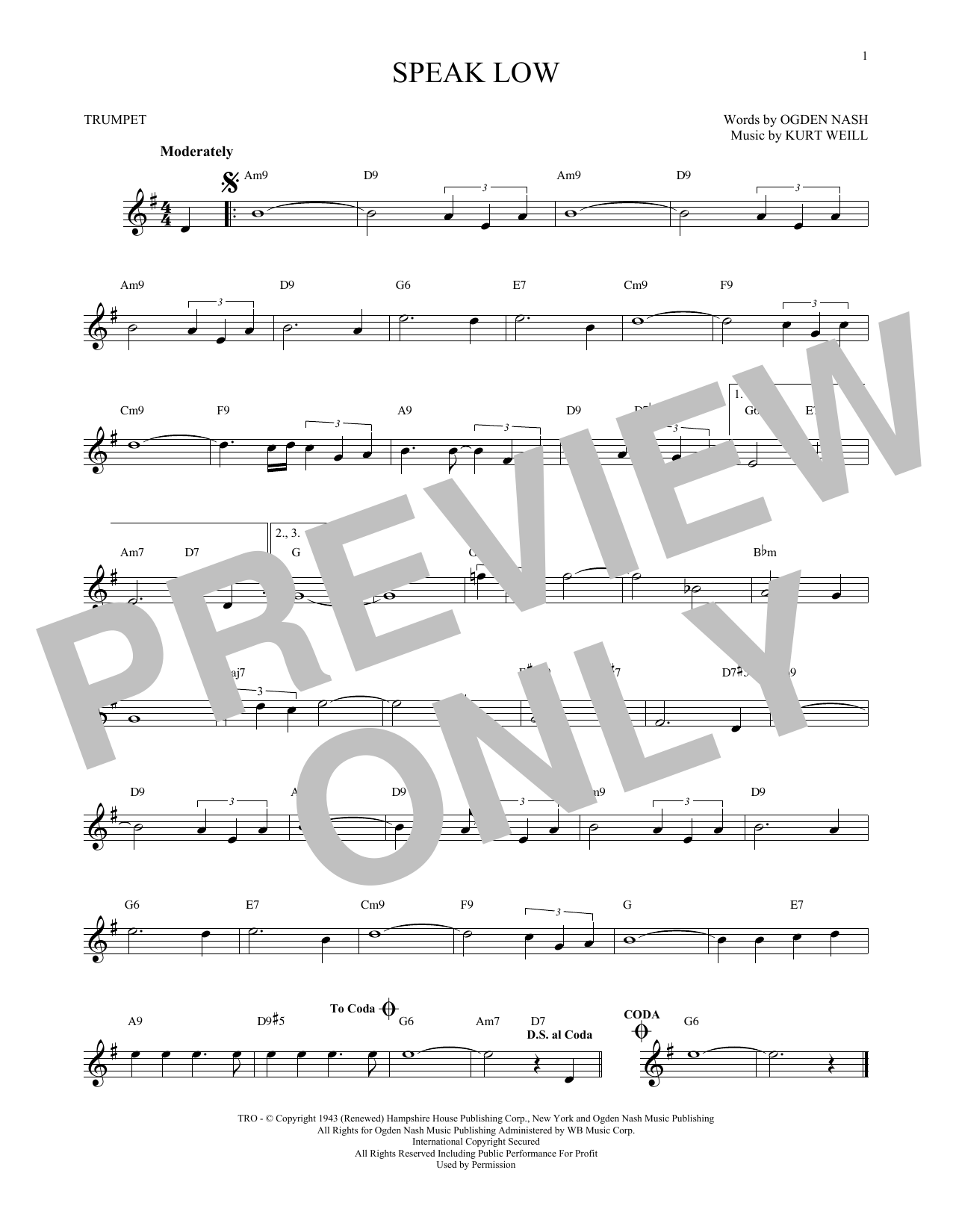
Ogden Nash (1902–1971) was an American poet renowned for his witty, unconventional verse and light comedic timing. While not primarily a musician, Nash's collaborations with composers like Kurt Weill resulted in some of the 20th century's most enduring popular songs, including the standard "Speak Low" from the 1943 musical "One Touch of Venus." His gift for memorable lyrical phrasing and rhythmic wordplay made him a natural fit for songwriting, and his work remains a staple in jazz and vocal repertoire.
Why we love this
"Speak Low" captures everything that makes a standard timeless: elegant restraint in the melody paired with lyrics that reward careful listening. The TPTSOL arrangement gives singers and players a vehicle to explore interpretive phrasing and the kind of space where nuance matters more than flash. It's the kind of tune that reveals something new each time you perform it.
What to expect
Intimate and reflective, with the kind of sophisticated melancholy that defines the golden age of American songwriting. The tune moves with conversational ease, never hurried, inviting the performer to find poetry in restraint.
Who it's for
Jazz students and vocalists developing their standard repertoire, as well as chamber ensembles and small jazz combos looking for accessible yet musically substantial material. This arrangement works equally well for classroom listening and live performance.
How to get the most out of it
Shape the opening phrase with a gentle decrescendo; let the lyric's intimacy guide your dynamics rather than pushing for volume.
Listen for the harmonic movement beneath the melody and allow it to inform your phrasing, especially during the bridge where the changes become more colorful.
Balance ensemble rhythm section support with space for the soloist to breathe; this tune demands restraint from accompaniment.
How to use it
Pair this with other Kurt Weill standards or use it as a teaching model for how classic songs function in jazz settings. It fits naturally into a program exploring American popular song or as a contrast to more rhythmically driven contemporary jazz selections.
Skills your students will build
Interpreting rubato and phrase shaping in jazz ballads
Reading and performing over sophisticated harmonic changes
Balancing lyrical clarity with instrumental expression
Understanding how standards function across different styles and contexts
You May Also Like
Scan to Complete Your Purchase
Use your phone's camera to scan the code below
You'll log in on your phone and the order will be added to your account