
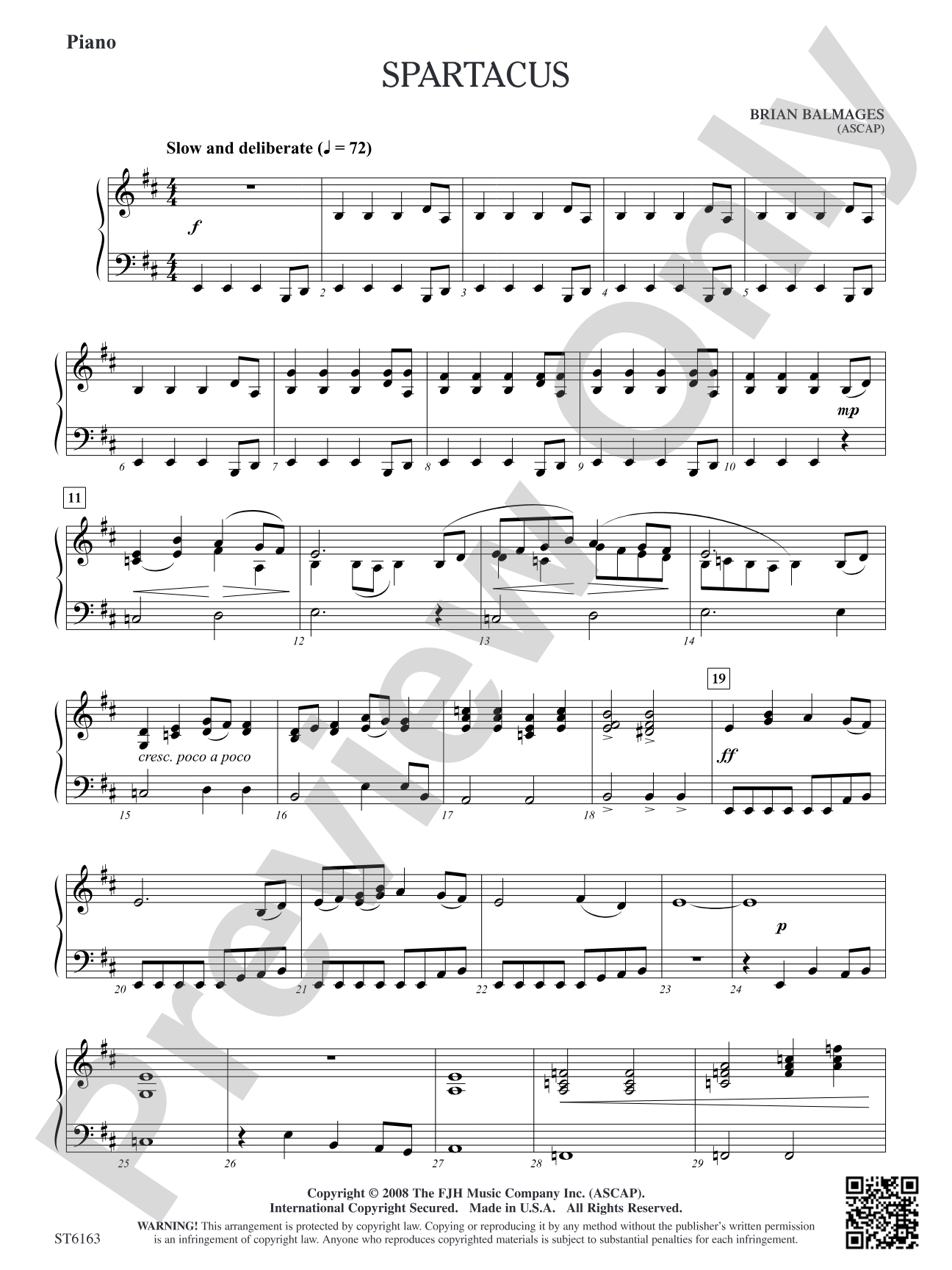

Spartacus: Piano
By Brian Balmages
Grade: 2.5
Item: 98-PC-DST6163_K
$7.00
Pickup currently not available
Description
Return to the time of the Roman Empire and Spartacus, one of the most famous gladiators to have lived during that era. The opening of the music signifies the harsh life of a gladiator while a fast, energetic section pays homage to his brilliance as a military tactician. Explosive rhythms, memorable melodies, and innovative harmonies all combine to make this piece unforgettable!


Don't just read it, hear it, play along with it, and watch your students grow with it. In MakeMusic Cloud, Spartacus: Piano comes alive with professional accompaniment, adjustable tempo, and built-in practice tools that turn solo practice into real progress.
Open in the Player
Jump straight in and assign it today.
Start Your Free Trial
Open this title and explore the full library in minutes.
Sample Audio
1
Audio File
--:--
0:00
0:00
Sample Video
No sample videos found.
Additional Details
Series:
FJH Developing Strings
Publisher:
The FJH Music Company, Inc.
SKU:
98-PC-DST6163_K
More about this title
About the Composer: Brian Balmages

Brian Balmages holds a distinguished position in contemporary music as a composer and conductor whose work spans orchestral, band, and chamber repertoires with equal facility. His compositions have been performed worldwide by ensembles ranging from professional symphony orchestras to school groups, in venues including Carnegie Hall, the Kennedy Center, and the Sydney Opera House. He received the A. Austin Harding Award from the American School Band Directors Association and won the 2020 NBA William D. Revelli Composition Contest.
Balmages serves as Director of MakeMusic Publications and Digital Education for Alfred and MakeMusic. His academic honors include the inaugural James Madison University Distinguished Alumni Award and a commissioning from the University of Miami for presidential inauguration music. As a guest conductor, he works regularly with all-state ensembles, university groups, and professional orchestras at major conferences and venues internationally.
Why we love this
Balmages brings vivid narrative clarity to a grade 2.5 score without relying on simplistic treatment. The opening establishes genuine dramatic weight through texture and sonority rather than cheap effects, then pivots to propulsive rhythmic writing that keeps young players engaged and challenged. It's the kind of programmatic work that reminds students why they joined orchestra in the first place.
What to expect
The opening immerses players in a world of constraint and hardship through sparse, weighted textures that feel almost suffocating. When the tempo shifts, the music erupts with kinetic energy and driving rhythmic patterns that capture the tactical brilliance and defiant power of a legendary military leader.
Who it's for
String orchestras at the intermediate level seeking a programmatic piece with real substance and theatrical appeal. This works equally well for groups preparing contest repertoire or for programs where you want students to experience narrative storytelling through purely instrumental means.
How to get the most out of it
- Shape the opening section with careful attention to dynamics and tone quality; resist the urge to rush the slower material. The sense of oppression emerges from sustained, dark sonorities rather than exaggerated slowness.
- Lock the rhythmic precision in the fast section by having the ensemble conduct the subdivision internally. Mark the energetic passages in rehearsal before adding tempo, so players feel the pulse clearly.
- Balance the memorable melodic lines so they project over the accompaniment figures. Upper voices should bloom without drowning the harmonic foundation that underpins the 'brilliant military tactician' section.
- Use the conductor score to map the dynamic trajectory across both sections. The shift from bleak to explosive needs clear gestural preparation so the ensemble moves with intent.
How to use it
Program this as an opener on a concert where the dramatic arc sets the tone for lighter works that follow, or pair it with other programmatic pieces to create a thematic evening around historical narratives. Its contest-festival designation makes it ideal for spring competitions, where the combination of musical substance and audience appeal serves both adjudicators and spectators.
Skills your students will build
- Contrasting the character of slow, legato writing with fast, rhythmically active sections
- Maintaining ensemble precision in driving rhythmic patterns
- Balancing principal melodic lines against supporting harmonic textures
- Interpreting dynamic range to shape narrative tension and release
- Understanding how texture and instrumentation convey programmatic meaning