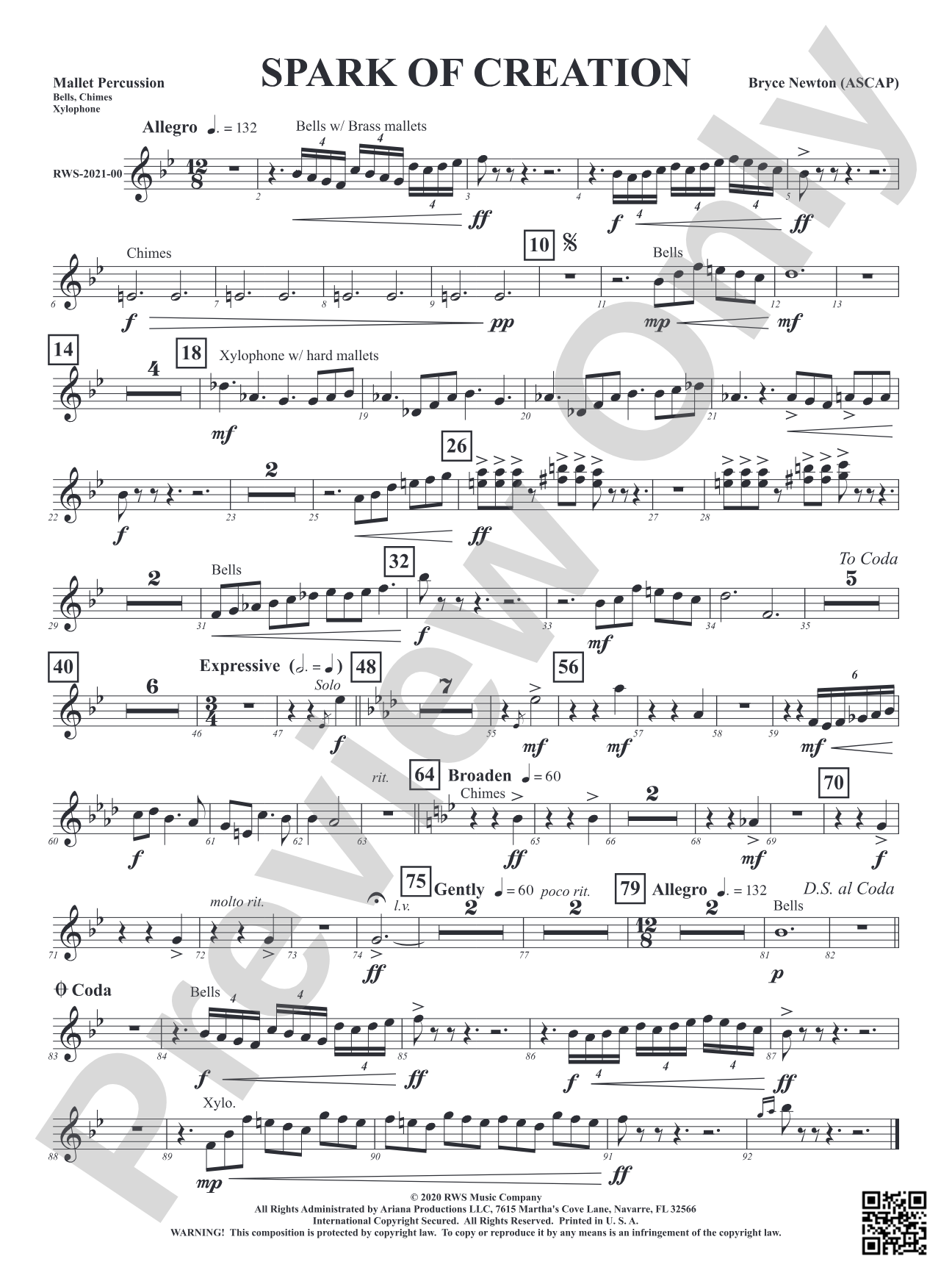
Spark of Creation: 1st Mallet Percussion Sheet Music Preview

Spark of Creation: 1st Mallet Percussion

By Bryce Newton

Grade: 4

Item: 98-PC-RWS2021_M1

Digital Download
$3.99
Description
Depicting the creative work of American inventor Charles F. Kettering, Bryce Newton's Spark of Creation portrays the relentlessly inventive nature of Kettering's mind. After a bold and driving introduction, the piece gives way to a lush chorale, symbolic of the success and extreme merit of Kettering's contributions to our modern society. Spark of Creation merges history, music and the curiosity of the human mind into a setting that your students and audiences will thoroughly enjoy. An outstanding selection for festivals and contests!

Original Item#: RWS-2021-00

Spark of Creation: 1st Mallet Percussion isn't in MakeMusic Cloud just yet...but it could be. Let us know you'd like to see it, and you'll help shape what comes next. In the meantime, start a free trial and dive into thousands of interactive titles your students can play along with today.

Sample Audio
0:00
0:00
Sample Video
Additional Details
Series: RWS - Symphony Band
Publisher: RWS Music Company
SKU: 98-PC-RWS2021_M1

More about this title

About the Composer: Bryce Newton

Bryce Newton is a composer and educator whose work bridges storytelling and concert music. His compositions, including pieces in the RWS Symphony Band series, emphasize narrative clarity and musical accessibility without sacrificing sophistication.

Why we love this

Bryce Newton captures the arc of innovation itself here, moving from raw invention through reflection to triumph. The programmatic framing gives students concrete stakes for their phrasing and dynamics, transforming what could be generic heroism into a story about human curiosity and perseverance.

What to expect

The opening crackles with purpose and momentum, like watching someone's mind race through possibilities. Then the music settles into something grander and more introspective—a moment to recognize the weight and beauty of what has been achieved. It's ambitious in scope but accessible in execution.

Who it's for

Grade 4 bands with secure fundamentals and ensemble discipline. This piece works well for groups that can handle rubato or tempo shifts with confidence and sustain a legit chorale without thinning out.

How to get the most out of it

  • Bring aggressive forward motion to the introduction; this is the spark igniting, not a gentle prelude. Push the tempo and articulation so the subsequent chorale lands with earned repose.
  • Shape the chorale as if you're conducting a hymn. Even in a band setting, this section benefits from legato phrasing and a conducting gesture that breathes with the melodic line rather than marking time.
  • Balance the thematic material between your principal voices and supporting parts. Newton's orchestration rewards transparency; if the second clarinets and altos cover the flutes, the texture collapses into noise.
  • Rehearse transitions carefully. The shift from kinetic energy to sustained chorale (and back, if the piece reprises) requires a clear gesture and ensemble agreement about tempo and character.

How to use it

Program this at a festival or contest where the judges will hear both your ensemble's rhythmic precision and your musicians' ability to sing. It also pairs well in a concert built around American themes or innovators, especially if you're looking for something that bridges contemporary band sound with concert tradition.

Skills your students will build

  • Contrast in articulation and character between driving rhythmic passages and sustained melodic playing
  • Dynamic control across forte passages without losing clarity in the lower voices
  • Conducting and ensemble response to tempo shifts and fermatas
  • Sectional independence while maintaining a unified sound in a chorale texture

You May Also Like