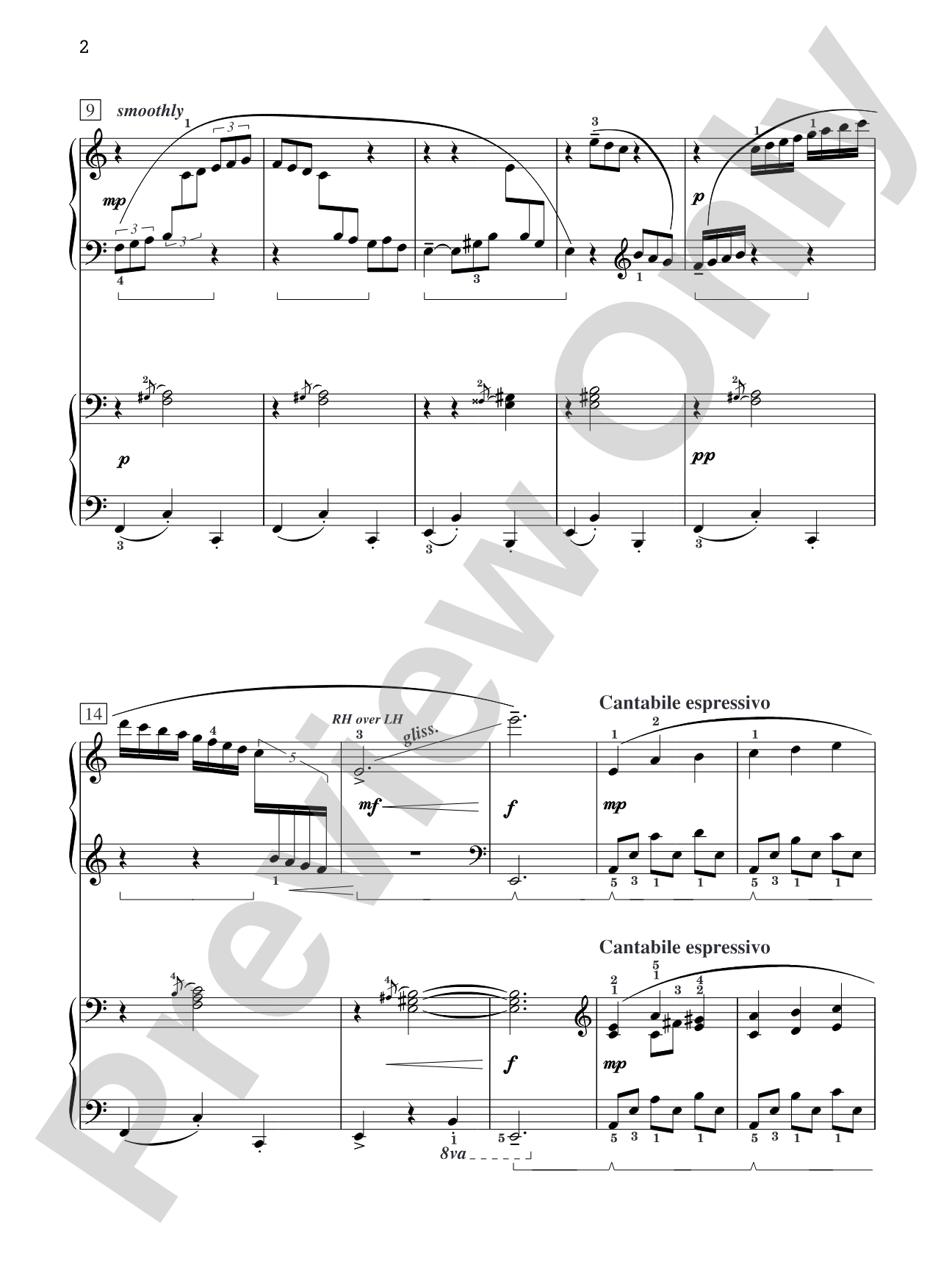
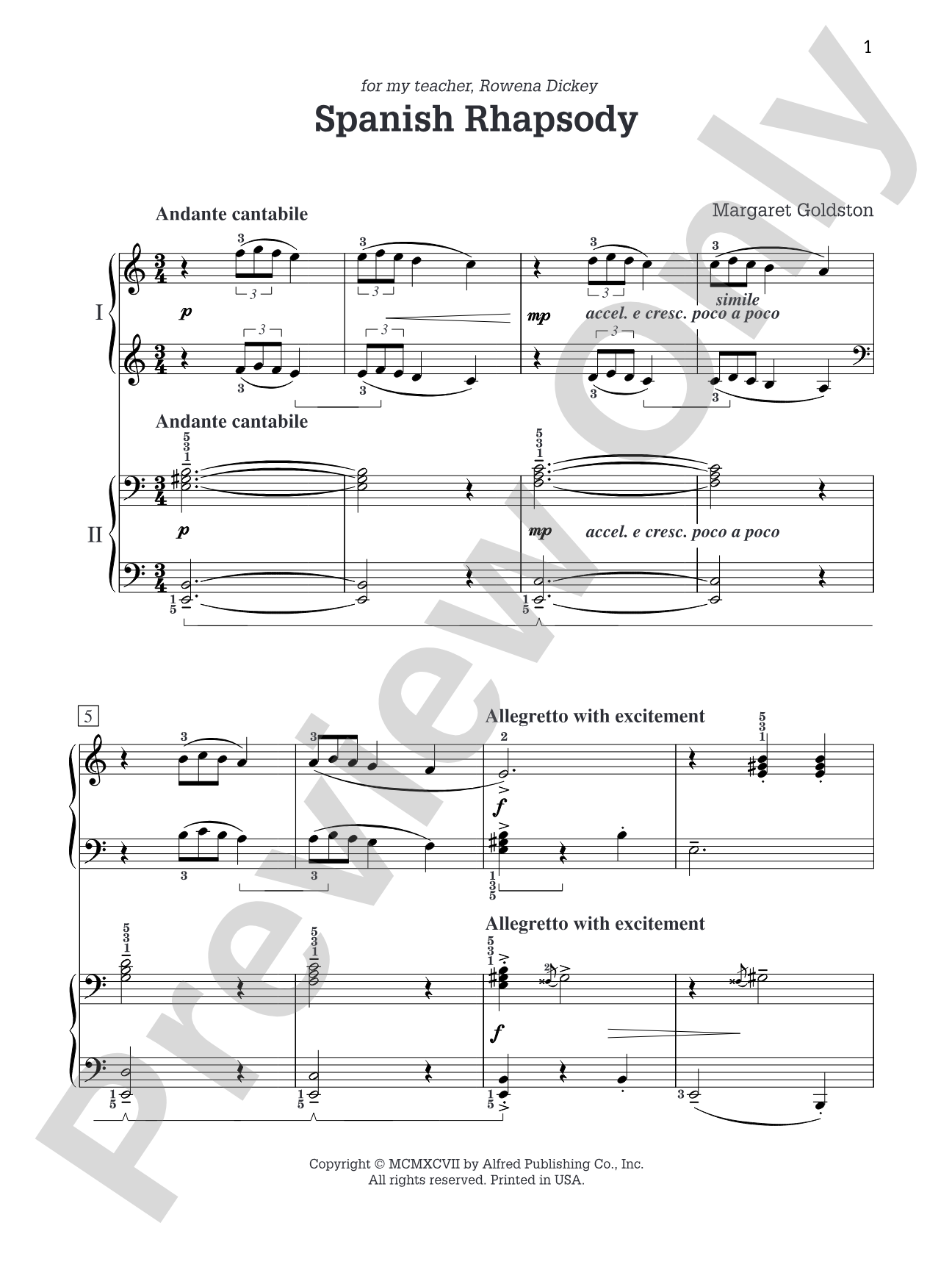
Spanish Rhapsody - Piano Duo (2 Pianos, 4 Hands) Sheet Music Preview

Spanish Rhapsody - Piano Duo (2 Pianos, 4 Hands): Piano Duets & Four Hands

By Margaret Goldston

Level: Late Intermediate

Item: 00-PB-0000843

Digital Download
$5.95
Description
This popular late intermediate ensemble piece by Margaret Goldston is written for two pianos, four hands. Changes in dynamics, unusual meters, and key modulations are featured in a challenging Spanish-style duet. Contrasting sections are marked cantabile espressivo and agitato con fuoco, leading to dramatic glissandi in both parts at the ending. A Federation Festivals 2024-2028 selection.

Spanish Rhapsody - Piano Duo (2 Pianos, 4 Hands): Piano Duets & Four Hands isn't in MakeMusic Cloud just yet...but it could be. Let us know you'd like to see it, and you'll help shape what comes next. In the meantime, start a free trial and dive into thousands of interactive titles your students can play along with today.

Sample Audio
No sample audio found.
Sample Video
Additional Details
Publisher: Alfred Music
Page Count: 8
SKU: 00-PB-0000843

More about this title

About the Composer: Margaret Goldston

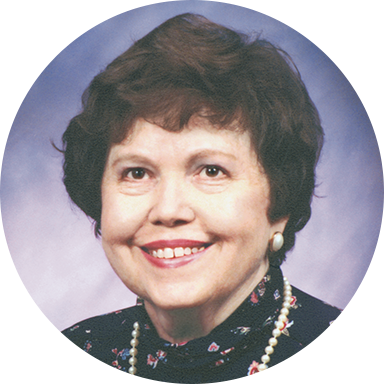
Margaret Goldston

Margaret Goldston (1932-2003) built her career in North Carolina as a composer, educator, and clinician who worked with piano students across all levels in her private studio. She completed her Bachelor of Music degree in piano performance at Louisiana State University and later studied composition privately with Robert Ward, a Pulitzer Prize-winning composer.

Why we love this

Goldston crafts a duet that demands genuine musical partnership without sacrificing individual voice. The dramatic arc from lyrical passages to fiery, glissando-laden climaxes gives both pianists equally rewarding material, and the shifting meters and key changes keep rehearsals intellectually engaging while remaining playable at the late intermediate level.

What to expect

Spanish Rhapsody pulses with passion and restlessness. Lyrical, singing passages give way to driving rhythmic figures and explosive fiery sections, creating a journey that feels both intimate and theatrical. The glissandi that punctuate the ending leave listeners breathless.

Who it's for

This duet works well for upper-level piano students who have moved past basic ensemble repertoire and are ready to navigate metric complexity and Spanish musical idioms. Pairs of pianists preparing for festival performances or recitals will find a piece that rewards careful preparation with impressive results.

How to get the most out of it

  • Balance the cantabile espressivo sections with clear phrase shaping from both players; one pianist should not dominate the song-like melodic content while the other shrinks into accompaniment.
  • Lock in the meter changes through careful counting and possibly rehearsing with a metronome set to subdivisions, since unusual meters can destabilize ensemble timing.
  • Coordinate the final glissandi by agreeing on a precise starting point and release; rehearse the hand position and trajectory separately before combining them for maximum dramatic effect.
  • Use the dynamic contrasts to shape the overall arc; the agitato con fuoco sections should feel genuinely propulsive, not rushed.

How to use it

This piece works beautifully on a recital featuring collaborative piano music or on a festival program where its Federation listing carries immediate recognition. Position it where its dramatic contrasts can stand out, perhaps following a quieter work or pairing it with another Latin-inflected duet to build a thematic program segment.

Skills your students will build

  • Reading unusual meters and transitioning between different time signatures
  • Ensemble balance and independence when both parts are equally prominent
  • Dynamic control across a wide range, from espressivo singing to agitato intensity
  • Keyboard technique for glissandi and rapid passage work
  • Interpreting stylistic markings (cantabile espressivo, agitato con fuoco) and translating them into musical choices

You May Also Like