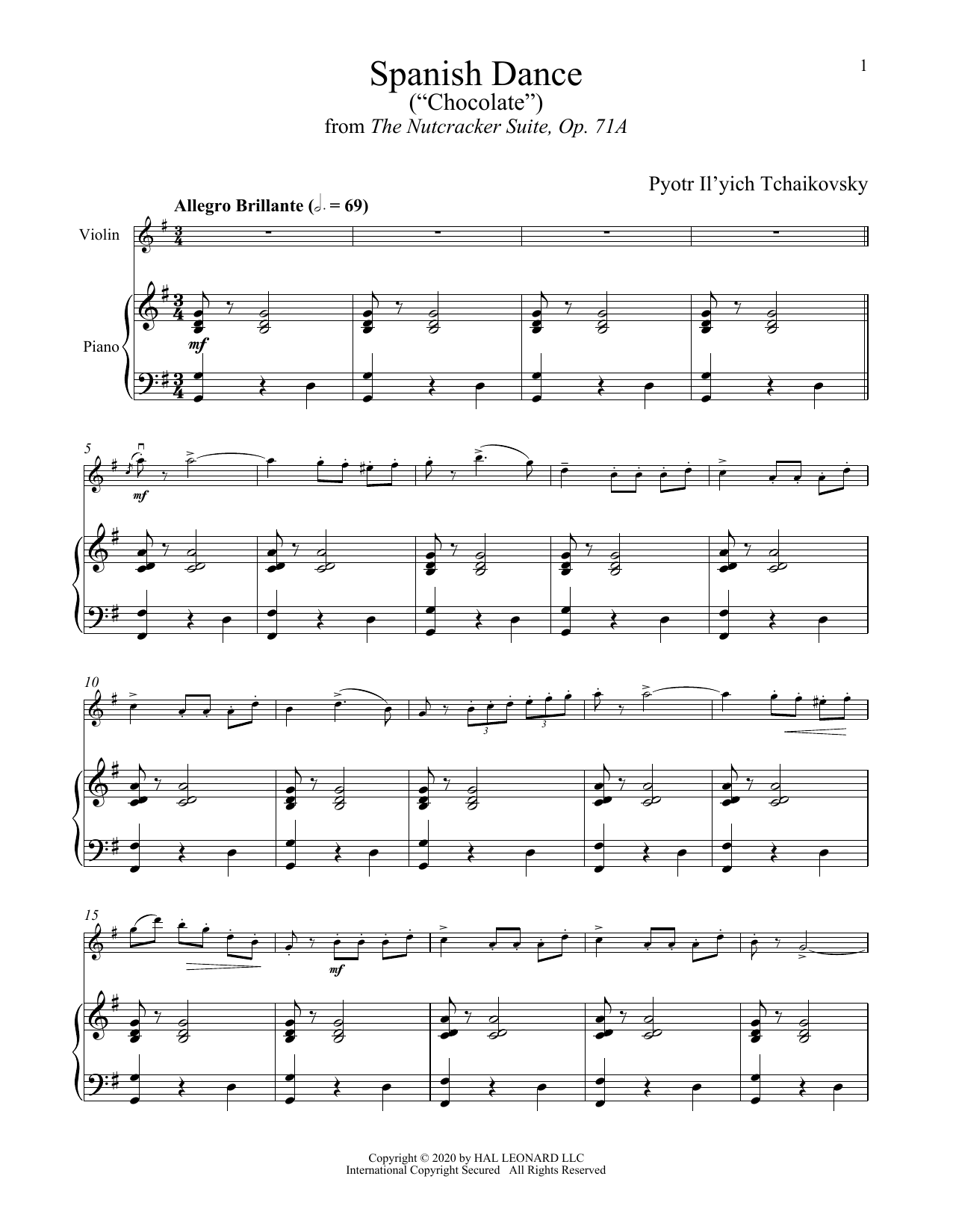
Spanish Dance (from The Nutcracker) Sheet Music Preview

Spanish Dance (from The Nutcracker): Violin and Piano

By Pyotr Il'yich Tchaikovsky

Item: 35-DS00472402

Digital Download
$5.99
Description

Discover MakeMusic Cloud: thousands of interactive titles your students can play along with today.

Sample Audio
No sample audio found.
Sample Video
Additional Details
Publisher: Hal Leonard
Page Count: 4
SKU: 35-DS00472402

More about this title

About the Composer: Pyotr Il'yich Tchaikovsky

Tchaikovsky stands as one of the most performed composers in the orchestral canon, and for good reason. His gift for melody and his instinct for what makes music move listeners defined his career in 19th century Russia and continue to define concert halls today.

The Nutcracker, composed in 1892, remains his most beloved work among music students and audiences alike. The ballet's individual movements have become standard repertoire across ensembles of all levels, each one a masterclass in orchestration and character writing.

Why we love this

The Spanish Dance brings immediate color and rhythmic vitality to any concert, and this violin and piano arrangement captures the orchestral energy without losing an ounce of charm. Audiences recognize it instantly, yet it never feels overdone when played with confidence and style.

What to expect

Bright and rhythmically alive, this piece sparkles with the exotic flavor Tchaikovsky brought to his ballet numbers. The Spanish Dance moves with a natural buoyancy that makes both performers and listeners want to move along with it.

Who it's for

Violinists at the intermediate level and above will find this a rewarding addition to recitals or holiday programs. Piano teachers and their students also gain a repertoire piece that teaches classical style while remaining genuinely fun to perform.

How to get the most out of it

  • Shape the phrasing in longer melodic lines by thinking through to the harmonic goal rather than stopping at each bar line; this keeps the momentum alive.
  • Balance the violin and piano so the accompaniment supports without overwhelming the melody. The pizzicato or staccato figures should dance rather than dominate.
  • Establish a steady, infectious pulse early in rehearsal. This piece thrives on rhythmic clarity and forward motion.
  • Let the Spanish character breathe through articulation and subtle dynamic inflection; avoid making it mechanical or stiff.

How to use it

Slot this into a holiday concert as either a solo feature or a chamber interlude between larger works. It also serves beautifully as an encore or as a bridge between classical and contemporary selections when you want to lighten the mood.

Skills your students will build

  • Playing with clear articulation and rhythmic precision in classical style
  • Balancing melody and accompaniment in a duo setting
  • Building character and color through rubato and dynamic shaping
  • Reading and executing ornaments and rhythmic figures typical of 19th century ballet music

You May Also Like