
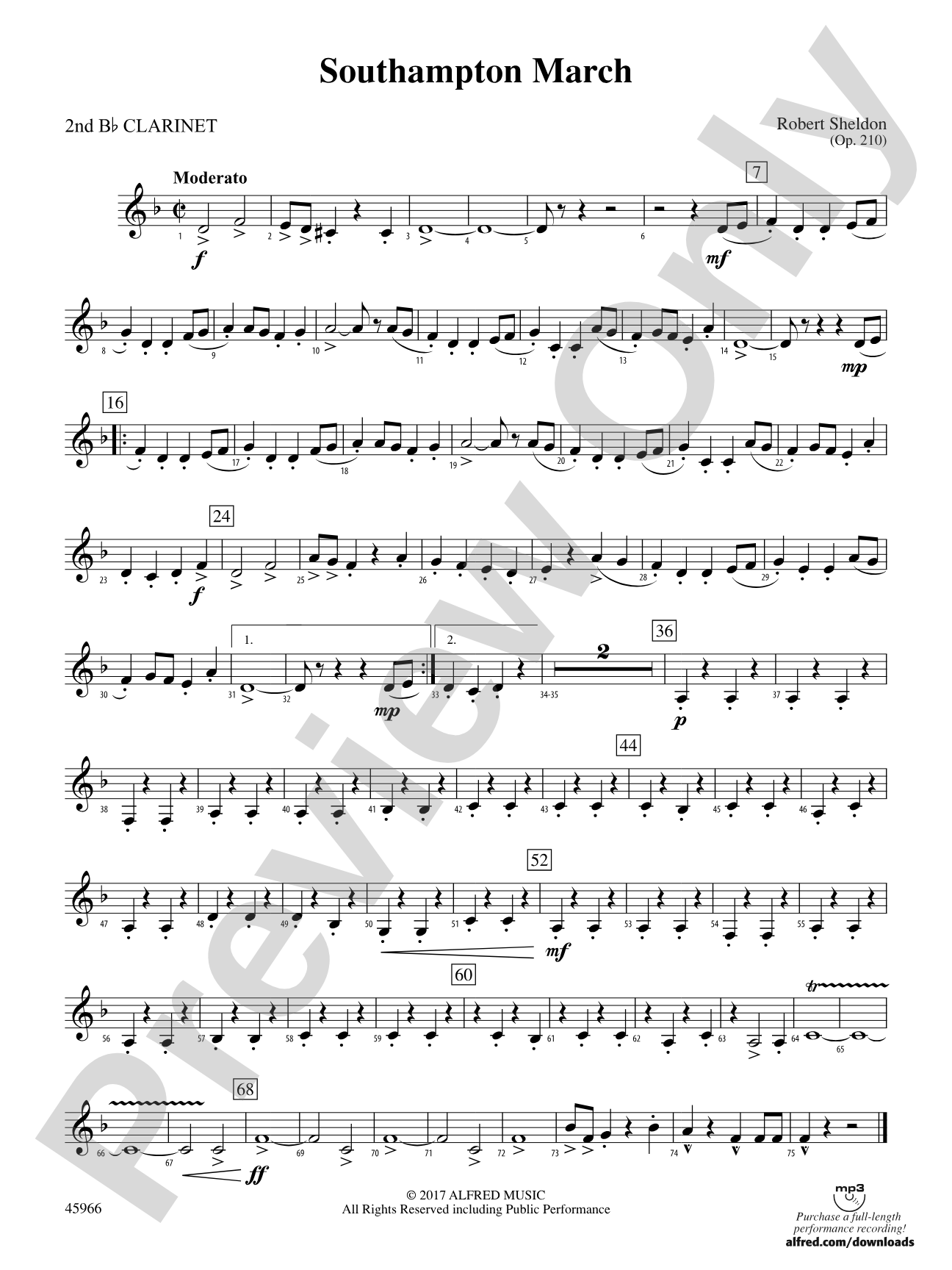

Southampton March: 2nd B-flat Clarinet
By Robert Sheldon
Grade: 1.5 (Easy)
Item: 00-PC-0017692_C2
$3.00
Pickup currently not available
Description
The charm and style of a British-style march is brought "to the fore" in this delightful concert march for young band. Tuneful melodies reminiscent of folk tunes create a tasty palette with which to open a concert or festival performance. (1:45) Correlates to Book 2, level 3.


Don't just read it, hear it, play along with it, and watch your students grow with it. In MakeMusic Cloud, Southampton March: 2nd B-flat Clarinet comes alive with professional accompaniment, adjustable tempo, and built-in practice tools that turn solo practice into real progress.
Open in the Player
Jump straight in and assign it today.
Start Your Free Trial
Open this title and explore the full library in minutes.
Sample Audio
1
Audio File
--:--
0:00
0:00
Sample Video
Additional Details
Series:
Sound Innovations for Concert Band
Publisher:
Alfred Music
Page Count:
130
SKU:
00-PC-0017692_C2
More about this title
About the Composer: Robert Sheldon

Robert Sheldon's wind band compositions are performed by ensembles worldwide and appear regularly on festival and contest programs. Beyond his prolific output as a composer, he serves as lead author of Sound Innovations for Concert Band and has earned recognition from the American School Band Director's Association, Phi Beta Mu, and ASCAP for compositions that balance musical substance with accessibility.
Sheldon maintains an active schedule as guest conductor for All-State and Regional Honor Bands, clinician at universities and state music education conferences, and commissioned composer. His works have been performed at Carnegie Hall, Orchestra Hall, Boston's Symphony Hall, the Sydney Opera House, and the Kennedy Center. In 2020, VanderCook College of Music awarded him an honorary doctorate.
Why we love this
Southampton March captures what Sheldon does best: craft a piece that sounds substantial and memorable without overwhelming a developing ensemble. The folk-inspired melodies give your musicians something genuinely singable to play, and the march structure provides clear architectural points that young bands can grasp immediately.
What to expect
Southampton March radiates the genial charm of a British-style march without any stuffiness. Its folk-tune-inspired melodies feel warm and approachable, moving with a purposeful bounce that makes both players and listeners smile. The orchestration is transparent enough that each section can hear what it's doing, yet full enough to give young musicians a genuine sense of ensemble sound.
Who it's for
Beginning to early intermediate concert bands (Grade 1.5) looking for a piece with genuine musical substance and proven appeal at festivals and contests. This works equally well for bands making their first venture into march repertoire or for programs seeking a tuneful opener that audiences will remember.
How to get the most out of it
- Establish a steady, character-filled tempo in rehearsal before drilling individual parts. A march needs rhythmic confidence, and your band will lock in faster if they feel the pulse in their bodies first.
- Balance the melody between sections so that those tuneful folk-inspired lines cut through without drowning the harmonic support. Young bands often play everything at the same dynamic level; use your rehearsal to shape the counterpoint.
- Attend to the articulation style. British marches thrive on clean tonguing and consistent rhythmic precision, especially in the accompaniment figures.
- Record a run-through before the performance and listen together. Young musicians learn enormously from hearing what they actually sound like, and it builds their confidence for contest or concert.
How to use it
Open a concert or festival performance with this piece to set a welcoming, energetic tone that puts your audience at ease. Its length (1:45) and modest difficulty also make it a reliable choice for contests where you need a solid opener that doesn't consume rehearsal time better spent on more challenging repertoire.
Skills your students will build
- Marching style articulation and phrasing
- Melodic awareness and balance between principal voices and accompaniment
- Ensemble precision in rhythmic figures at moving tempos
- Listening to folk-inspired contours and maintaining musical shape across phrases