
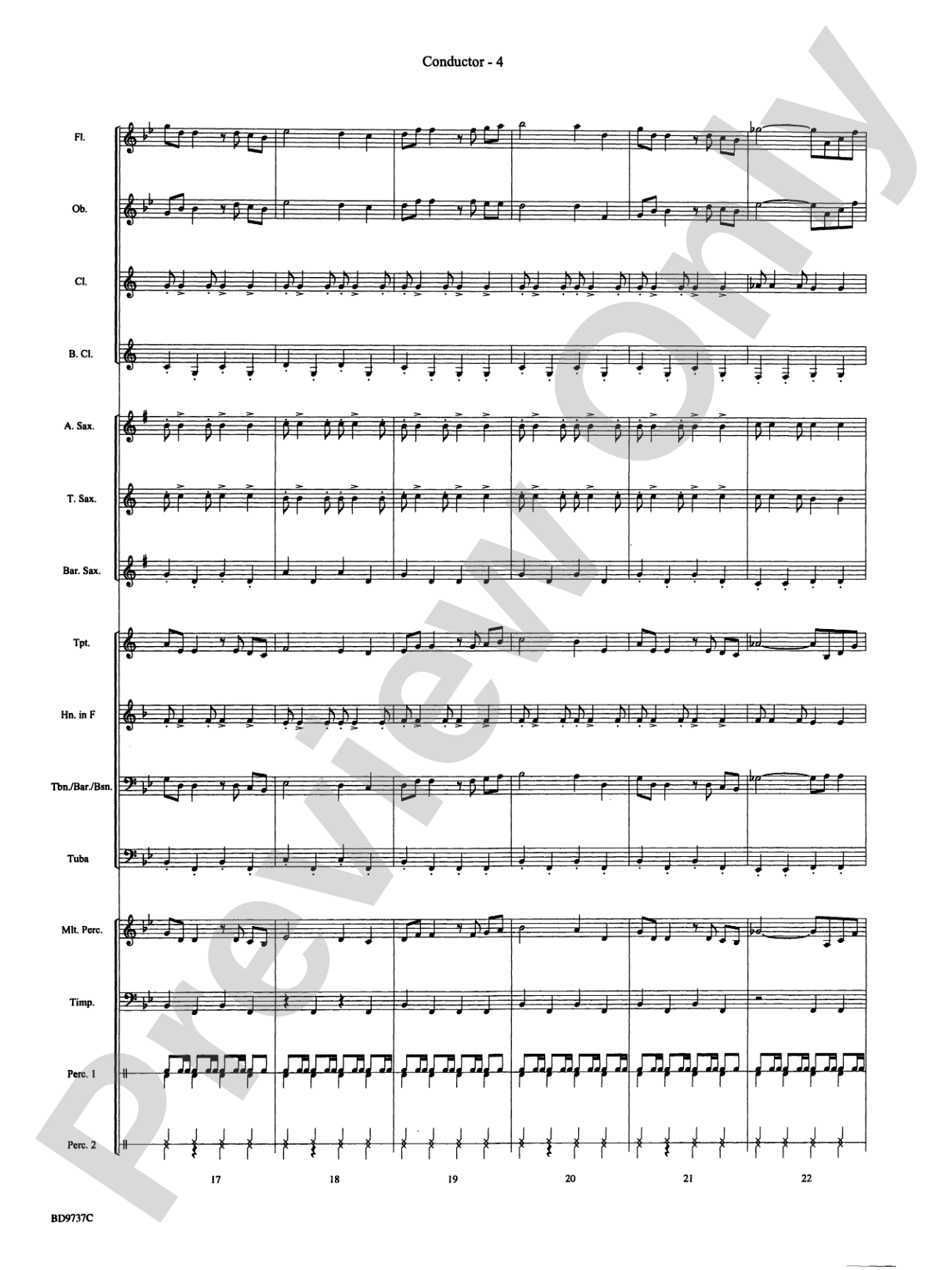
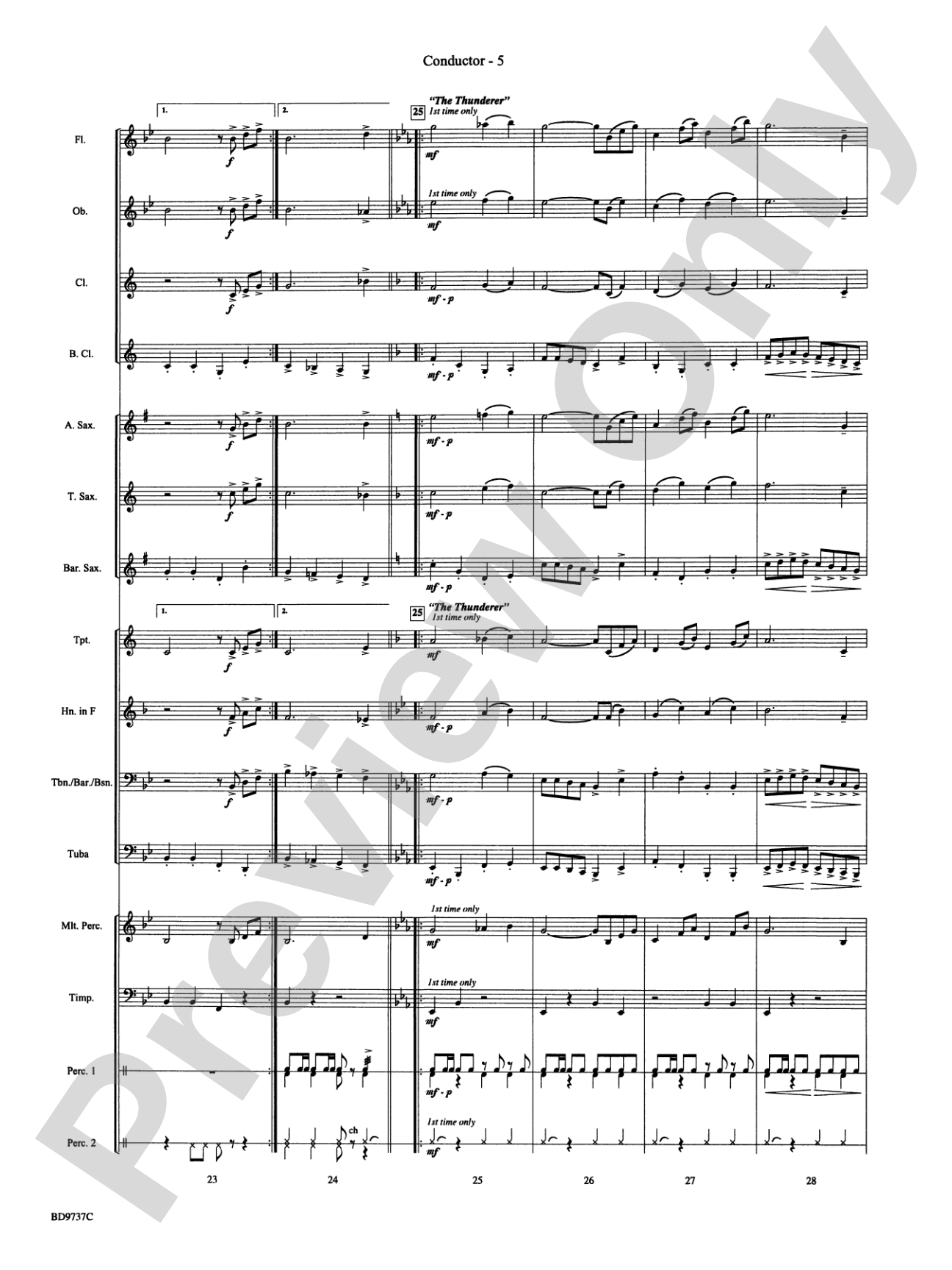
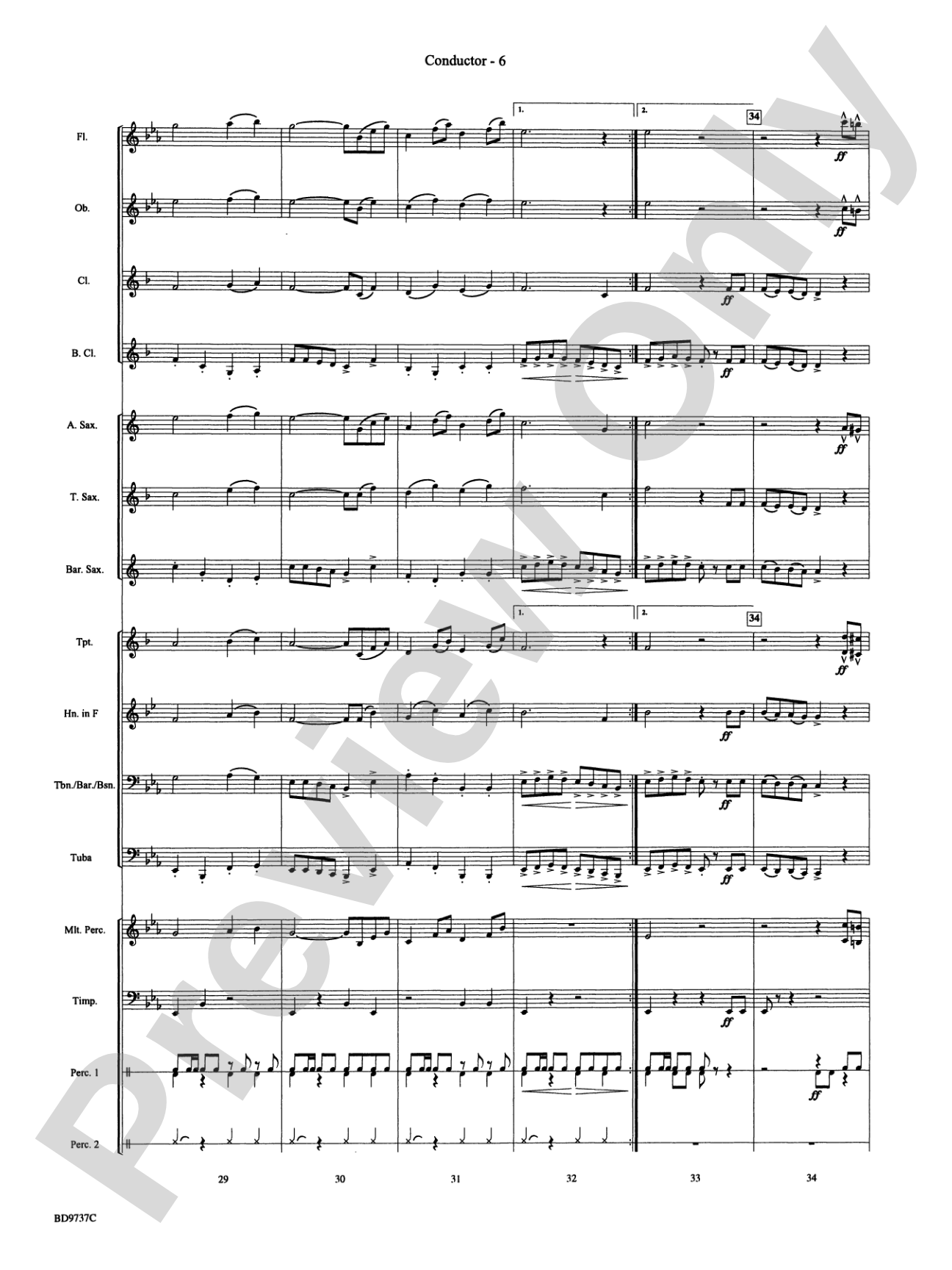
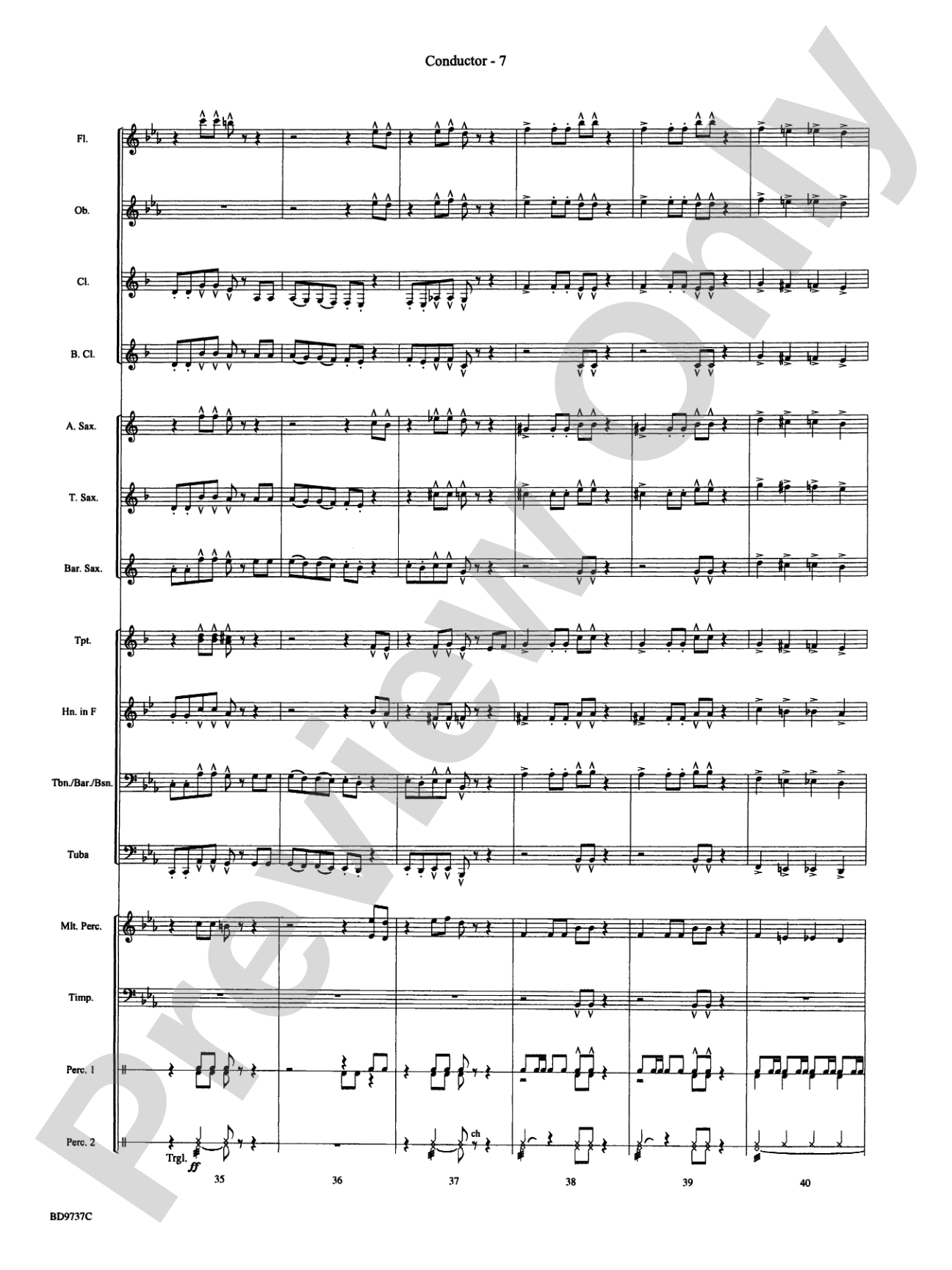
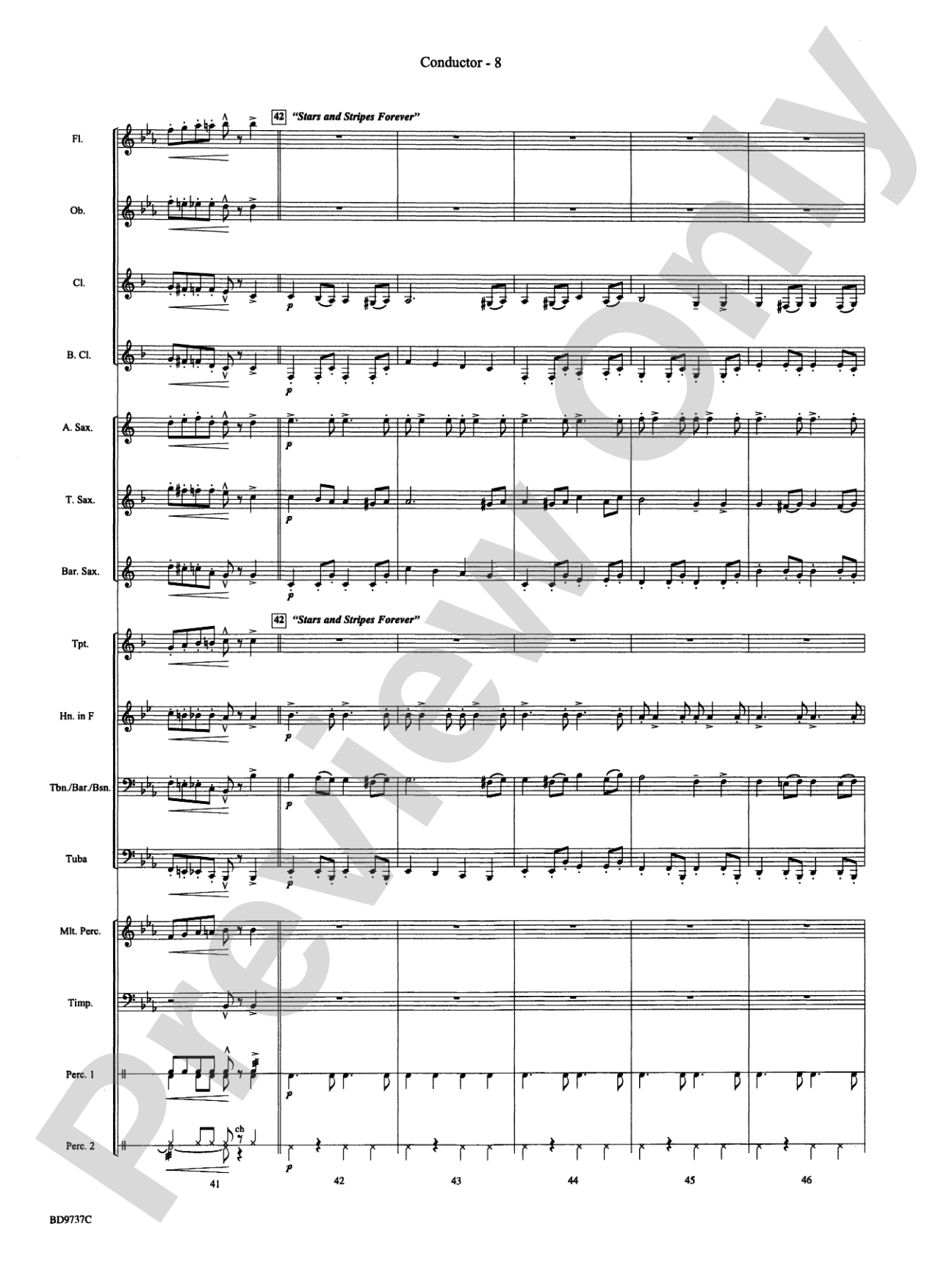
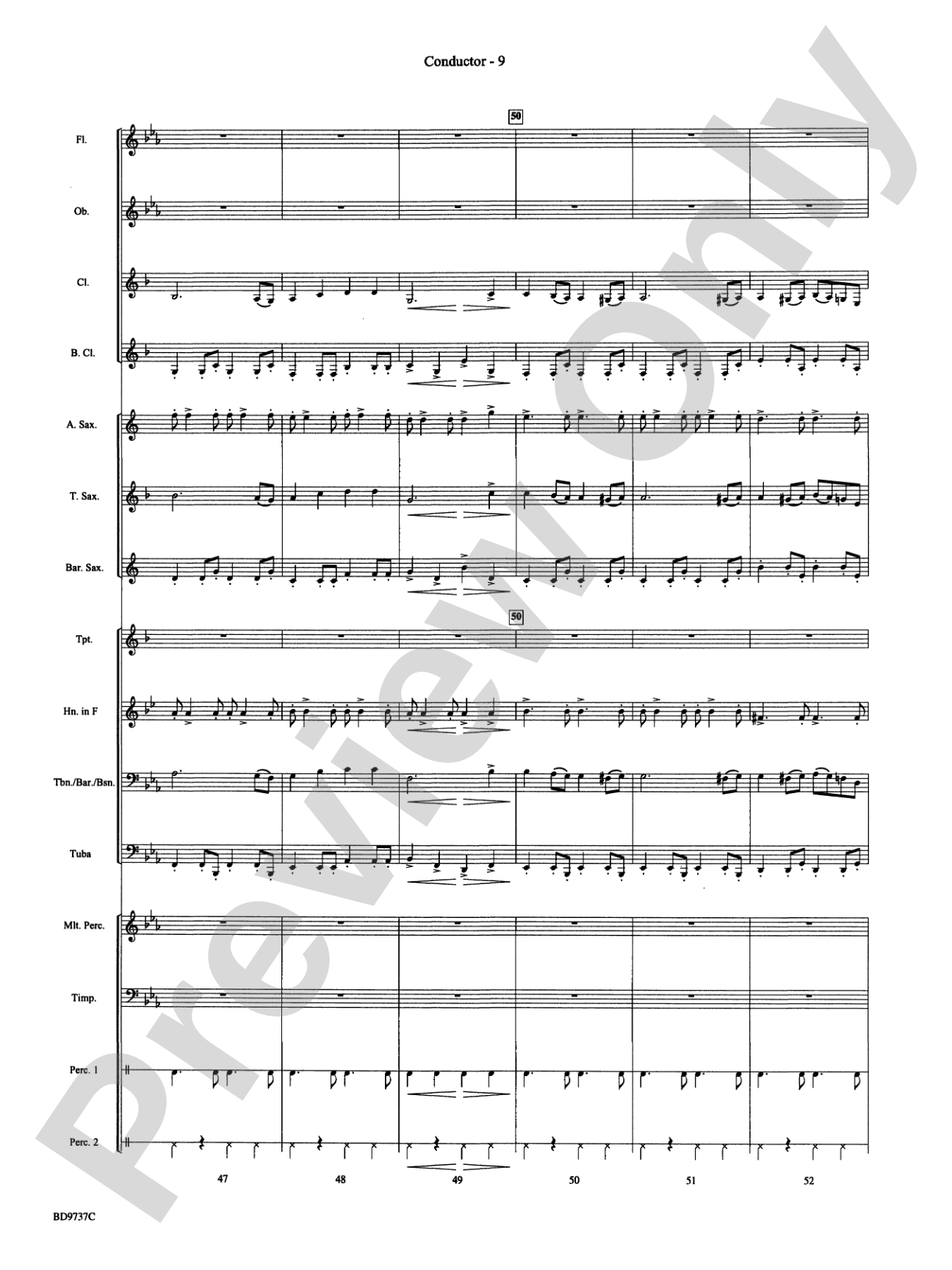
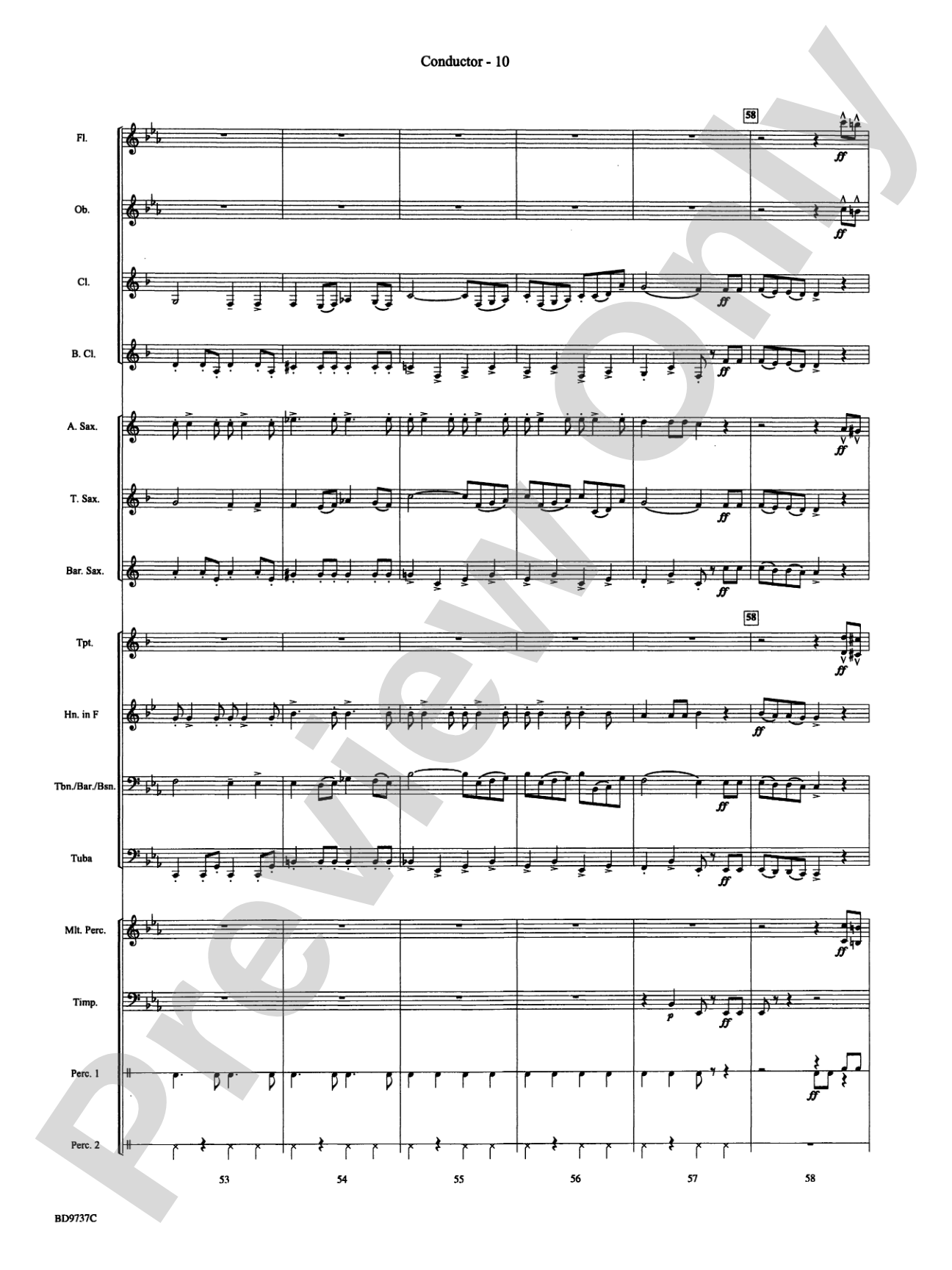
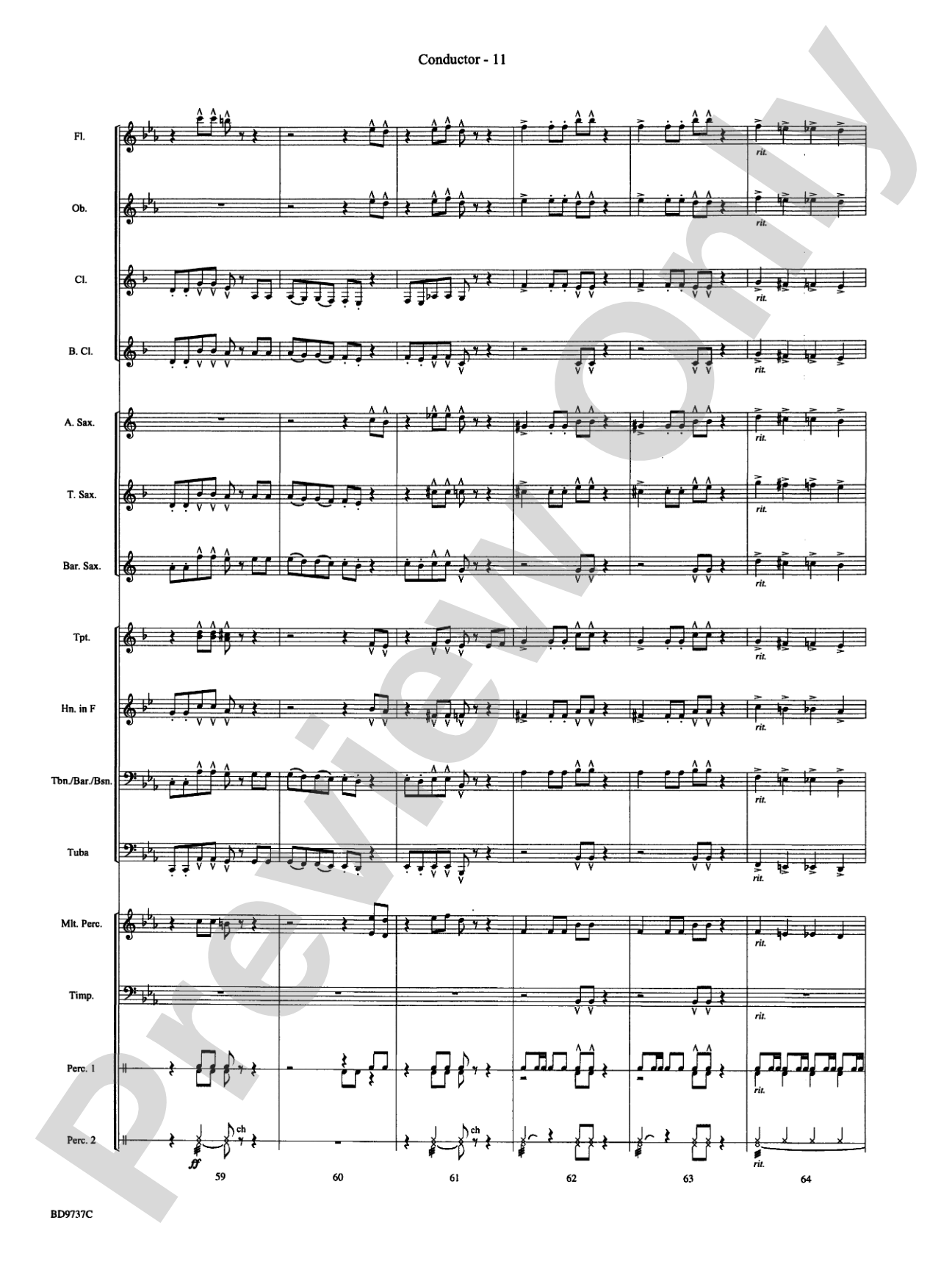

Sousa - The March King: Concert Band Conductor Score & Parts
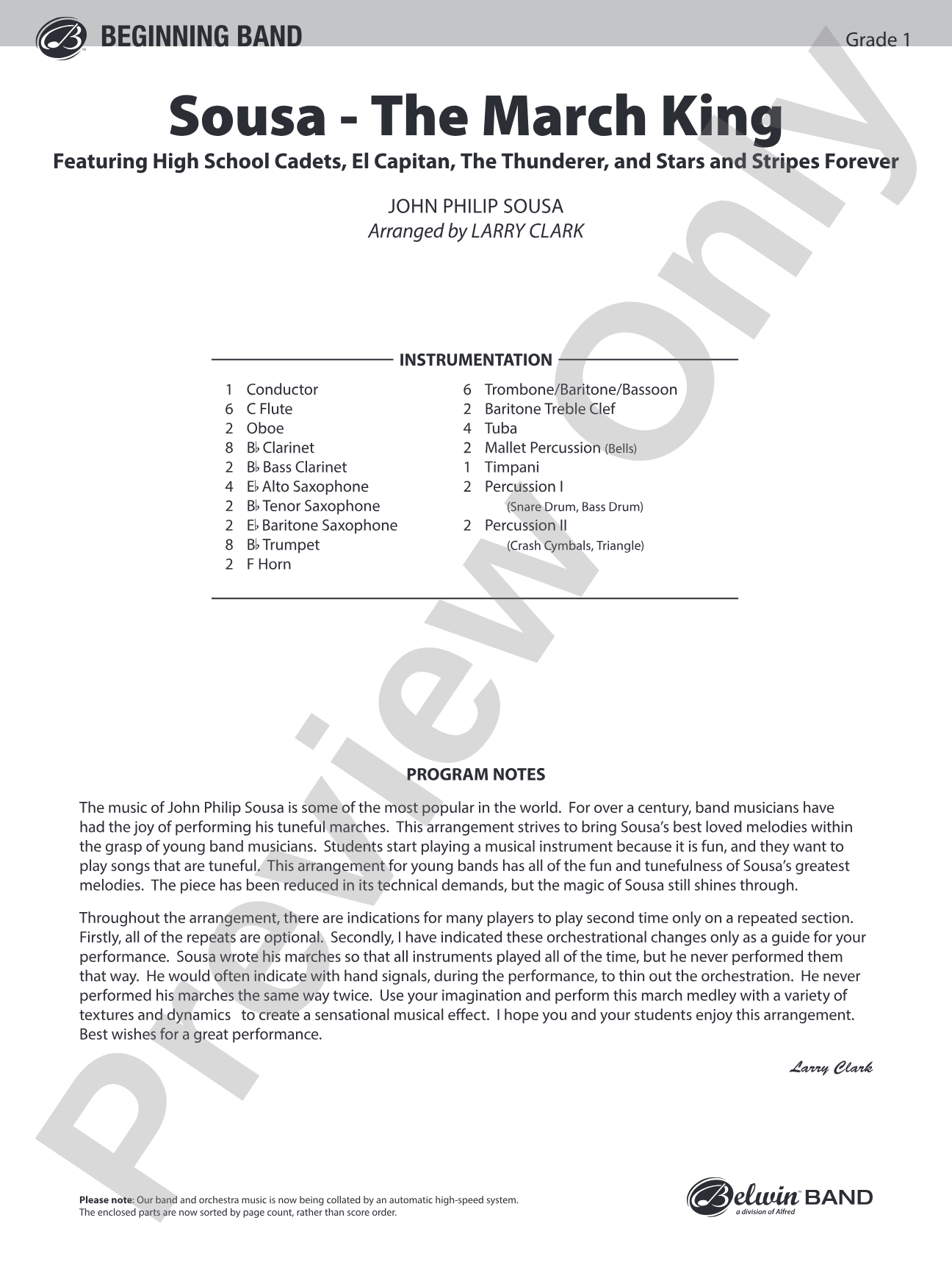
Featuring: High School Cadets / El Capitan / The Thunderer / Stars and Stripes Forever
By John Philip Sousa / arr. Larry Clark
Grade: 1 (Very Easy)
Item: 00-PK-0002069

$55.00
Pickup currently not available
Buy Extra Parts (Digital PDF Download)
Parts Added to Cart!
Description
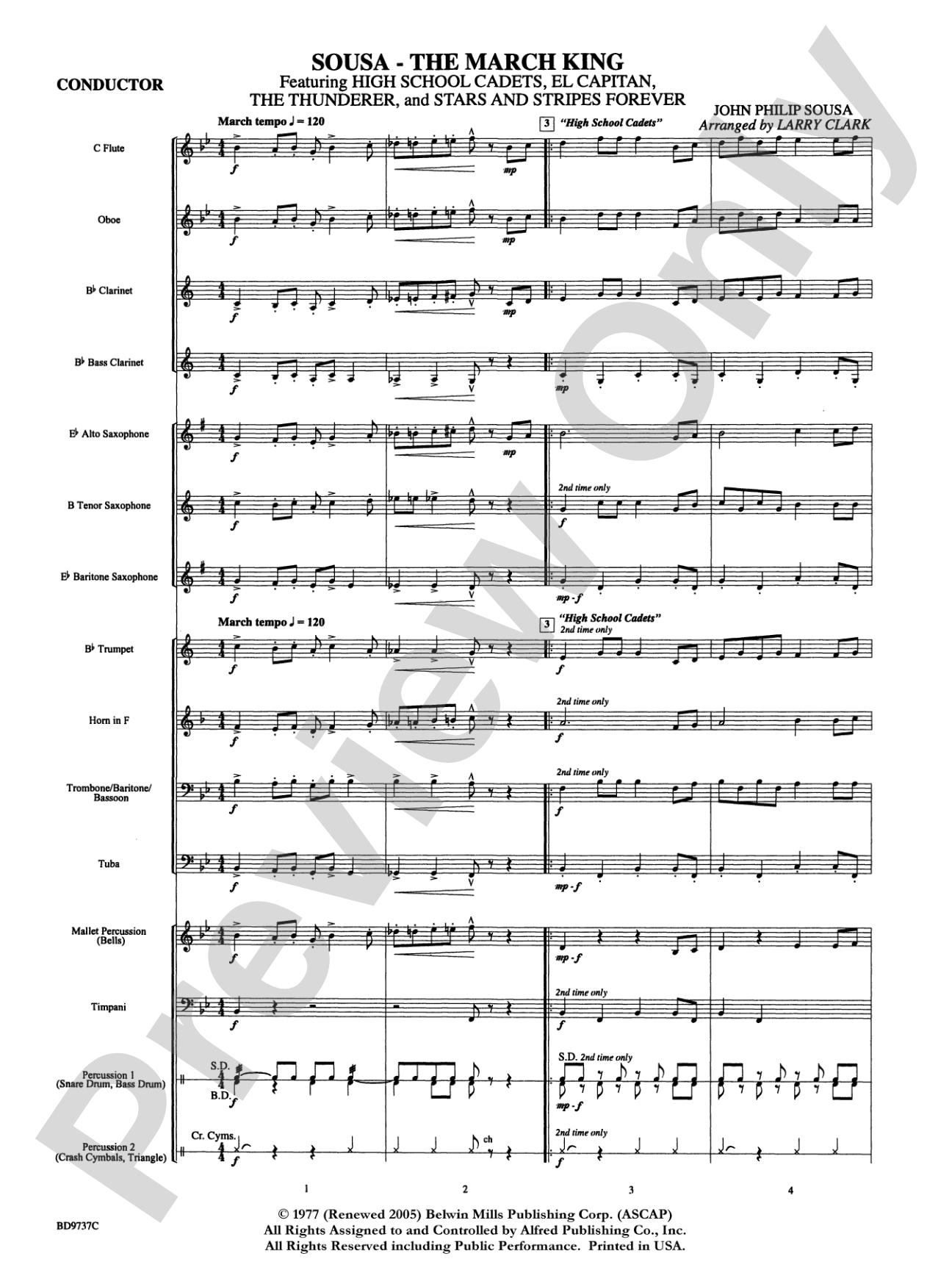
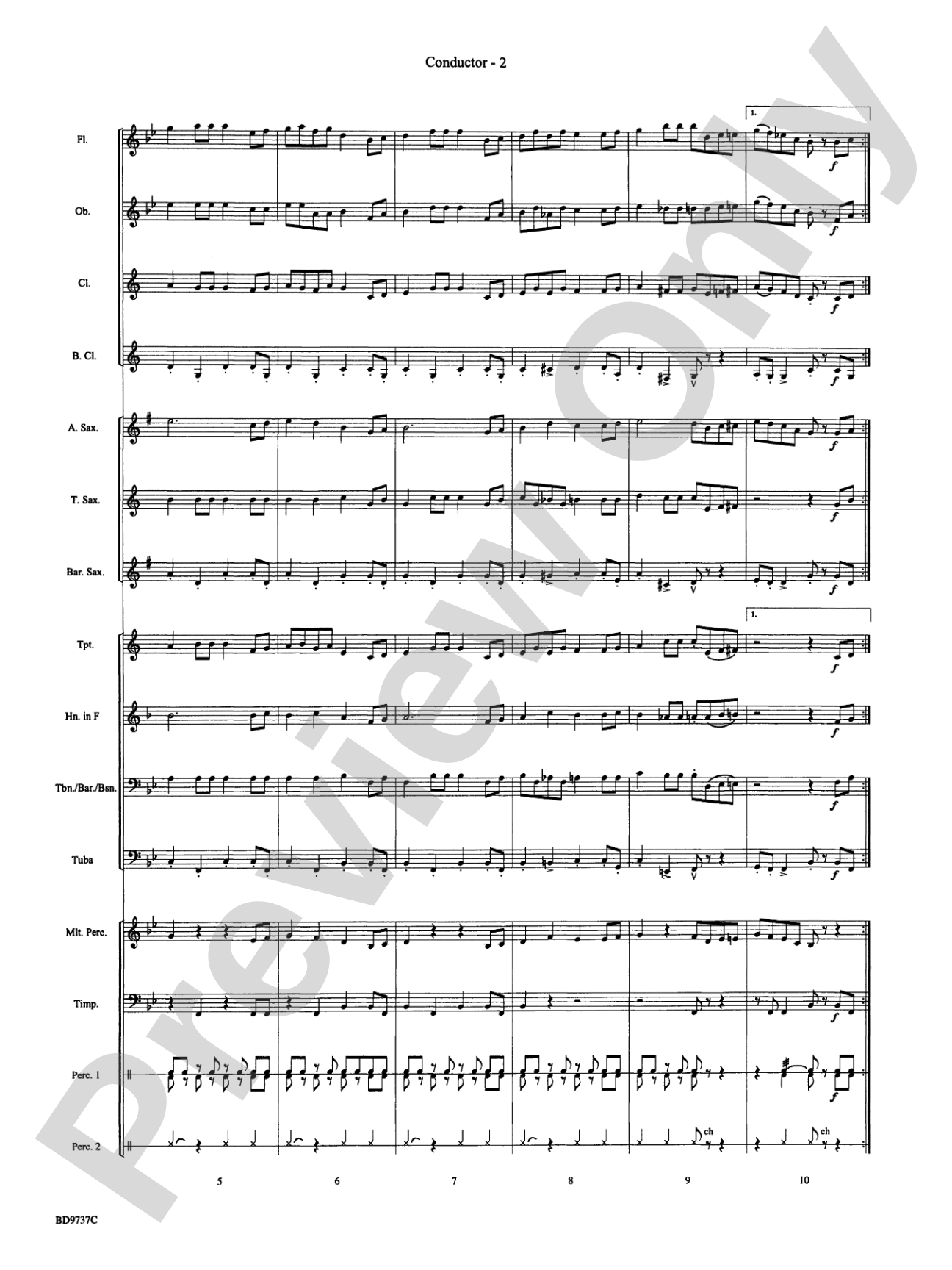
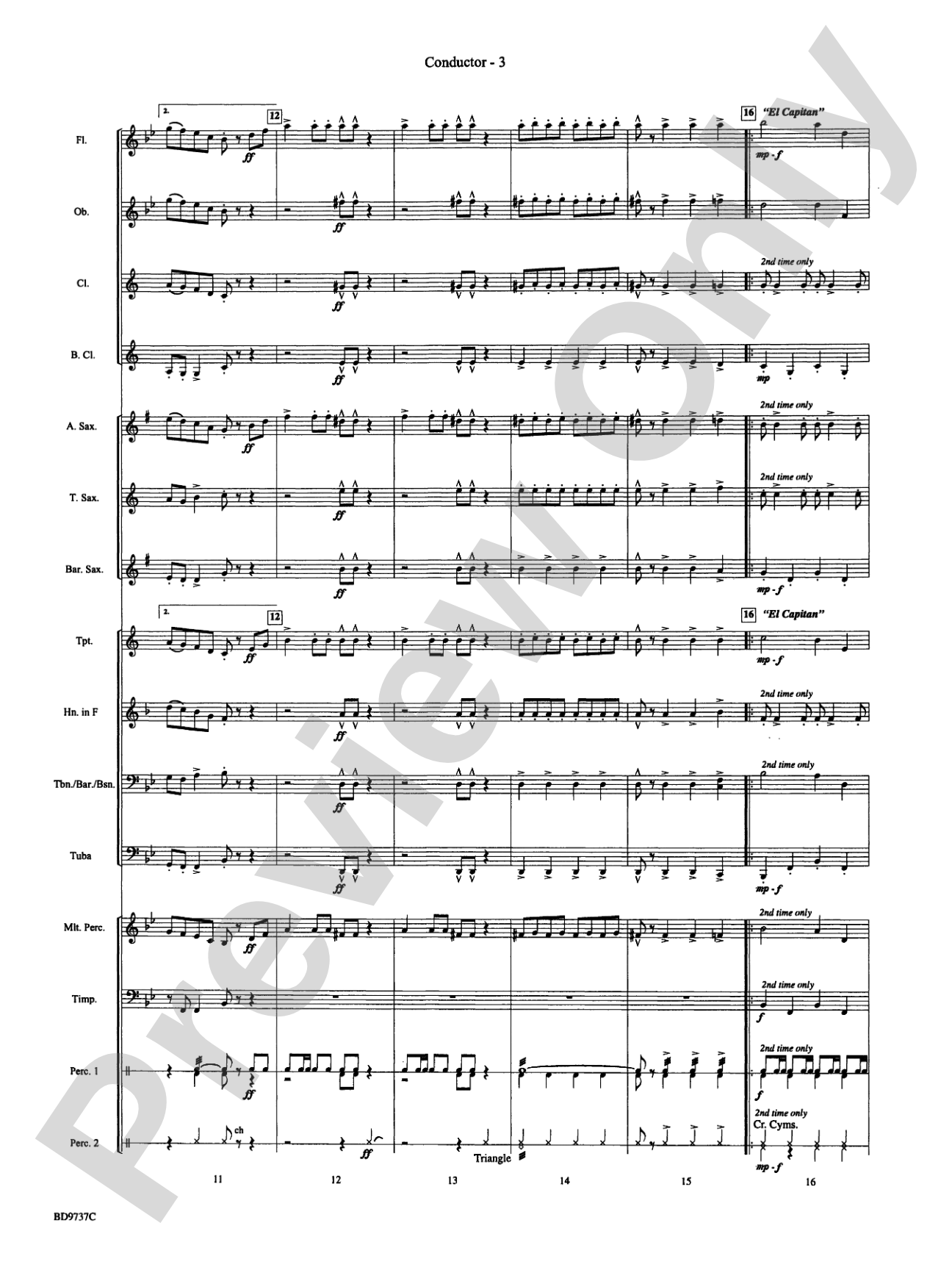
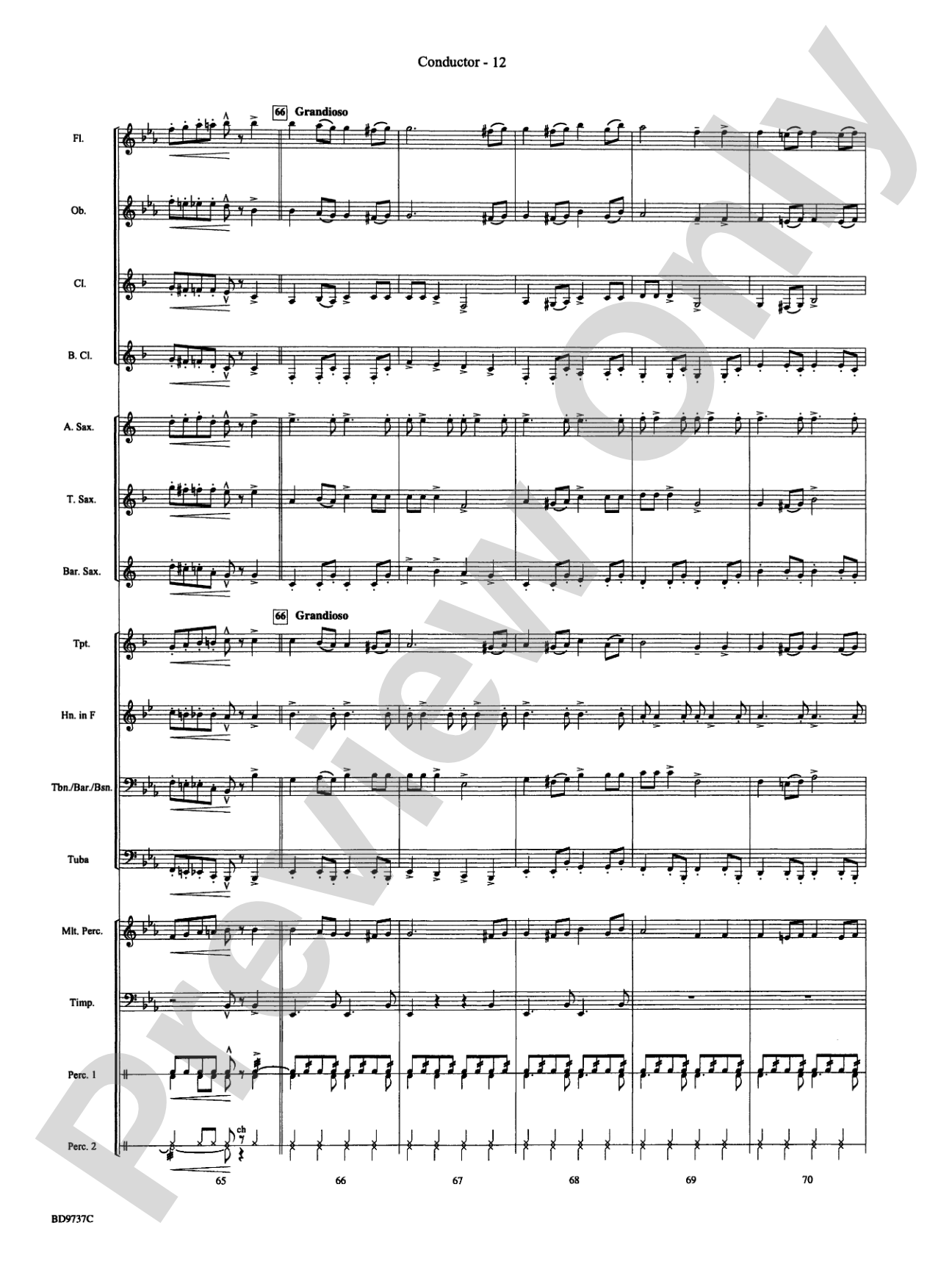
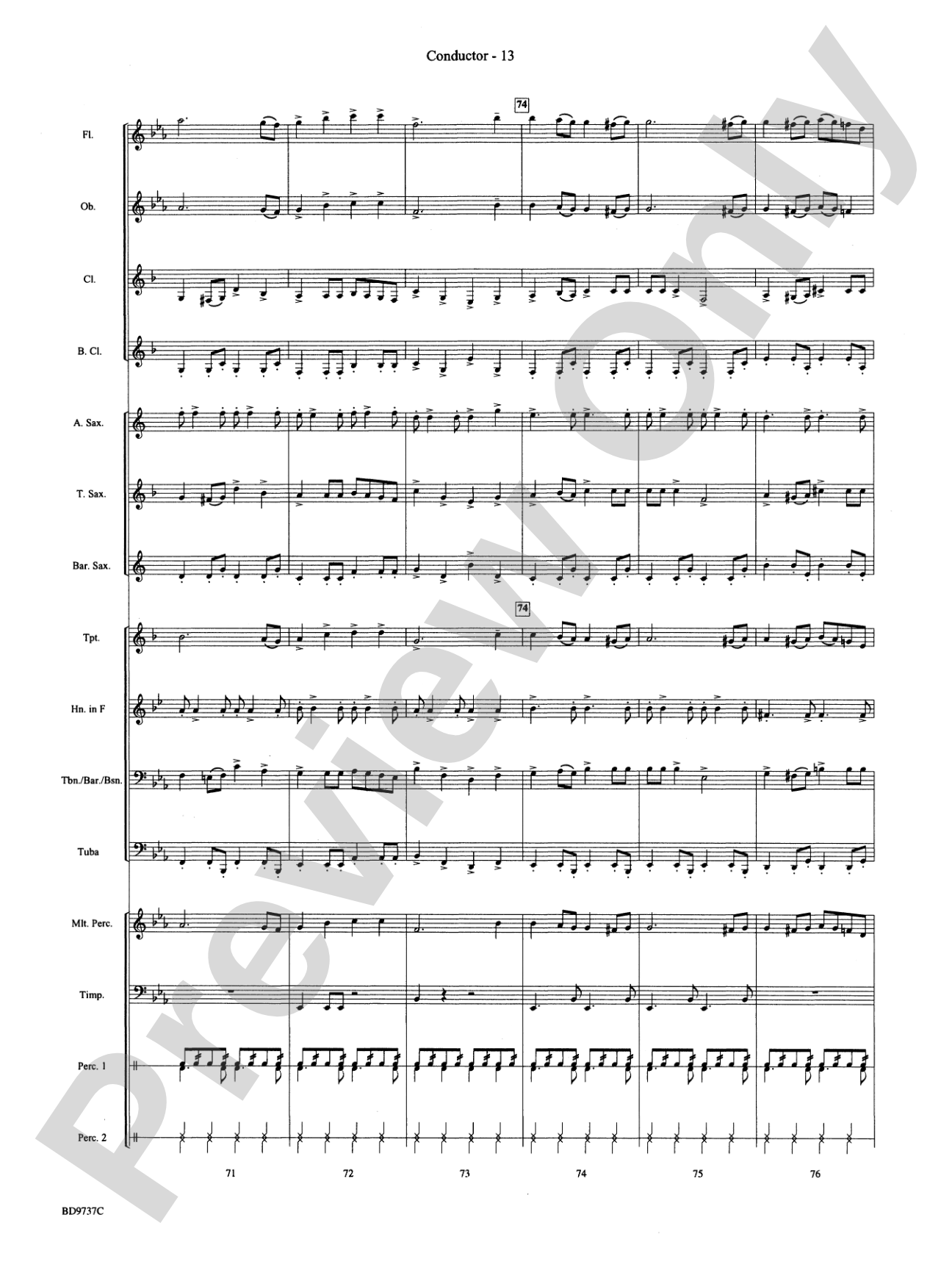
Four of the 'big ones' are here: El Capitan, High School Cadets, The Thunderer, and of course, Stars and Stripes Forever. Audiences love marches, particularly those that everybody knows! You will appreciate Larry Clark's arrangement; he has reduced the difficulty level but left plenty of Sousa to suit just about anyone. There is no way more enjoyable to close that all-important spring concert. (3:39)


Don't just read it, hear it, play along with it, and watch your students grow with it. In MakeMusic Cloud, Sousa - The March King: Concert Band Conductor Score & Parts comes alive with professional accompaniment, adjustable tempo, and built-in practice tools that turn solo practice into real progress.
Open in the Player
Jump straight in and assign it today.
Start Your Free Trial
Open this title and explore the full library in minutes.
Sample Audio
No sample audio found.
Sample Video
No sample videos found.
Additional Details
Series:
Belwin Beginning Band
Publisher:
Alfred Music
Page Count:
234
SKU:
00-PK-0002069
More about this title
About the Composer: John Philip Sousa
John Philip Sousa (1854-1932) remains the most performed American composer of concert band music. His marches defined a genre and established the concert band as a serious ensemble capable of moving audiences with patriotic fervor, memorable melody, and crystal-clear structure. His influence on American musical culture endures through institutions, curricula, and concert halls nationwide.
Sousa's compositional genius lay in his gift for accessible, sophisticated melody paired with strong harmonic progressions and brilliant orchestration. He understood how to write for amateur and professional ensembles alike, crafting parts that challenged musicians without overwhelming them. His marches remain cornerstones of the concert band repertoire and essential touchstones for any conductor building a program.
Why we love this
This collection delivers four Sousa standards that audiences recognize immediately, yet the Grade 1 arrangement by Larry Clark keeps the technical demands reasonable for developing bands. You get the prestige and emotional payoff of genuine Sousa without sacrificing rehearsal efficiency or student confidence. It's an ideal closer for a spring concert because it combines familiarity with musicianship and leaves audiences on an undeniable high.
What to expect
Patriotic, spirited, and undeniably joyful. Each march carries the brassy confidence and rhythmic clarity you associate with American band tradition. The melodies are memorable enough that audiences leave humming, yet the harmonies and counterpoint reward attentive listening.
Who it's for
Concert bands in grades 1-3 seeking accessible, high-impact repertoire for festival or concert performance. Directors need music that meets developing musicians where they are technically while delivering genuine Americana and audience engagement.
How to get the most out of it
- Maintain steady, confident tempo throughout. Sousa marches thrive on rhythmic precision and forward momentum; dragging the beat drains their energy and appeal.
- Balance the melody line clearly in the upper woodwinds while ensuring the countermelody (often in the lower reeds and brass) remains audible. Both voices matter equally in Sousa's design.
- Shape phrases with subtle dynamic swells that match the natural rise and fall of the melody. Avoid sudden jumps; Sousa's rhetoric builds through incremental growth.
- Pay special attention to the transitions between marches within this medley. Make them clean and decisive so the listener feels the shift from one piece to the next.
How to use it
Reserve this medley for the final spot on a spring concert program. The combination of four familiar titles creates a celebratory arc that sends the audience home in high spirits. It also pairs well after more experimental or challenging contemporary work, providing a satisfying musical anchor that reassures audiences about the band's core strengths.
Skills your students will build
- Sustaining even tone across extended phrases without pitch deterioration
- Reading and balancing two independent melodic lines (melody and countermelody) simultaneously
- Coordinating rhythmic precision across all sections in march style (crisp articulation, unified releases)
- Responding to subtle dynamic shaping and conducting cues in familiar repertoire
- Managing the technical demands of key changes within a medley structure