
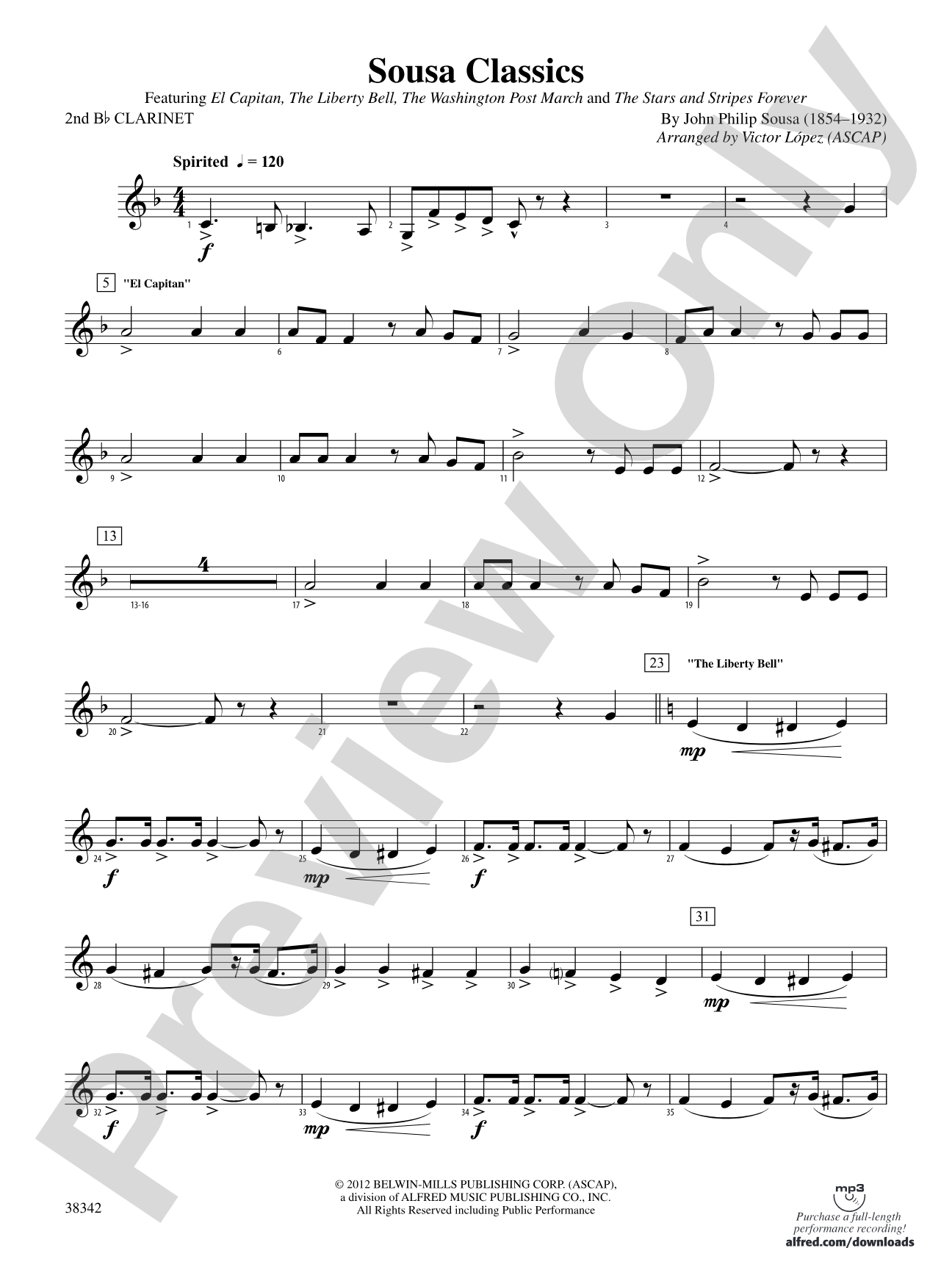

Sousa Classics: 2nd B-flat Clarinet
Featuring: El Capitan / The Liberty Bell / The Washington Post March / The Stars and Stripes Forever
By John Philip Sousa / arr. Victor López
Grade: 2 (Easy)
Item: 00-PC-0015435_C2
$3.00
Pickup currently not available
Description
Written for the Young Band series and arranged by Victor López, this piece features "El Capitan," "The Liberty Bell," "The Washington Post March," and "The Stars and Stripes Forever"---four trio sections of John Philip Sousa's greatest marches. You can never go wrong with a march, and this dynamic arrangement has four of Sousa's best. Bravo! (2:30)


Don't just read it, hear it, play along with it, and watch your students grow with it. In MakeMusic Cloud, Sousa Classics: 2nd B-flat Clarinet comes alive with professional accompaniment, adjustable tempo, and built-in practice tools that turn solo practice into real progress.
Open in the Player
Jump straight in and assign it today.
Start Your Free Trial
Open this title and explore the full library in minutes.
Sample Audio
1
Audio File
--:--
0:00
0:00
Sample Video
Additional Details
Series:
Belwin Young Band
Publisher:
Alfred Music
Page Count:
244
SKU:
00-PC-0015435_C2
More about this title
About the Composer: John Philip Sousa
John Philip Sousa (1854–1932) fundamentally shaped American concert band music and remains its most performed composer. His mastery of march form, gift for memorable melody, and understanding of wind instrument sonorities created works that endure in rehearsal rooms and concert halls worldwide. Sousa's marches have become the backbone of band repertoire precisely because they balance accessibility with musical substance; they teach musicians phrasing, precision, and ensemble blend while remaining genuinely enjoyable to perform.
Beyond marches, Sousa was a skilled conductor and educator who elevated the concert band from an amateur ensemble to a serious musical force. His influence on American music education is unmeasured—generations of student musicians have cut their teeth on his works, and there is no band director who hasn't turned to Sousa when the ensemble needs confidence, joy, and musical integrity in equal measure.
Why we love this
Victor López's arrangement gives you four iconic marches without overwhelming a developing band. Grade 2 students encounter immediate success with familiar, singable themes while building foundational skills in ensemble balance, style, and rhythmic precision. Programming Sousa signals to your community that you take musicianship seriously while keeping rehearsals energized.
What to expect
These marches pulse with American optimism and pageantry. The melodies are grand yet approachable, the rhythms propulsive and clean, and the harmonic language clear enough for young musicians to hear how the parts fit together. Performing Sousa feels like being part of a musical tradition that matters.
Who it's for
Young bands working at Grade 2 level who want to perform recognizable, musically substantial literature without excessive technical demands. This arrangement serves directors seeking repertoire that builds ensemble discipline, teaches historical style, and guarantees audience recognition in a single package.
How to get the most out of it
- Shape each march's trio section with intentional dynamic contours. These melodies carry the piece; let them breathe and sing rather than pushing through at uniform volume.
- Anchor the inner voices (clarinets, saxophones, trombones) in the harmonic framework. When they lock rhythmically and tonally, the entire ensemble sits together.
- Match articulation language across sections playing the same rhythmic figures. Consistency in tonguing style creates polish and unified phrasing.
- Bring out counter-melodies in the lower reeds and brass. Sousa's marches are constructed in layers; letting secondary lines emerge adds texture and interest.
How to use it
Open a spring concert or festival appearance with this collection to establish musical confidence and audience goodwill from the opening downbeat. The four contrasting trio melodies give you substantial concert material while the Grade 2 level keeps preparation time manageable alongside more challenging works on your program.
Skills your students will build
- Marchlike articulation and phrasing (separation in running passages, legit singing of lyrical sections)
- Inner voice independence and harmonic awareness (balance between melody and supporting lines)
- Ensemble rhythmic precision (synchronization across winds and percussion in syncopated figures)
- Concert band style and historical context (understanding foundational American wind literature)
- Dynamic shaping of themed material (pacing and crescendo/diminuendo within repeated sections)