
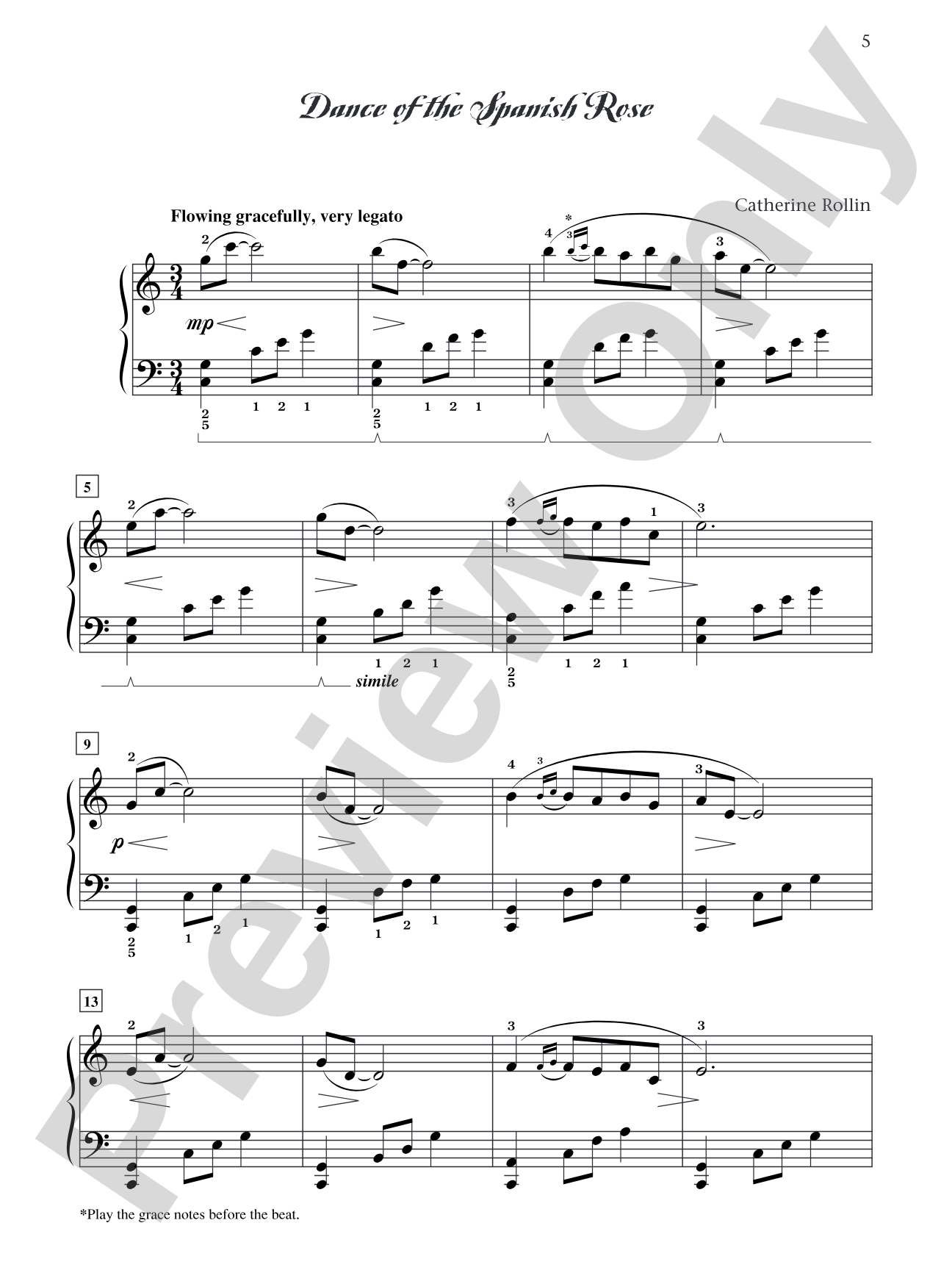

Sounds of Spain, Book 2: 7 Colorful Intermediate Piano Solos in Spanish Styles: Piano
7 Colorful Intermediate Piano Solos in Spanish Styles
By Catherine Rollin
Level: Intermediate
Item: 00-PB-0000532
$7.99
Pickup currently not available
Related Items
Sounds of Spain, Book 2: Piano Book |
$7.99
|
View |
Description
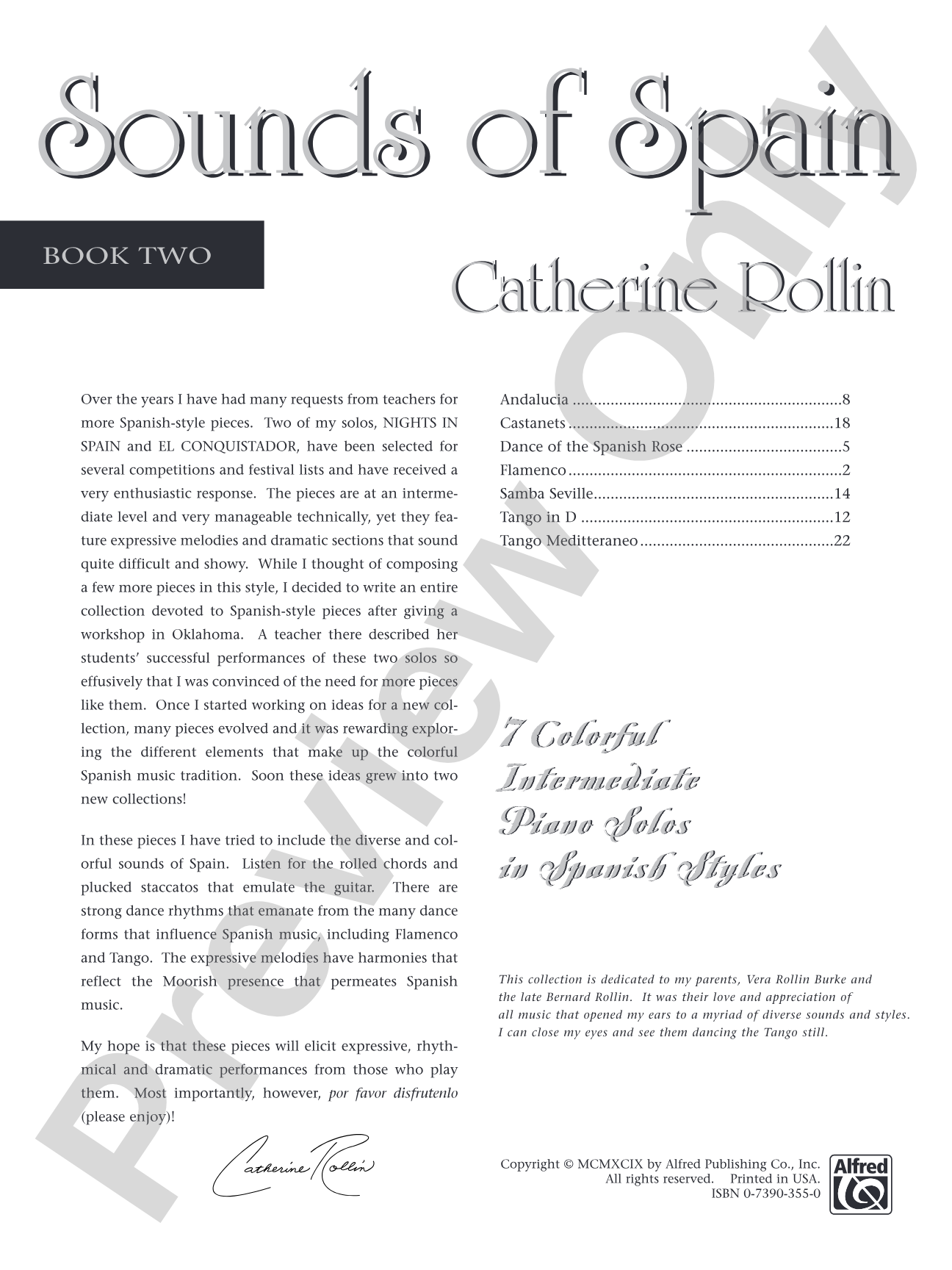
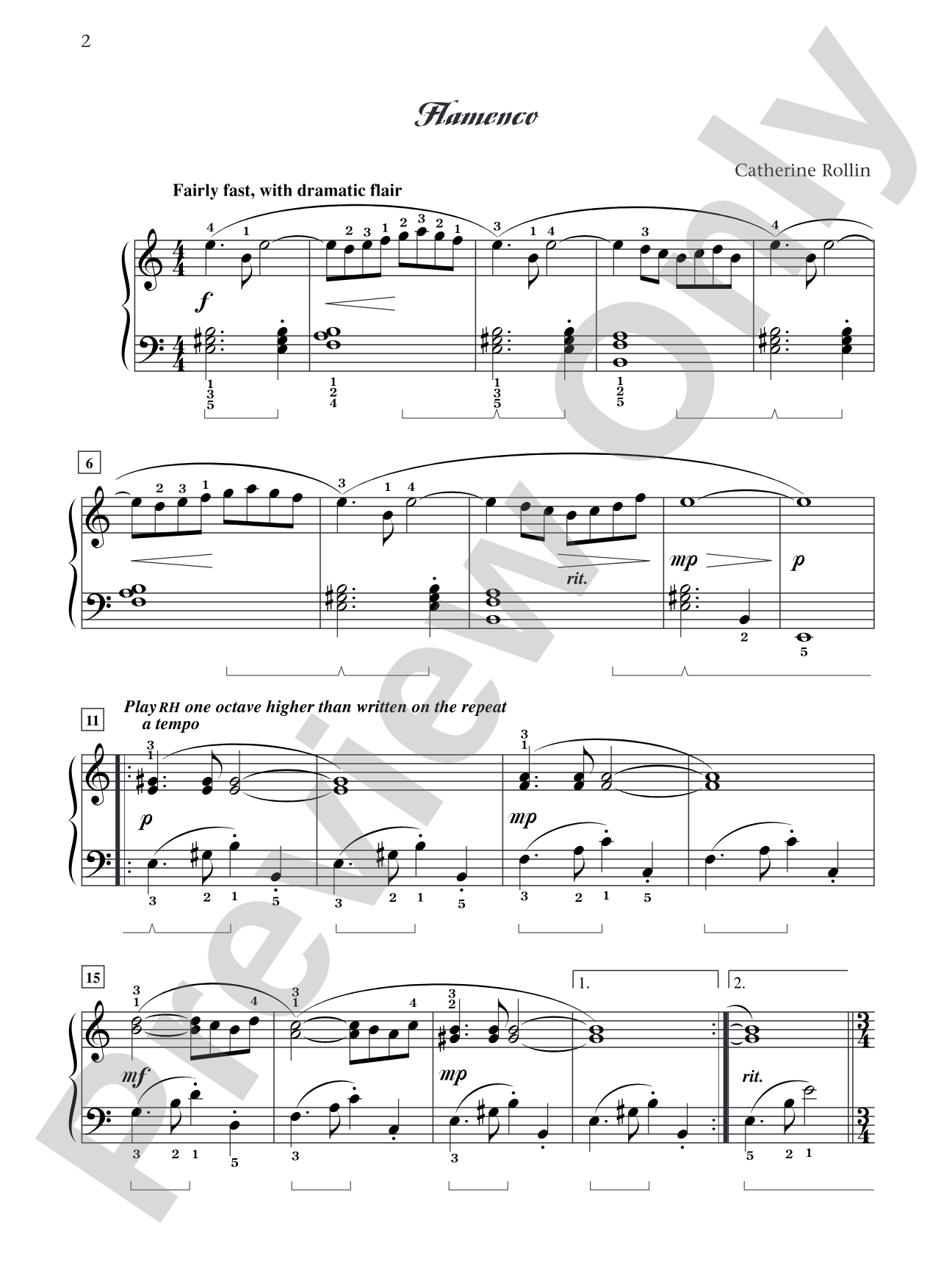
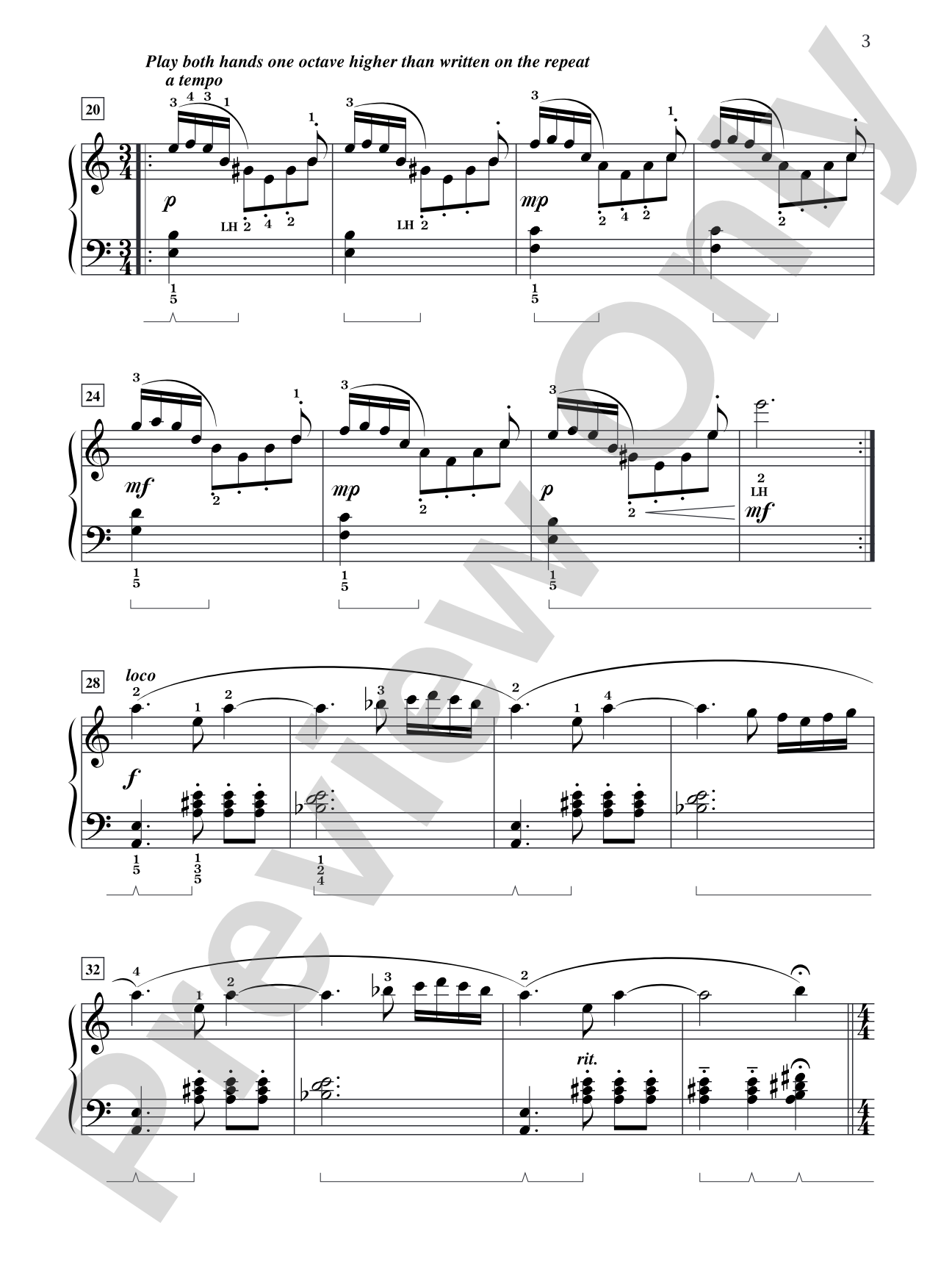
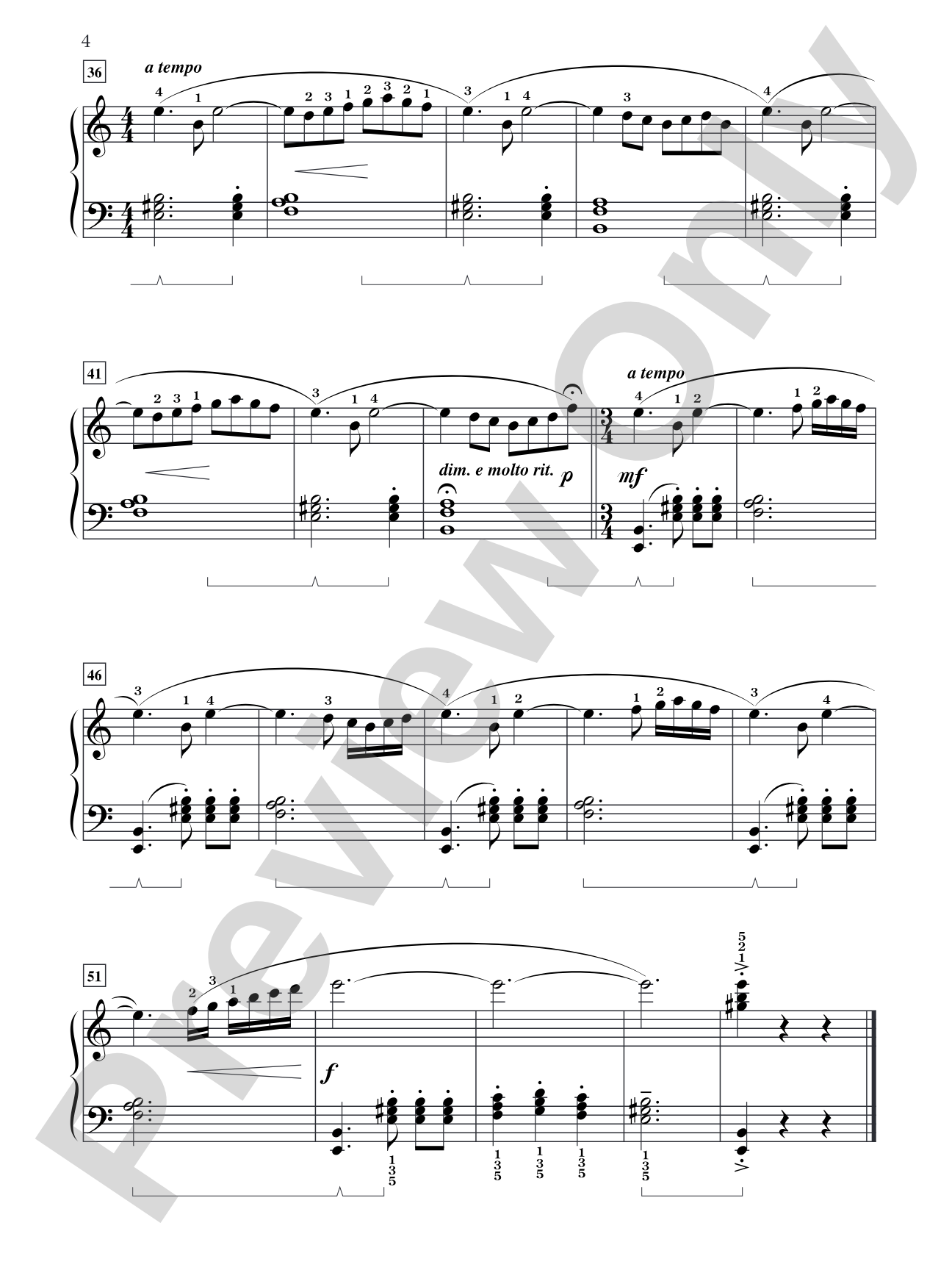
The precision of the tango . . . the rhythmic excitement of a flamenco guitarist . . . the clicking of wooden castanets . . . the whirling of great dancers. Such impressions of Spain are captured effectively by Catherine Rollin in this fantastic sequel to Sounds of Spain Book 1. Seven intermediate solos explore many of the diverse dance and harmonic elements that make up the colorful Spanish music tradition. All are very manageable technically, yet contain dramatic sections that sound difficult and showy. Great crowd-pleasers! A Federation Festivals 2020-2024 selection.


Sounds of Spain, Book 2: 7 Colorful Intermediate Piano Solos in Spanish Styles: Piano isn't in MakeMusic Cloud just yet...but it could be. Let us know you'd like to see it, and you'll help shape what comes next. In the meantime, start a free trial and dive into thousands of interactive titles your students can play along with today.
Request This Title
Tell us you want it.
Start Your Free Trial
Explore everything that's ready to play right now.
Sample Audio
No sample audio found.
Sample Video
No sample videos found.
Additional Details
Series:
Sounds of Spain
Publisher:
Alfred Music
Page Count:
24
SKU:
00-PB-0000532
More about this title
About the Composer: Catherine Rollin

Catherine Rollin is a composer and pianist whose work spans performance, pedagogy, and commissioning. She holds degrees from the University of Michigan and Oakland University School of Performing Arts, and has presented masterclasses in more than 200 cities across the United States, Canada, Japan, and Taiwan. Her students have won numerous prizes under her mentorship.
Rollin's compositions have earned recognition from MTNA, the Music Teachers National Association, the Michigan Music Teachers Association, and the National Federation of Music Clubs. She has been commissioned by Clavier Companion, MTNA, and the prestigious From the Pen to the Premiere series, and served as a judge for the MTNA Student Composition Competition and the Lynn Freeman Olson Composition Contest. Her ASCAP award-winning Museum Masterpieces series and her recent Steinway Society concert performance showcase her standing in both composition and performance.
Why we love this
Rollin understands intermediate pianists completely: the pieces sound impressive and exciting without demanding virtuosity. The Spanish idioms feel authentic (tango rhythms, flamenco color, rhythmic urgency) but remain technically accessible, making them ideal for students who want to play repertoire that translates to an audience as polished and sophisticated. These solos consistently land on festival programs because they reward solid practice with genuine dramatic payoff.
What to expect
Spain comes alive through rhythmic precision and harmonic richness. You'll feel the snap of castanets, the pulse of tango, and the whirling energy of flamenco dancers, all captured in music that sits comfortably under the hands while delivering dramatic, crowd-pleasing moments.
Who it's for
Intermediate pianists looking for approachable yet showy repertoire that captures authentic Spanish musical flavor. These solos work equally well for festival performances, recitals, or supplementary material in a lesson rotation; they appeal to students who appreciate rhythmic energy and colorful harmony over technical display.
How to get the most out of it
- Study the rhythmic patterns in isolation before layering them with melody; Spanish dance rhythms are the foundation that makes the harmonic elements land properly.
- Balance the dramatic sections by resisting the urge to push tempo; let the inherent drive of the rhythms carry the excitement rather than rushing.
- Exploit the clicking and rhythmic textures as percussion events; clarity in the left hand often matters more than singing tone in these styles.
- Reference the flamenco and tango traditions by listening to professional recordings; Rollin's notation captures the style, but hearing authentic performances will deepen your interpretation of articulation and rubato.
How to use it
Program individual solos from this collection as contrasting moments in a student recital, or feature the entire set as a thematic program exploring Spanish music. The pieces work well alongside classical and contemporary repertoire because their distinct character provides visual and sonic variety without demanding excessive ensemble time.
Skills your students will build
- Rhythmic accuracy in tango and flamenco patterns
- Harmonic color through Spanish modal and chromatic inflections
- Balance between rhythmic accompaniment and melodic line
- Stylistic interpretation of Latin American and Spanish dance forms
- Clarity and articulation in rapid rhythmic passages
- Dynamic contrast to create dramatic effect within an intermediate range