Sound Over All Waters Sheet Music Preview

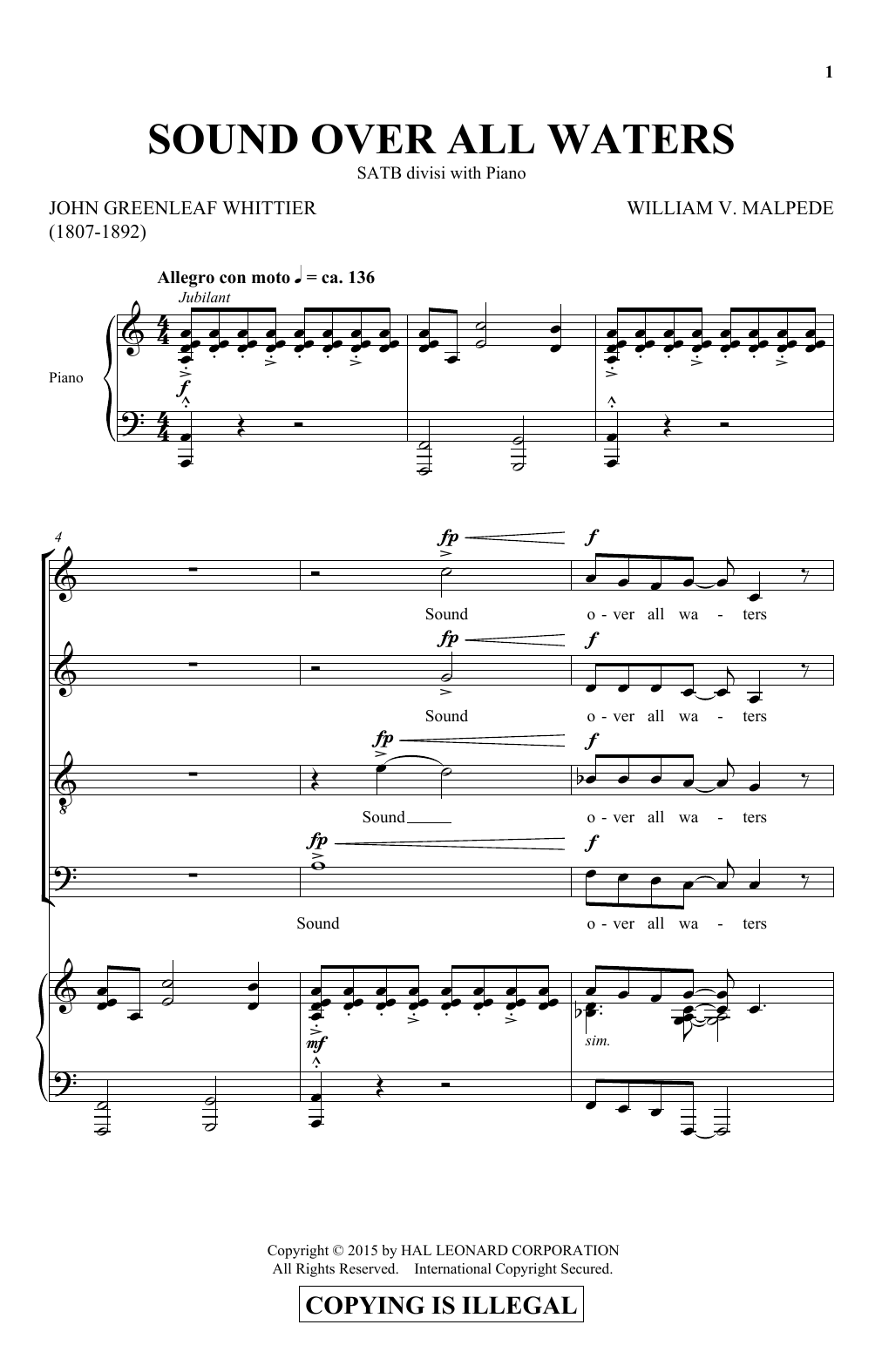
Sound Over All Waters: SATB Choral Octavo

By William V. Malpede / As performed by John Greenleaf Whittier

Item: 35-DS00322986

Digital Download
$2.99
Description

Sound Over All Waters: SATB Choral Octavo isn't in MakeMusic Cloud just yet...but it could be. Let us know you'd like to see it, and you'll help shape what comes next. In the meantime, start a free trial and dive into thousands of interactive titles your students can play along with today.

Sample Audio
No sample audio found.
Sample Video
Additional Details
Publisher: Hal Leonard
Page Count: 17
SKU: 35-DS00322986

More about this title

Why we love this

Malpede sets Whittier's text with genuine lyricism, avoiding the sentimentality that can plague nature poetry in choral music. The writing sits comfortably for voices while maintaining textual clarity, a balance that rewards singers who care about both line and words.

What to expect

Water imagery unfolds in sound. The piece moves with quiet contemplation, inviting listeners into moments of reflection without demanding emotional theatricality. Harmonic motion supports the text's meditative quality rather than interrupting it.

Who it's for

Choirs with solid fundamentals in blend and intonation will find this an accessible addition to a secular concert program. It works equally well for collegiate and upper-level high school ensembles seeking repertoire that values musicality over technical flash.

How to get the most out of it

  • Treat the piece as a song first. Whittier's imagery deserves space to breathe; resist the urge to rush the harmonic progressions.
  • Balance the four parts carefully in homophonic sections. Even distribution of tone matters more than dynamic swells.
  • Let soloists or section leaders inhabit the melodic passages if your singers aren't yet comfortable with sustained legit singing.

How to use it

Pair this with other nature-inspired works for a thematic concert block, or use it as a bridge between heavier secular fare and lighter closing numbers. Its moderate length and performance demands make it ideal for mid-season programming when singers have developed consistency but before preparing concert repertoire becomes consuming.

Skills your students will build

  • Legit singing and sustained breath control in longer phrases
  • Part independence within homophonic textures
  • Text painting and interpretive choices informed by Romantic-era poetry
  • Ensemble blend and balance across four voice parts
  • Sensitivity to harmonic color and voice leading

You May Also Like