
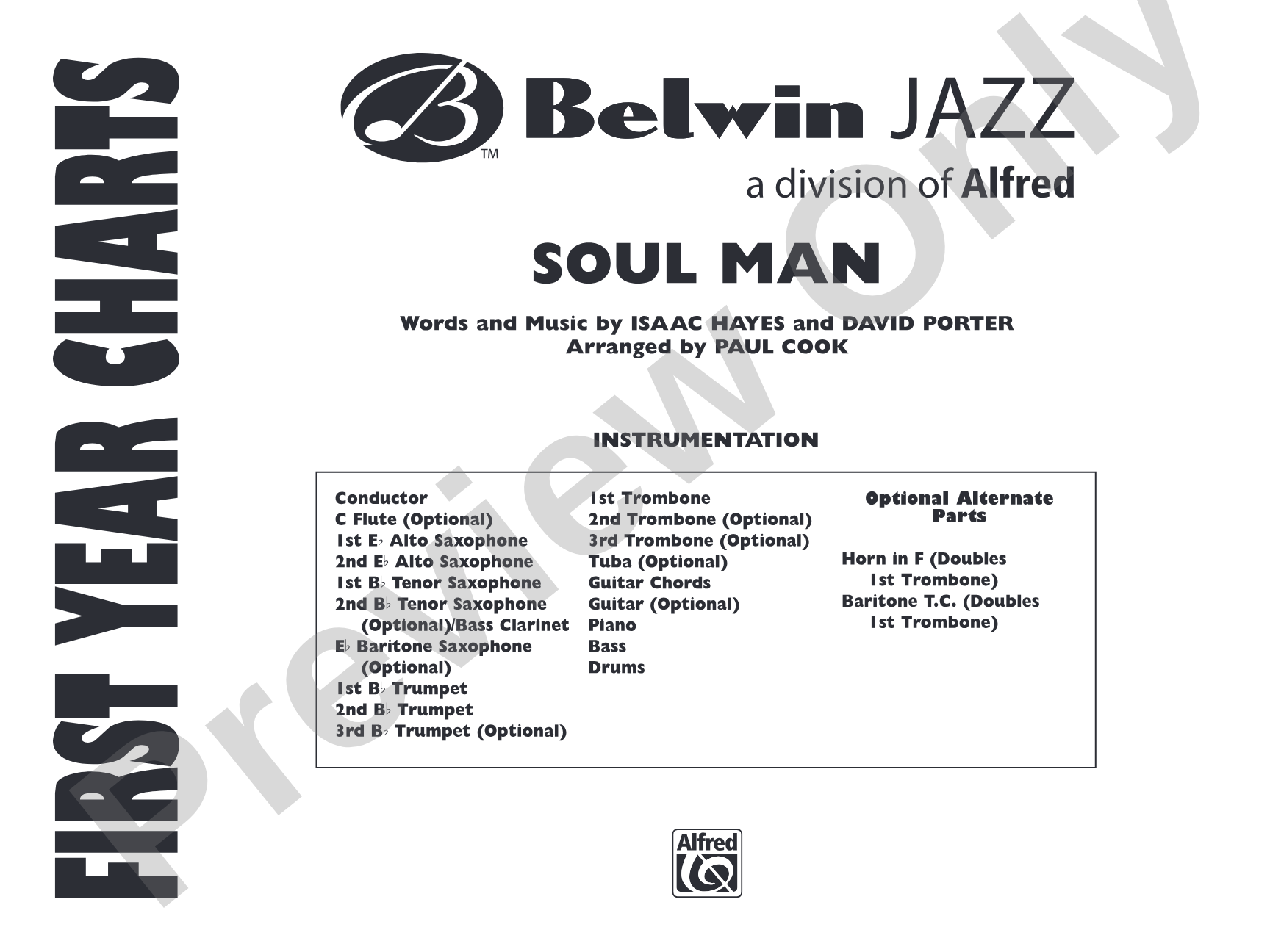

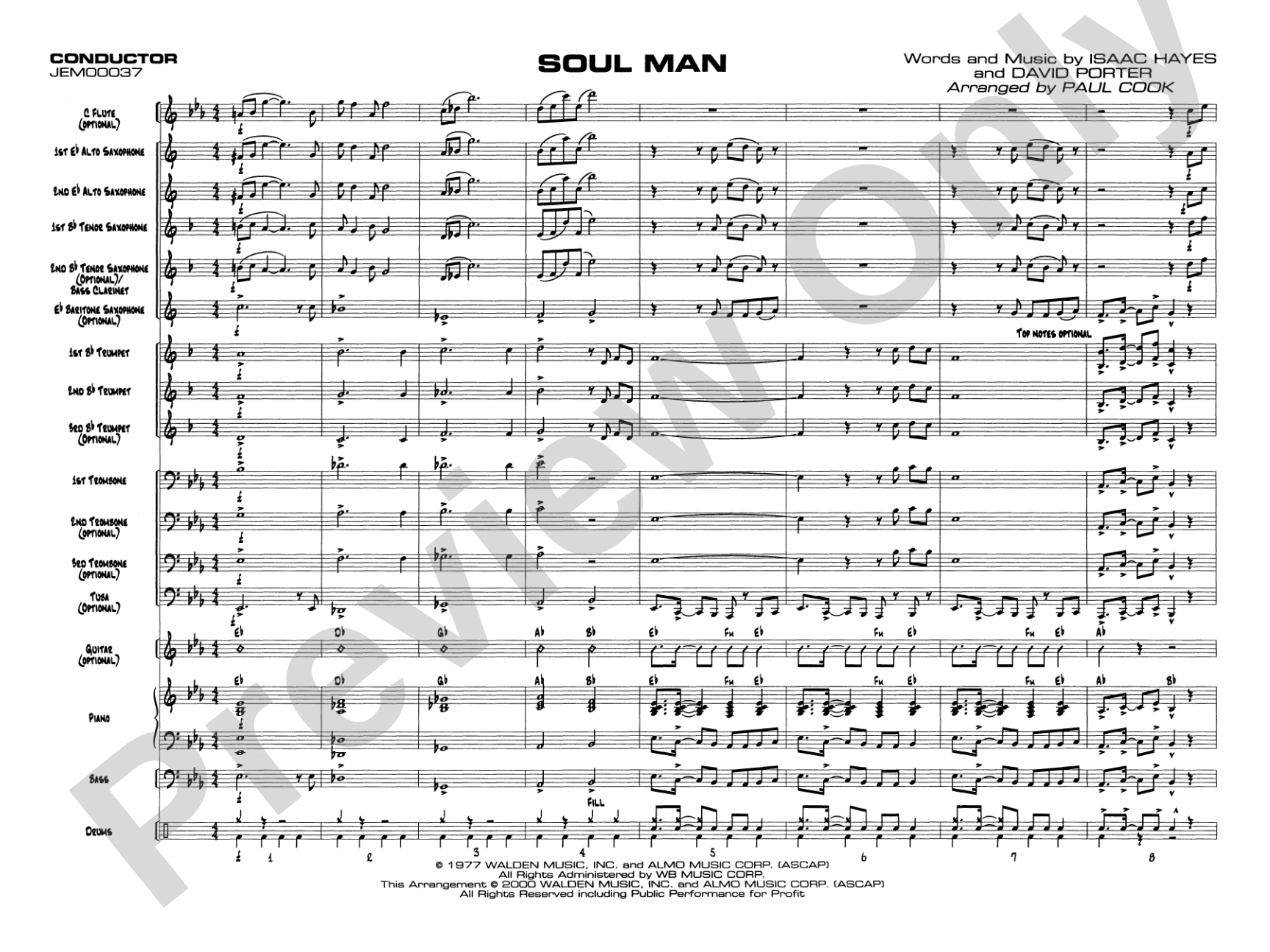
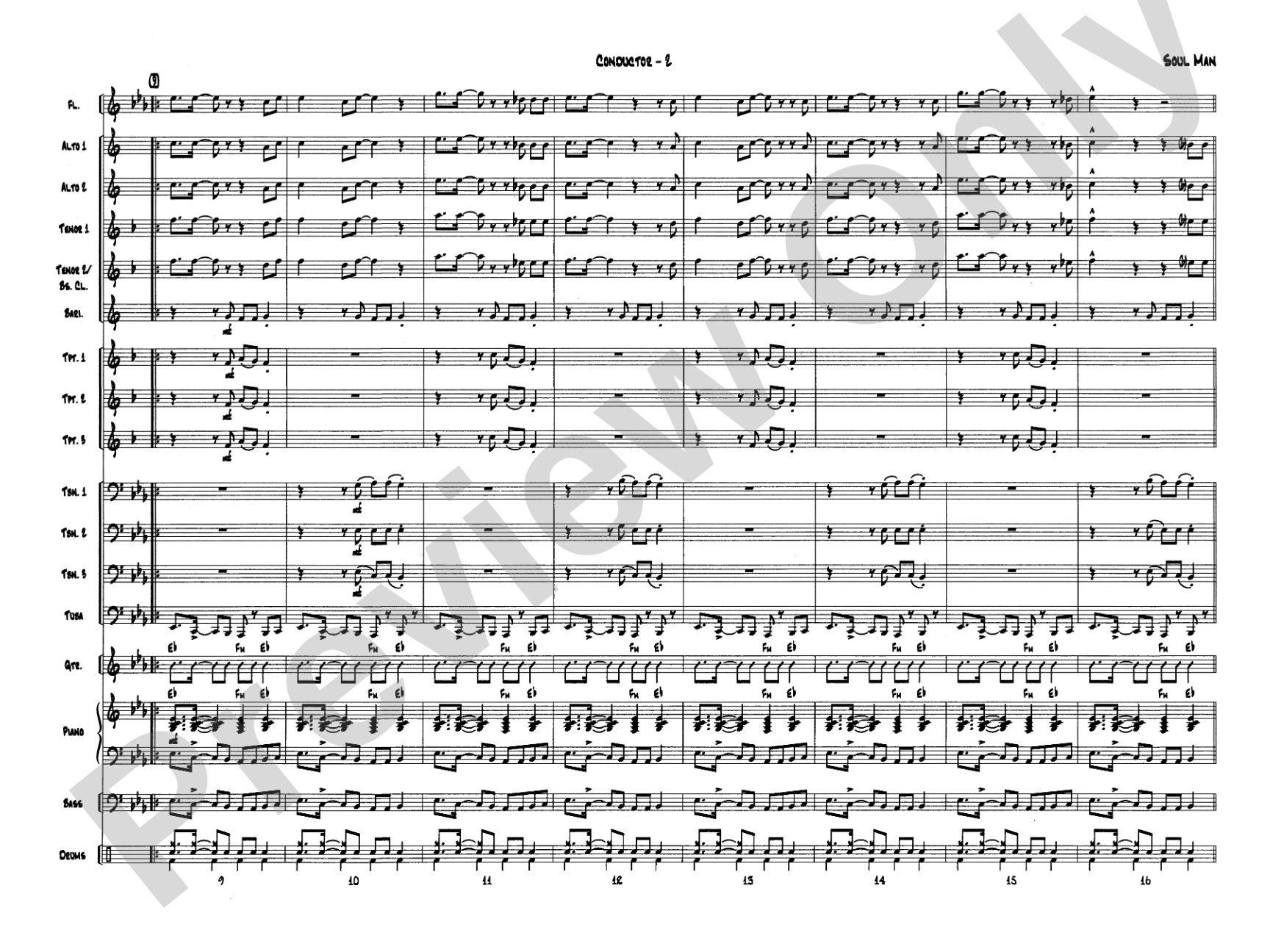
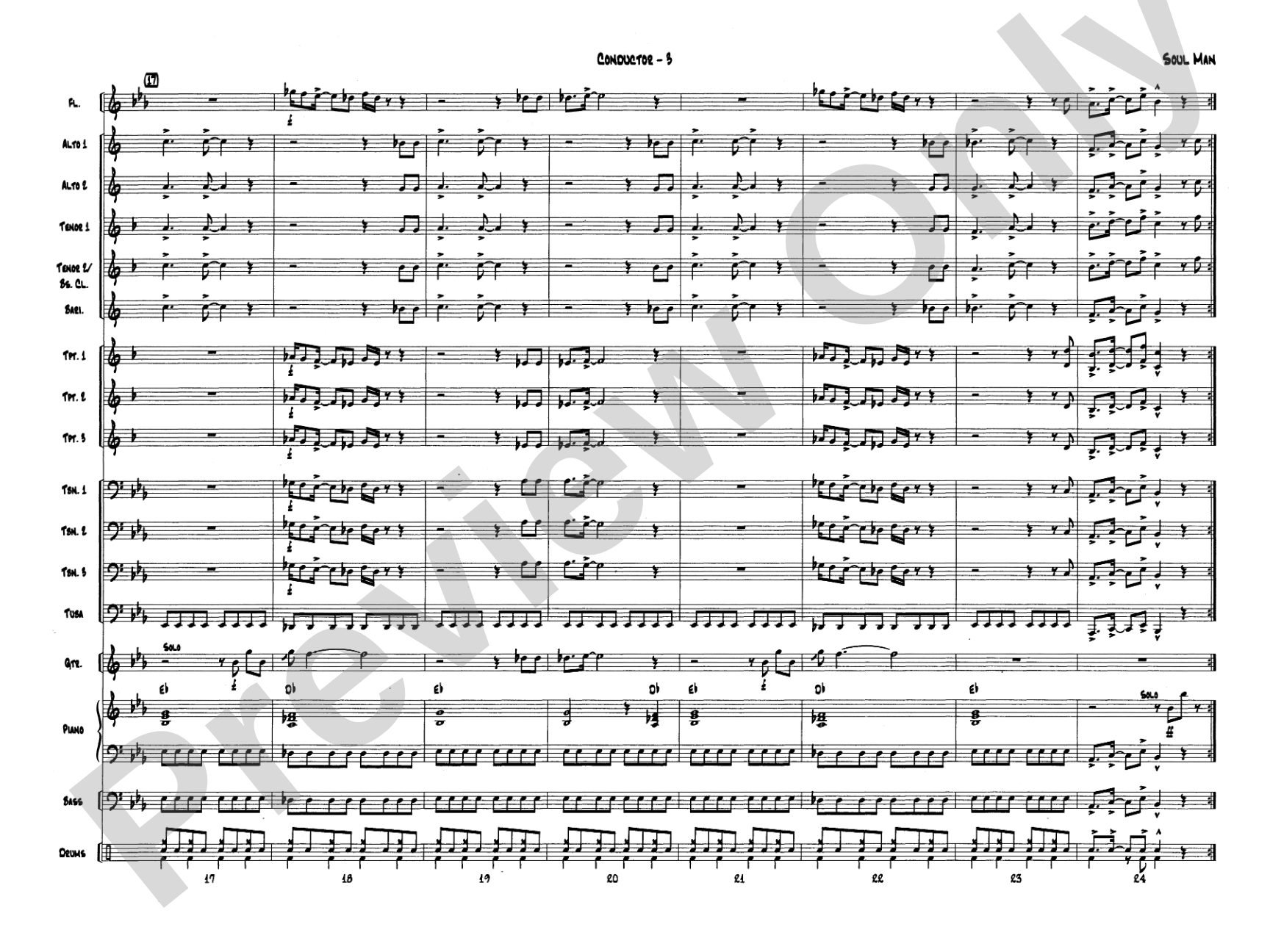
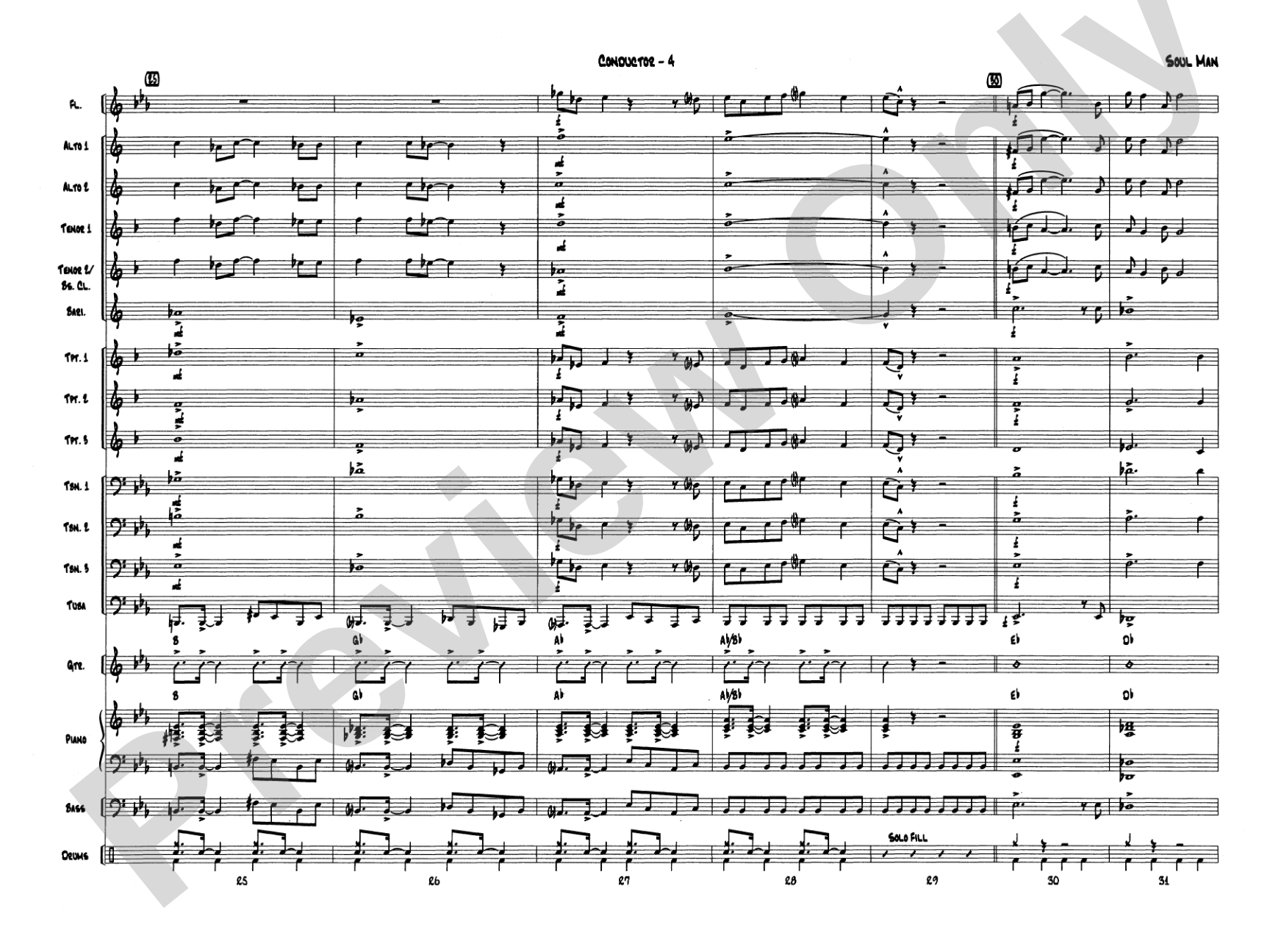
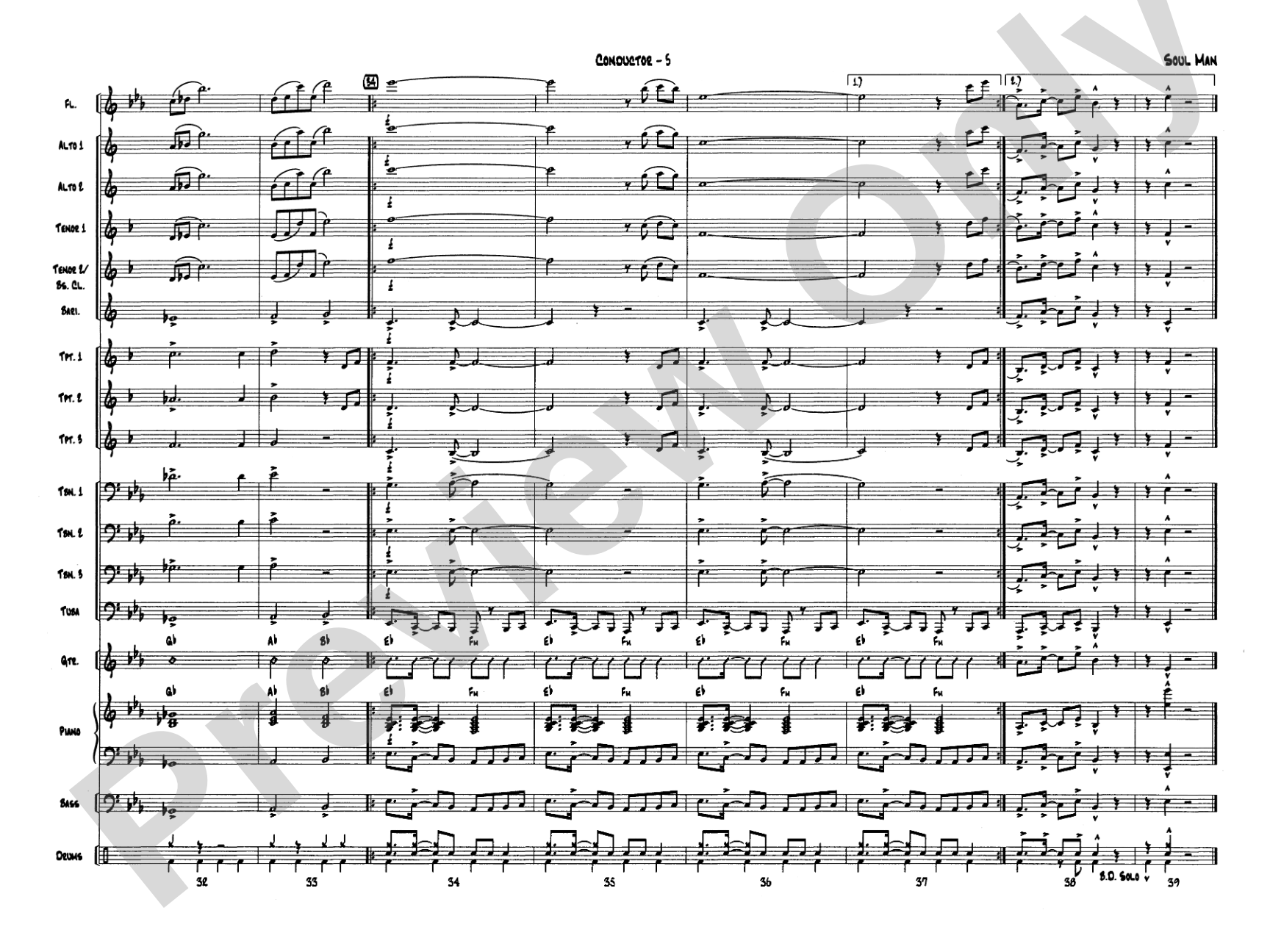


Soul Man: Jazz Ensemble Conductor Score & Parts
Arr. Paul Cook
Grade: 1 (Easy)
Item: 00-PK-0002473

$42.00
One moment…
Description
Your first-year players will really get into this soul tune. A nice change of pace for the concert setting, this chart stands out with its infectious rhythm pattern. Plenty of unison, easy brass ranges (trumpet to D and trombone to E-flat), straight-ahead ensemble work, and a traditional rock feel make this modern classic a pleasure and a breeze to rehearse and perform. It's guaranteed the audience will appreciate this tune. Enjoy!


Don't just read it, hear it, play along with it, and watch your students grow with it. In MakeMusic Cloud, Soul Man: Jazz Ensemble Conductor Score & Parts comes alive with professional accompaniment, adjustable tempo, and built-in practice tools that turn solo practice into real progress.
Open in the Player
Jump straight in and assign it today.
Start Your Free Trial
Open this title and explore the full library in minutes.
Sample Audio
1
Audio File
--:--
0:00
0:00
Sample Video
No sample videos found.
Additional Details
Series:
First Year Charts for Jazz Ensemble
Publisher:
Alfred Music
Page Count:
64
SKU:
00-PK-0002473
More about this title
Why we love this
Paul Cook has written an arrangement that respects the soul and groove of the original without overwhelming young players. The unison writing and conservative brass ranges mean your section leaders can focus on locking in the rhythm rather than wrestling with high passages, and the straightforward ensemble work lets everyone feel like they're contributing to something that swings.
What to expect
Soul Man grooves with an infectious, toe-tapping energy that comes from its simple, effective rhythm pattern. The arrangement feels modern and relatable, with the kind of straightforward swing that makes young players feel like they're playing something real and current, not just a textbook exercise.
Who it's for
First-year jazz ensemble students who are building confidence with ensemble blend and rhythm. This is an ideal opener for groups new to jazz repertoire because the accessible ranges, generous unison writing, and familiar tune remove barriers to making music sound cohesive.
How to get the most out of it
- Lock the rhythm section (drums, bass, guitar if available) first. The infectious rhythm pattern is the backbone; once the groove is solid, everything else falls into place.
- Emphasize the straight-ahead rock feel in articulation. Avoid over-legato phrasing in the unison passages; crisp attacks will make the tune sit better in the pocket.
- Balance the melody against the accompanying parts so the tune breathes. Young ensembles often play the whole arrangement at one dynamic level; shaping the dynamics around the head and sections will keep the audience engaged.
How to use it
Use this early in the year as a concert centerpiece or as a palate cleanser between more challenging pieces. It works especially well on programs with younger or newer ensembles because the tune itself carries the performance; audiences connect with the recognizable melody and upbeat groove, and your students will feel the reward of a genuinely enjoyed performance.
Skills your students will build
- Locking into a groove and maintaining consistent tempo with a rhythm section
- Playing unison passages with blend and articulation consistency
- Reading and performing straight-ahead jazz articulation and feel
- Balancing ensemble texture and shaping dynamic contour in jazz voicings