Soul Express: B-flat Tenor Saxophone Sheet Music Preview

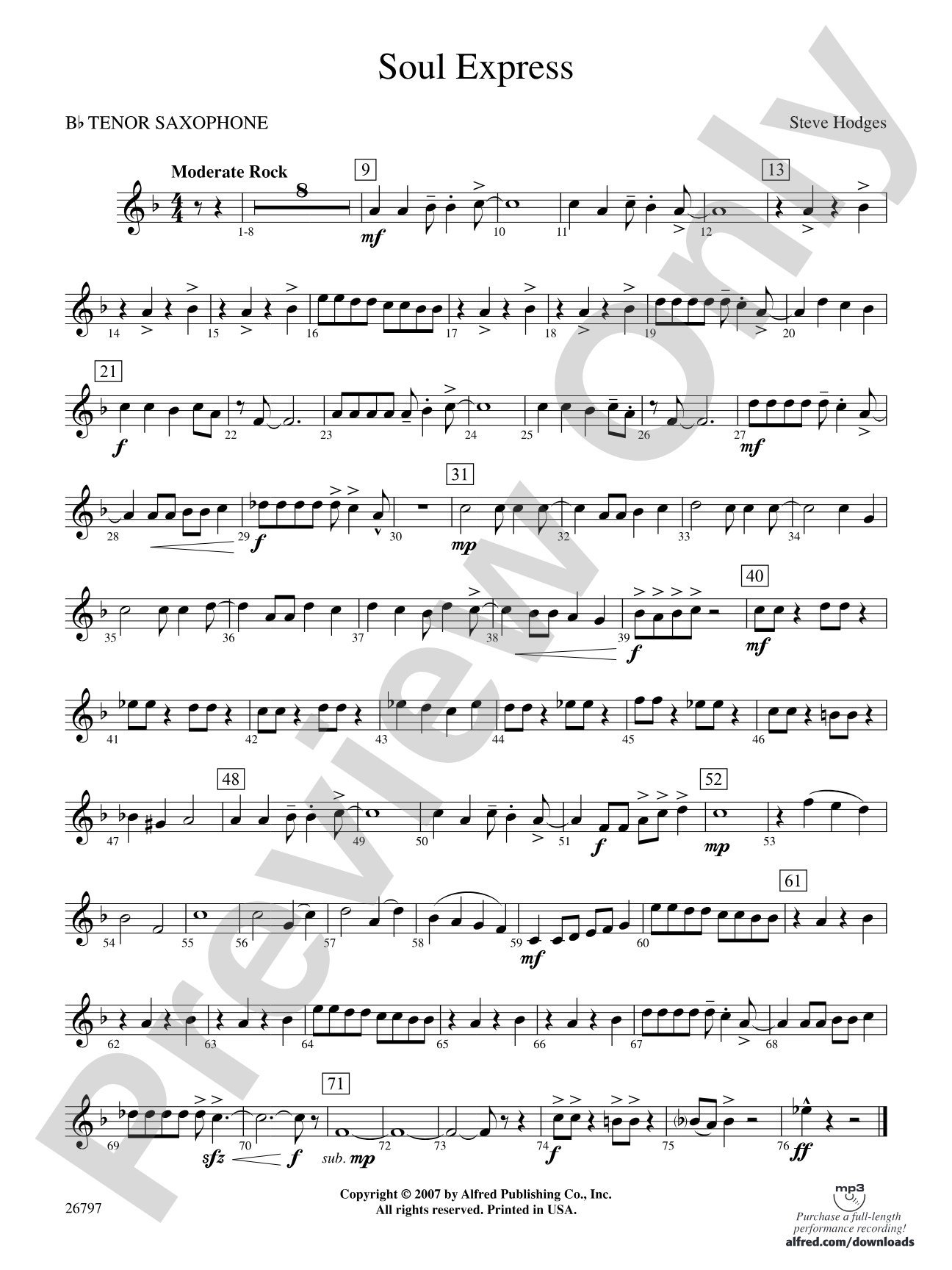
Soul Express: B-flat Tenor Saxophone

By Steve Hodges

Grade: 1.5 (Easy)

Item: 00-PC-0001235_TX1

Digital Download
$3.00
Description
A catchy clarinet theme opens this fun, yet effective piece with a little bit of soul mixed with a little bit of gospel rock. Everyone gets involved with the melodies and the active bass line provides a solid foundation for the themes. This piece will be a guaranteed crowd-pleaser! This title is available in MakeMusic Cloud.

Don't just read it, hear it, play along with it, and watch your students grow with it. In MakeMusic Cloud, Soul Express: B-flat Tenor Saxophone comes alive with professional accompaniment, adjustable tempo, and built-in practice tools that turn solo practice into real progress.

Sample Audio
0:00
0:00
Sample Video
Additional Details
Series: Challenger Band Series
Publisher: Alfred Music
Page Count: 61
SKU: 00-PC-0001235_TX1

More about this title

About the Composer: Steve Hodges

Steve Hodges

Steve Hodges holds degrees from Western Oregon University (Bachelor of Science) and Central Washington University (Master of Music Education). After four decades directing bands, choirs, and small ensembles across public school systems, he transitioned to full-time composition. Since 1986, he has published over 120 concert band works through Alfred Music, along with choral arrangements via Staff Music and Shawnee Press.

His compositions have appeared at festivals and state conventions worldwide, with commissions from honor bands and schools spanning Virginia, Iowa, Winnipeg, British Columbia, Oregon, Washington, and North Carolina. His music has also been featured on TBS and ESPN cable television. Hodges holds membership in ASCAP and continues to reside in The Dalles, Oregon, where he remains active in community music alongside his wife, Teddie. The joy of hearing his grandchildren perform his compositions in their school bands stands as a particular highlight of his career.

Why we love this

Hodges writes for the conductor who needs a piece that lands immediately with audiences and musicians alike. The soul and gospel-rock flavor elevates what could be a simple novelty into something genuinely engaging, while the Grade 1.5 difficulty ensures every section gets meaningful material to play rather than padding.

What to expect

The piece opens with infectious clarinet charm before blooming into a groove rooted in soul and gospel rock. There's a light-hearted confidence throughout, yet the active bass line and full ensemble involvement keep it musically substantial rather than disposable.

Who it's for

This score and parts set works for any concert band program seeking accessible, energetic repertoire that excels at pops concerts, community performances, or end-of-year programs. Grade 1.5 bands will find it challenging enough to develop musicianship without overwhelming developing musicians.

How to get the most out of it

  • Let the opening clarinet solo breathe with slight rubato before the ensemble locks in; this moment sells the entire piece to your audience.
  • Emphasize the rhythmic precision of the bass line rather than drowning it out. Its active foundation is what makes the melodies soar.
  • Shape the energy dynamically through the form instead of playing at one volume throughout. The soul element thrives on subtle dynamic conversation between sections.
  • Balance the novelty aspect with musical intent. This isn't a joke piece; treat the rock groove and gospel inflections as legitimate stylistic choices.

How to use it

Position this as a crowd-pleaser in mixed programs where you want strong contrast to more classical selections. Its style and accessibility make it ideal for pops concerts, community outreach performances, or as a second-half opener to lift energy after heavier repertoire.

Skills your students will build

  • Playing with groove and rhythmic precision in a rock/gospel style
  • Balancing melody against active harmonic and rhythmic accompaniment
  • Developing awareness of sectional roles and their musical function
  • Sustaining energy and ensemble cohesion through novelty-style performance

You May Also Like