
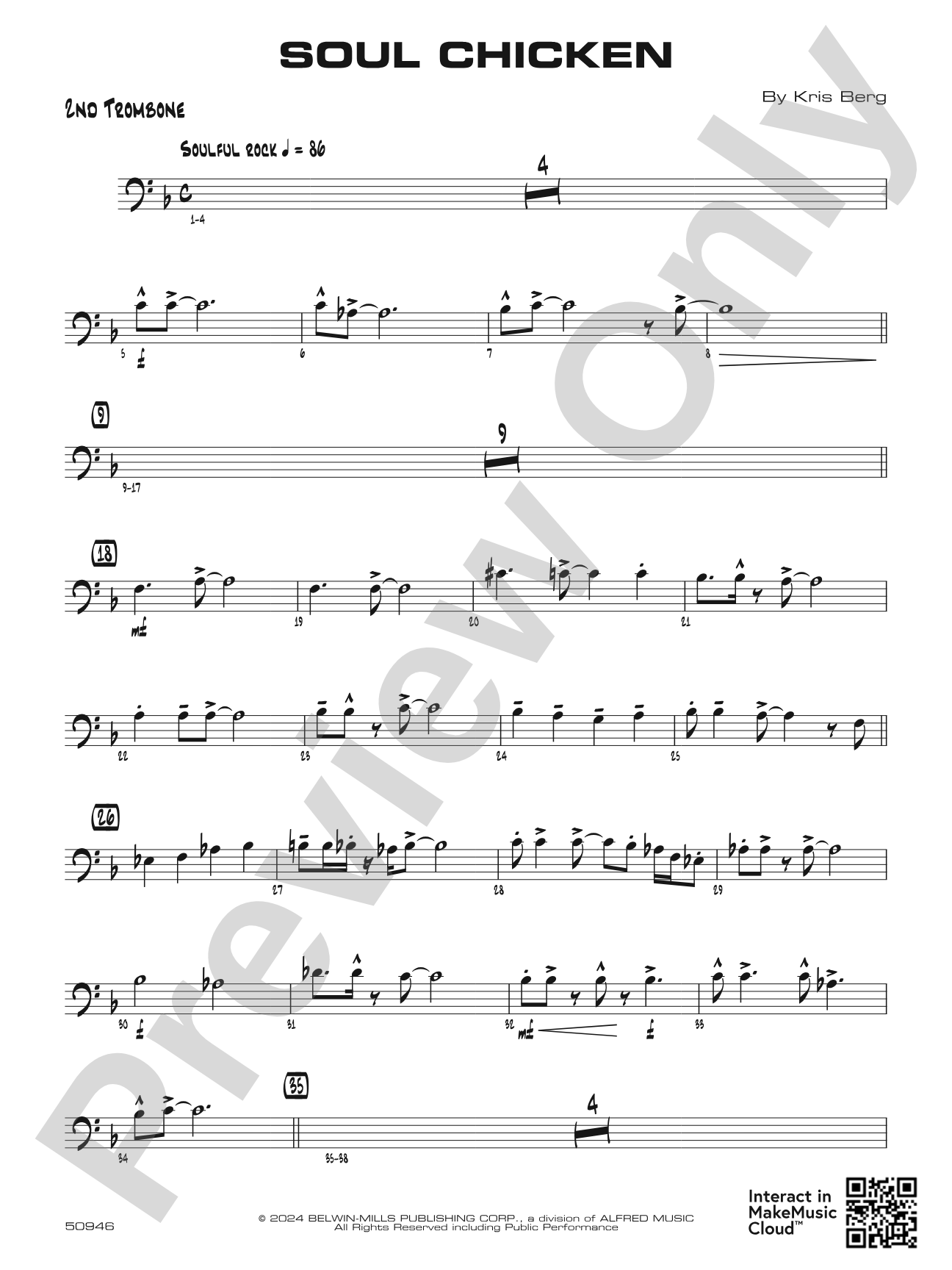

Soul Chicken: 2nd Trombone
By Kris Berg
Grade: 2.5
Item: 00-PC-0019355_TN2
$3.00
Pickup currently not available
Description
A very soulful alto sax 1 feature with a relaxed rock-flavored groove played around 86 BPM. Everything is written out for the alto including a suggested ad-lib solo section. Trumpet 1 range is to written G on top of the staff. An electric piano and bass will provide a nice texture. An outstanding chart for any performance. (4:05)


Don't just read it, hear it, play along with it, and watch your students grow with it. In MakeMusic Cloud, Soul Chicken: 2nd Trombone comes alive with professional accompaniment, adjustable tempo, and built-in practice tools that turn solo practice into real progress.
Open in the Player
Jump straight in and assign it today.
Start Your Free Trial
Open this title and explore the full library in minutes.
Sample Audio
1
Audio File
--:--
0:00
0:00
Sample Video
Additional Details
Series:
Young Jazz Ensemble
Publisher:
Alfred Music
SKU:
00-PC-0019355_TN2
More about this title
About the Composer: Kris Berg
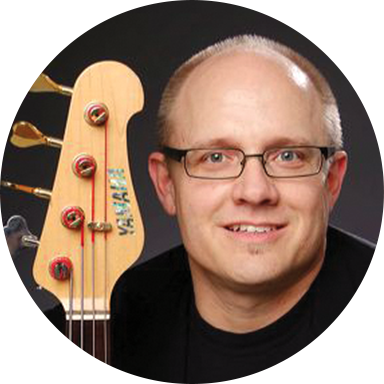
Kris Berg directs the jazz studies program at Collin County Community College in Texas, where he earned both his bachelor's and master's degrees in jazz studies from the University of North Texas. His ensembles have received repeated invitations to perform at the Montreux Jazz Festival, and he founded both the Collin Jazz Fest and the Texas All-Star Jazz Camp.
Berg's arrangements and compositions have been performed and recorded internationally. He is a prolific big band arranger and composer for Belwin Jazz (Alfred Publishing) and authored the widely adopted resource Bass Lines in Minutes. As a clinician and artist for Yamaha Corporation, he regularly collaborates with accomplished jazz musicians including Kurt Elling, Randy Brecker, Peter Erskine, Bob Mintzer, and many others, bringing his experience directly into educational settings.
Why we love this
Berg writes from genuine experience with what student ensembles can execute, and this alto sax feature proves it. The groove sits comfortably at 86 BPM while remaining deeply musical, and the written-out solo section gives young improvisers a clear structure to build confidence without overwhelming them. This is the kind of chart that sounds like a real jazz recording rather than a student exercise.
What to expect
Soulful and grounded, with a relaxed rock-flavored pocket that makes this feel like a late-night set rather than a school performance. The alto sax soars over a warm electric piano and bass foundation, creating an intimate space that lets the soloist breathe and connect with the audience.
Who it's for
Jazz ensemble directors looking for a Grade 2.5 feature that sounds fully realized and professional. The alto sax gets a genuine moment to shine while remaining accessible, and the writing respects both the soloist's emerging abilities and the ensemble's learning curve.
How to get the most out of it
- Lock the rhythm section (electric piano and bass) into the pocket before adding horns. A rock-flavored groove depends entirely on the underlying pulse being relaxed and anchored.
- Have the alto saxophonist listen to recordings of the chart if available. Berg's written solo suggestion is detailed, so understanding the intended phrasing and articulation style will make the performance sit naturally in the ensemble.
- Shape the dynamic arc around the alto sax feature. This is her chart, so balance the trumpet and remaining ensemble parts to support rather than compete with her voice.
- Work the ad-lib solo section carefully with your alto player. The written suggestion is there as a guide, but encourage her to understand the harmonic structure well enough to interpret it with feeling rather than merely reading it.
How to use it
This works beautifully as a second-set opener at a jazz festival or as the centerpiece of a concert focused on blues-based repertoire. The 4-minute length and solo feature also make it an excellent choice for jazz band competitions where you want to showcase an emerging soloist without overshadowing ensemble cohesion.
Skills your students will build
- Comping and support roles for ensemble members not featured
- Rhythmic precision in a relaxed groove (86 BPM rock feel)
- Solo construction and harmonic navigation in a blues-influenced setting
- Listening and responding to a featured soloist as an ensemble
- Articulation and phrasing in a soulful, contemporary jazz style