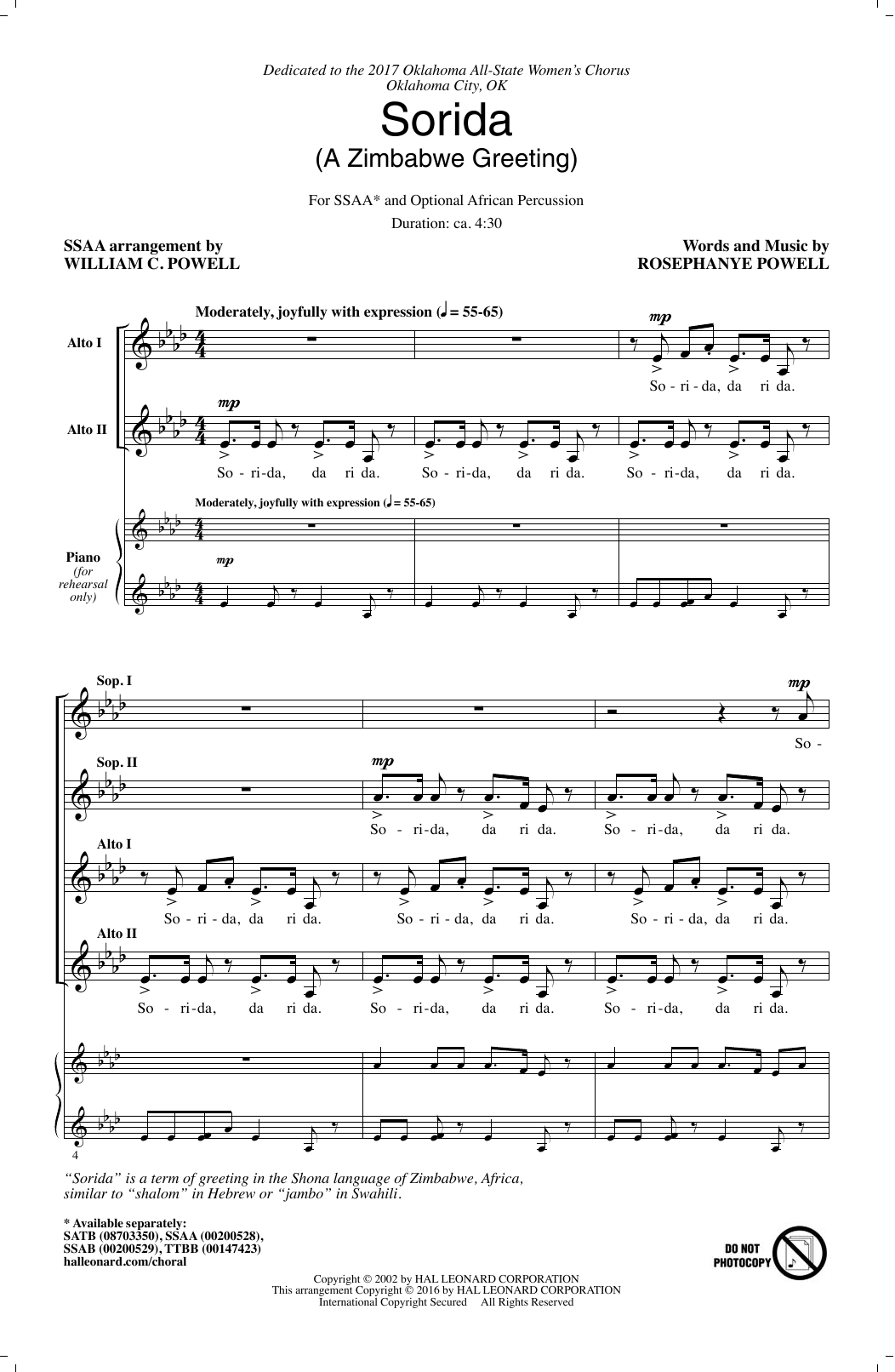
Sorida (A Zimbabwe Greeting) Sheet Music Preview

Sorida (A Zimbabwe Greeting): SSAA Choral Octavo

Arranged by William C. Powell

Item: 35-DS00360192

Digital Download
$2.95
Description

Sorida (A Zimbabwe Greeting): SSAA Choral Octavo isn't in MakeMusic Cloud just yet...but it could be. Let us know you'd like to see it, and you'll help shape what comes next. In the meantime, start a free trial and dive into thousands of interactive titles your students can play along with today.

Sample Audio
No sample audio found.
Sample Video
Additional Details
Publisher: Hal Leonard
Page Count: 13
SKU: 35-DS00360192

More about this title

Why we love this

Powell's arrangement brings authentic warmth to this Zimbabwean greeting without sacrificing singability or accessibility. The voicing sits naturally for women's voices while keeping the cultural voice of the material front and center. It's the kind of piece that reminds singers why they chose this art form.

What to expect

Warm and inviting, with the character of a genuine greeting rather than a theatrical spectacle. The harmonic support creates space for genuine expression, allowing singers to connect personally with the text while maintaining musical integrity.

Who it's for

Choirs seeking repertoire that expands cultural horizons without requiring specialized vocal technique or excessive rehearsal time. This works equally well for festival programs, multicultural celebrations, or concerts built around world music.

How to get the most out of it

  • Honor the rhythmic language that shapes the melody; this isn't a European harmonic framework, so let the text and rhythm drive the phrasing rather than looking for predictable cadence points.
  • Balance the soprano line against the lower voices, especially where the harmonies support rather than shadow the primary melodic statement.
  • Invest time in clear articulation of the text. The Zimbabwean language carries the greeting's cultural meaning, and singers should feel ownership of both pronunciation and emotional intent.

How to use it

Pair this with other world music selections to build a thematic concert section, or program it as a standalone community bridge piece that brings the audience into cultural conversation. Its modest length and accessible voicing make it ideal for spring festivals or multicultural awareness events.

Skills your students will build

  • Singing with rhythmic independence from typical Western metrical patterns
  • Pronouncing and honoring non-English language texts
  • Balancing harmonic support with melodic clarity in African compositional frameworks
  • Maintaining musical integrity while exploring unfamiliar cultural traditions

You May Also Like