Sorida Sheet Music Preview

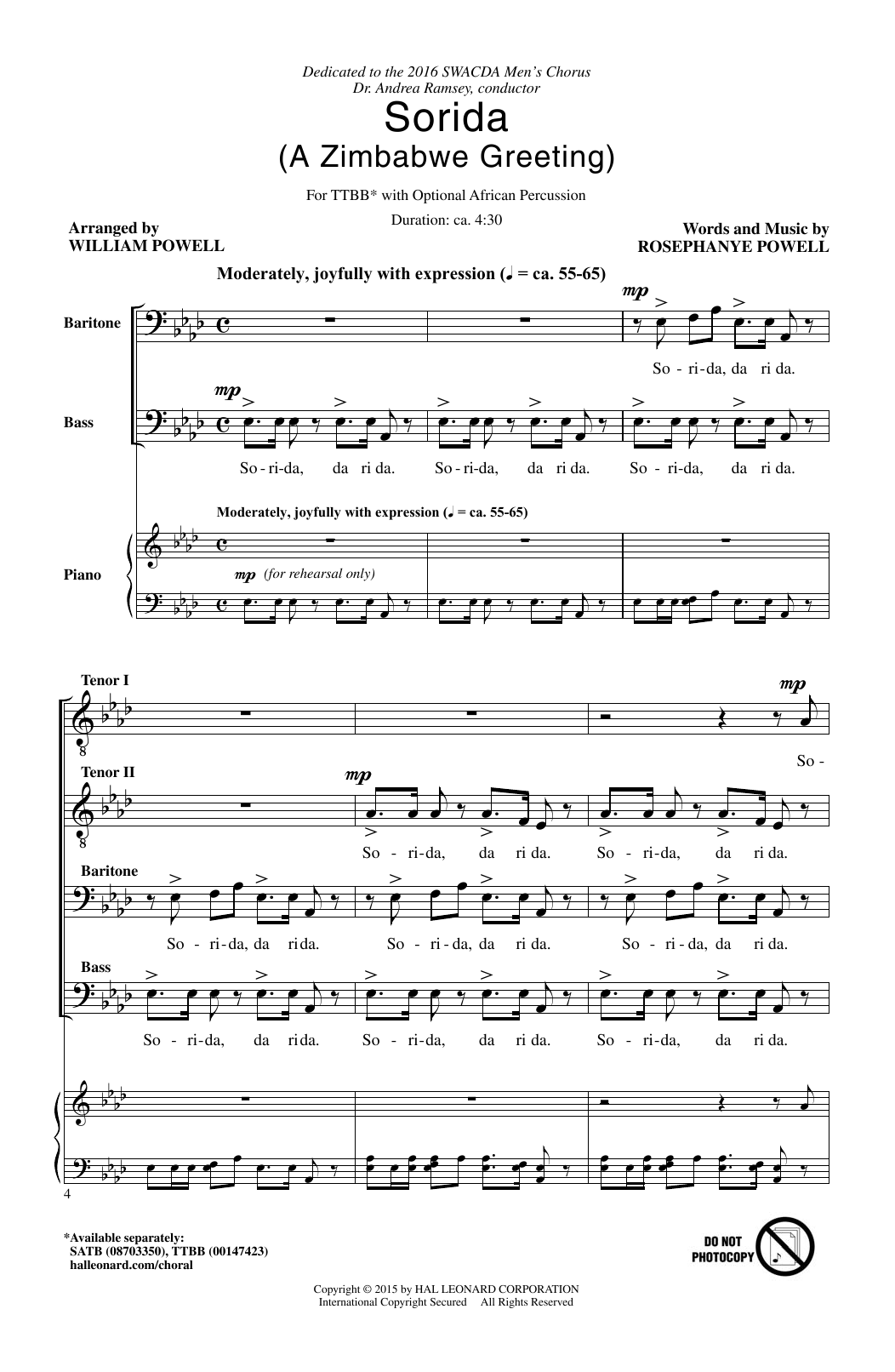
Sorida: TTBB Choral Octavo

As performed by Rosephanye Powell / Arranged by William Powell

Item: 35-DS00315796

Digital Download
$2.99
Description

Sorida: TTBB Choral Octavo isn't in MakeMusic Cloud just yet...but it could be. Let us know you'd like to see it, and you'll help shape what comes next. In the meantime, start a free trial and dive into thousands of interactive titles your students can play along with today.

Sample Audio
No sample audio found.
Sample Video
Additional Details
Publisher: Hal Leonard
Page Count: 13
SKU: 35-DS00315796

More about this title

About the Artist: Rosephanye Powell

Rosephanye Powell is a composer and arranger whose work centers African American musical traditions and contemporary choral writing. Her arrangements bridge concert hall sophistication with the rhythmic vitality and spiritual depth of African and African American musical idioms, making her compositions valuable resources for choirs seeking meaningful cultural repertoire.

Why we love this

Powell's setting of Sorida captures something genuinely theatrical without resorting to gimmick. The flexible voicing (TB/TTB/TBB/TTBB) means you can program this whether your ensemble numbers eight or eighty, and the African roots of the material give your concert an authenticity that audiences feel immediately.

What to expect

Sorida moves with organic rhythmic momentum rather than mechanical precision. The harmonic language feels grounded and warm, with moments of real emotional lift that arrive not through volume but through textural clarity and the natural unfolding of Powell's voice leading.

Who it's for

TTBB choirs ranging from advanced high school ensembles to collegiate and community groups. The 13-page score offers enough musical substance to reward serious preparation while remaining accessible to directors seeking African-centered repertoire that doesn't demand specialized vocal techniques.

How to get the most out of it

  • Attend closely to the rhythmic phrasing in the opening section. These aren't metrically obvious gestures, and drilling them early prevents the piece from feeling square.
  • Balance the texture between bass and tenor voices during the central section. Powell weights the harmonic foundation heavily, but tenors need space to carry the melodic line forward.
  • Record a rehearsal pass focused solely on vowel consistency across the ensemble. The piece's effectiveness depends on unified vocal color, especially in passages where parts move independently.

How to use it

Consider this for a festival or concert celebrating African diaspora traditions, or use it as a centerpiece for programming that pairs concert spirituals with contemporary settings. The piece works equally well as an intimate set opener or a climactic moment later in the program.

Skills your students will build

  • Reading and sustaining independent melodic lines within complex harmonic textures
  • Understanding African American musical phrasing and rhythmic conventions
  • Balancing blend and clarity across multiple voice parts
  • Flexible approaches to tuning in extended harmonic structures
  • Ensemble awareness in pieces that prioritize rhythmic cohesion over strict metric regularity

You May Also Like