
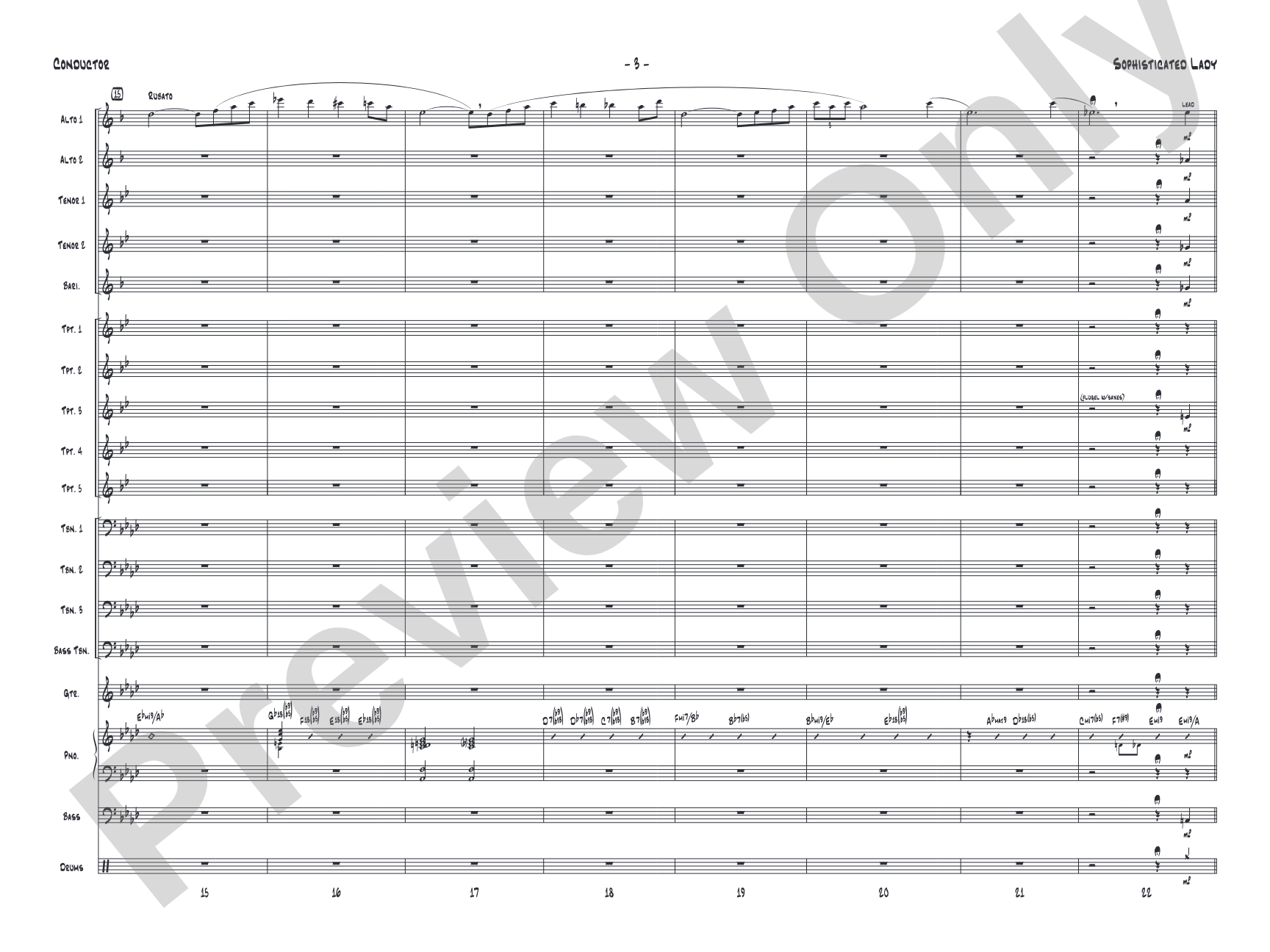
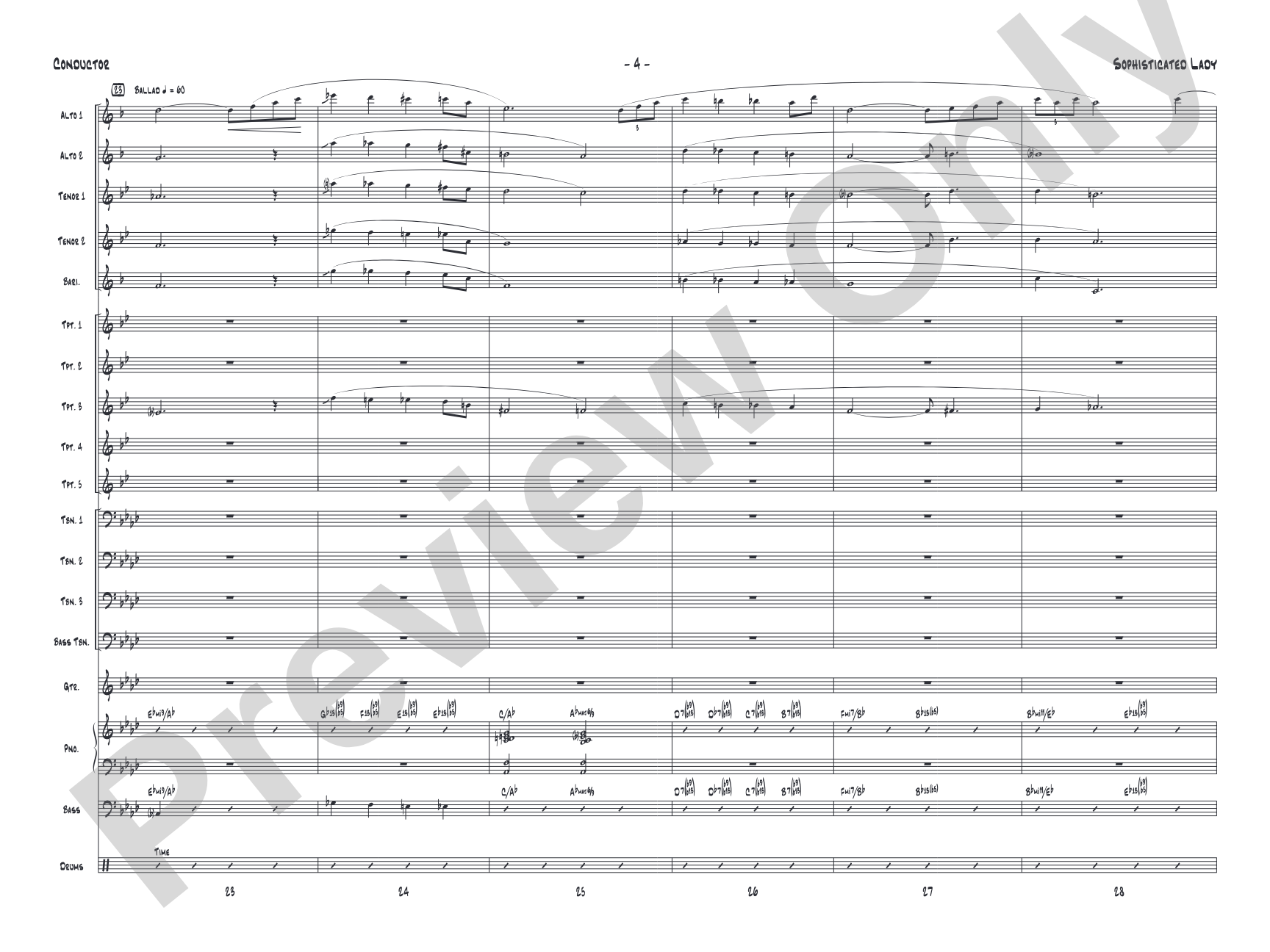
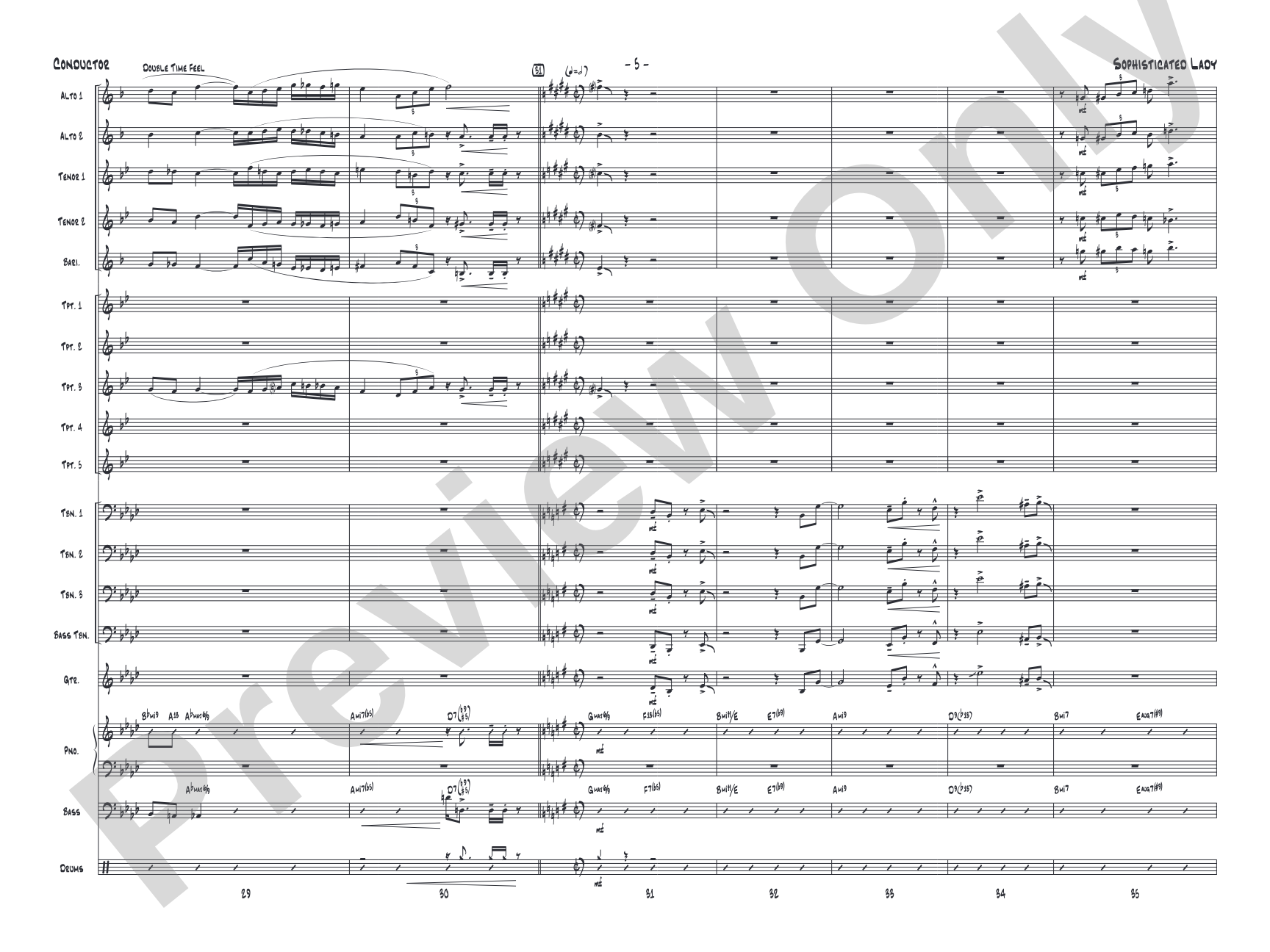
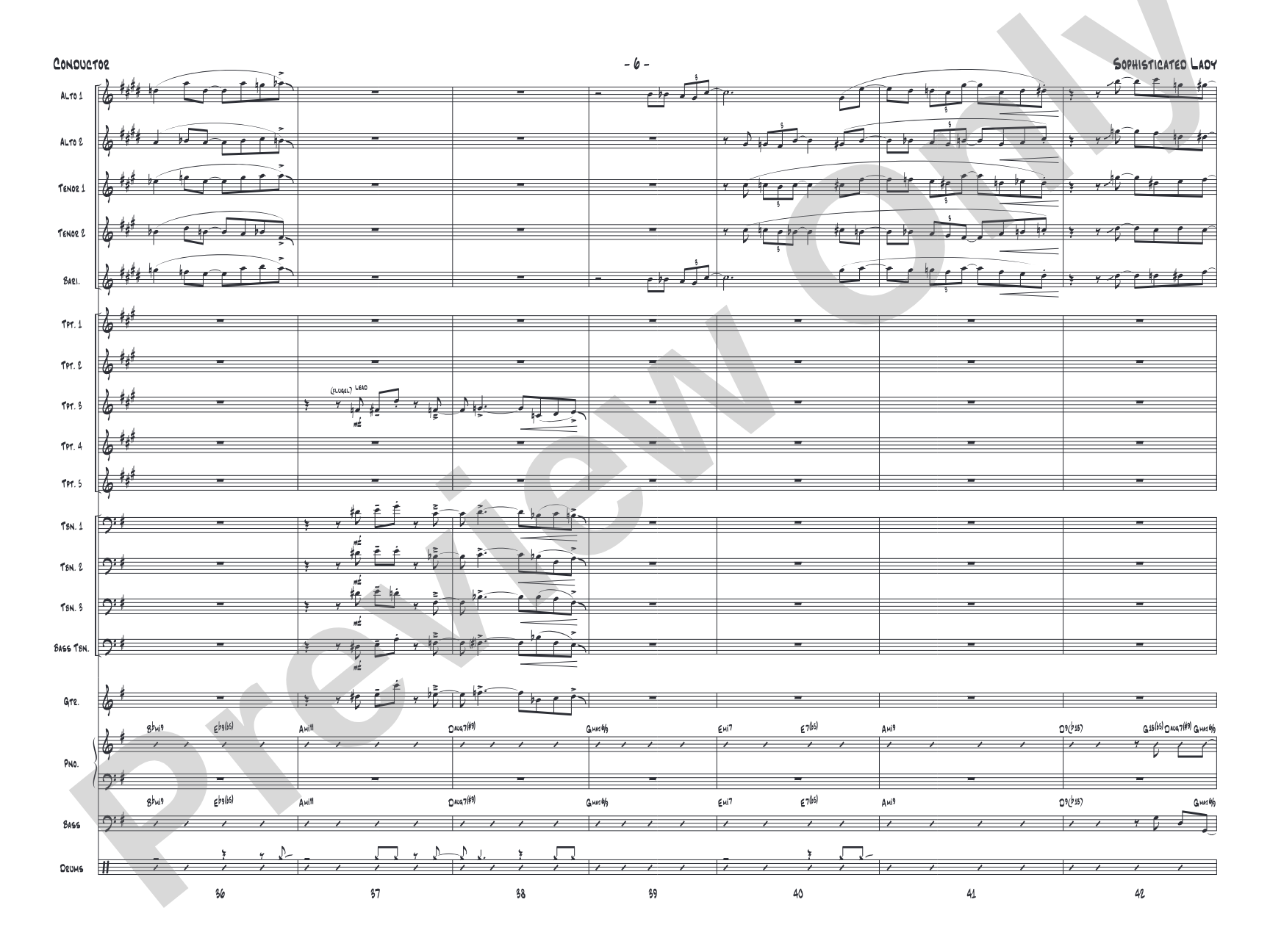
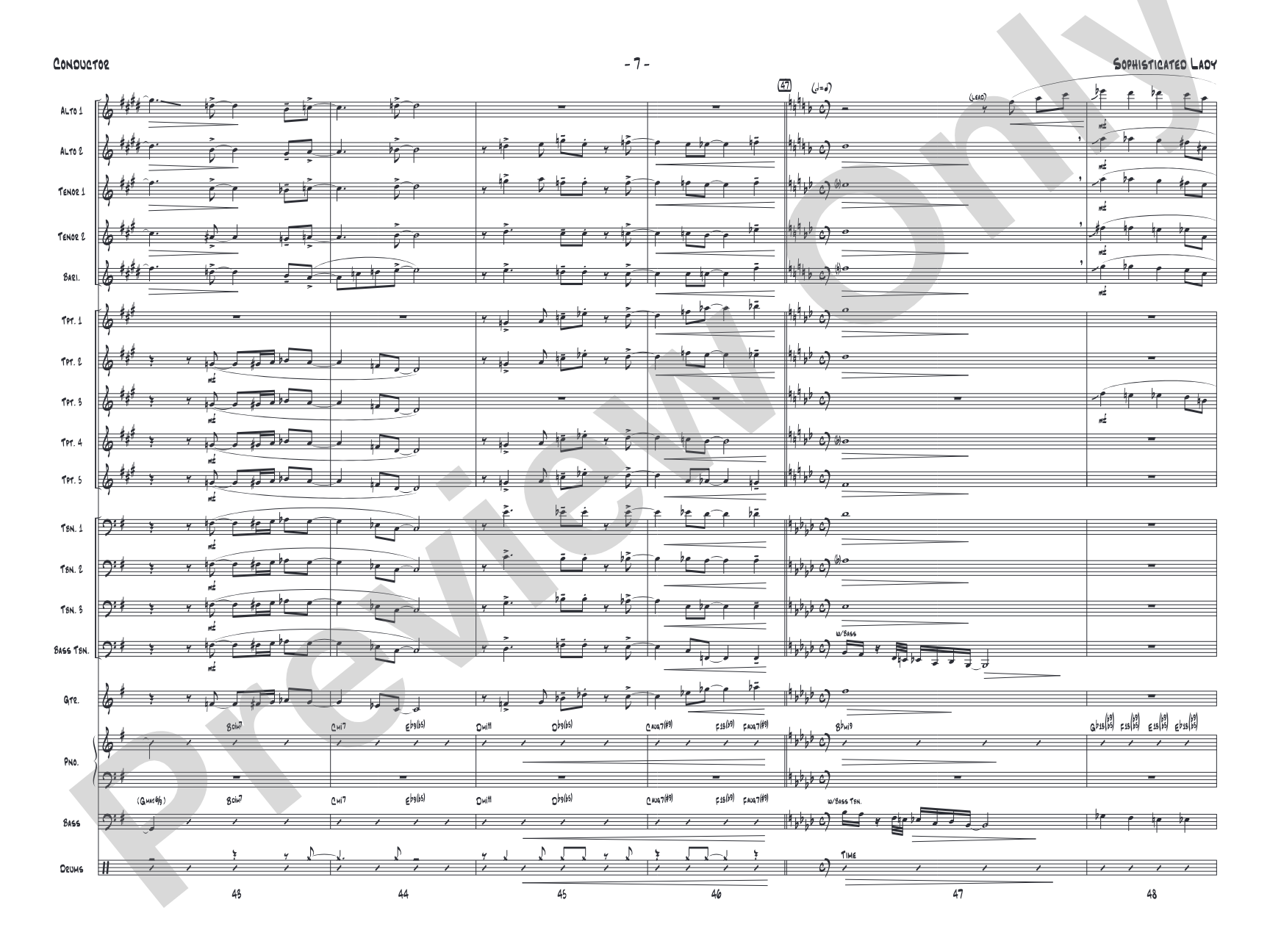
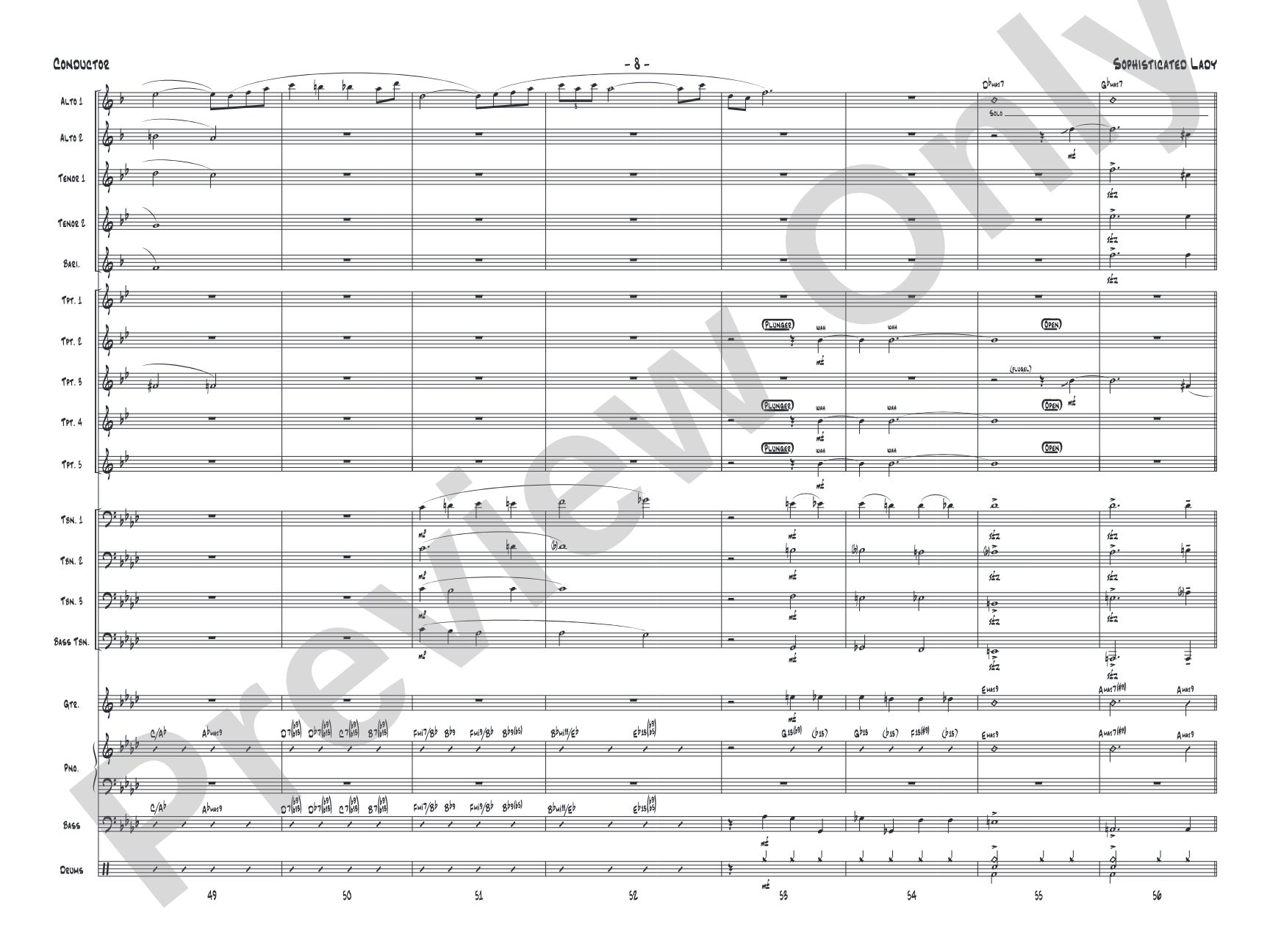
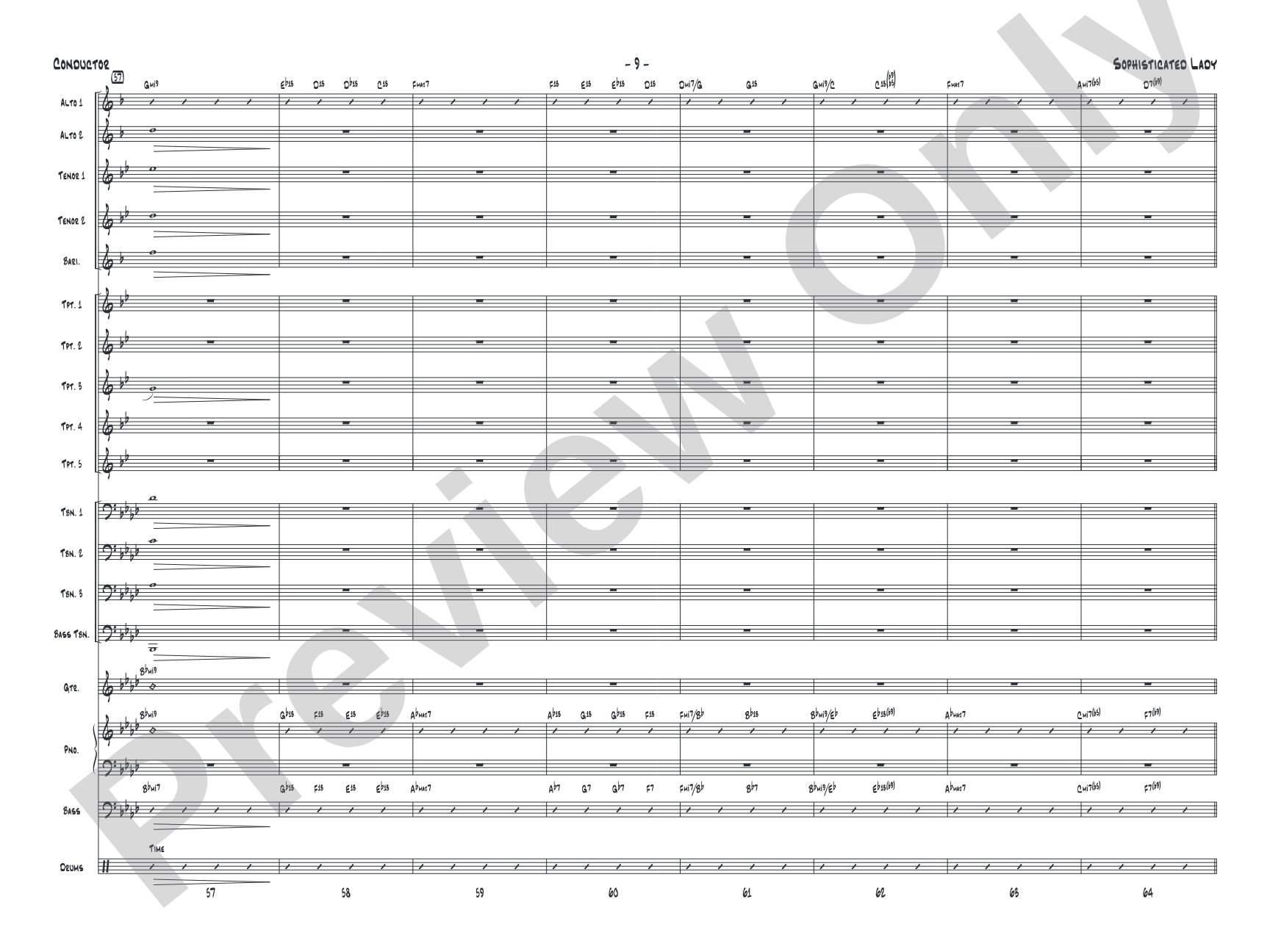
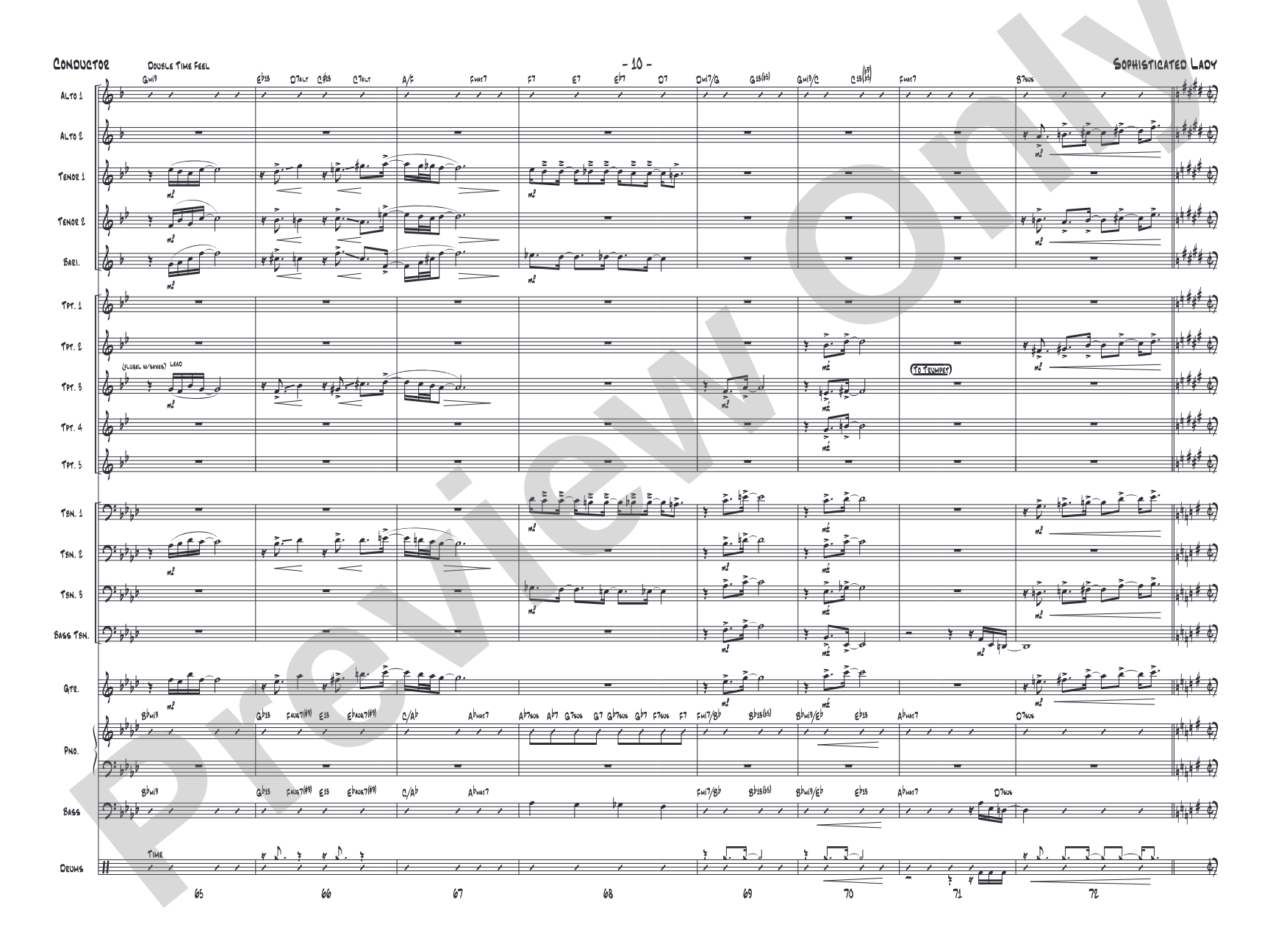
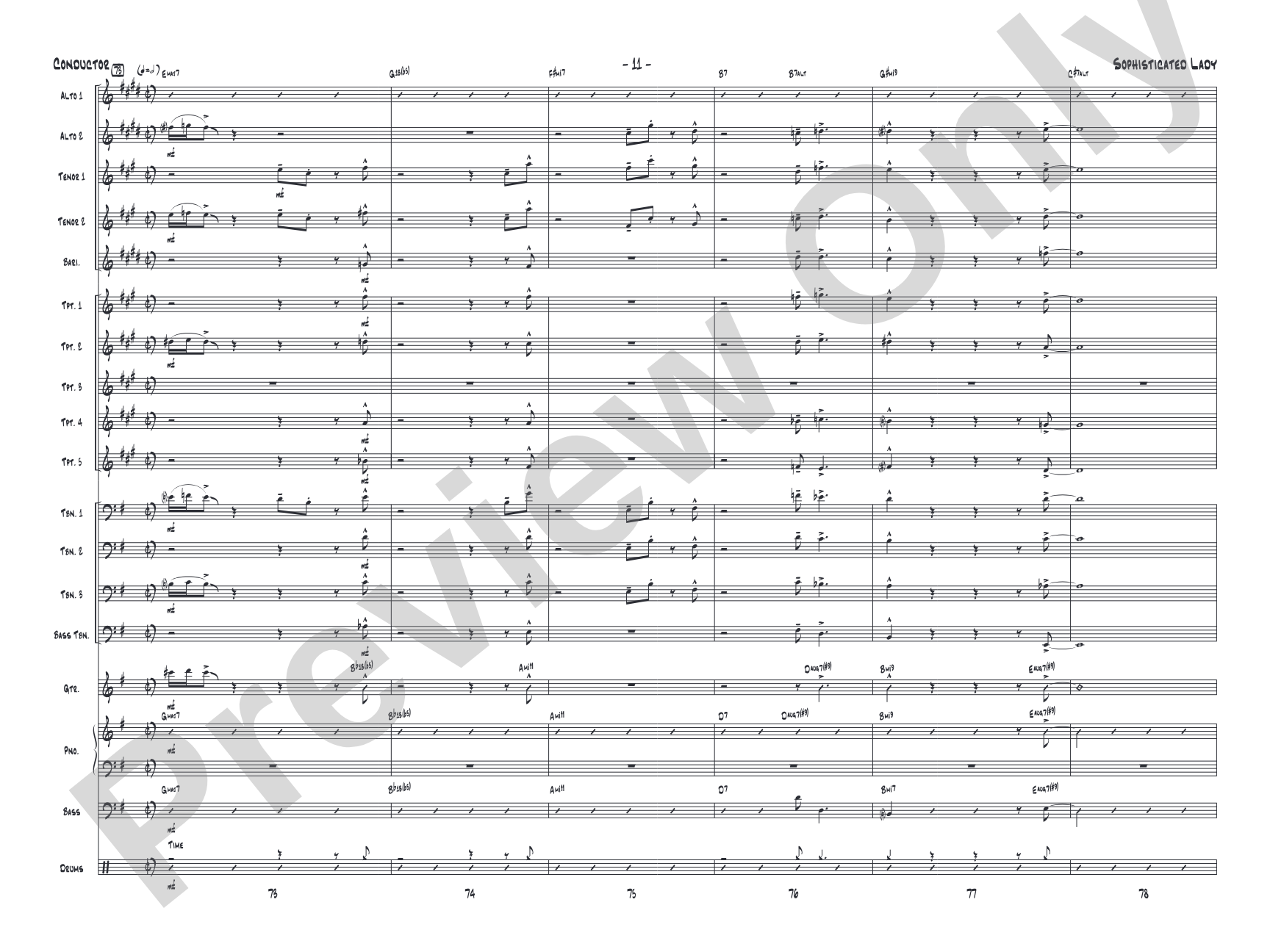
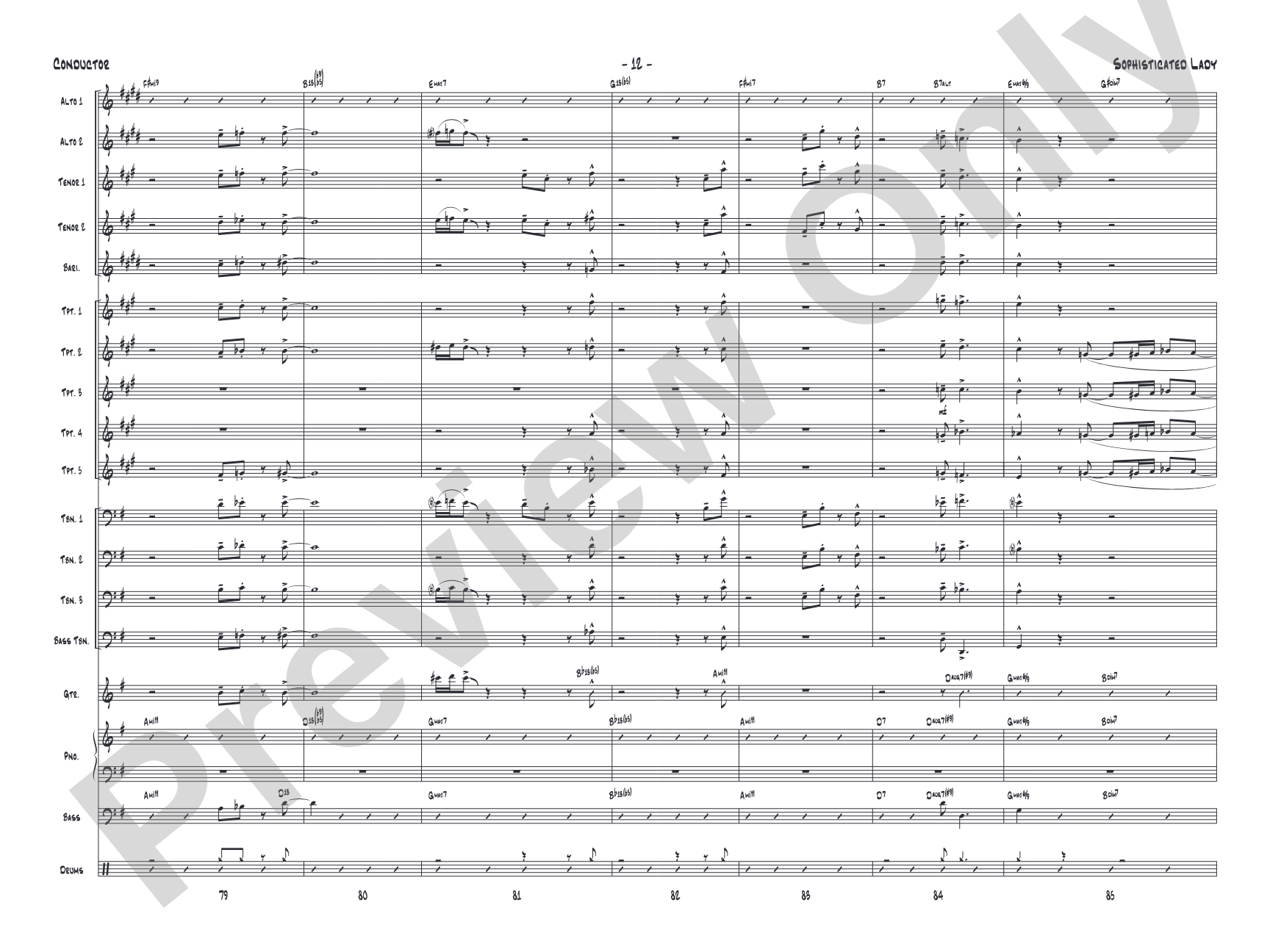
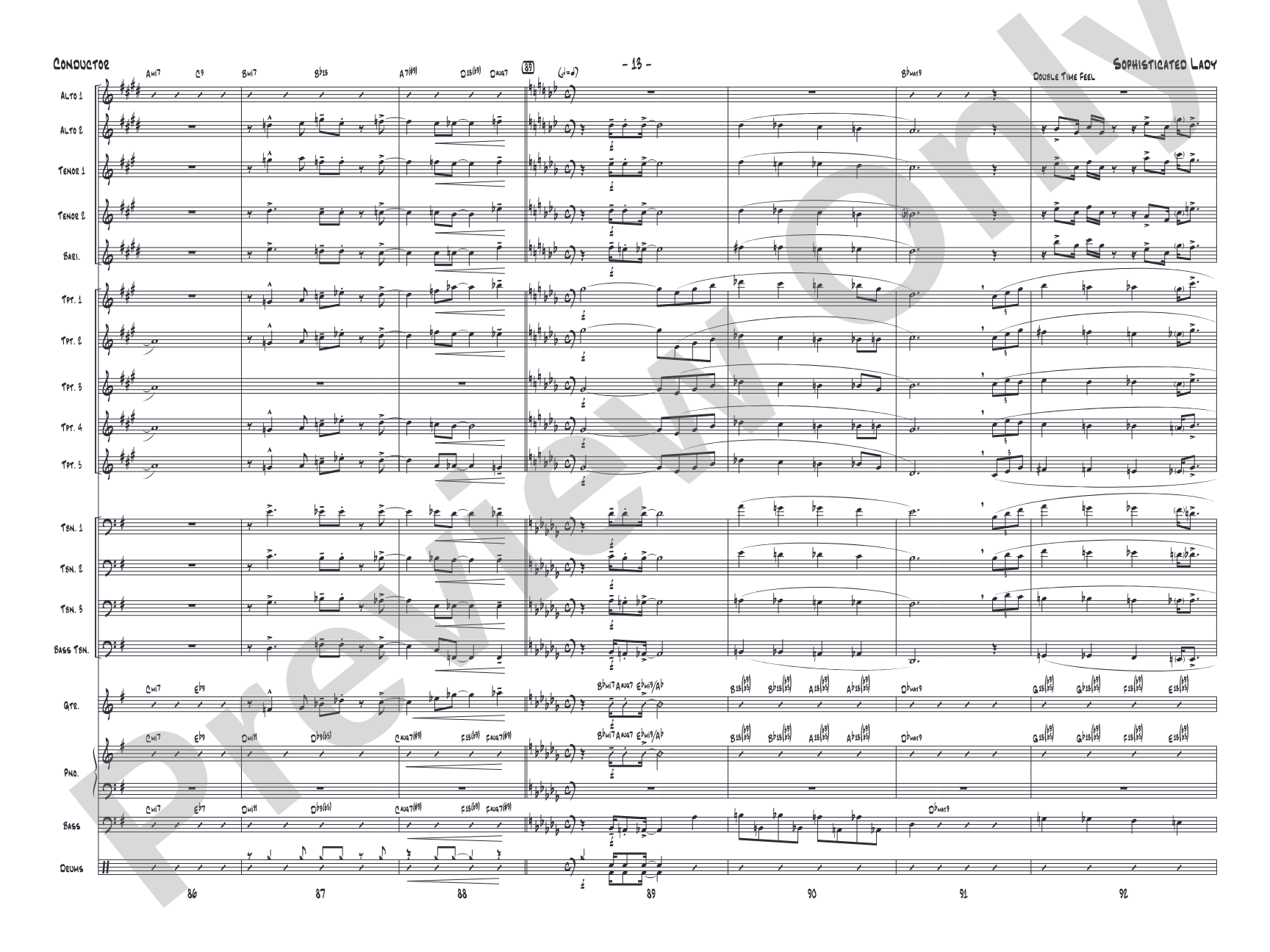
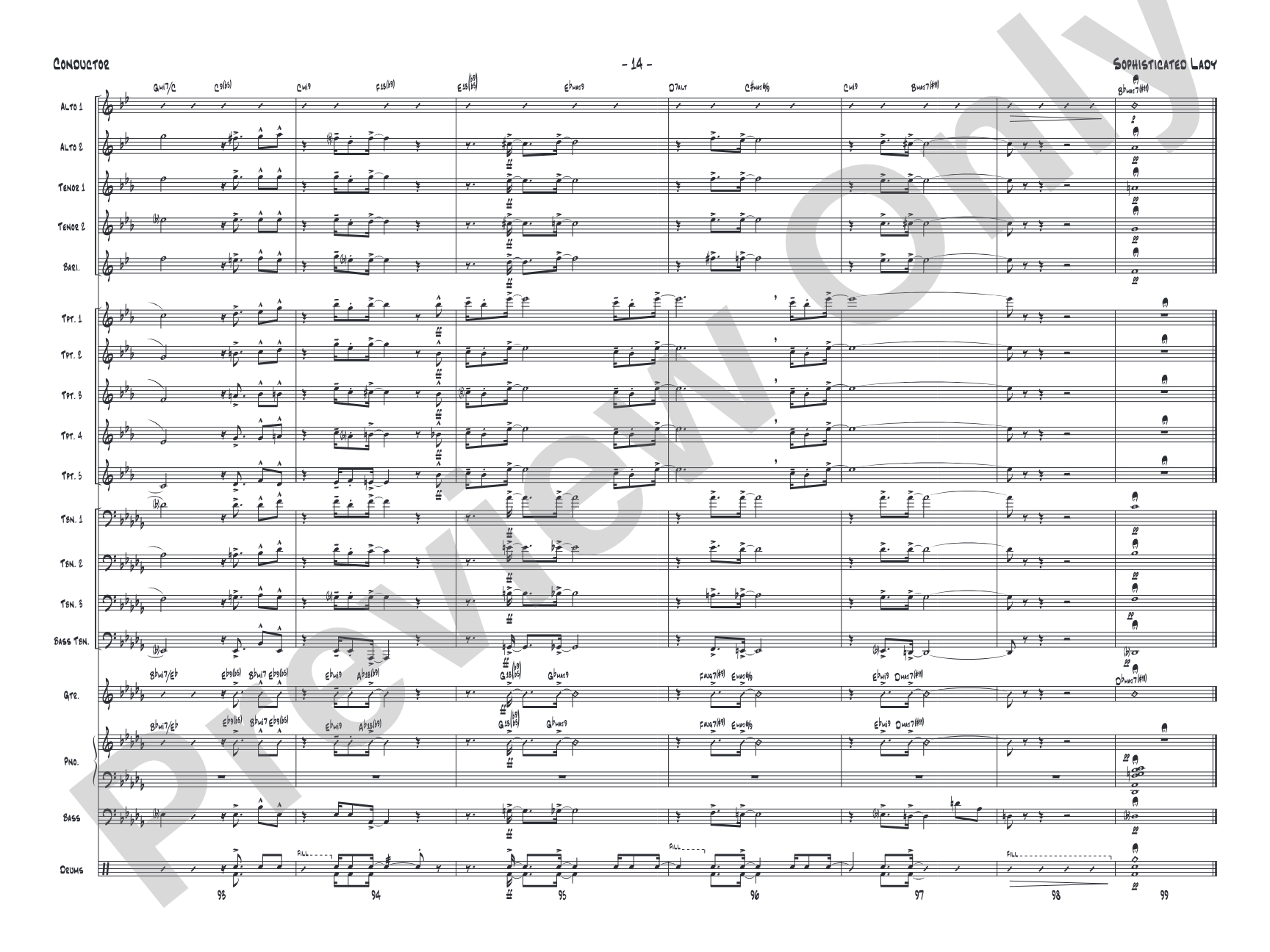

Sophisticated Lady: Score
Words and music by Duke Ellington, Irving Mills, and Mitchell Parish / arr. Mike Crotty
Grade: 4 (Medium Advanced / Difficult)
Item: 00-PR-0005512
$10.00
Pickup currently not available
Description
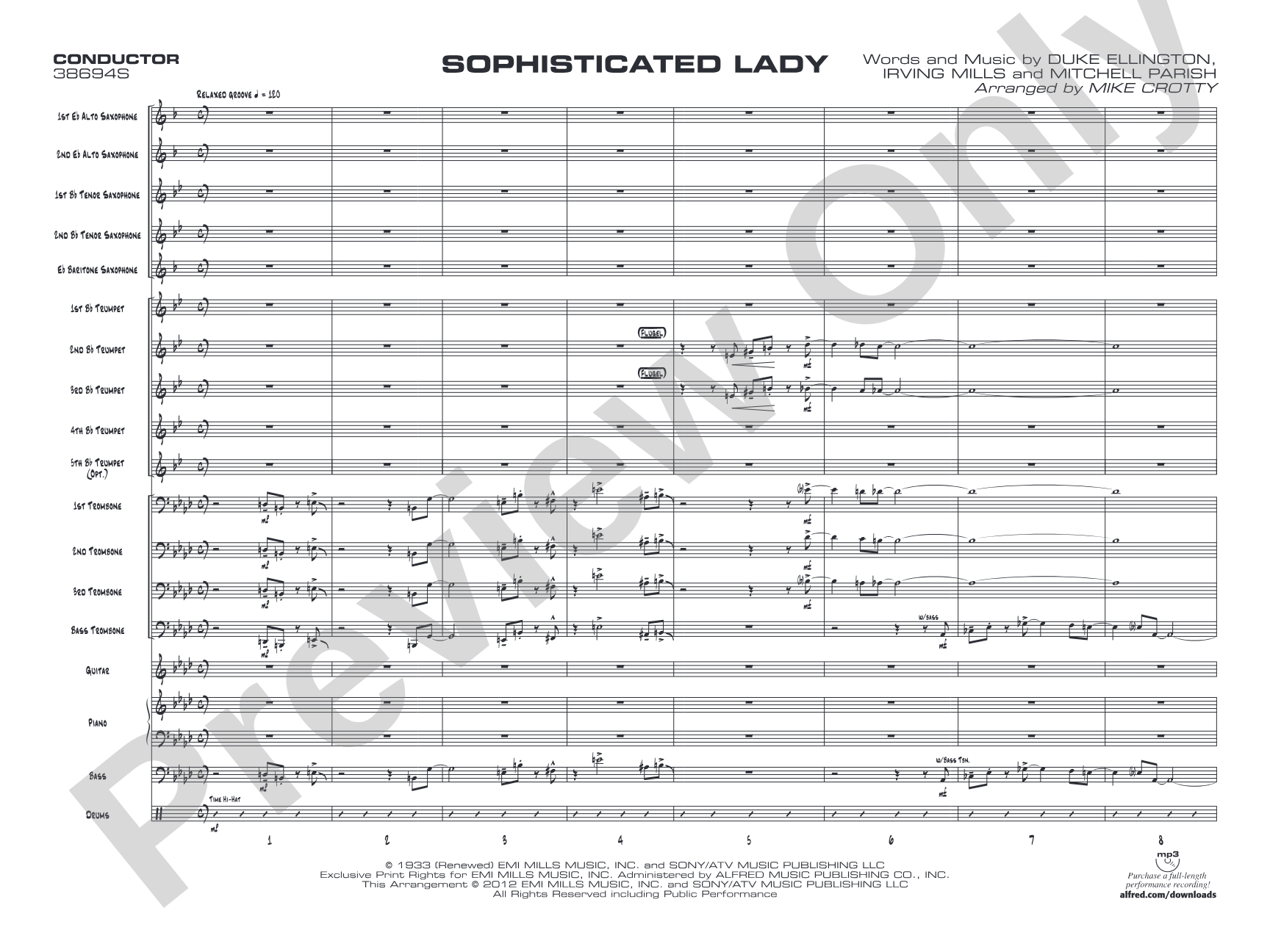
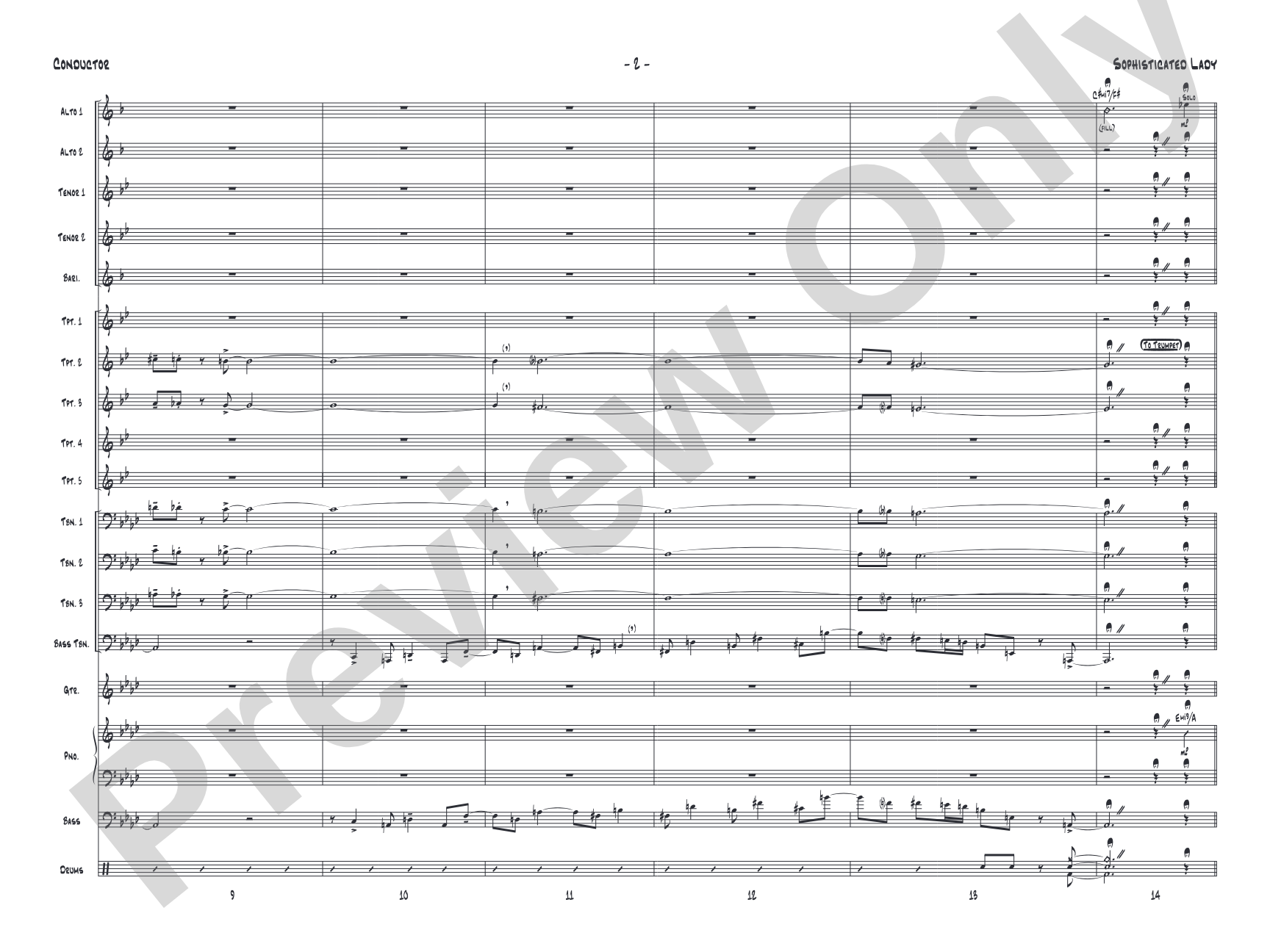
Arranged especially for the USAF Airmen of Note, this alto ballad is outstanding in every respect. The introduction features 'bones playing the bridge, followed by the A section statement with alto and piano, development, alto solo space, some double time sections, back to the ballad tempo, and a big ensemble ending. Lead trumpet range to written high E-flat. Includes optional 5th trumpet part.


Don't just read it, hear it, play along with it, and watch your students grow with it. In MakeMusic Cloud, Sophisticated Lady: Score comes alive with professional accompaniment, adjustable tempo, and built-in practice tools that turn solo practice into real progress.
Open in the Player
Jump straight in and assign it today.
Start Your Free Trial
Open this title and explore the full library in minutes.
Sample Audio
1
Audio File
--:--
0:00
0:00
Sample Video
No sample videos found.
Additional Details
Series:
Premier Jazz Series
Publisher:
Alfred Music
Page Count:
70
SKU:
00-PR-0005512
More about this title
About the Composer: Duke Ellington
Duke Ellington (1899-1974) stands as one of the most consequential composers in American music history. His career spanned nearly six decades, during which he created thousands of compositions ranging from three-minute jazz standards to extended concert works, fundamentally reshaping what jazz could express and accomplish.
Ellington's approach to orchestration and harmonic sophistication set him apart from his contemporaries. He understood instrumental voicings with the precision of a classical composer while maintaining the improvisational spirit and rhythmic flexibility that define jazz. His legacy extends far beyond the jazz world; his influence permeates concert music, film scoring, and popular song composition.
Why we love this
Mike Crotty's arrangement honors Ellington's harmonic language while creating genuine solo space and clear sectional storytelling that keeps an ensemble engaged. The inclusion of optional 5th trumpet and the controlled range demands (lead trumpet to written high E-flat) make this accessible to strong medium-advanced groups without oversimplifying the material. Programming a Duke Ellington classic at this level signals serious musical intent while remaining achievable for rehearsals that aren't exclusively all-star ensembles.
What to expect
Sophisticated Lady inhabits the space between intimate and grand. The ballad framework creates vulnerability, especially in the trombone and alto solos, while the ensemble sections and double-time passages suggest larger emotional stakes. Throughout, Ellington's harmonic sophistication keeps the harmony moving without ever feeling rushed.
Who it's for
This arrangement suits jazz ensembles with solid fundamentals in time, section balance, and basic harmonic awareness. Directors working with groups that can sustain ballad tempos without dragging and manage ensemble voicings with blend will find the material rewarding for both players and listeners.
How to get the most out of it
- Shape the 'bones introduction with deliberate space between phrases. This isn't a rhythm section moment; the trombone melody sets the emotional landscape for everything that follows.
- Balance the alto statement in the A section so the piano comping breathes underneath rather than competing. The section's power comes from transparency, not volume.
- Let the double-time sections build naturally from the ballad context. Rushing these passages or forcing them will obscure the compositional logic of the transition.
- The ensemble ending needs precision in articulation and dynamic control. Ellington's voicings are sophisticated enough that muddy attacks will bury the harmonic content.
How to use it
This works beautifully as an anchor for a program exploring Duke Ellington's compositional range, or as a lyrical counterweight to up-tempo swingers on the same concert. Its 70 pages and medium-advanced difficulty place it squarely in the middle of a well-rounded jazz ensemble season, suitable for a concert where you want to showcase both musicianship and the group's ability to handle ballad material.
Skills your students will build
- Maintaining consistent ballad tempo without dragging or rushing
- Voicing jazz harmonies with clarity and blend across the ensemble
- Balancing comping and melodic lines within a rhythm section
- Executing smooth transitions between tempo/style changes (ballad to double-time and back)
- Solo construction and navigation of harmonic changes over extended form
- Reading and performing stylistically idiomatic jazz articulation and phrasing