
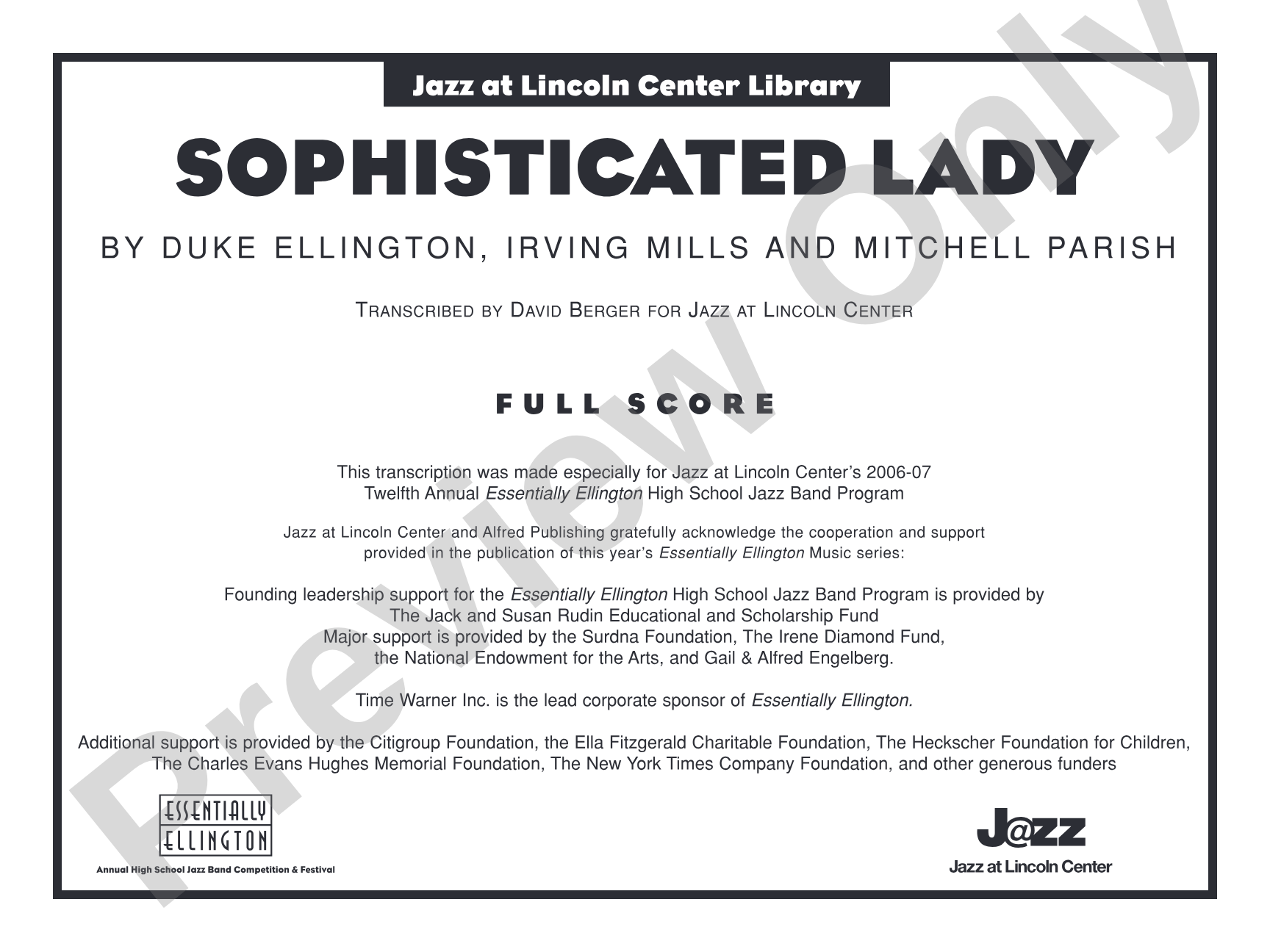

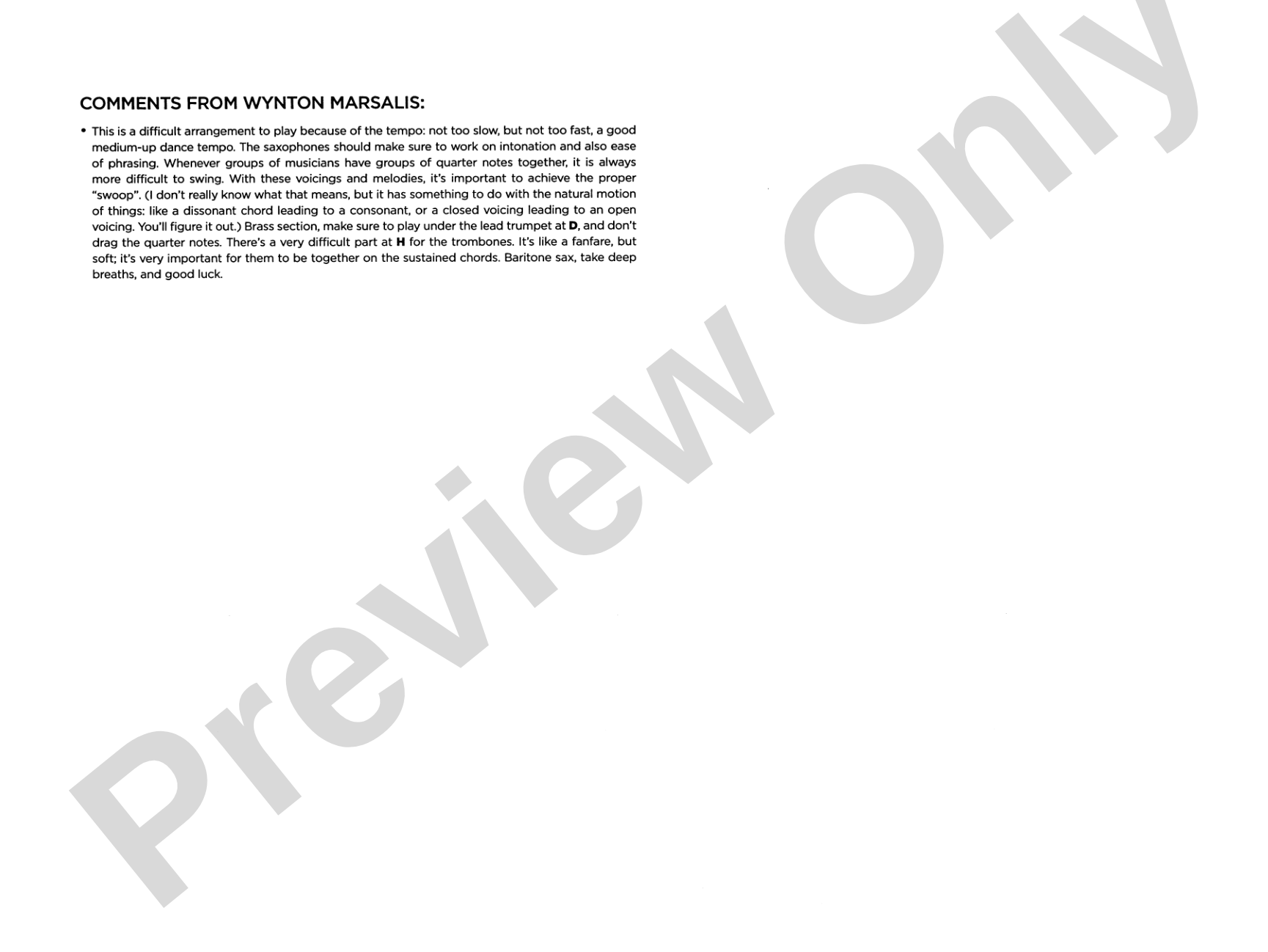
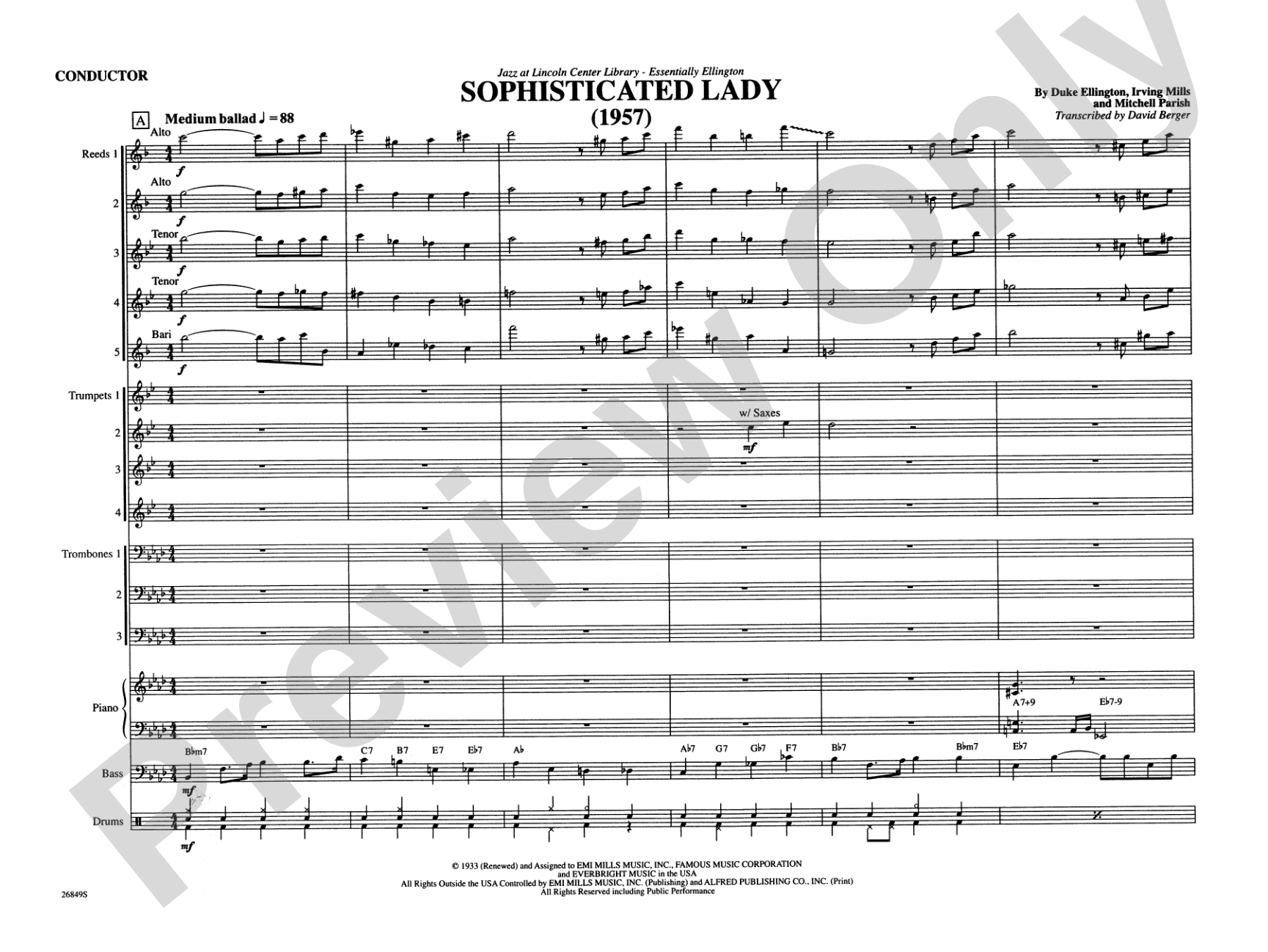
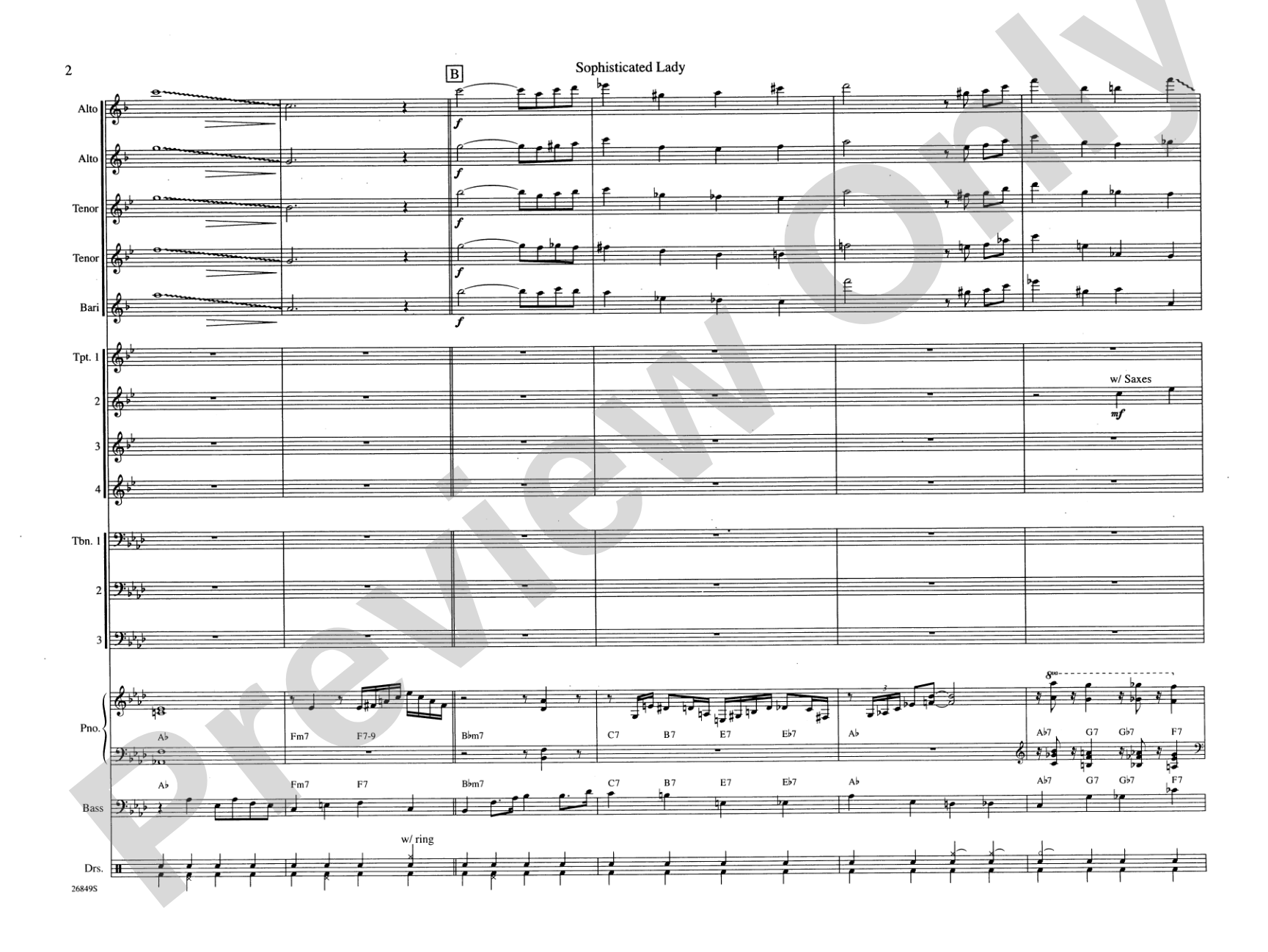
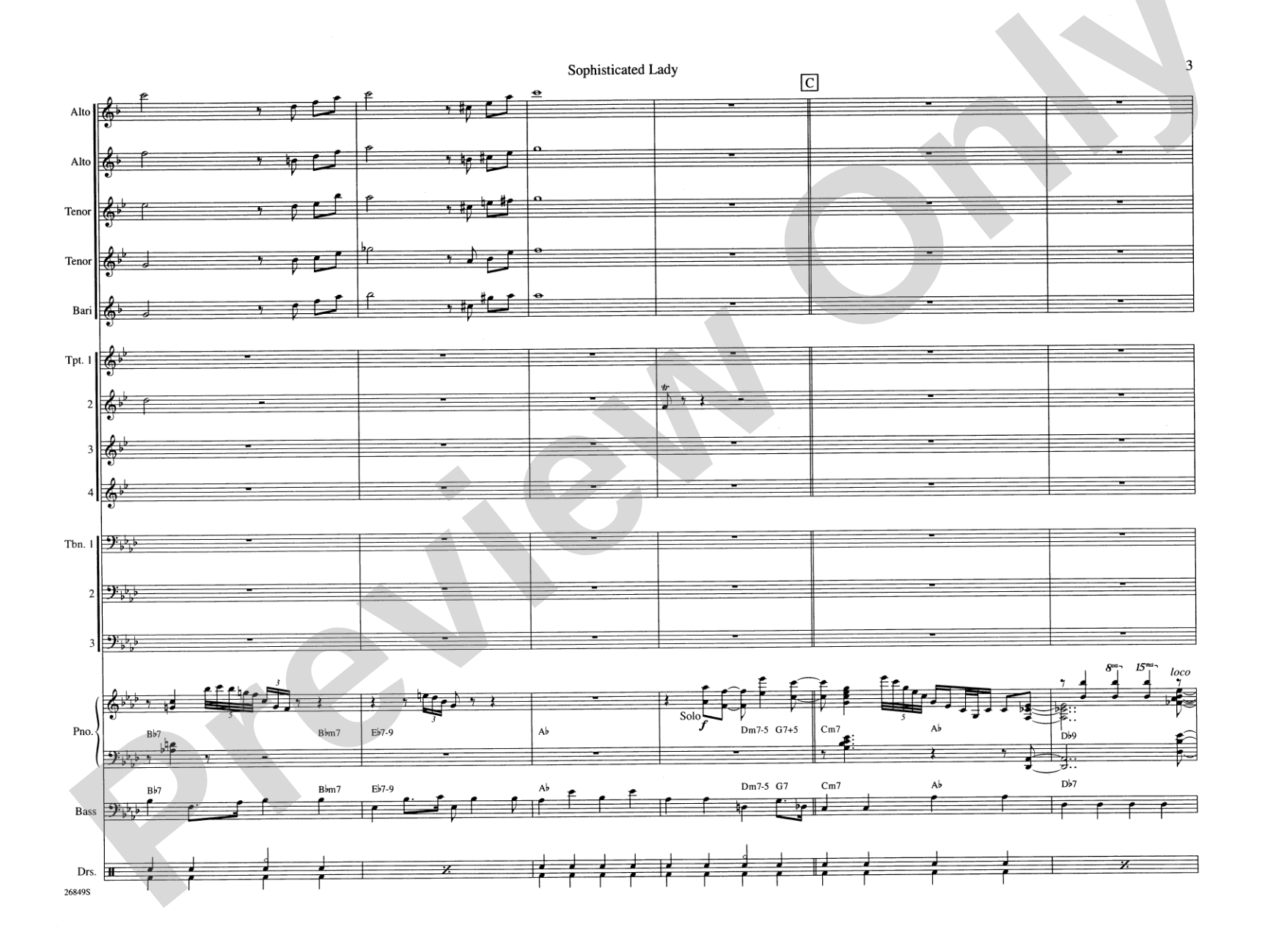
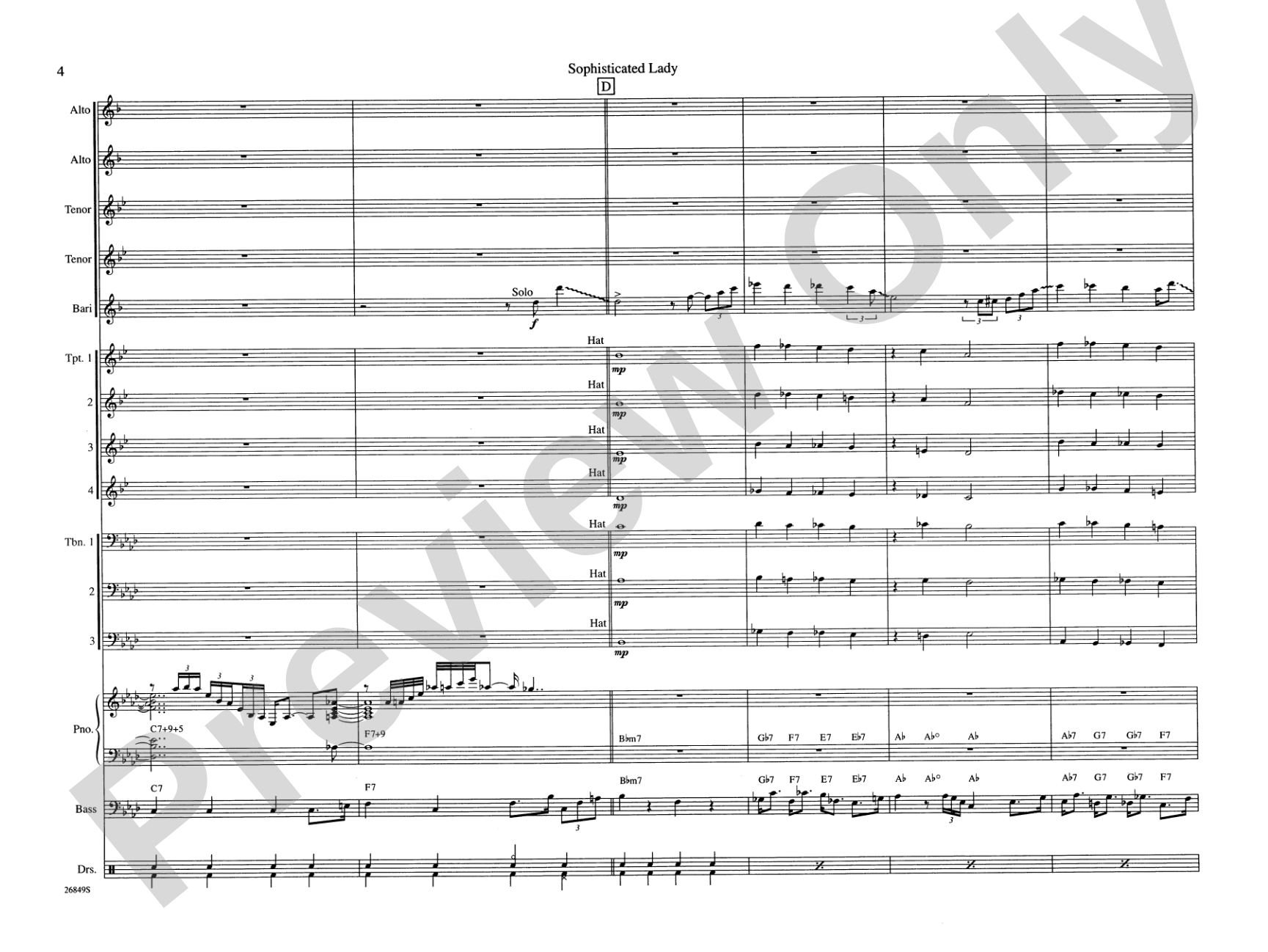
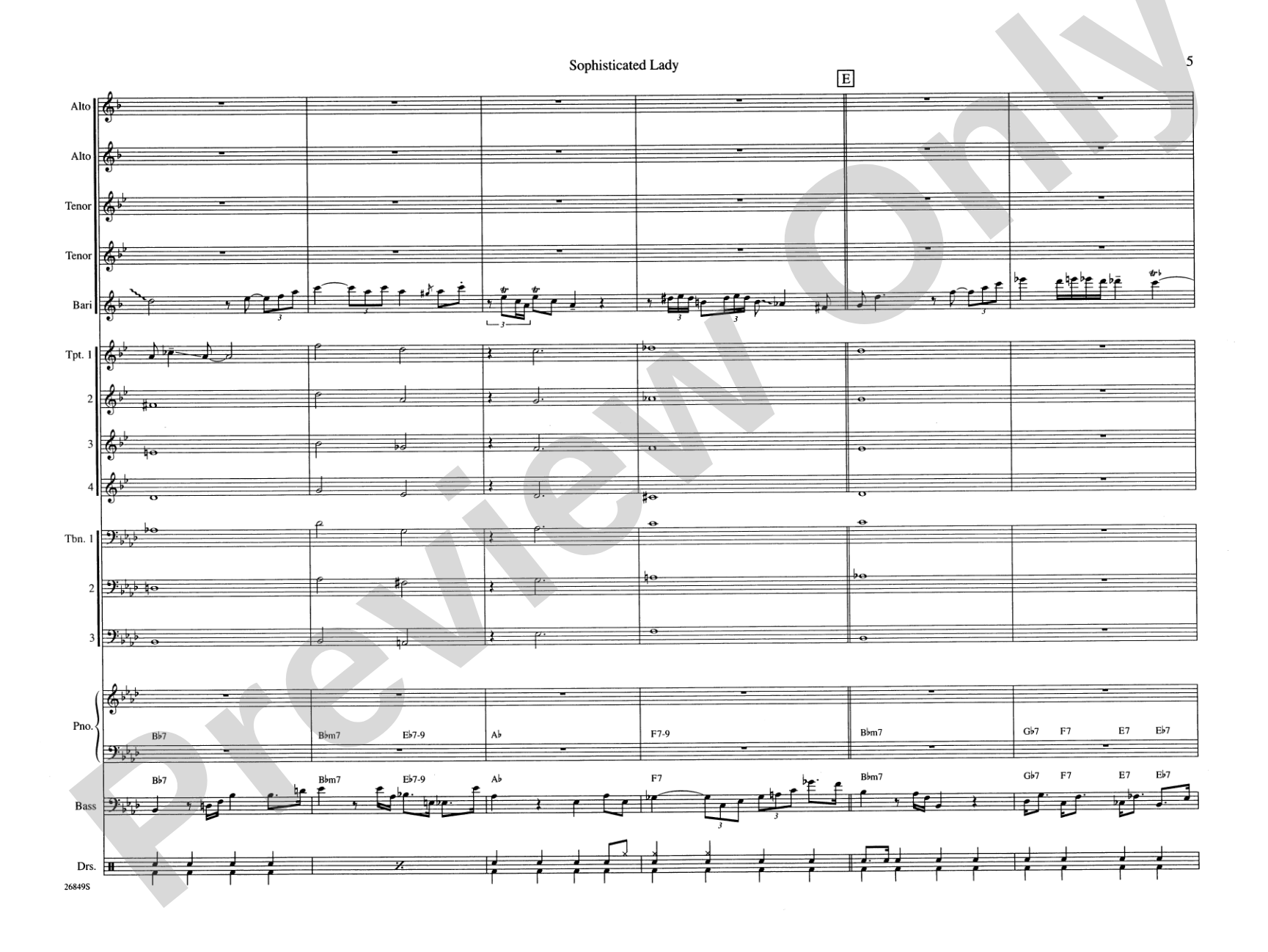
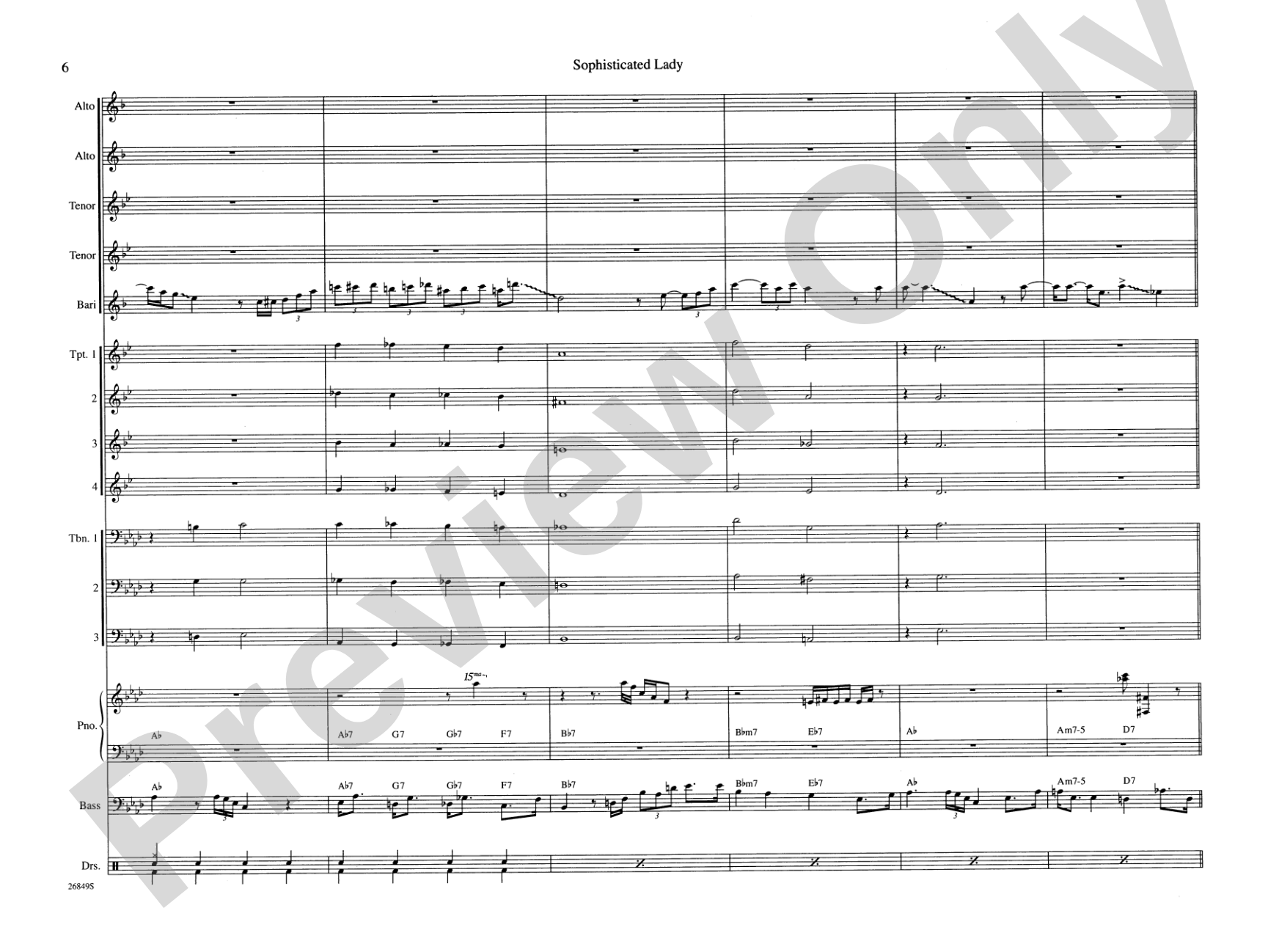
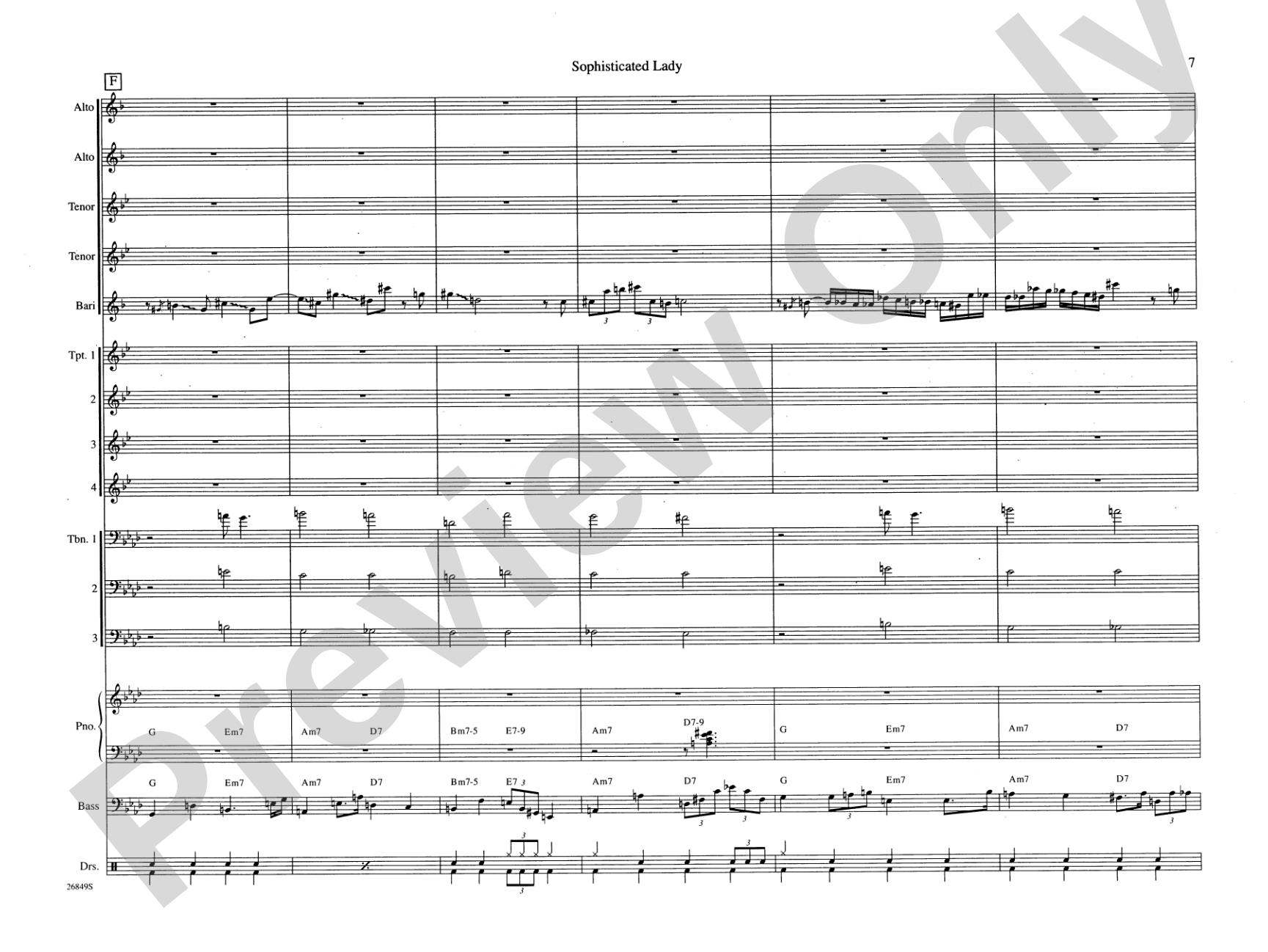
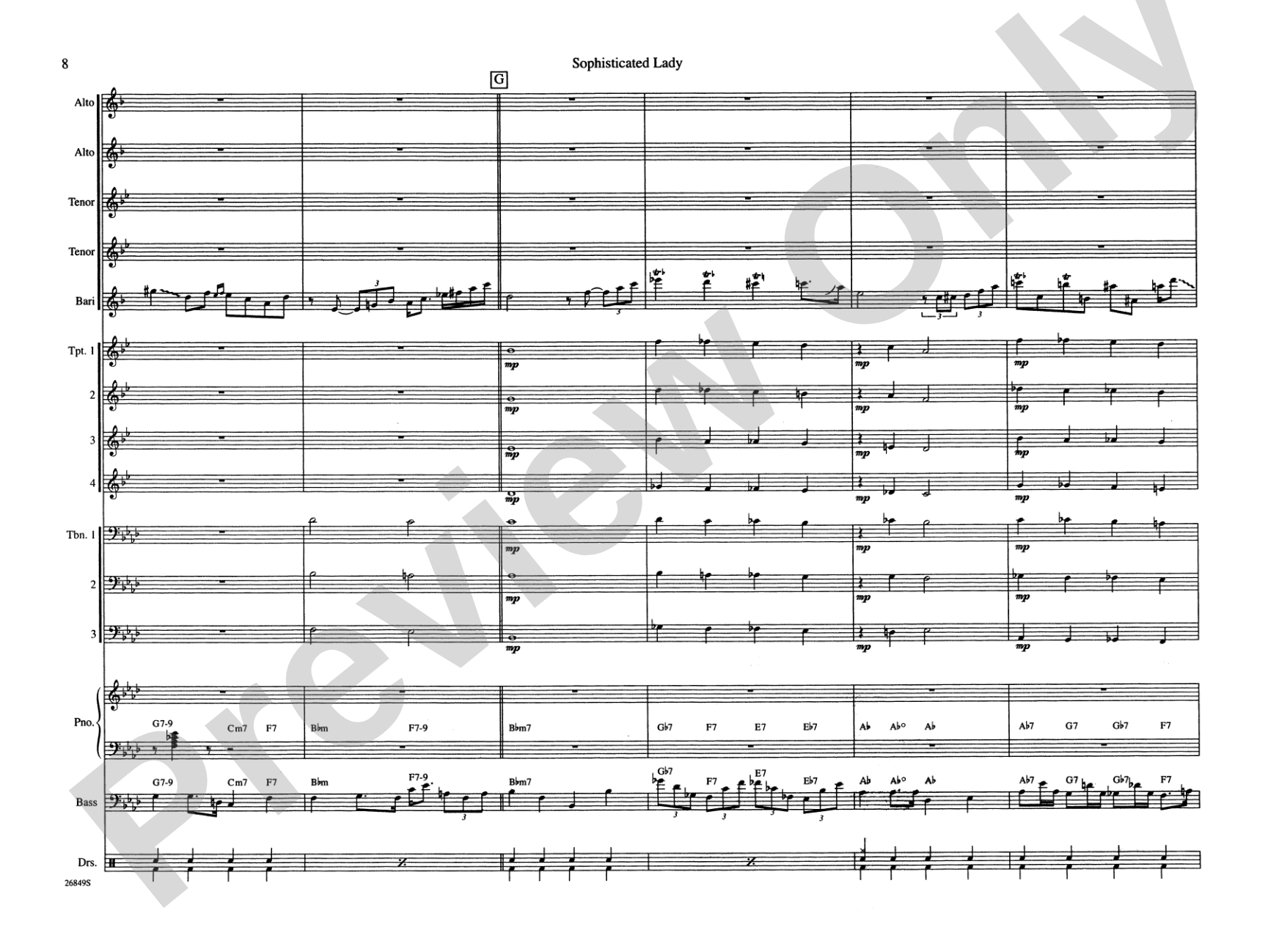
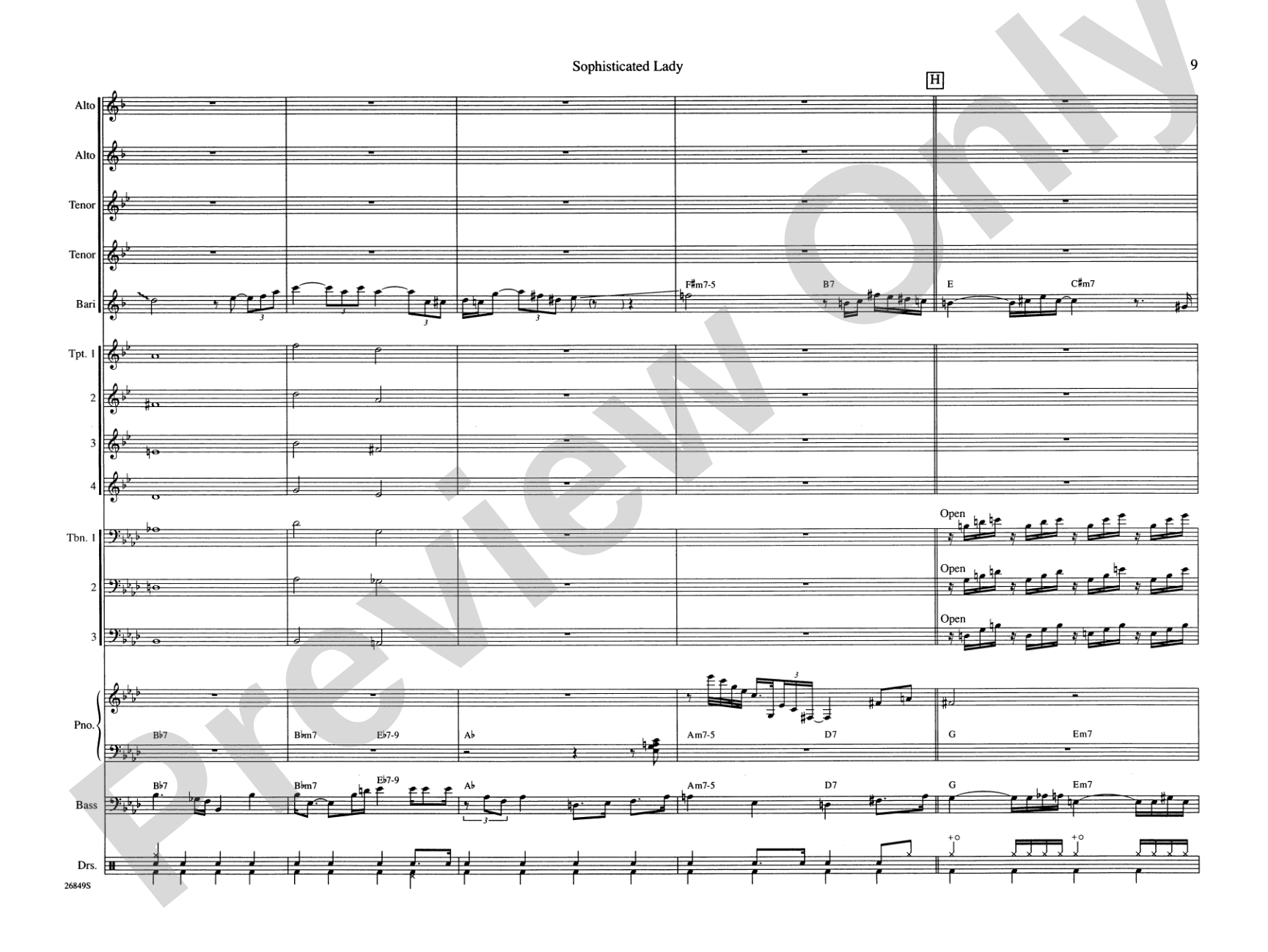
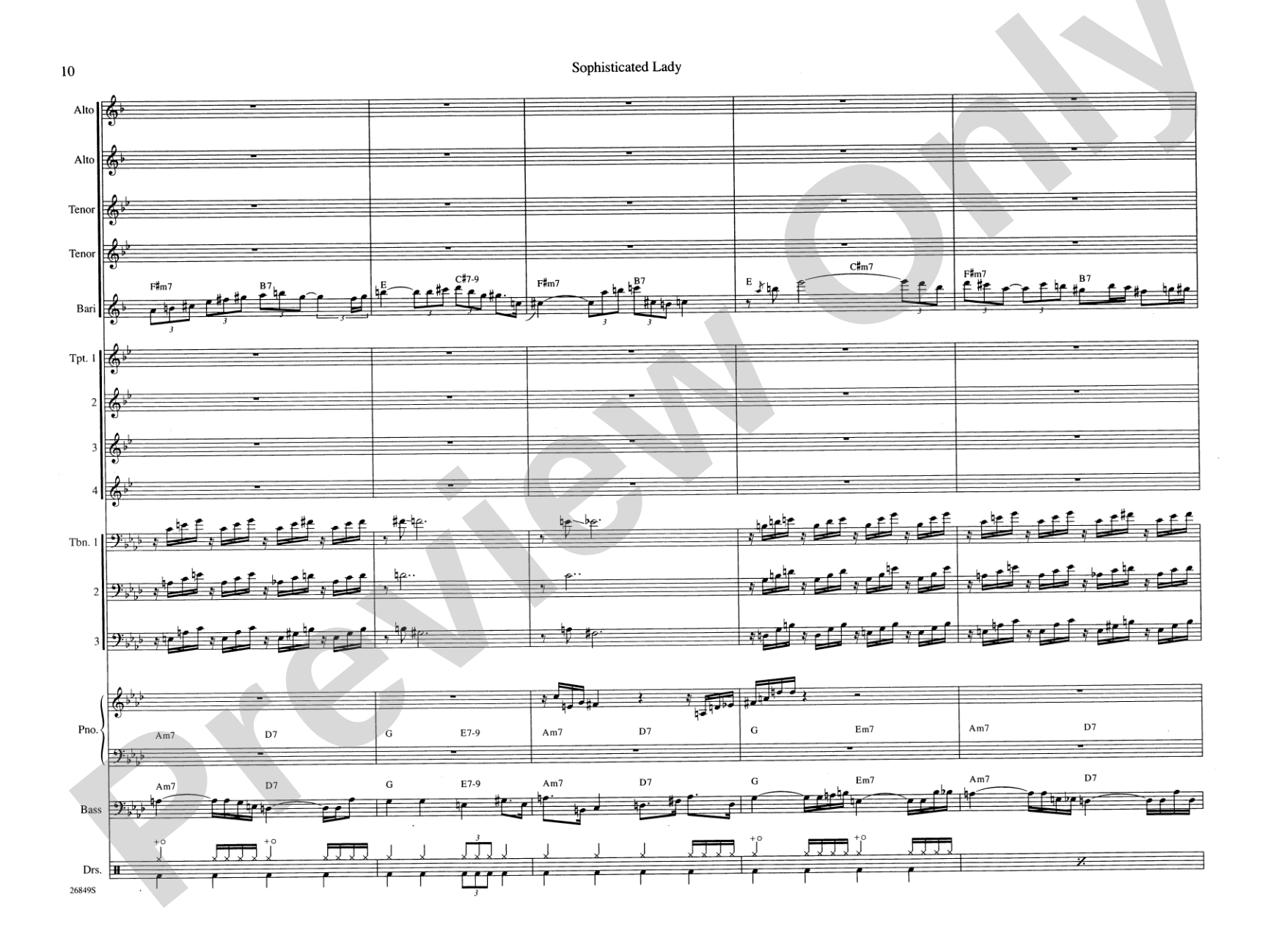
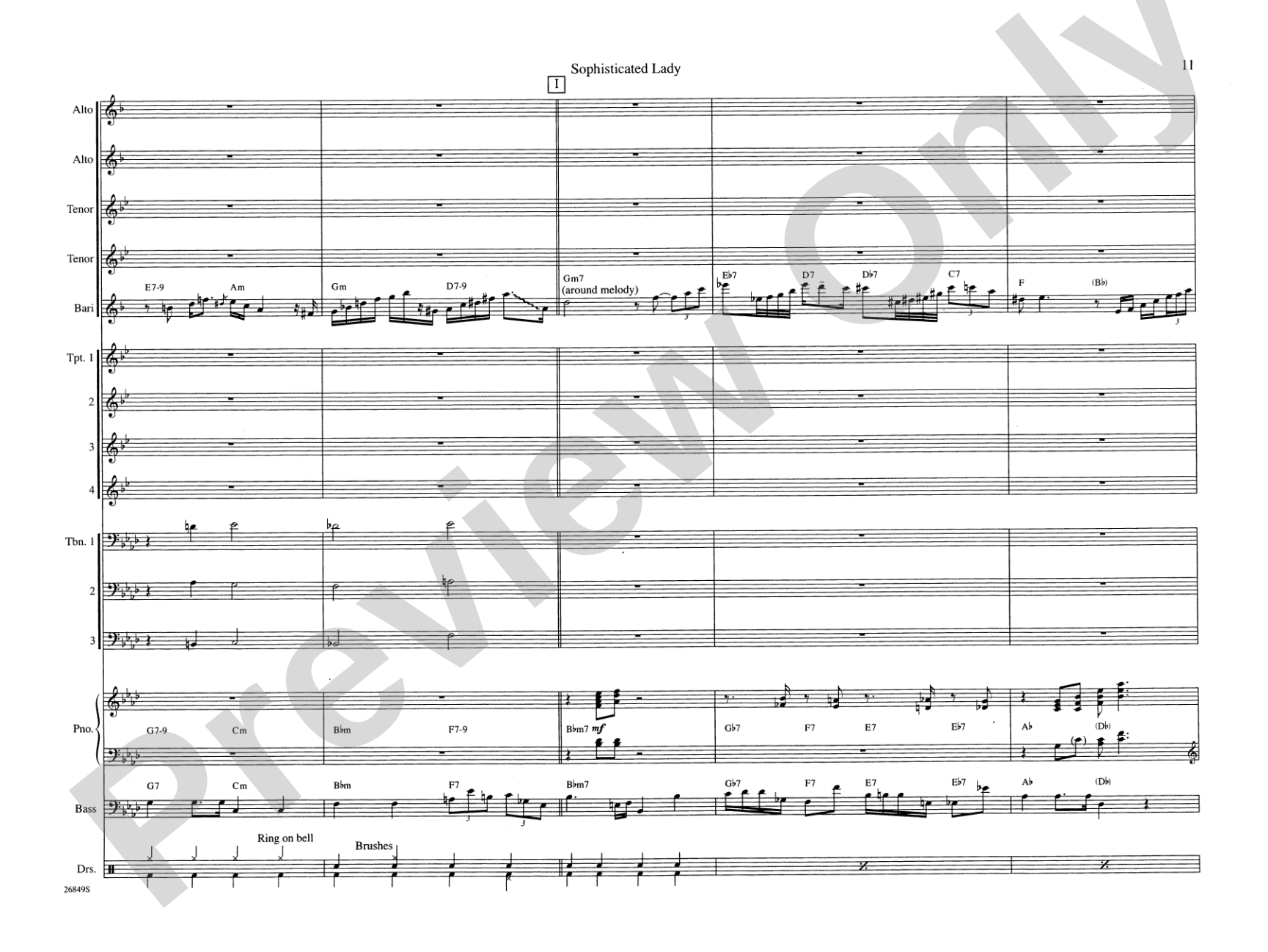
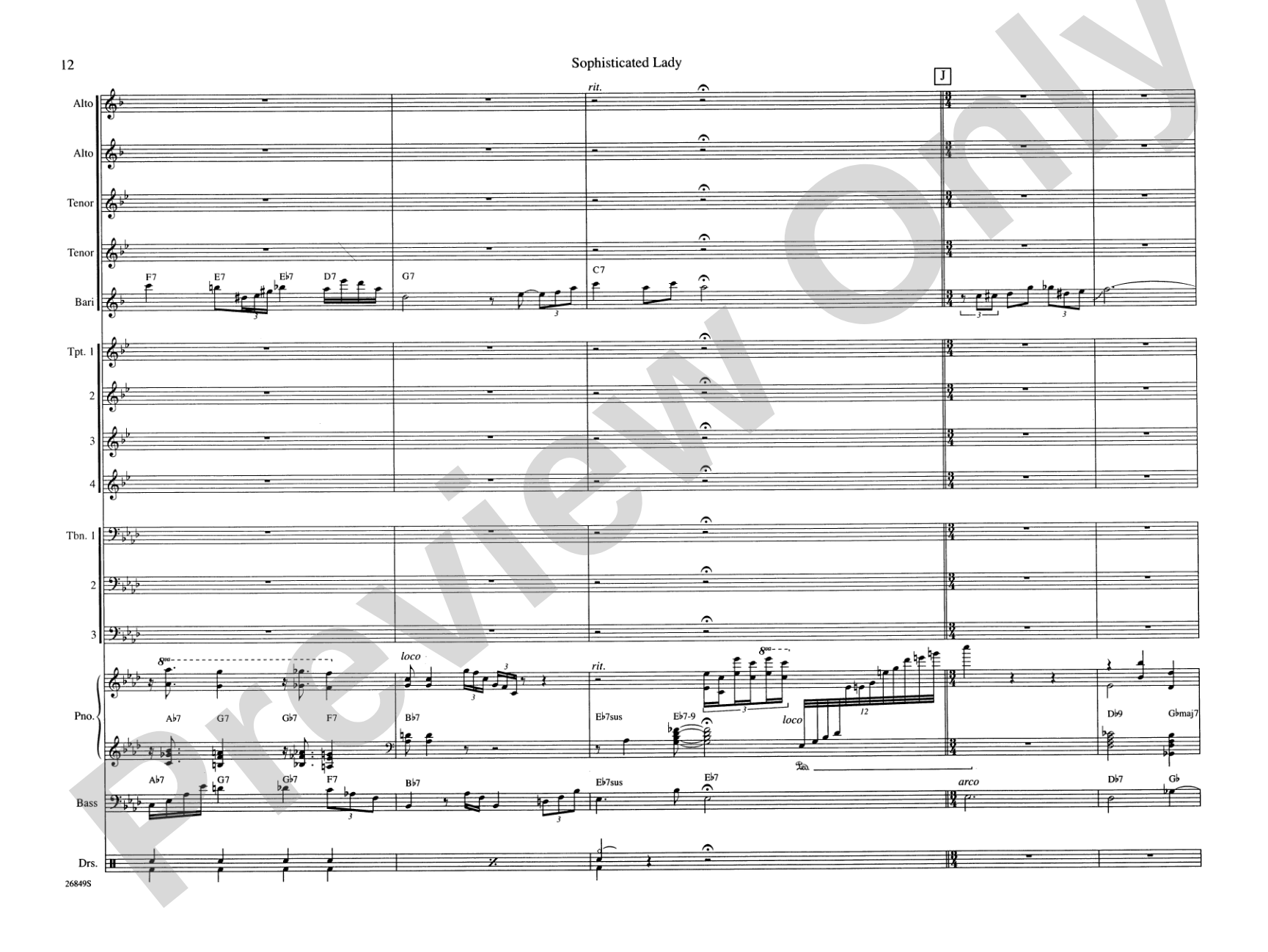
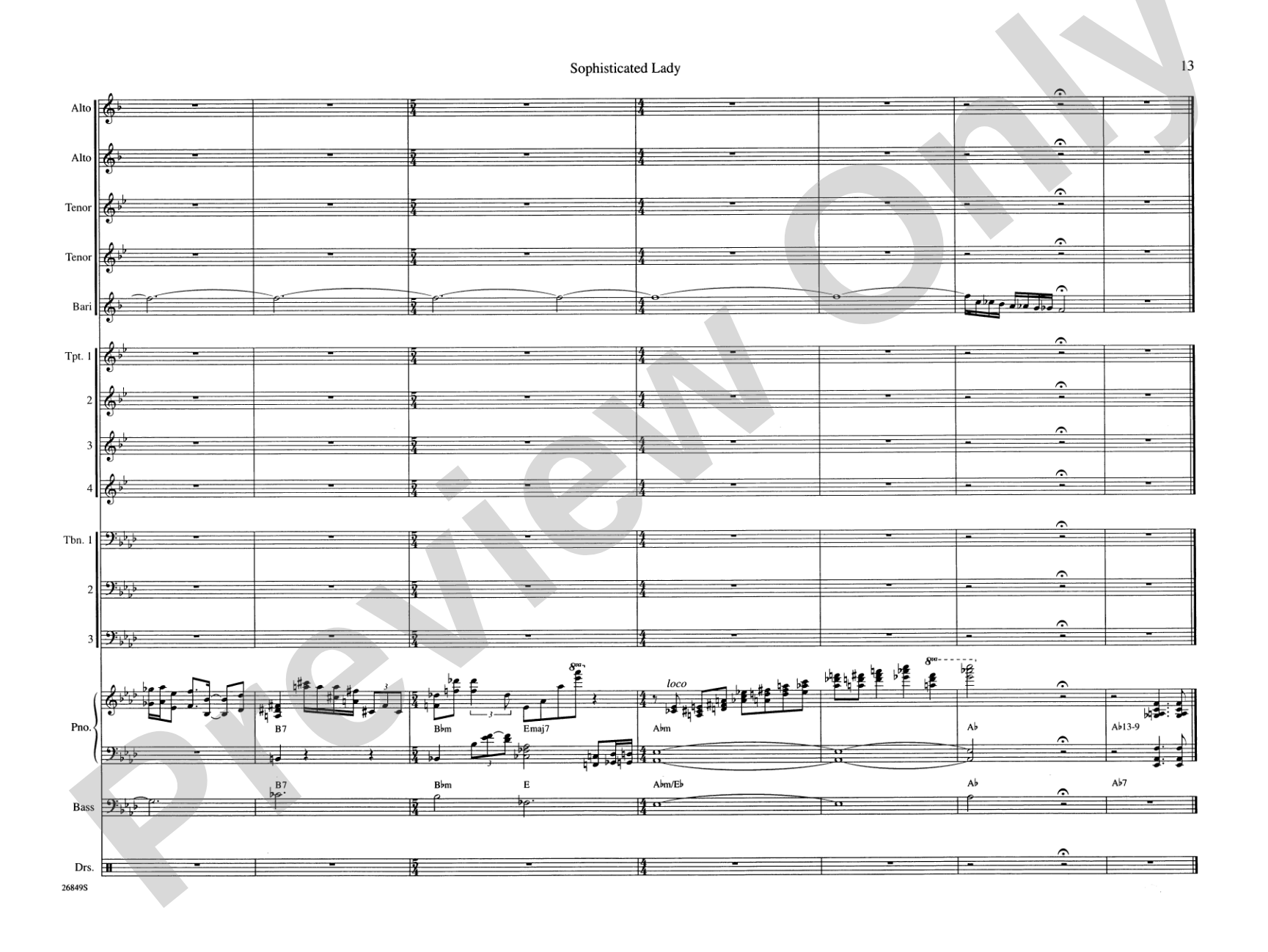


Sophisticated Lady: Jazz Ensemble Conductor Score & Parts
By Duke Ellington, Irving Mills, and Mitchell Parish / transcr. David Berger
Item: 00-PK-0001292

$55.00
One moment…
Description
This title is available in MakeMusic Cloud.


Don't just read it, hear it, play along with it, and watch your students grow with it. In MakeMusic Cloud, Sophisticated Lady: Jazz Ensemble Conductor Score & Parts comes alive with professional accompaniment, adjustable tempo, and built-in practice tools that turn solo practice into real progress.
Open in the Player
Jump straight in and assign it today.
Start Your Free Trial
Open this title and explore the full library in minutes.
Sample Audio
No sample audio found.
Sample Video
No sample videos found.
Additional Details
Series:
Essentially Ellington: Jazz at Lincoln Center Library
Publisher:
Alfred Music
Page Count:
46
SKU:
00-PK-0001292
More about this title
About the Arranger: David Berger
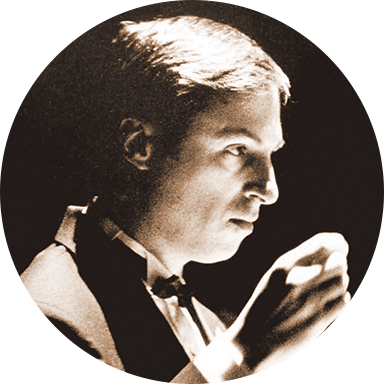
David Berger stands as one of the most authoritative voices on Duke Ellington and Swing Era repertoire. His work as conductor and arranger with the Lincoln Center Jazz Orchestra (1988-1994) established him as a trusted interpreter of this music, and his scholarly depth is evident in the hundreds of full scores he has transcribed from classic recordings, including nearly 500 works by Ellington and Billy Strayhorn.
Berger's arrangements reflect both historical fidelity and practical musicianship. His deep familiarity with the original recordings informs every voicing and dynamic choice, making his scores valuable teaching tools for ensembles serious about understanding Ellington's compositional language.
Why we love this
Berger's arrangement honors the sophistication of Ellington's original without overwhelming young ensembles. The writing is idiomatic to jazz voices and instruments, the parts are playable at a high school level, and the 46 pages give you a contest-ready arrangement grounded in authentic swing style rather than a simplified version.
What to expect
Elegant and intricate, with the liquid sophistication the title promises. The piece opens with a classic Ellington sensibility—rich harmonic colors, unexpected voice leading, and a rhythmic sophistication that rewards repeated listening.
Who it's for
Jazz ensembles at the high school and college level who want a substantial, stylistically authentic arrangement for festivals and concerts. Directors building a program grounded in genuine Ellington repertoire will find this a centerpiece rather than a filler piece.
How to get the most out of it
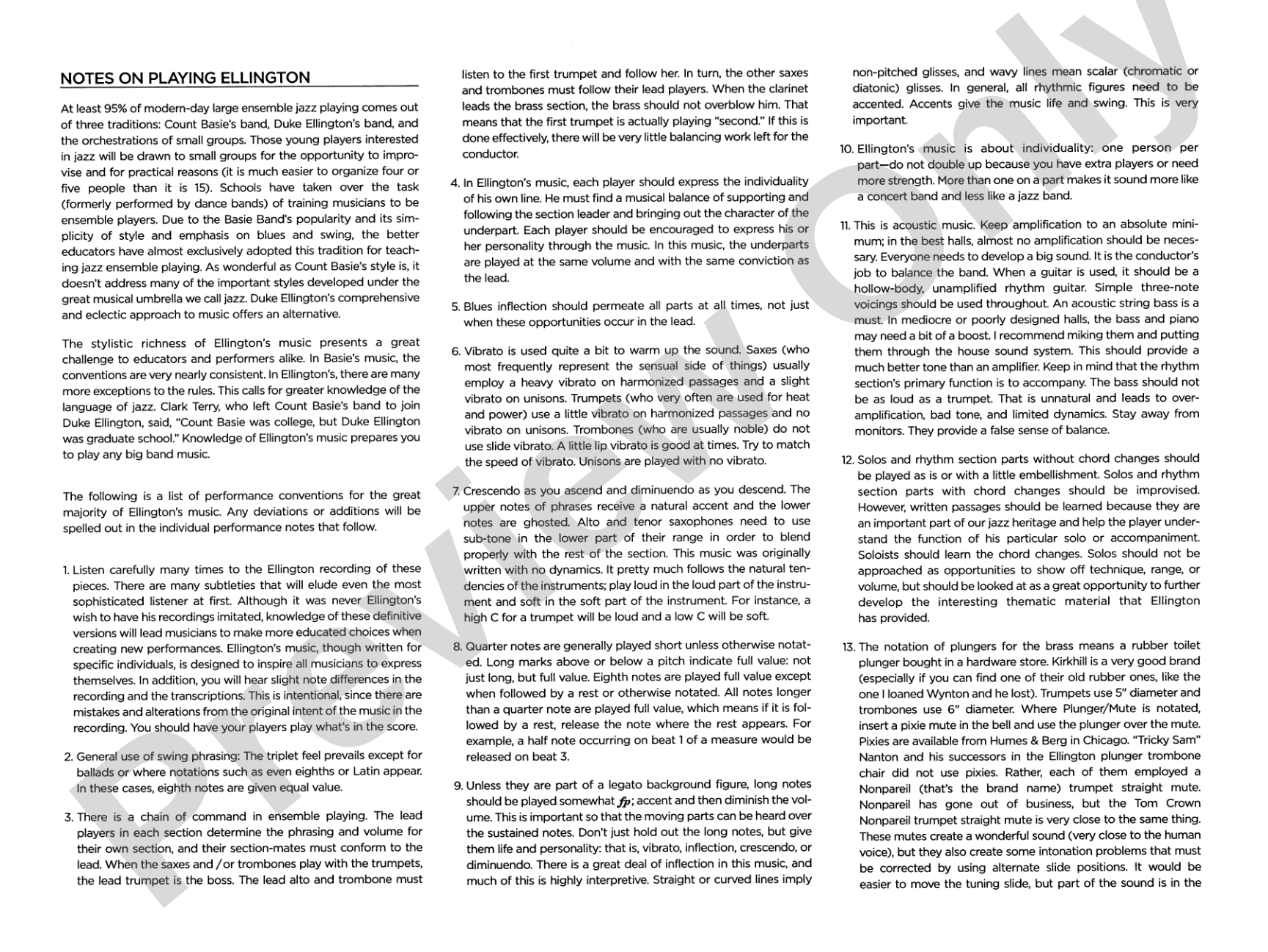
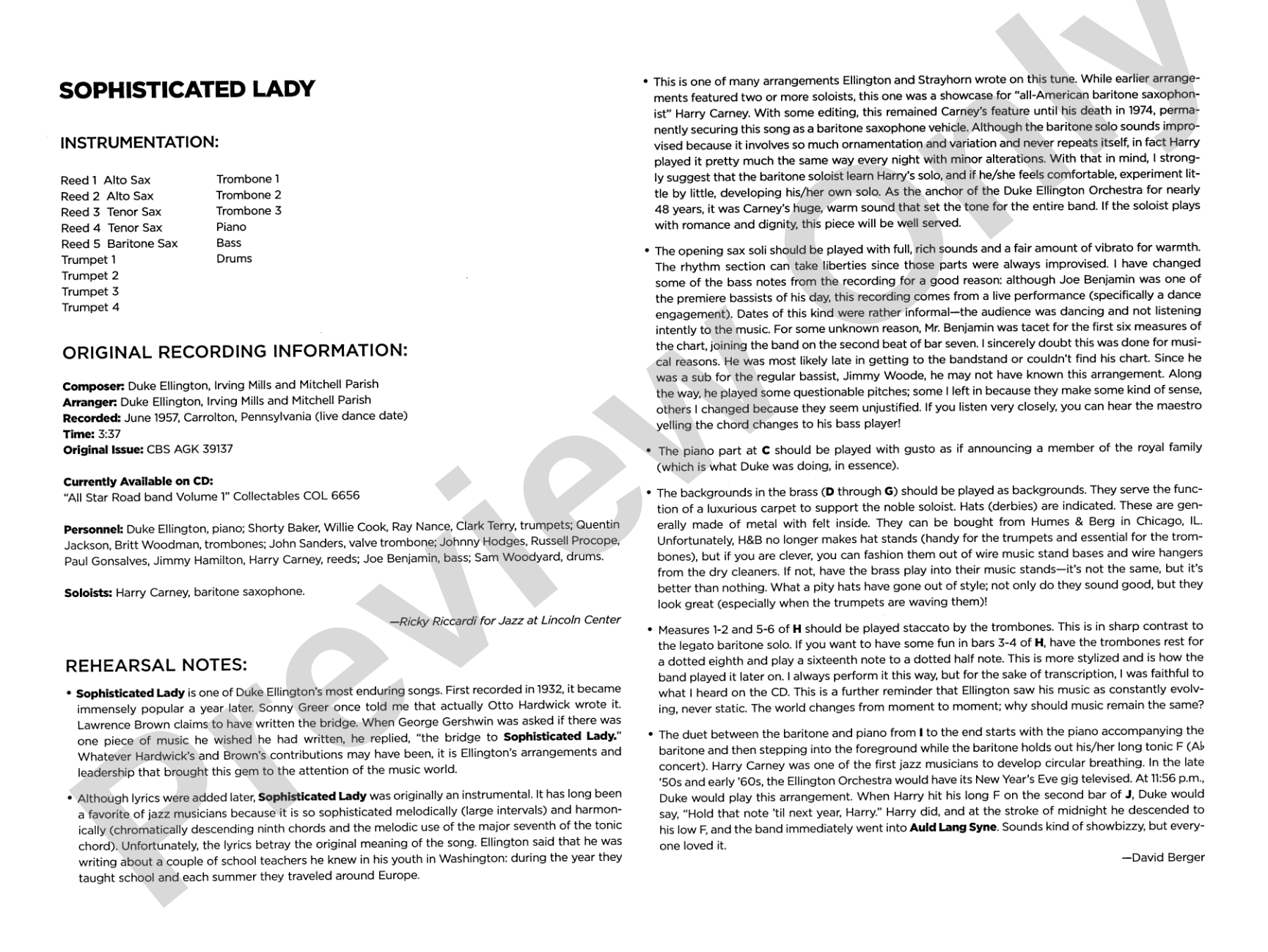
- Listen to Ellington's original recording before rehearsal. Berger's orchestration reflects specific details from Duke's band sound, and knowing the reference recording accelerates your section's understanding of style and balance.
- Pay close attention to the rhythm section foundation. Jazz ensemble sound lives or dies with how the drums, bass, and piano lock together, so spend rehearsal time on those parts before layering in the horns.
- Shape phrases around the soloists rather than playing every section identically. Berger's arrangement includes room for individual voices to breathe, and your ensemble will sound more alive if you lean into that architecture.
- Balance upper and lower voicings carefully. Ellington's arranging genius depends on hearing all four or five lines at once, so resist the impulse to feature the trumpet section at full volume when the trombones and saxophones carry equal harmonic weight.
How to use it
This works beautifully as a festival or contest entry, where an authentic Ellington arrangement demonstrates your ensemble's depth. Pair it alongside other Swing Era repertoire for a program that explores the era's harmonic language, or use it as your concert anchor if you're featuring Duke's music.
Skills your students will build
- Reading and executing tight jazz voicings across four or five instrument families
- Maintaining swing feel in fast and slow sections
- Balancing solo and ensemble roles within a single piece
- Understanding Ellington's harmonic vocabulary and voice-leading practices
- Responding to rhythmic independence in the rhythm section while maintaining ensemble cohesion