
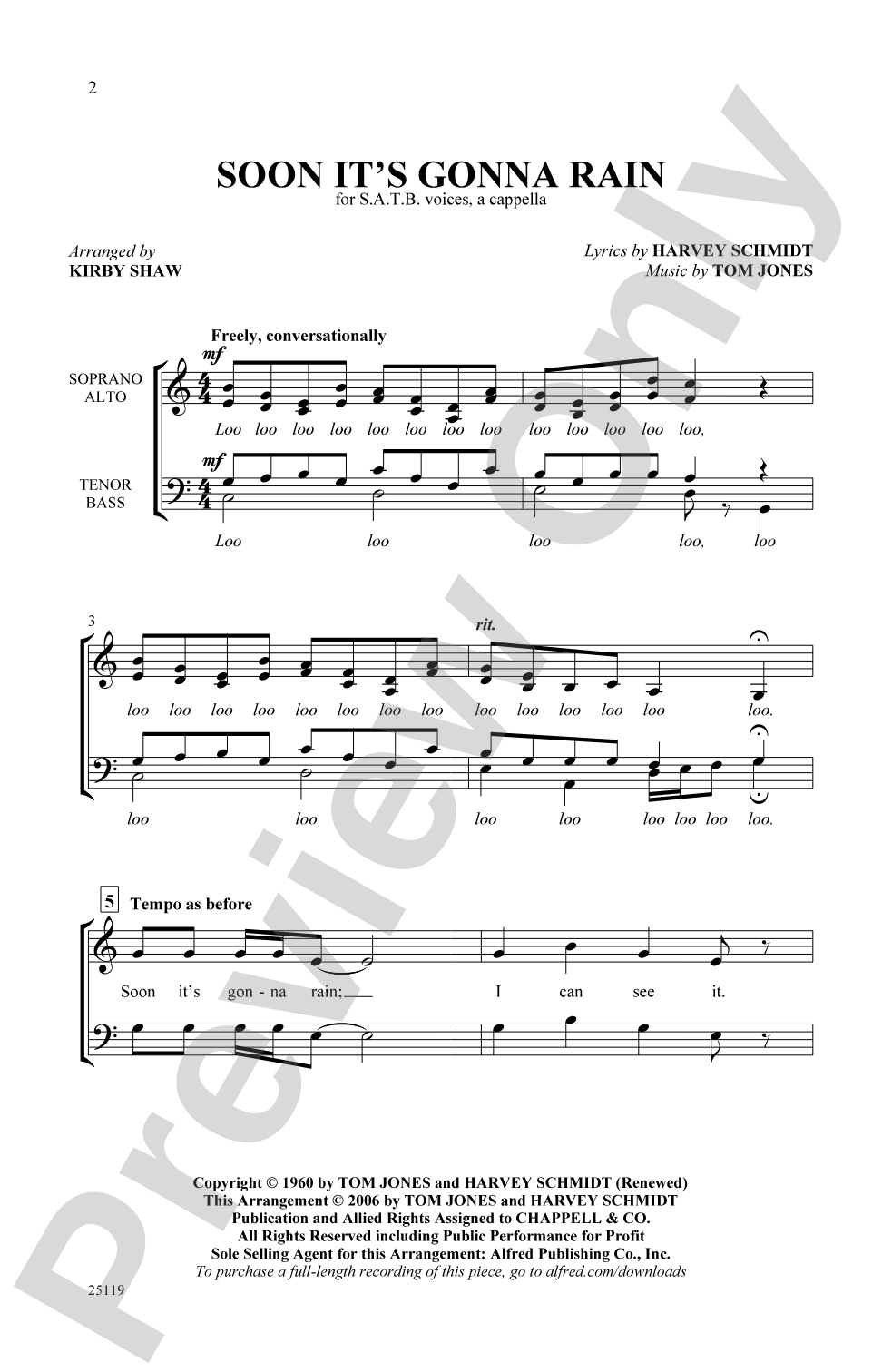

Soon It's Gonna Rain: SATB, a cappella Choral Octavo
From The Fantasticks
By Harvey Schmidt and Tom Jones / arr. Kirby Shaw
Item: 00-PO-0007749
$1.75
Minimum order quantity: 20 copies
Pickup currently not available
Related Items
Soon It's Gonna Rain: SATB, a cappella Choral Octavo |
$1.75
|
View |
Description
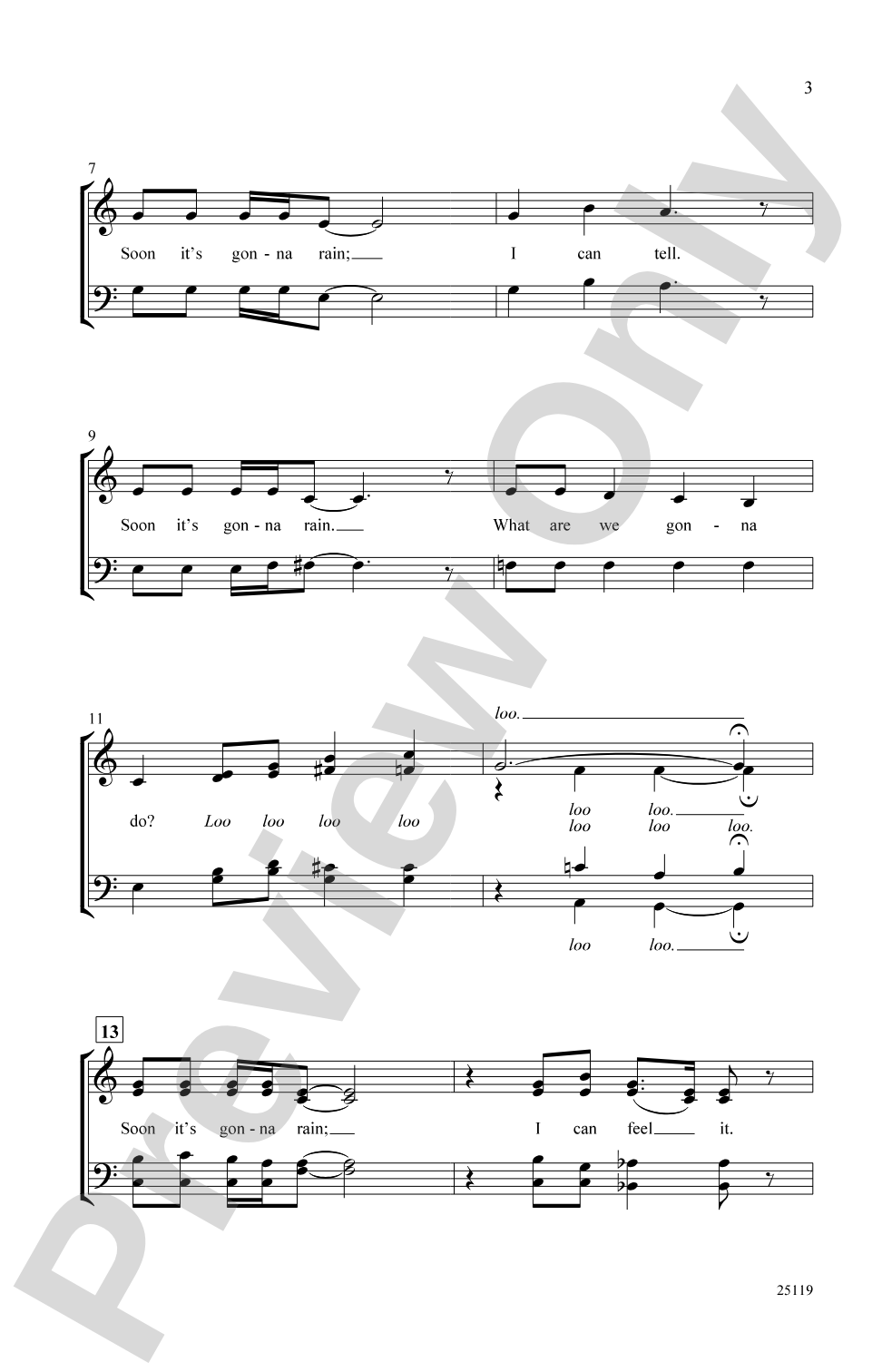
This touching ballad from The Fantasticks, the longest running musical in the history of the American stage, has been beautifully arranged for a cappella voices by Kirby Shaw. With its lush harmonic treatment of the tender melody, this arrangement is appropriate for any SATB choir from a show choir/vocal jazz group to a traditional chorus.


Soon It's Gonna Rain: SATB, a cappella Choral Octavo isn't in MakeMusic Cloud just yet...but it could be. Let us know you'd like to see it, and you'll help shape what comes next. In the meantime, start a free trial and dive into thousands of interactive titles your students can play along with today.
Request This Title
Tell us you want it.
Start Your Free Trial
Explore everything that's ready to play right now.
Sample Audio
1
Audio File
--:--
0:00
0:00
Sample Video
No sample videos found.
Additional Details
Series:
Alfred Pop Choral Series
Publisher:
Alfred Music
Page Count:
8
SKU:
00-PO-0007749
More about this title
About the Composer: Harvey Schmidt
Harvey Schmidt composed the score for The Fantasticks alongside lyricist Tom Jones in 1960. Their collaboration created one of the most enduring works in American musical theater, with the show running for over 40 years off-Broadway and spawning productions worldwide. Schmidt's gift for crafting memorable melodies with sophisticated harmonic support made him a pivotal figure in the American musical theater canon.
Throughout his career, Schmidt demonstrated a keen understanding of how music serves dramatic storytelling. His compositions balance accessibility with musical depth, a quality that has made his work particularly valuable for choral arrangers seeking material that engages both singers and audiences.
Why we love this
Kirby Shaw's arrangement captures the tenderness of this beloved ballad while giving it genuine harmonic sophistication that rewards careful listening. The voicing works beautifully across different choir contexts, from show choirs that thrive on jazzy flexibility to traditional ensembles seeking a contemporary sound with emotional depth. Programming this piece signals to your audience that your choir values both accessibility and artistry.
What to expect
The piece unfolds like a quiet conversation between old friends, with warmth and underlying tenderness. Shaw's harmonies create depth without heaviness; the sound is intimate and reflective, inviting listeners into a moment of genuine emotional connection. There is optimism in the melody even as the lyrics anticipate change, and that balance gives the piece its particular poignancy.
Who it's for
This arrangement suits SATB choirs across the spectrum, from show choirs and vocal jazz ensembles to chamber choirs and traditional concert choruses. Directors seeking a piece that bridges contemporary style with theatrical accessibility will find it immediately usable. The a cappella format makes it practical for programs where instrumental accompaniment is limited or unavailable.
How to get the most out of it
- Pay close attention to the harmonic movement beneath the melody. The lush voicing means every voice carries musical weight, so balance is not about bringing out the tune but about letting the inner parts breathe and support the line.
- Approach this a cappella setting as an opportunity to shape phrasing without relying on instrumental landmarks. Work the breath points carefully so the melody feels sustained even during rests.
- Use dynamic contrast to reveal the arrangement's sophistication. The tender character invites restraint in the softer moments, which makes the fuller passages land with greater impact.
- If incorporating movement and staging, let the blocking grow from the emotional arc of the song rather than competing with it. The arrangement's beauty lies in vocal storytelling.
How to use it
Situate this arrangement as a showcase moment that demonstrates your choir's vocal flexibility and emotional maturity. It pairs well in a mixed program between more energetic contemporary pieces and classical repertoire, offering a breathing space that feels intentional rather than transitional. The show's enduring cultural presence means many audiences will recognize it, which can strengthen the connection your choir makes with listeners.
Skills your students will build
- Singing jazz-influenced harmony in four parts without instrumental reference
- Balancing inner voice independence with ensemble blend in lush voicings
- Shaping long phrases through breath control and dynamic control in a cappella singing
- Interpreting theatrical material through choral performance
- Intonation precision in complex tertian harmony