

Soon I Will Be Done: SSATB, a cappella Choral Octavo
Arr. Mark Hayes
Item: 00-PO-0002146
$3.50
Minimum order quantity: 20 copies
Pickup currently not available
Related Items
Soon I Will Be Done: SSATB, a cappella Choral Octavo |
$3.50
|
View |
Description
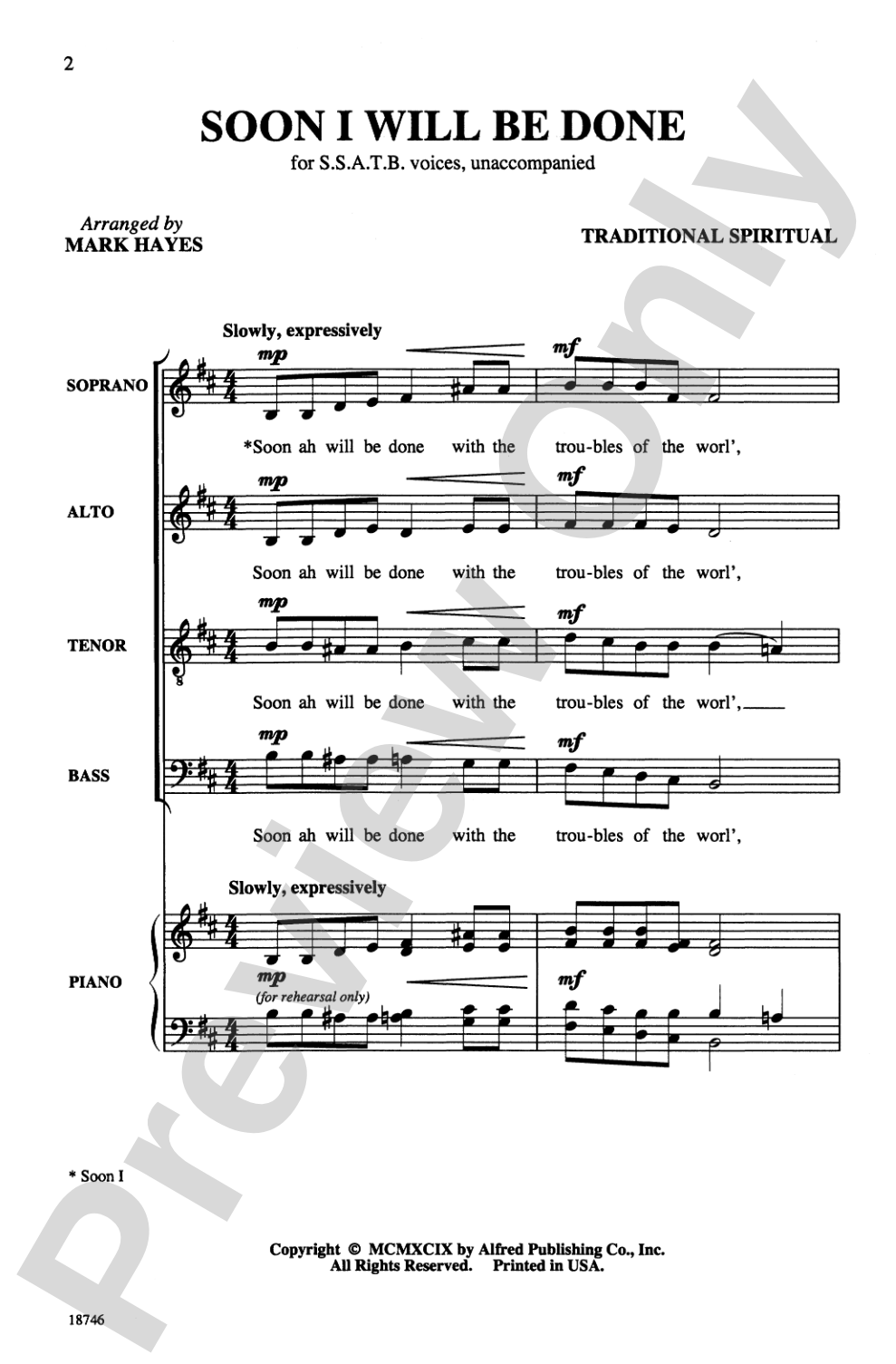
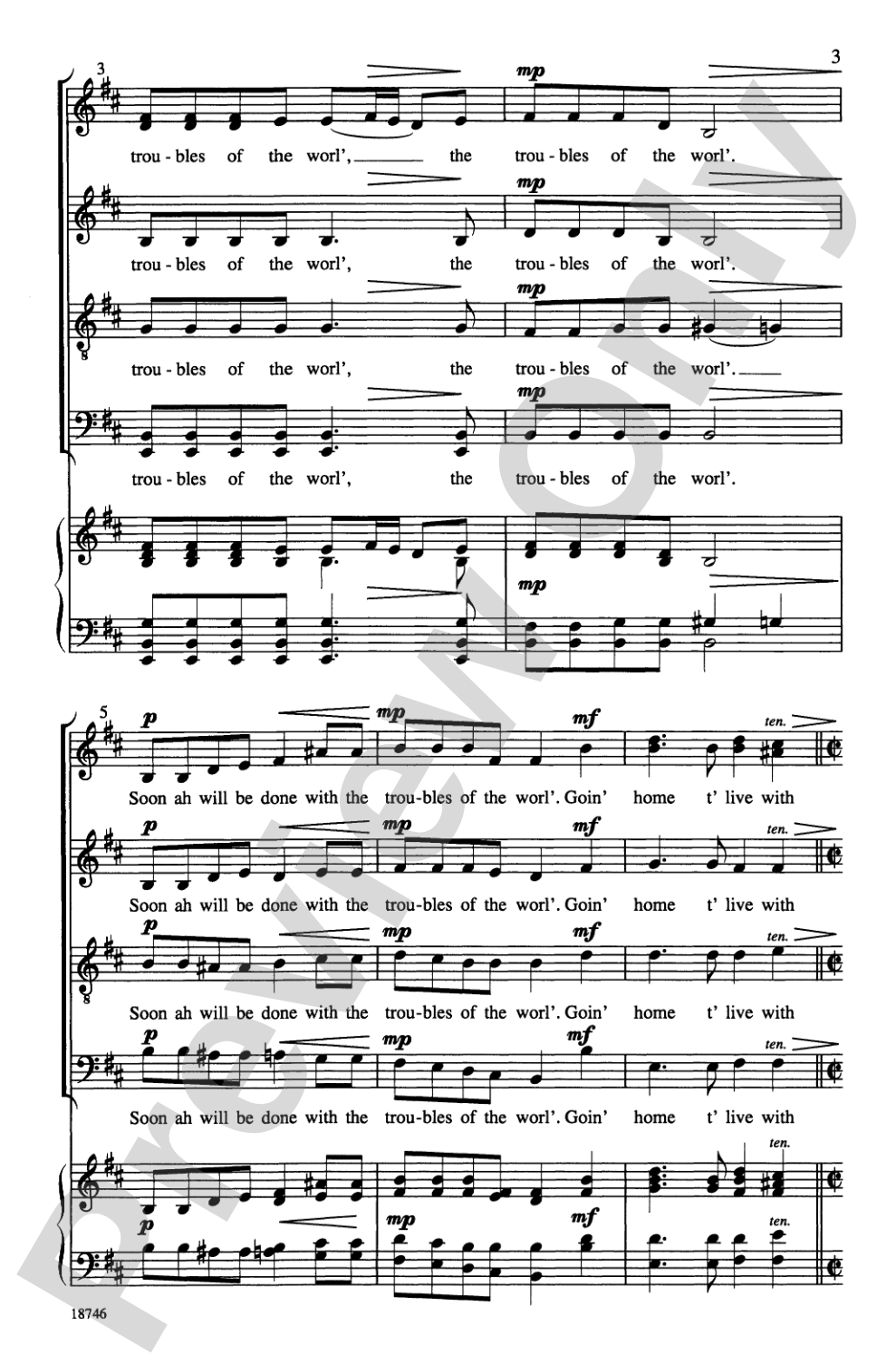
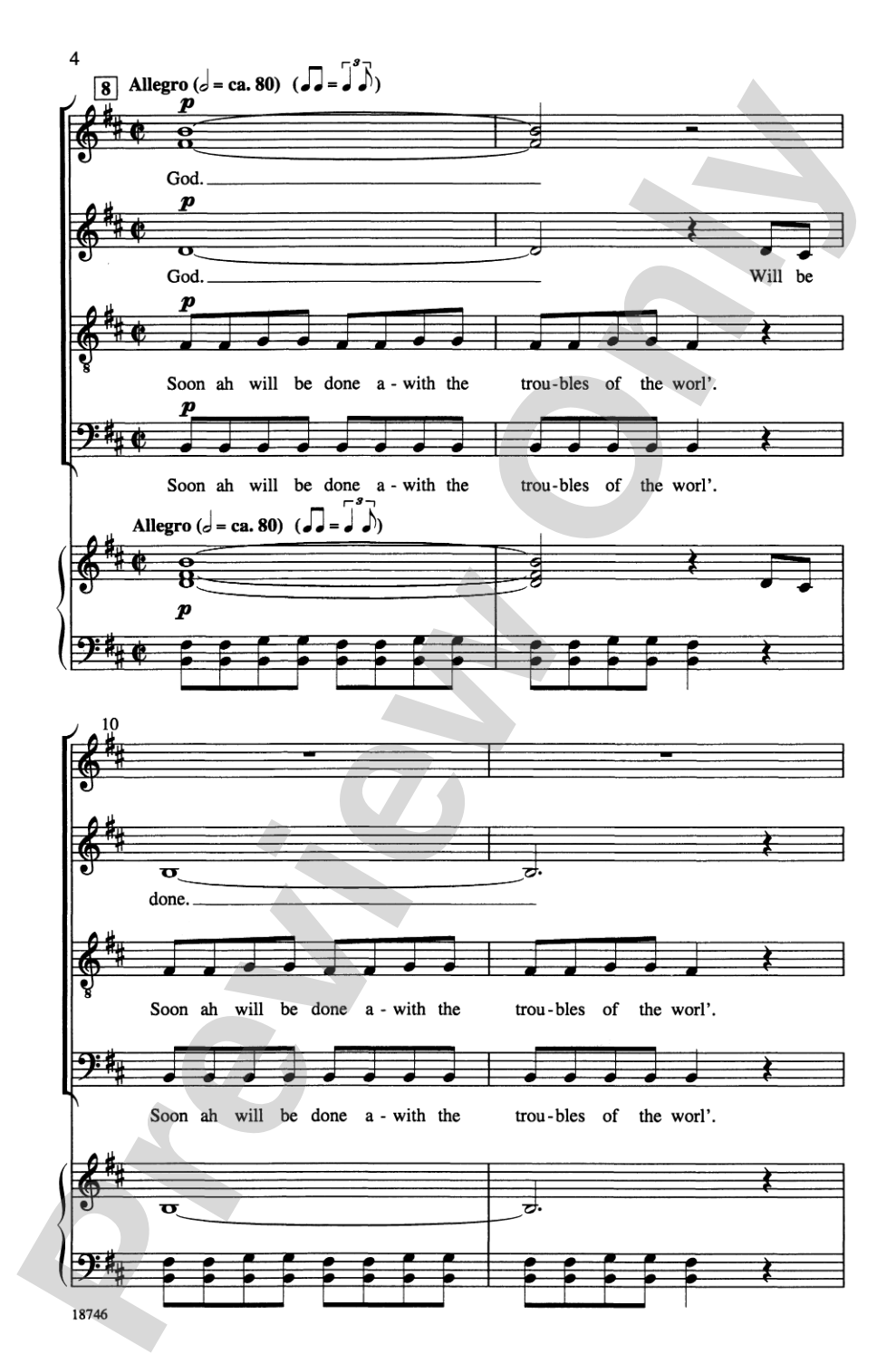
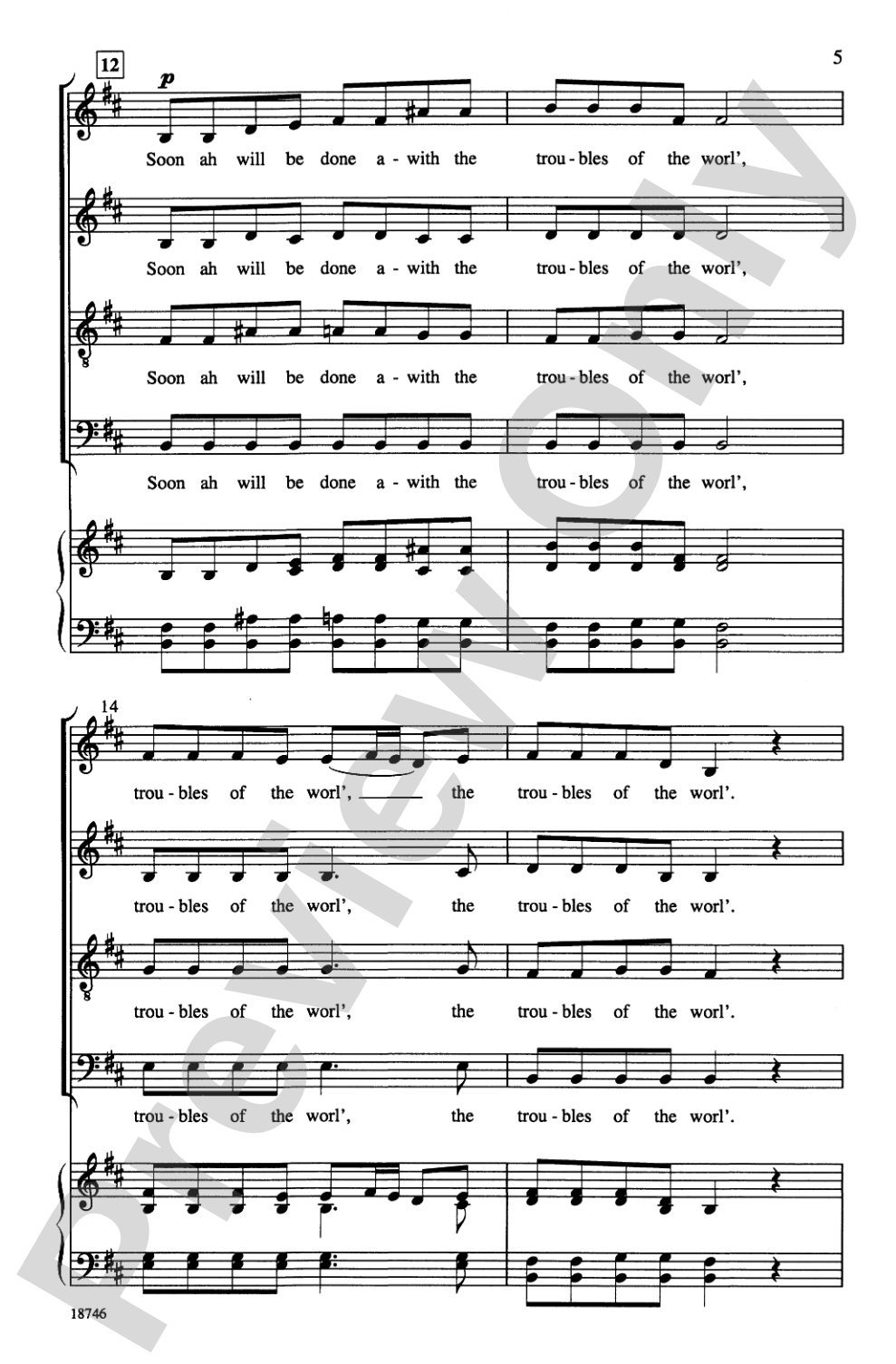
Mark Hayes' newest spirital arrangement is in the classic, time-honored choral style, with full, a cappella scoring throughout. Powerful sectional writing often contrasts the men with the women, and sudden dynamic changes add interest.


Soon I Will Be Done: SSATB, a cappella Choral Octavo isn't in MakeMusic Cloud just yet...but it could be. Let us know you'd like to see it, and you'll help shape what comes next. In the meantime, start a free trial and dive into thousands of interactive titles your students can play along with today.
Request This Title
Tell us you want it.
Start Your Free Trial
Explore everything that's ready to play right now.
Sample Audio
1
Audio File
--:--
0:00
0:00
Sample Video
No sample videos found.
Additional Details
Series:
Alfred Archive Edition: Alfred Choral Designs
Publisher:
Alfred Music
Page Count:
20
SKU:
00-PO-0002146
More about this title
About the Arranger: Mark Hayes
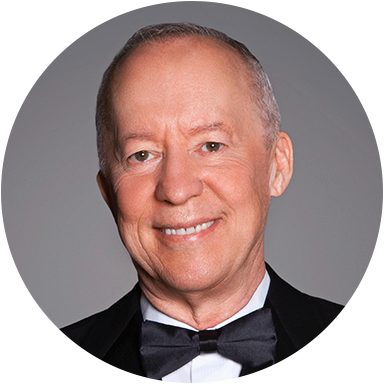
Mark Hayes has established himself as a prolific composer and arranger whose catalog exceeds 1,750 published works spanning sacred music, piano literature, orchestral works, and musical theater. A summa cum laude graduate in Piano Performance from Baylor University, Hayes has conducted world premieres of his major choral works at Lincoln Center and performed his compositions at prestigious venues including Carnegie Hall and the National Cathedral. In 2010, Baylor University's Center for Christian Music Studies recognized him with the Award for Exemplary Leadership in Christian Music.
Beyond the concert hall, Hayes has contributed significantly to musical theater, orchestrating the musical Madame Buttermilk and arranging scores for stage productions. His work in sacred music earned international reach when he was commissioned to write a large-scale work for treble and mixed voices with orchestra for a major institution's centennial celebration, which he premiered in Hong Kong in 2015. Based in Kansas City, Missouri, Hayes continues to compose across multiple genres, with particular emphasis on piano works and choral literature.
Why we love this
Hayes brings decades of conducting experience directly into his arrangement; the sectional contrasts and dynamic shapes feel written by someone who knows exactly how singers move between eight measures of soft vulnerability and sudden powerful unison. The a cappella scoring demands focused ensemble listening and intonation work, yet the spiritual's natural rhythmic momentum keeps the music alive rather than precious.
What to expect
The spiritual emerges with reverence and power; Hayes honors the tradition by building from intimate, closely voiced passages into moments of full ensemble brightness that feel earned rather than inevitable. The absence of accompaniment places every voice's responsibility into sharper relief, creating an immediacy and vulnerability that connects directly to the emotional depth of the text.
Who it's for
Treble and mixed choirs with solid intonation skills and the ability to sustain focus through unaccompanied singing. This arrangement suits intermediate to advanced community choirs, church choirs with strong musical leadership, and college or high school choirs preparing for festival or concert performance.
How to get the most out of it
- Mark the structural moments where Hayes shifts the textural balance (men against women, full ensemble against soloists) in rehearsal; these are the arrangement's dramatic spine, and singers need to understand the architectural purpose of each shift, not just execute the dynamic change.
- Tune the sustained chords that support sectional entries with particular care; without instrumental support, even small intonation slips between parts become audible, especially in the hymn-like passages where the harmony is open and exposed.
- Shape the sudden dynamic changes as dramatic events, not merely as written markings; each shift should feel purposeful and connected to the text rather than arbitrary, which requires singers to understand what the spiritual means at that moment.
- Balance the lower voices (men's parts) when they carry the melody or harmonic foundation; in a cappella writing, these lines often anchor the chord but can disappear if not given deliberate voice distribution in the ensemble.
How to use it
Program this as a centerpiece of a sacred concert or festival appearance, pairing it with other spirituals or hymn-based choral works to create a cohesive set. The piece works equally well as a closing number for a concert that moves through multiple sacred traditions, offering both musical sophistication and the spiritual's timeless emotional resonance.
Skills your students will build
- Sustaining intonation without instrumental support
- Responding to rapid dynamic and textural shifts
- Balancing four independent voice parts while maintaining harmonic clarity
- Interpreting sectional writing that contrasts men's and women's voices
- Understanding the role of silence and space in a cappella arranging