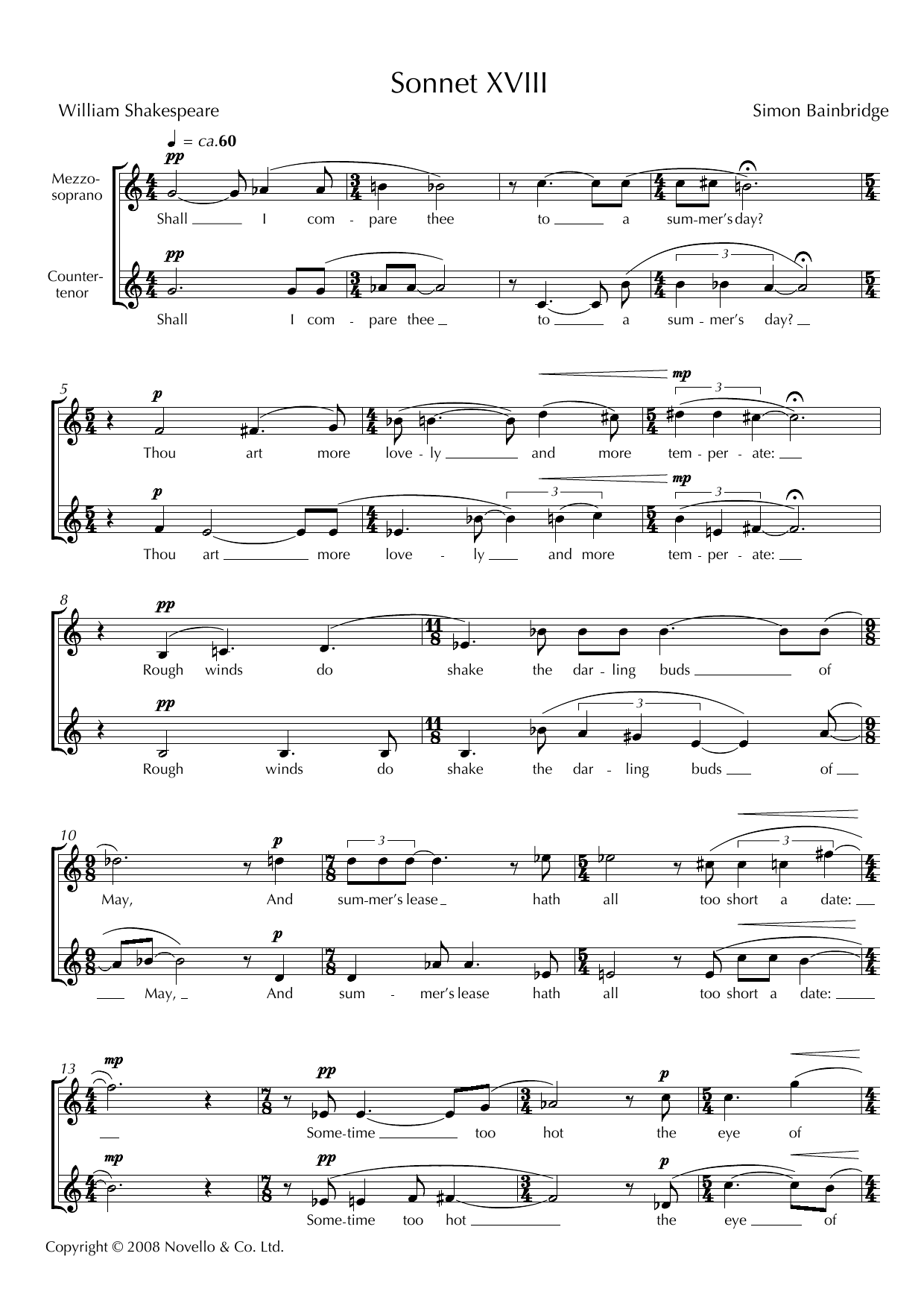
Sonnet XVIII (for mezzo-soprano and counter-tenor) Sheet Music Preview

Sonnet XVIII (for mezzo-soprano and counter-tenor): Piano Vocal

As performed by Simon Bainbridge

Item: 35-DS00365242

Digital Download
$5.99
Description

Sonnet XVIII (for mezzo-soprano and counter-tenor): Piano Vocal isn't in MakeMusic Cloud just yet...but it could be. Let us know you'd like to see it, and you'll help shape what comes next. In the meantime, start a free trial and dive into thousands of interactive titles your students can play along with today.

Sample Audio
No sample audio found.
Sample Video
Additional Details
Publisher: Hal Leonard
Page Count: 3
SKU: 35-DS00365242

More about this title

About the Artist: Simon Bainbridge

Simon Bainbridge is a British composer whose work spans orchestral, chamber, and vocal music with a particular gift for setting text. His compositions combine rigorous structural thinking with expressive melodic writing, making them both intellectually engaging and performatively rewarding. As a teacher and mentor, Bainbridge has shaped generations of composers while maintaining an active portfolio of new works.

Why we love this

The pairing of mezzo-soprano and counter-tenor creates an intimate dialogue that Bainbridge uses to illuminate Shakespeare's language. This is the kind of vocal writing that makes both singers feel seen, with lines that sit naturally in each voice while creating genuine dramatic tension between them.

What to expect

Conversational and probing, with the kind of musical intimacy that emerges when two voices inhabit the same emotional space. Bainbridge's harmonic language is modern but never cold, supporting the tenderness that Shakespeare's meditation on beauty and time demands.

Who it's for

Mezzo-sopranos and counter-tenors seeking repertoire that treats both voices as full artistic partners. Chamber ensembles building recital programs around art song traditions. Anyone looking to explore how contemporary composers approach the sonnet form.

How to get the most out of it

  • Balance the two voices as equal conversational partners rather than soloist and accompaniment. The counter-tenor shouldn't retreat into the background.
  • Listen closely to how Bainbridge phrases the text across the bar lines. Natural speech rhythm often conflicts with the notated meter, so trust the language first.
  • Work the piano part as a third voice in the ensemble. It's not merely supportive; it carries harmonic and emotional weight that both singers need to acknowledge.

How to use it

Pair this with other contemporary vocal chamber works to showcase how living composers engage with classic texts. It works particularly well in recital settings focused on dialogue and relationship, or in educational concerts exploring how music illuminates poetry.

Skills your students will build

  • Ensemble balance between soprano and alto ranges
  • Text interpretation across contemporary harmonic language
  • Collaborative listening and response in real time
  • Piano reduction reading and interpretive partnership

You May Also Like