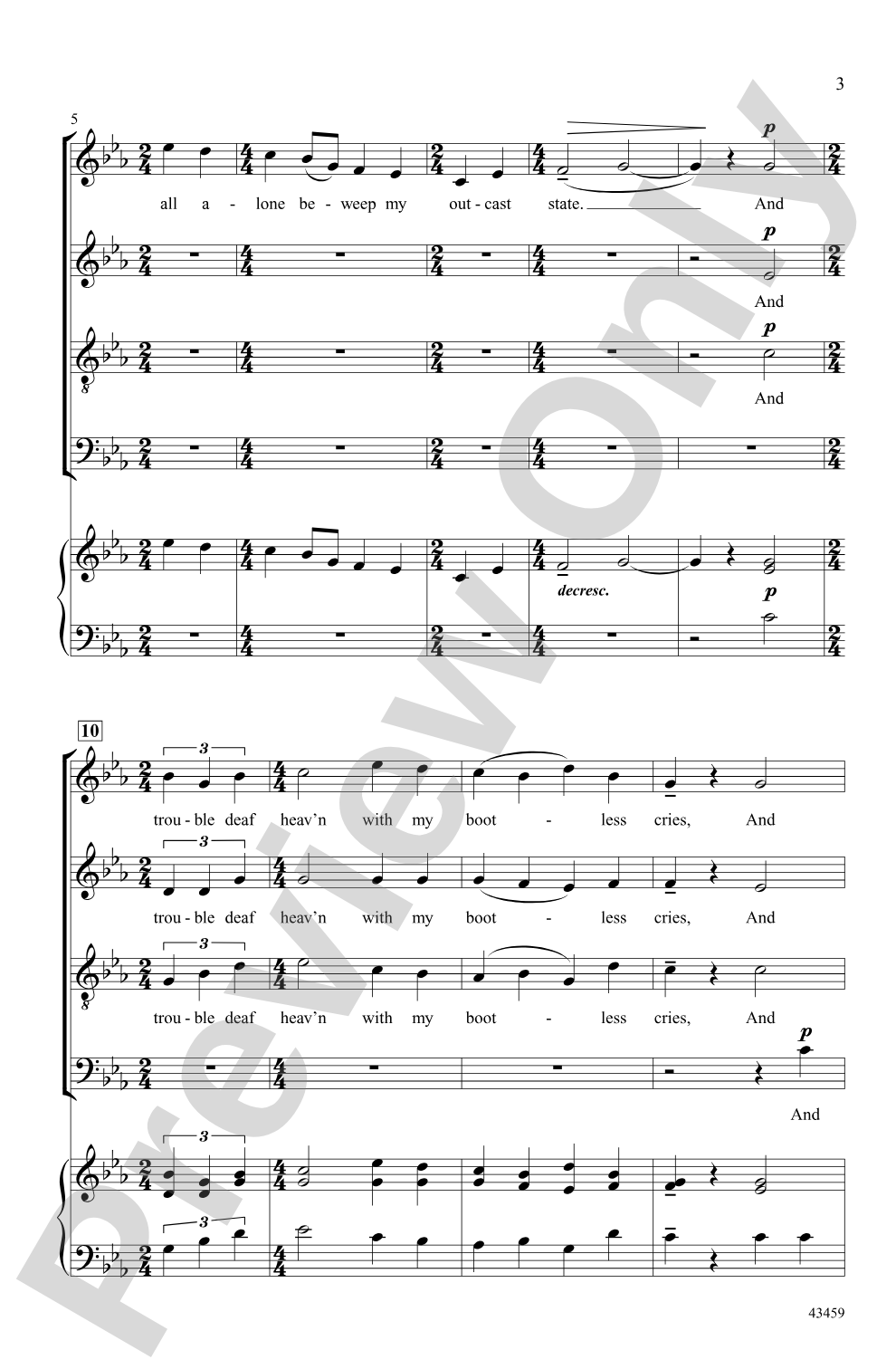
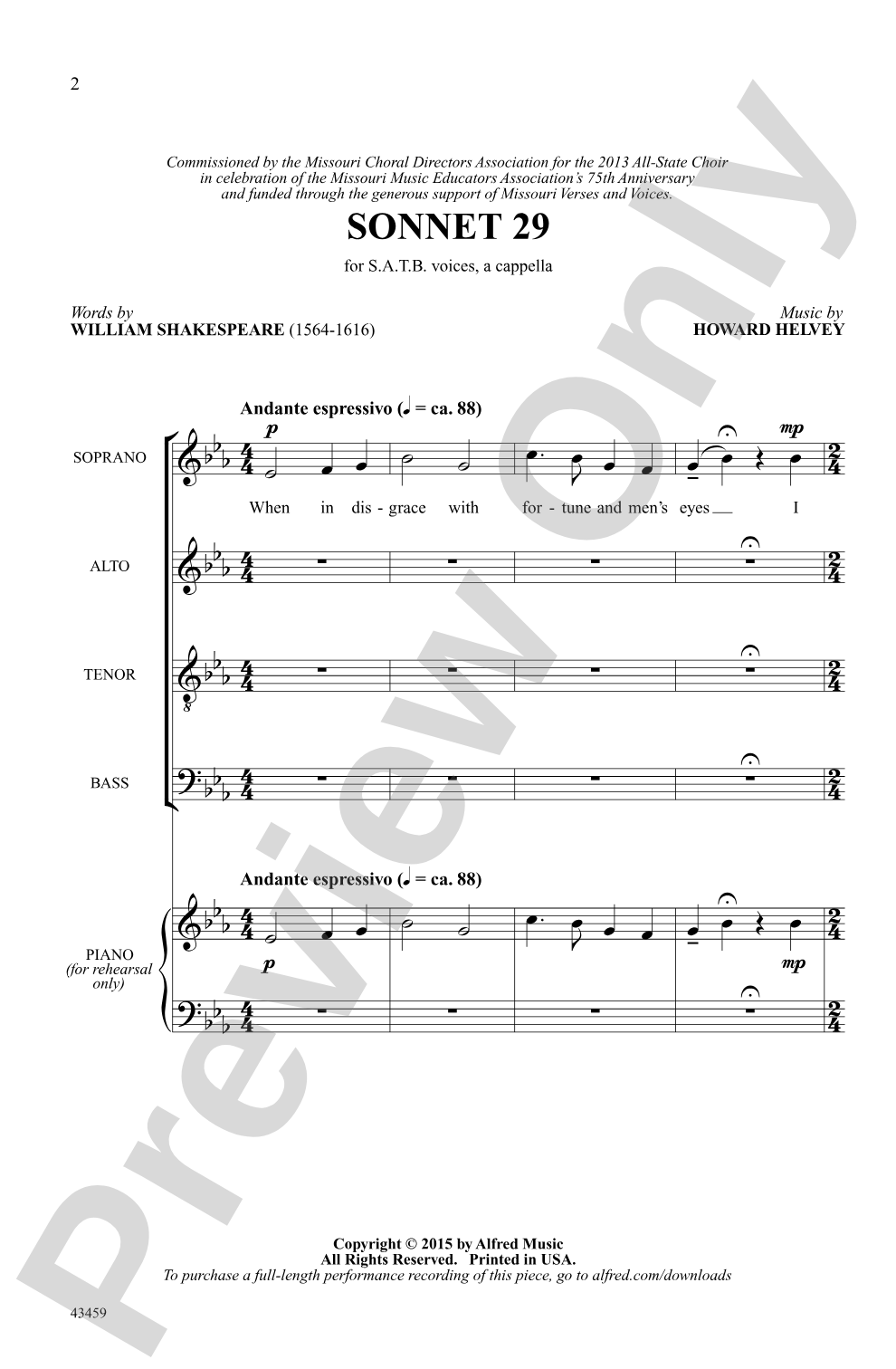
Sonnet 29 Sheet Music Preview

Sonnet 29: SATB, a cappella Choral Octavo

Words by William Shakespeare, music by Howard Helvey

Item: 00-PO-0003377

Digital Download
$1.90

Minimum order quantity: 20 copies

Description
Originally commissioned for the Missouri All-State choir, this impressive piece builds from a single soprano line to full choir. The innate musicality of the melodic lines almost guarantees expressive singing. Stately and strong.

Sonnet 29: SATB, a cappella Choral Octavo isn't in MakeMusic Cloud just yet...but it could be. Let us know you'd like to see it, and you'll help shape what comes next. In the meantime, start a free trial and dive into thousands of interactive titles your students can play along with today.

Sample Audio
0:00
0:00
Sample Video
Additional Details
Series: Lawson-Gould
Publisher: Alfred Music
Page Count: 12
SKU: 00-PO-0003377

More about this title

About the Composer: Howard Helvey

Howard Helvey is a composer whose choral works have become standards in American high school and collegiate music programs. His pieces are known for their lyrical writing, accessible yet sophisticated harmonies, and ability to draw expressive singing from singers at all levels.

Why we love this

The architecture of this piece is ingenious. Starting with a solo soprano and gradually building to full SATB creates natural dramatic momentum without requiring complex gestures from your singers. The melodic writing does the expressive work for you, which means even developing choirs sound polished and musical.

What to expect

Dignified and introspective, with a quality of gradual revelation. The progression from soloist to full choir feels inevitable rather than dramatic, like watching sunlight slowly fill a room. There is strength in restraint here; the piece never overreaches, yet builds considerable emotional presence.

Who it's for

Advanced high school choirs and college singers who can sustain long lines and respond to text-driven interpretation. The piece rewards choirs that already have solid intonation and blend; it will expose inconsistencies in those areas. Directors seeking a showcase piece that demonstrates ensemble musicality without requiring extreme vocal demands will find this effective.

How to get the most out of it

  • Begin the opening soprano solo with intimate tone quality; once other voices enter, maintain that same connection to the text rather than shifting to a larger choral sound.
  • Balance the inner voices carefully during the gradual build. Each entrance should be clearly heard as a new layer, not absorbed into the texture.
  • Shape phrases through the text's natural language rhythms rather than forcing uniform phrasing across all voice parts.
  • Reserve full dynamic intensity for the final statements; the stateliness of this piece comes from control and clarity, not volume.

How to use it

Program this as a concert centerpiece where you want to highlight your choir's musicianship and control. Its literary grounding and formal structure work well alongside other Renaissance or contemporary sacred works, or as a sophisticated opener that establishes artistic intent early in a program.

Skills your students will build

  • Sustaining long melodic lines without diphthongization or pitch drift
  • Balancing layered textures where each voice part remains distinctive
  • Interpreting poetic text to inform phrasing and expression
  • Maintaining intonation in expanded harmonic language
  • Singing a cappella with confidence and precision

You May Also Like