
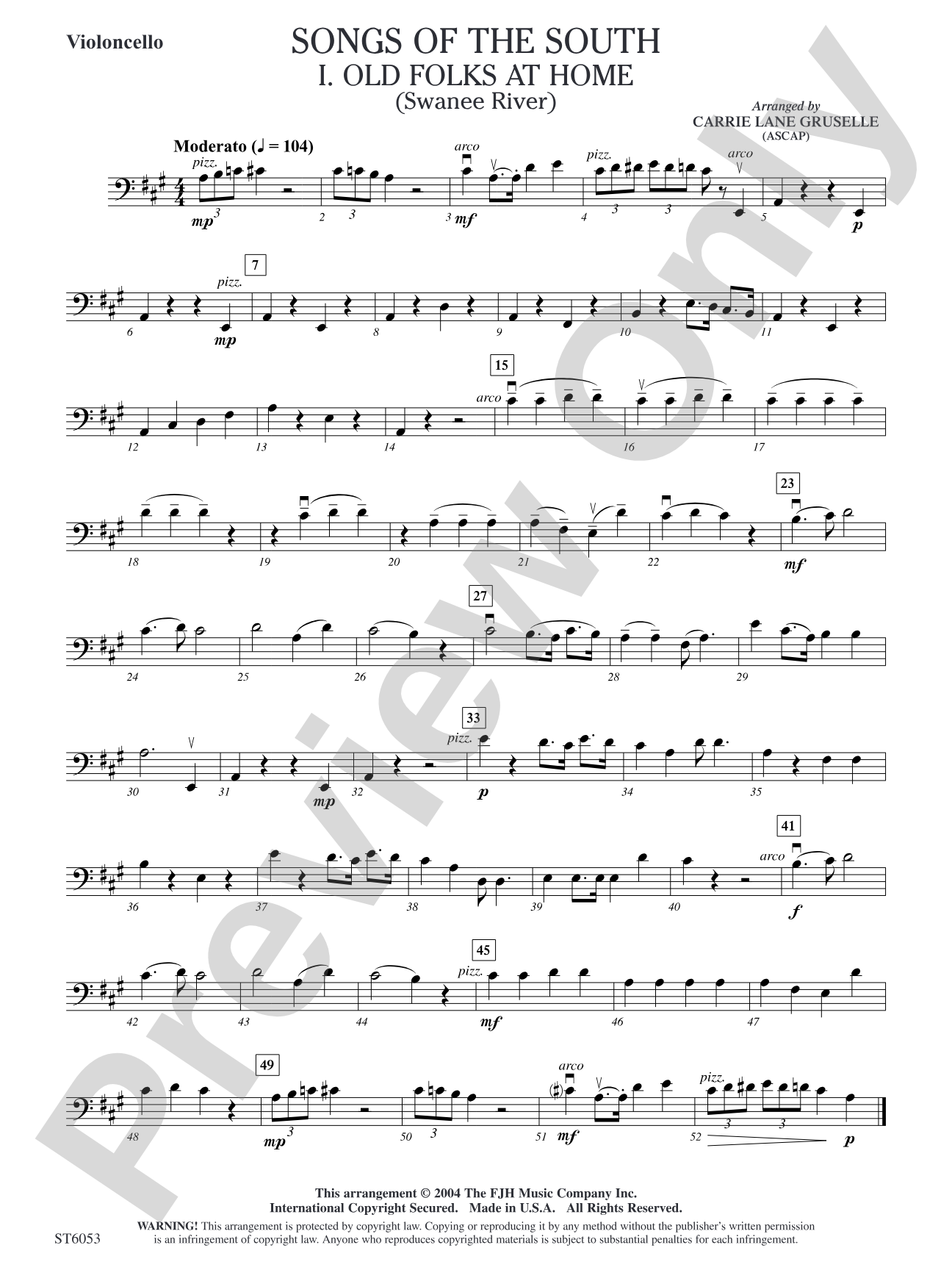

Songs of the South: Violoncello
By Stephen C. Foster / arr. Carrie Lane Gruselle
Grade: 3
Item: 98-PC-DST6053_VC1
$7.00
Pickup currently not available
Description
This short three-movement work includes arrangements of three famous Stephen Foster melodies that portray scenes of 19th century life in the Deep South. The first movement, Old Folks at Home (Swanee River), is cleverly scored with optional sand blocks to suggest the soft-shoe dance commonly associated with this song. The second movement, Gentle Annie, mourns a departed loved one in a beautiful and lyrical melody. The final movement, Nelly Bly, is lighthearted and full of drive and energy. An excellent piece for concert or festival, and well within the grasp of medium-level orchestras.


Songs of the South: Violoncello isn't in MakeMusic Cloud just yet...but it could be. Let us know you'd like to see it, and you'll help shape what comes next. In the meantime, start a free trial and dive into thousands of interactive titles your students can play along with today.
Request This Title
Tell us you want it.
Start Your Free Trial
Explore everything that's ready to play right now.
Sample Audio
1
Audio File
--:--
0:00
0:00
Sample Video
No sample videos found.
Additional Details
Series:
FJH String Orchestra
Publisher:
The FJH Music Company, Inc.
SKU:
98-PC-DST6053_VC1
More about this title
About the Composer: Stephen C. Foster
Stephen Foster (1826-1864) shaped American popular music during the 19th century, writing over 200 songs that became the soundtrack of a nation. His melodies were so memorable and singable that they transcended their original contexts and became part of American folk tradition, performed in concert halls, parlors, and streets alike. Foster's gift was for capturing the sentiment of everyday life in music that felt both sophisticated and accessible.
Why we love this
Carrie Lane Gruselle's arrangement brings Foster's most beloved melodies into the string orchestra repertoire with genuine care for the material. The clever orchestration choices—particularly the optional sand blocks in the opening movement—honor the historical and cultural context of these songs while letting young orchestras dig into characterful, singable writing. This is repertoire that performers enjoy playing and audiences recognize immediately, making it ideal for building program appeal alongside musical growth.
What to expect
The first movement evokes a contemplative, slightly nostalgic atmosphere with its gentle rhythm and optional period instrumentation touches. Gentle Annie deepens that mood into something more solemn and introspective, a genuine musical farewell. Then Nelly Bly sweeps in with spirited momentum and charm, offering release and reminding us why Foster's tunes became so beloved.
Who it's for
String orchestras at the Grade 3 level will find this work accessible and rewarding. Whether your ensemble is preparing for festival, building a concert program, or seeking repertoire that connects to American music history, this piece sits comfortably within intermediate technical demands while offering genuine musical substance.
How to get the most out of it
- Shape each melody as though you're singing it. String players often rush through Foster's straightforward phrasing; give these tunes room to breathe and allow the lyricism to emerge naturally.
- If using the sand blocks in Old Folks at Home, keep them subtle and rhythmically precise. They're a color choice, not a percussion feature; they should enhance the texture, not dominate it.
- Contrast the three movements deliberately. Old Folks at Home should feel wistful and reflective, Gentle Annie should emphasize the mourning quality through careful dynamic control, and Nelly Bly requires energy and clarity in the rhythmic drive.
- Balance the parts carefully so inner voices remain audible. The arrangement distributes the melody and countermelody across the ensemble; sloppy voice leading will obscure the beautiful harmonic choices Gruselle has made.
How to use it
This three-movement suite works beautifully as a complete concert offering, allowing you to program American music history without requiring additional pieces. Alternatively, perform Old Folks at Home and Nelly Bly on a lighter concert and save Gentle Annie for a program exploring themes of remembrance or loss. Its Grade 3 level makes it an excellent choice for mid-year performances when technical growth supports more nuanced interpretation.
Skills your students will build
- Singing through the orchestra in legato string writing
- Stylistic shaping of period melodies
- Dynamic control in lyrical contexts
- Precision in optional percussion integration
- Contrasting character across a multi-movement work