
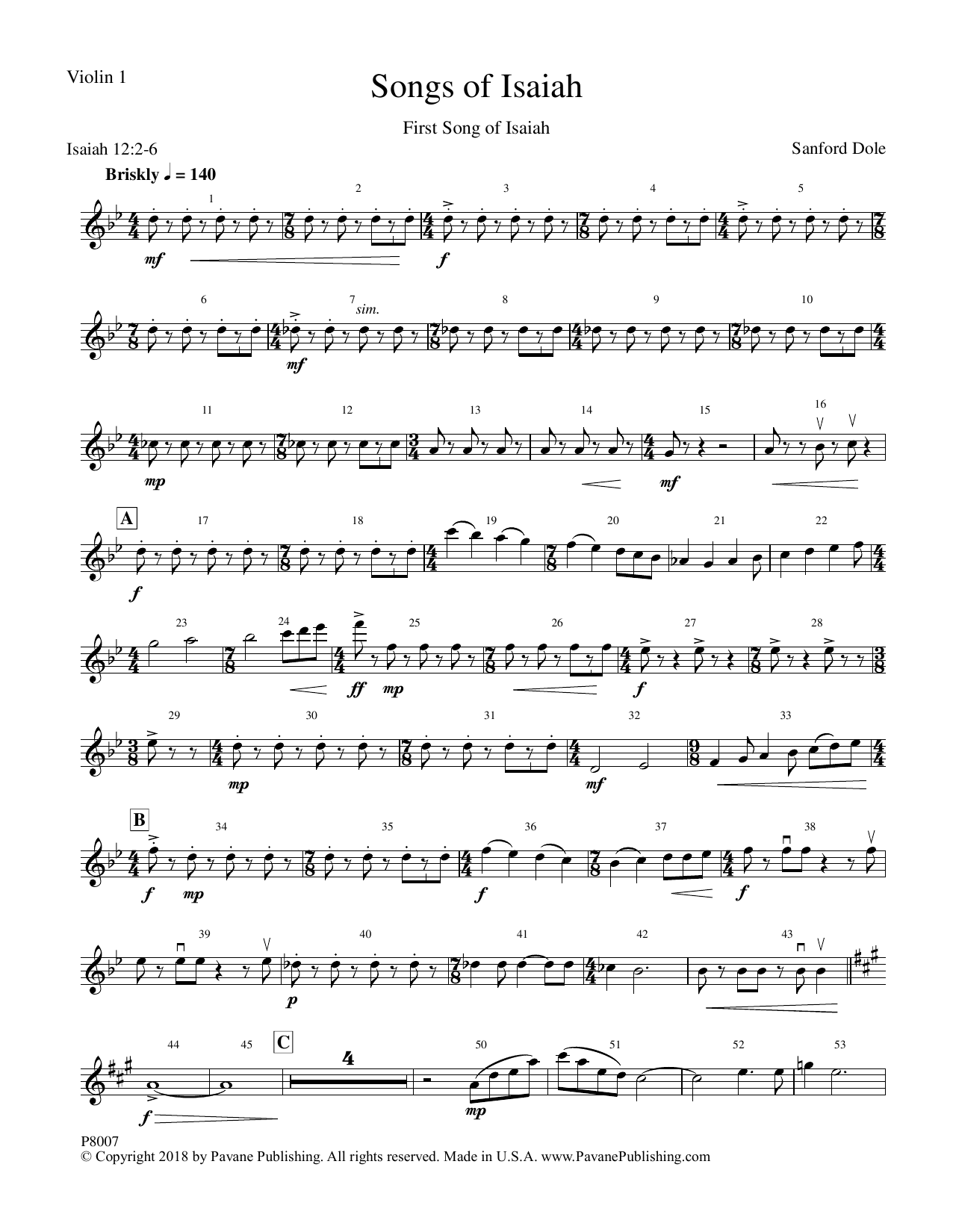

Songs of Isaiah (Parts): Choral Instrumental Pak
By Sanford Dole
Item: 35-PK00492302
$95.00
Pickup currently not available
Buy Extra Parts (Digital PDF Download)
Parts Added to Cart!
Description
Sanford Dole, one of Chanticleer's original members, is a San Francisco composer creating sounds that are fresh and stimulating. This 3-movement work, accompanied by strings and harp, is bold and entertaining. Unique and singular in his compositional style, this work is a refreshing statement for any progressive ensemble. Medium to difficult in difficulty.


Songs of Isaiah (Parts): Choral Instrumental Pak isn't in MakeMusic Cloud just yet...but it could be. Let us know you'd like to see it, and you'll help shape what comes next. In the meantime, start a free trial and dive into thousands of interactive titles your students can play along with today.
Request This Title
Tell us you want it.
Start Your Free Trial
Explore everything that's ready to play right now.
Sample Audio
No sample audio found.
Sample Video
No sample videos found.
Additional Details
Publisher:
Hal Leonard
SKU:
35-PK00492302
More about this title
About the Composer: Sanford Dole
Sanford Dole is a composer whose work spans both sacred and secular vocal music, bringing a distinctly contemporary sensibility to choral writing. As one of Chanticleer's founding members, he developed an intimate understanding of ensemble sound and the human voice that deeply informs his compositional voice.
Dole's music balances accessibility with sophistication, crafting pieces that challenge singers while remaining engaging for audiences. His approach to orchestration and harmonic language reflects decades spent performing at the highest levels of American choral music.
Why we love this
Dole writes for choirs with genuine understanding of what voices can do, and this three-movement work proves it. The addition of strings and harp creates an orchestral richness that feels inevitable rather than overdone, giving your ensemble a genuinely distinctive sound on the concert stage.
What to expect
The three movements unfold with contemplative intensity and moments of genuine brightness, shaped by Dole's harmonic language that feels both modern and rooted in the choral tradition. String and harp writing creates a luminous bed of sound that lifts the voices into something larger than themselves, while the choral writing itself remains direct and emotionally honest.
Who it's for
This work suits advanced high school and college choirs with access to string and harp accompaniment, as well as professional and semi-professional ensembles seeking contemporary sacred repertoire with real substance. Directors programming a concert that needs a bold centerpiece will find strong material here.
How to get the most out of it
- Balance the harp carefully in rehearsals; it carries considerable harmonic weight and can easily obscure the choral lines if not controlled through dynamic awareness.
- Mark breath points with your singers early. The medium-to-difficult writing rewards careful phrase planning, and unified breathing across sections will tighten ensemble cohesion.
- Reference the string parts during choral sectional rehearsals so singers understand the instrumental counterpoint they're singing against, not just over.
- Let the accompaniment dictate tempo stability; coordinate closely with your instrumentalists to establish a conducting framework that serves both ensemble voices and the full instrumentation.
How to use it
Place this as a centerpiece work on a mixed concert program, allowing it breathing room without competing works on either side. It pairs naturally with other contemporary sacred choral works and provides an ideal contrast to earlier standard repertoire if you're building a program that moves from tradition into present-day voices.
Skills your students will build
- Reading contemporary harmonic language and non-traditional chord progressions
- Blending voice parts with instrumental accompaniment across three distinct movements
- Sustaining phrasing and line through medium-to-difficult contrapuntal writing
- Responding to conductor cues that coordinate multiple instrumental and vocal lines