
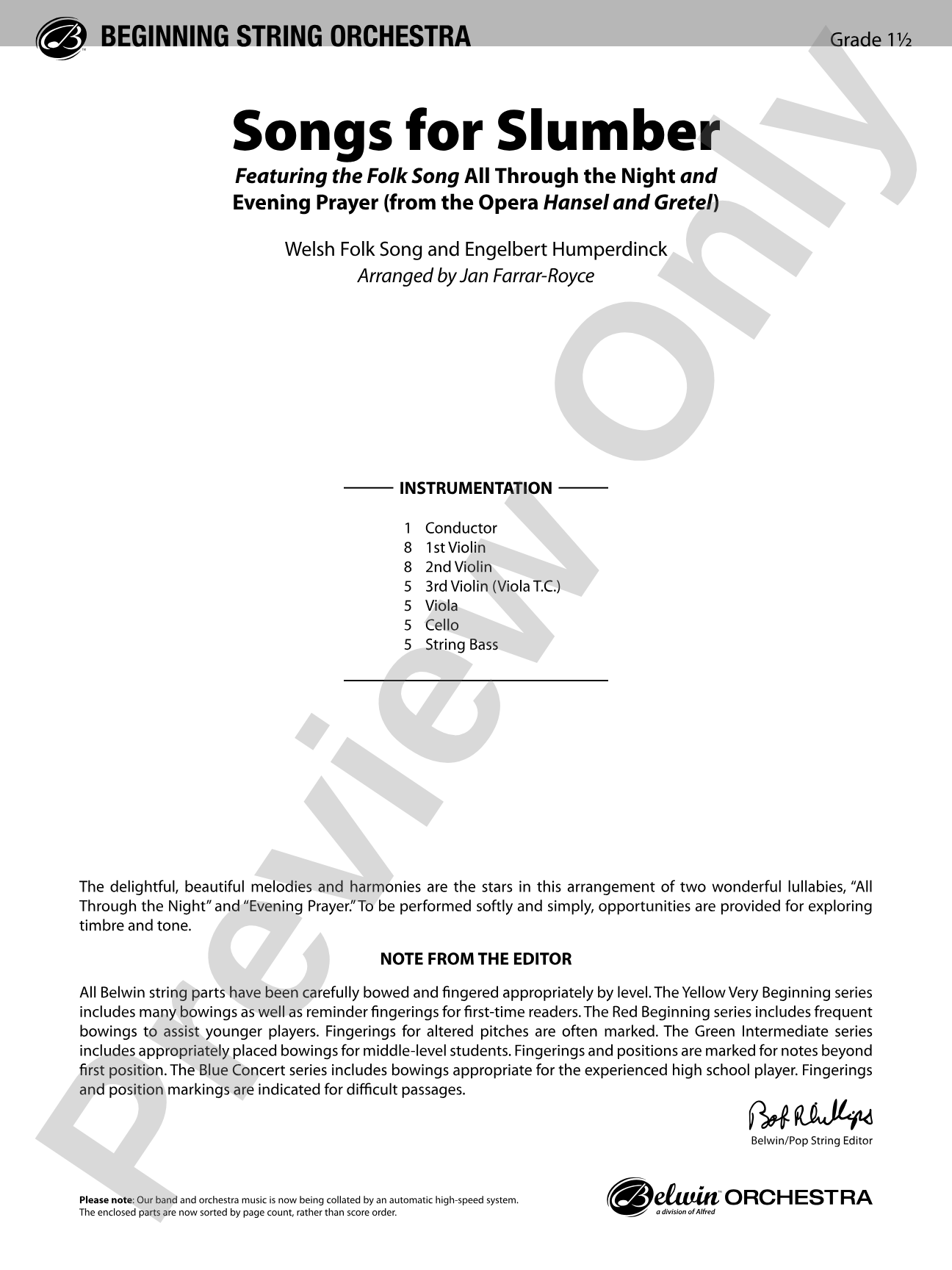
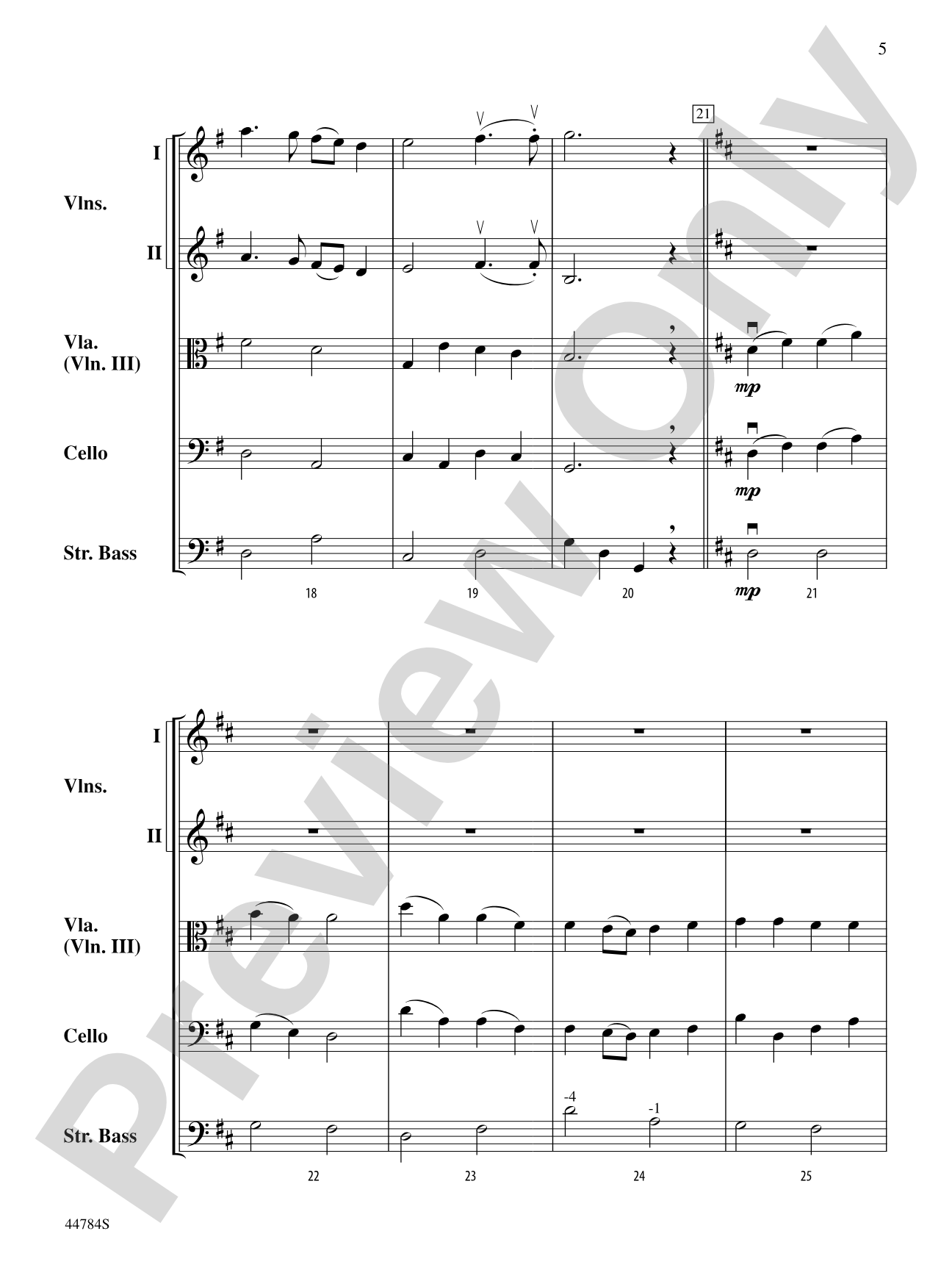
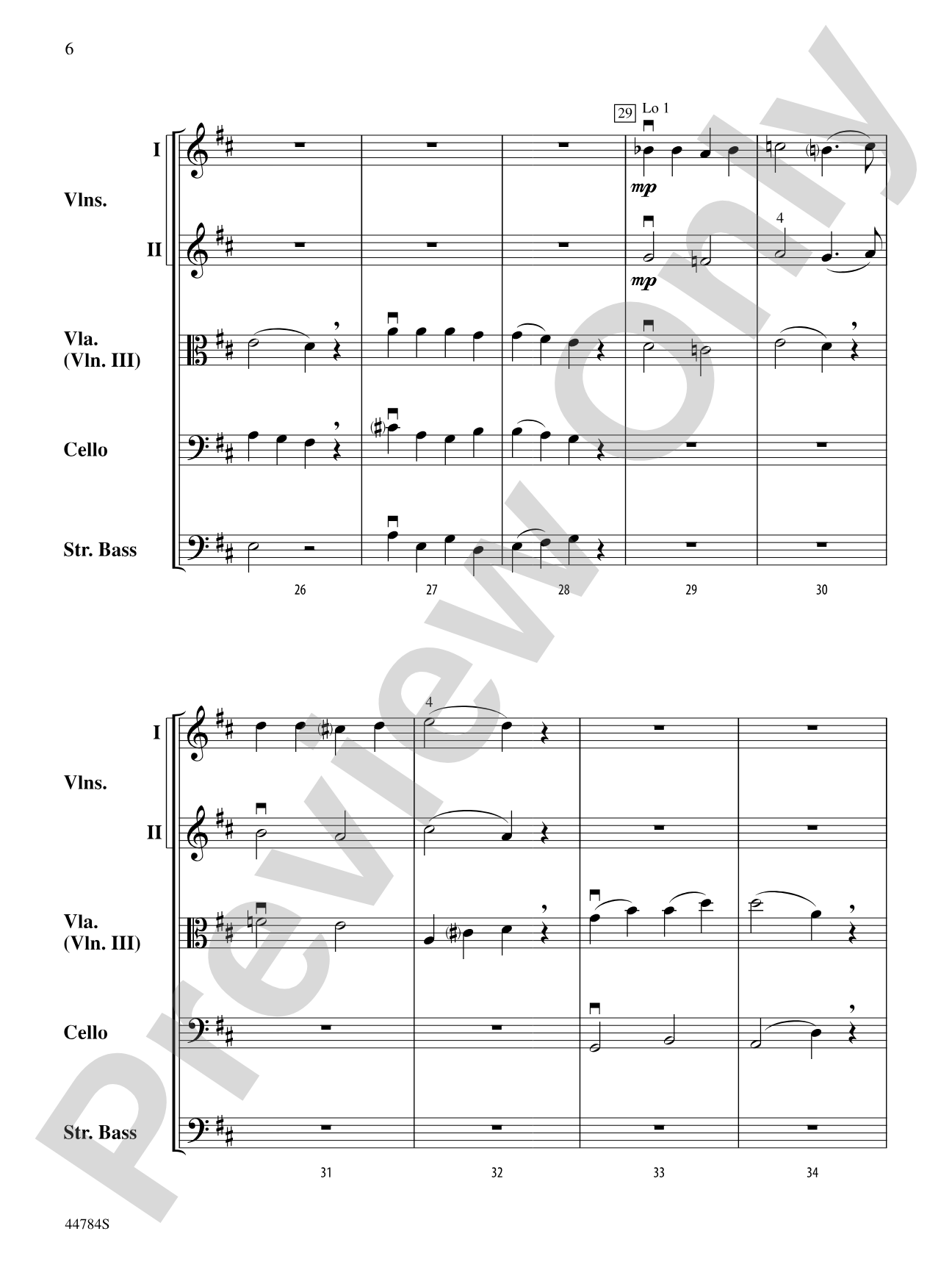
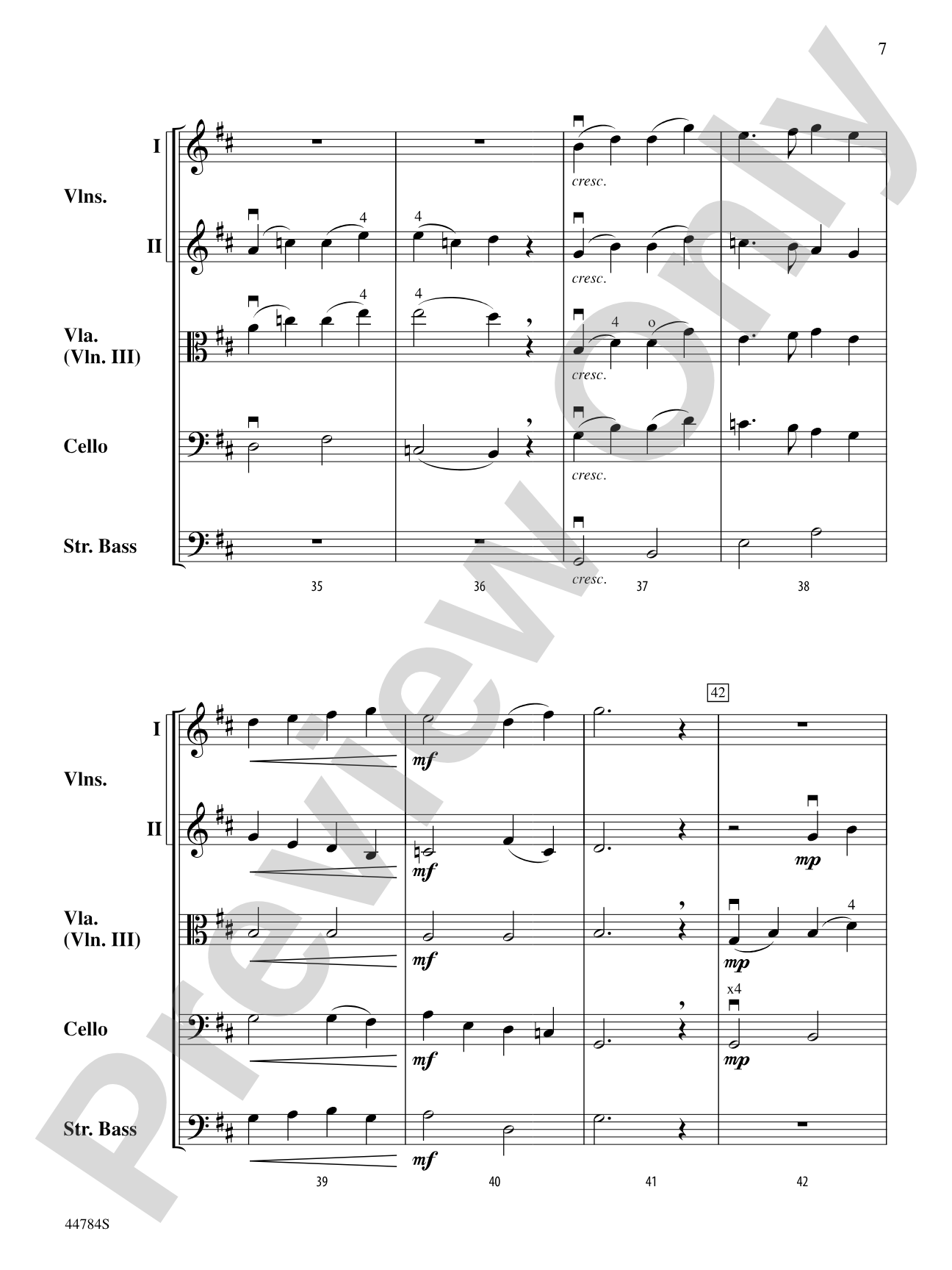
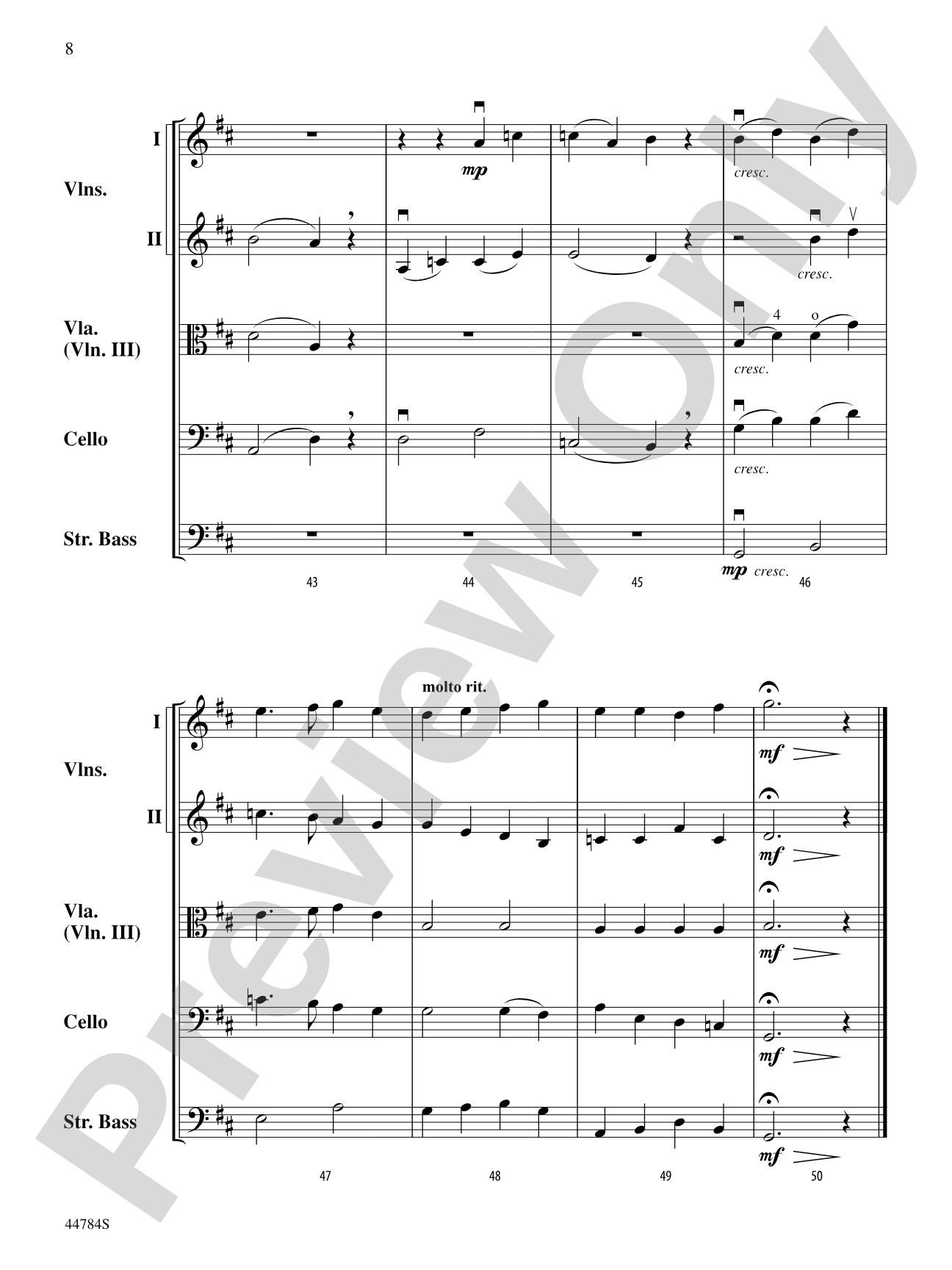

Songs for Slumber: String Orchestra Conductor Score & Parts
Featuring "All Through the Night" and "Evening Prayer" from the Opera Hansel and Gretel
Welsh Folk Song and Engelbert Humperdinck / arr. Jan Farrar-Royce
Grade: 1.5
Item: 00-PK-0007057

$46.00
Pickup currently not available
Buy Extra Parts (Digital PDF Download)
| Product | Price | Quantity |
|---|---|---|
| Songs for Slumber: Score | $6.00 | |
| Songs for Slumber: 1st Violin | $5.99 | |
| Songs for Slumber: 2nd Violin | $5.99 | |
| Songs for Slumber: 3rd Violin (Viola [TC]) | $5.99 | |
| Songs for Slumber: Viola | $5.99 | |
| Songs for Slumber: Cello | $5.99 | |
| Songs for Slumber: String Bass | $5.99 |
Parts Added to Cart!
Description
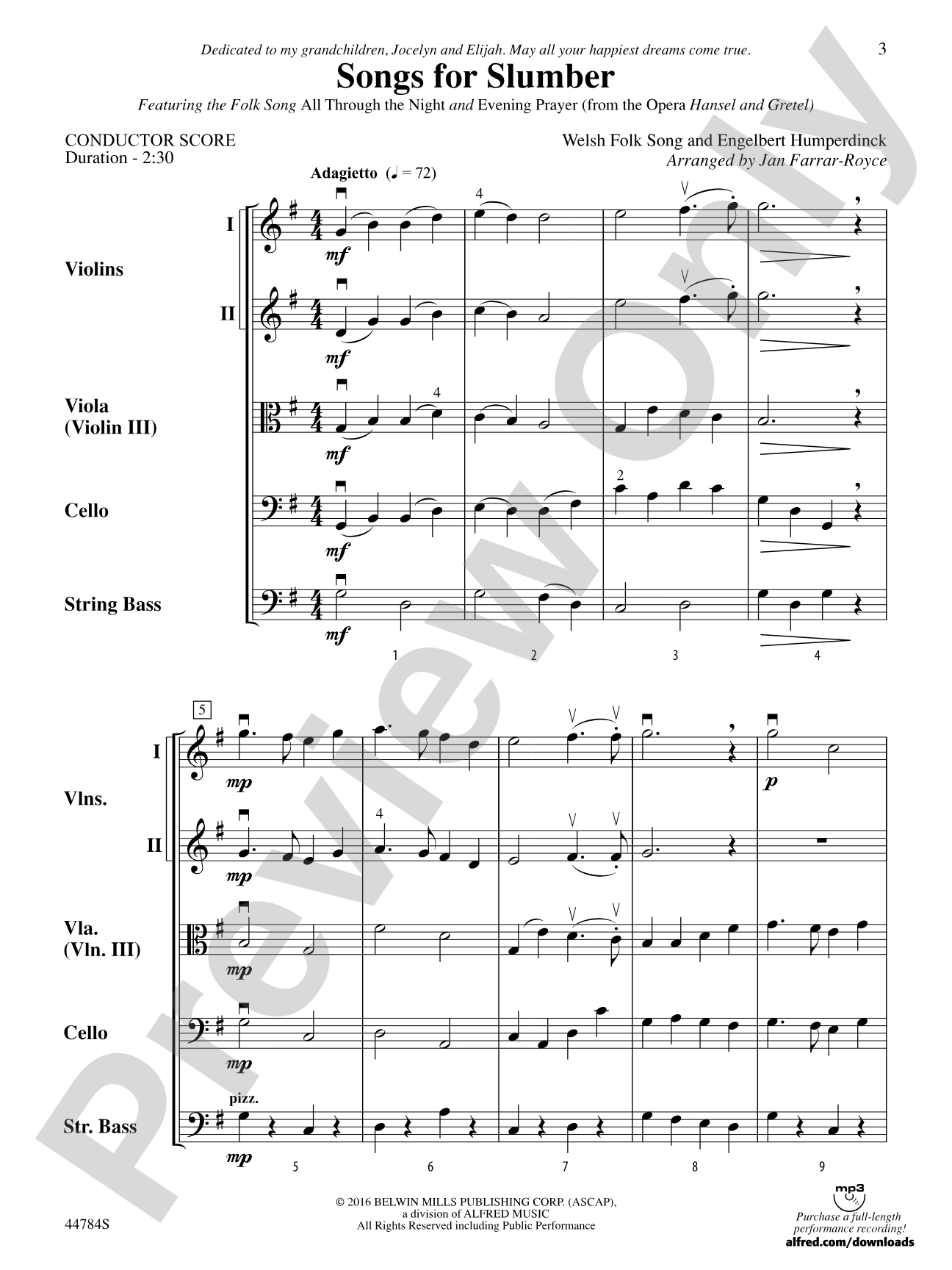
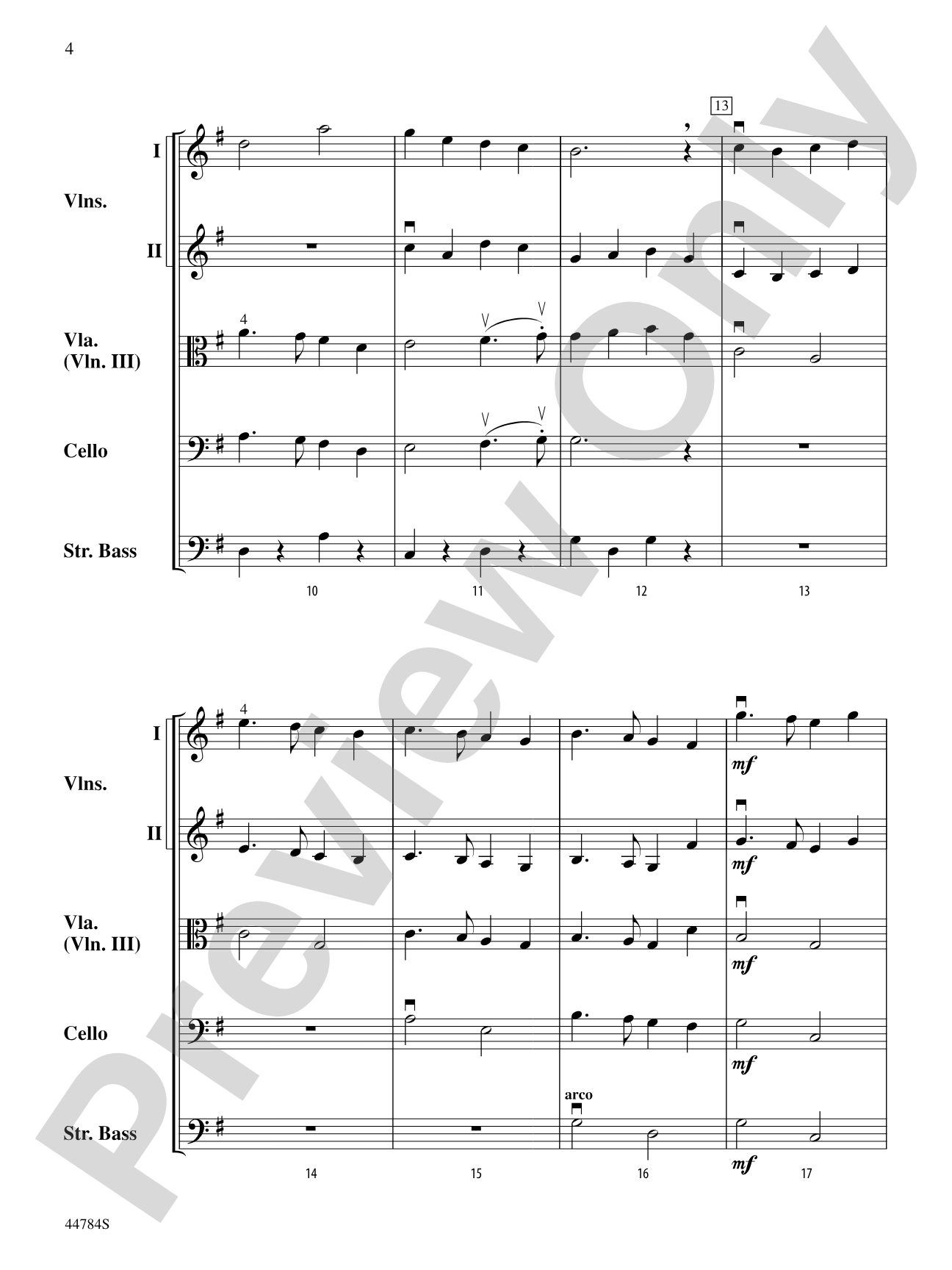
The delightful, beautiful melodies and harmonies are the stars in this Jan Farrar-Royce arrangement of two wonderful lullabies, "All Through the Night" and "Evening Prayer." To be performed softly and simply, opportunities are provided for exploring timbre and tone. (2:30)


Don't just read it, hear it, play along with it, and watch your students grow with it. In MakeMusic Cloud, Songs for Slumber: String Orchestra Conductor Score & Parts comes alive with professional accompaniment, adjustable tempo, and built-in practice tools that turn solo practice into real progress.
Open in the Player
Jump straight in and assign it today.
Start Your Free Trial
Open this title and explore the full library in minutes.
Sample Audio
1
Audio File
--:--
0:00
0:00
Sample Video
Additional Details
Series:
Belwin Beginning String Orchestra
Publisher:
Alfred Music
Page Count:
72
SKU:
00-PK-0007057
More about this title
About the Composer: Engelbert Humperdinck
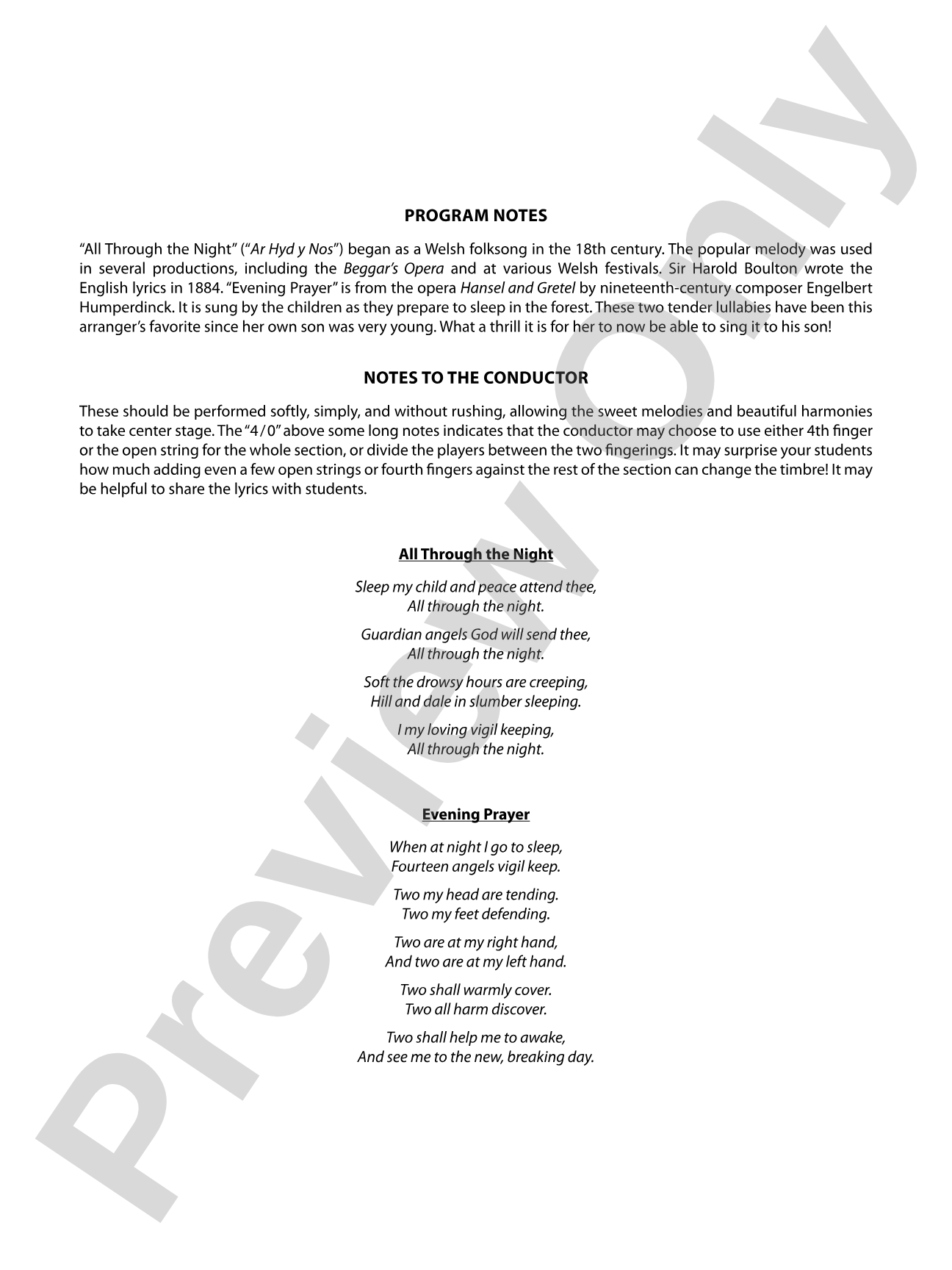
Engelbert Humperdinck (1854-1921) was a German composer whose operatic works shaped the Romantic era. Best known for his fairy-tale opera Hansel and Gretel, Humperdinck crafted music that balanced sophisticated harmony with emotional directness, making his works accessible to young performers and audiences alike. His gift for memorable melody and warm orchestration continues to serve music education well.
Why we love this
Farrar-Royce's arrangement captures the intimate character of these lullabies while respecting Grade 1.5 string players. The scoring invites genuine musical expression without overwhelming young musicians, and the focus on soft playing and tonal beauty teaches students that technical difficulty is never a substitute for genuine musicianship.
What to expect
Gentle and unhurried. These two lullabies rest in quiet spaces, inviting listeners into moments of calm reflection. The music breathes naturally, asking performers to sustain long lines and listen carefully to one another rather than rush toward rhythmic precision.
Who it's for
Young string orchestras ready to explore expressive playing beyond basic technical accuracy. This arrangement works well for students who have solid fundamentals in bow control and intonation but need experience with lyrical phrasing and ensemble balance.
How to get the most out of it
- Shape each phrase with subtle dynamic contours even within the soft dynamic range; avoid a flat, undifferentiated pianissimo throughout.
- Balance the melody clearly between sections while ensuring accompaniment voices remain supportive and transparent, not recessive.
- Rehearse sustained tones separately to develop consistent tone quality and intonation across all parts at soft volumes.
- Encourage vibrato as an expressive tool rather than default ornamentation; deliberate use of vibrato versus non-vibrato creates textural interest.
How to use it
Program this as a warm, closing piece on a concert or festival performance to showcase the expressive maturity of your ensemble. Pair it with contrasting material (a brighter folk tune, a rhythmic contemporary work) to demonstrate the full range of your young musicians.
Skills your students will build
- Playing sustained tones with consistent tone quality and intonation at soft dynamics
- Shaping phrases through subtle dynamic variation within a narrow dynamic range
- Balancing melody and accompaniment in ensemble texture
- Listening to colleagues and maintaining ensemble blend across all four string parts
- Using vibrato as a deliberate expressive choice rather than automatic technique