Song Without Words: Oboe Sheet Music Preview

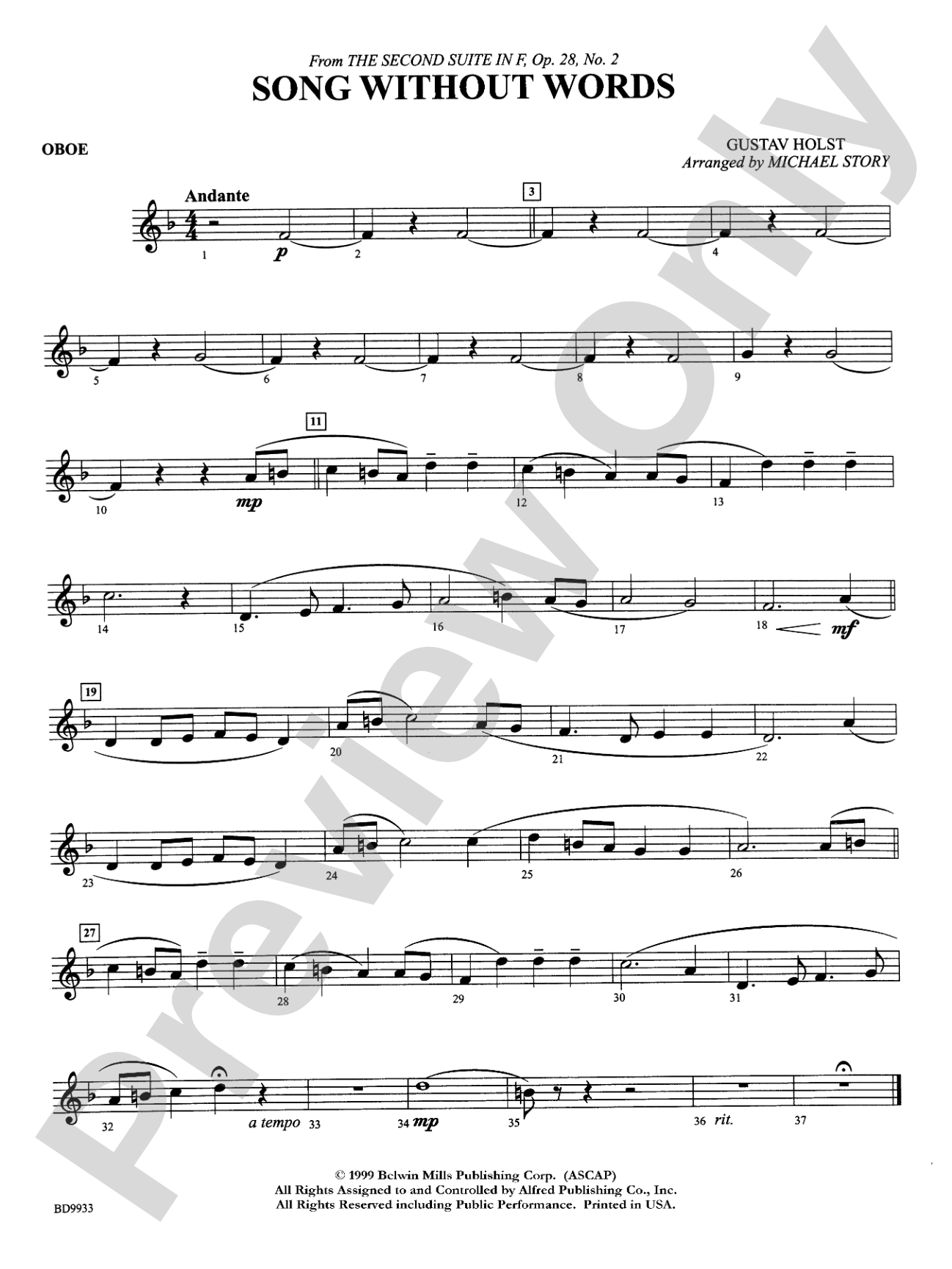
Song Without Words: Oboe

By Gustav Holst / arr. Michael Story

Grade: 2 (Easy)

Item: 00-PC-0002099_O1

Digital Download
$3.00
Description
With gentle grace, this charismatic melody is introduced by your clarinet section, setting into motion one of Gustav Holst's most famous themes, scored here for young concert band. The legato styling creates magnificent teaching opportunities and makes for a quality performance vehicle. Great care has been taken to maintain the integrity of the original composition. (2:20)

Don't just read it, hear it, play along with it, and watch your students grow with it. In MakeMusic Cloud, Song Without Words: Oboe comes alive with professional accompaniment, adjustable tempo, and built-in practice tools that turn solo practice into real progress.

Sample Audio
0:00
0:00
Sample Video
Additional Details
Series: Belwin Young Band
Publisher: Alfred Music
Page Count: 94
SKU: 00-PC-0002099_O1

More about this title

About the Composer: Gustav Holst

Gustav Holst (1874-1934) shaped the landscape of British concert music through bold orchestration and imaginative harmonic language. His compositions span operas, ballets, and orchestral works, but his gift for writing memorable, singable melodies made him one of the most performed composers in education settings. Holst believed deeply in music's power to reach ordinary people, and his output reflects that democratic spirit—his work appears in concert halls, classrooms, and community ensembles worldwide.

Why we love this

Michael Story's arrangement preserves the emotional warmth of Holst's melody while scoring it idiomatically for young players. The Grade 2 accessibility paired with the integrity of the original creates a rare teaching moment: students engage with a genuine masterwork rather than a simplification, building musical literacy through contact with real compositional voice. It's the kind of piece that stays with students long after they've moved on.

What to expect

Elegant and unhurried, with a quiet confidence that comes from a melody so well-crafted it needs little embellishment. The piece unfolds with Romantic sensibility—contemplative, warm, and genuinely moving despite its modest instrumentation. There's a timeless quality here, the feeling of discovering something beautiful that's been waiting to be played.

Who it's for

Young concert bands ready to move beyond functional etude-style pieces and into genuine repertoire. This works beautifully for bands in grades 4-6 or intermediate high school ensembles seeking a confident entry into the standard literature. It's equally suited for concert programs, festivals, and sectional study focused on legato style and phrase architecture.

How to get the most out of it

  • Shape the opening clarinet solo as a complete musical sentence; resist the urge to rush, and let the legato phrasing breathe naturally across the phrases.
  • Balance the harmonic accompaniment carefully once the melody passes to other sections; the supporting voices should enhance rather than cover the tune.
  • Work the ritardando markings with intention, using them to signal phrase endings and moments of expressive weight rather than treating them as mechanical tempo changes.
  • Record a run-through and listen for uniformity of vibrato style across the clarinet section—consistency in the opening solo sets the character for the entire performance.

How to use it

Pair this with a contrasting work to build a short concert arc that showcases your band's range; the gentle character makes it an ideal closing piece for a concert set or a thoughtful bridge between more energetic selections. It's also a fine choice for contest or festival play, where its clarity of line and emotional directness tend to resonate with adjudicators and audiences alike.

Skills your students will build

  • Legato phrasing across long melodic lines
  • Listening and balancing in harmonic accompaniment roles
  • Responding to expressive tempo changes (ritardando)
  • Sustaining tone quality and intonation in slower tempos
  • Understanding phrase structure in a complete musical statement

You May Also Like