
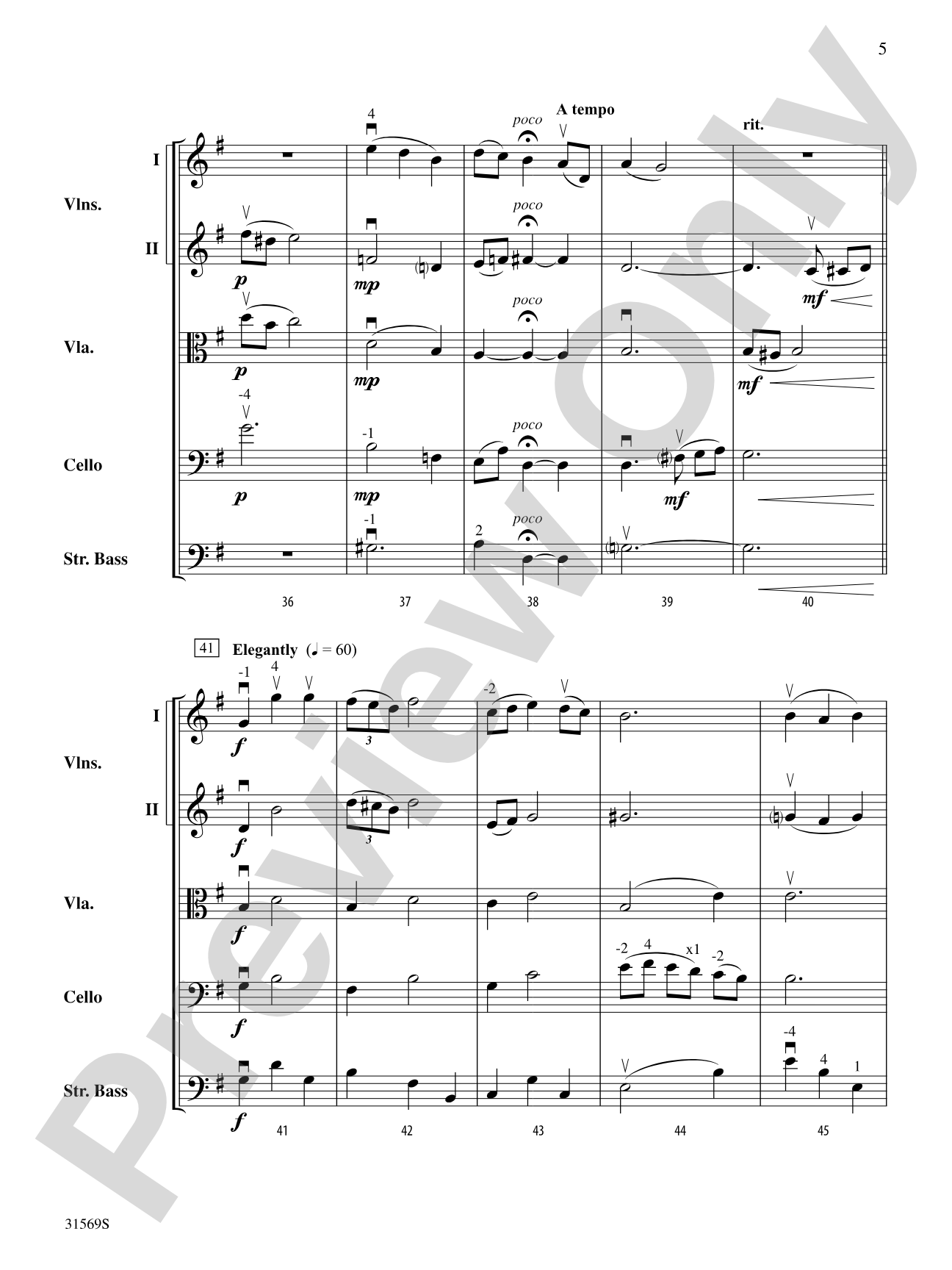
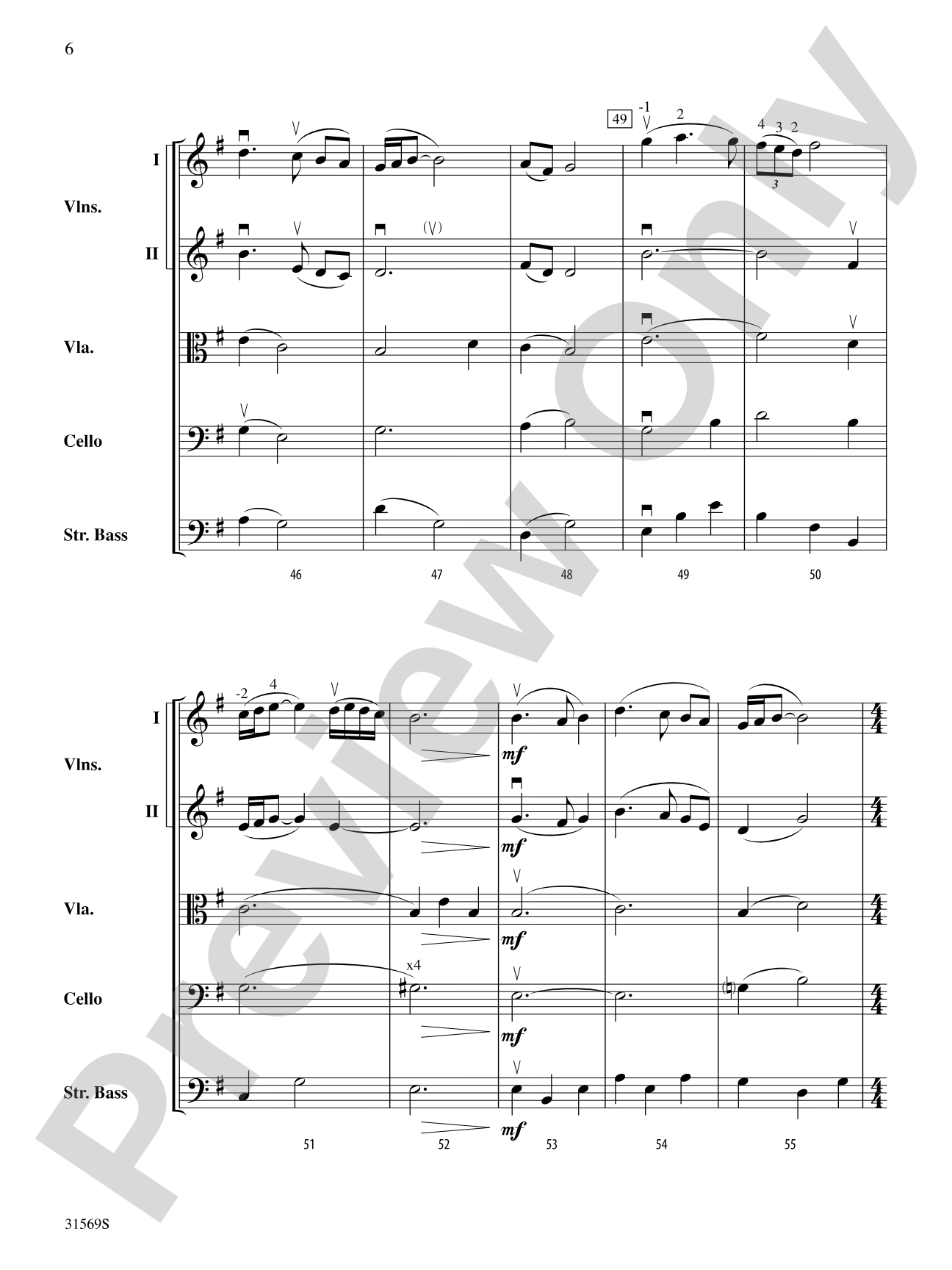
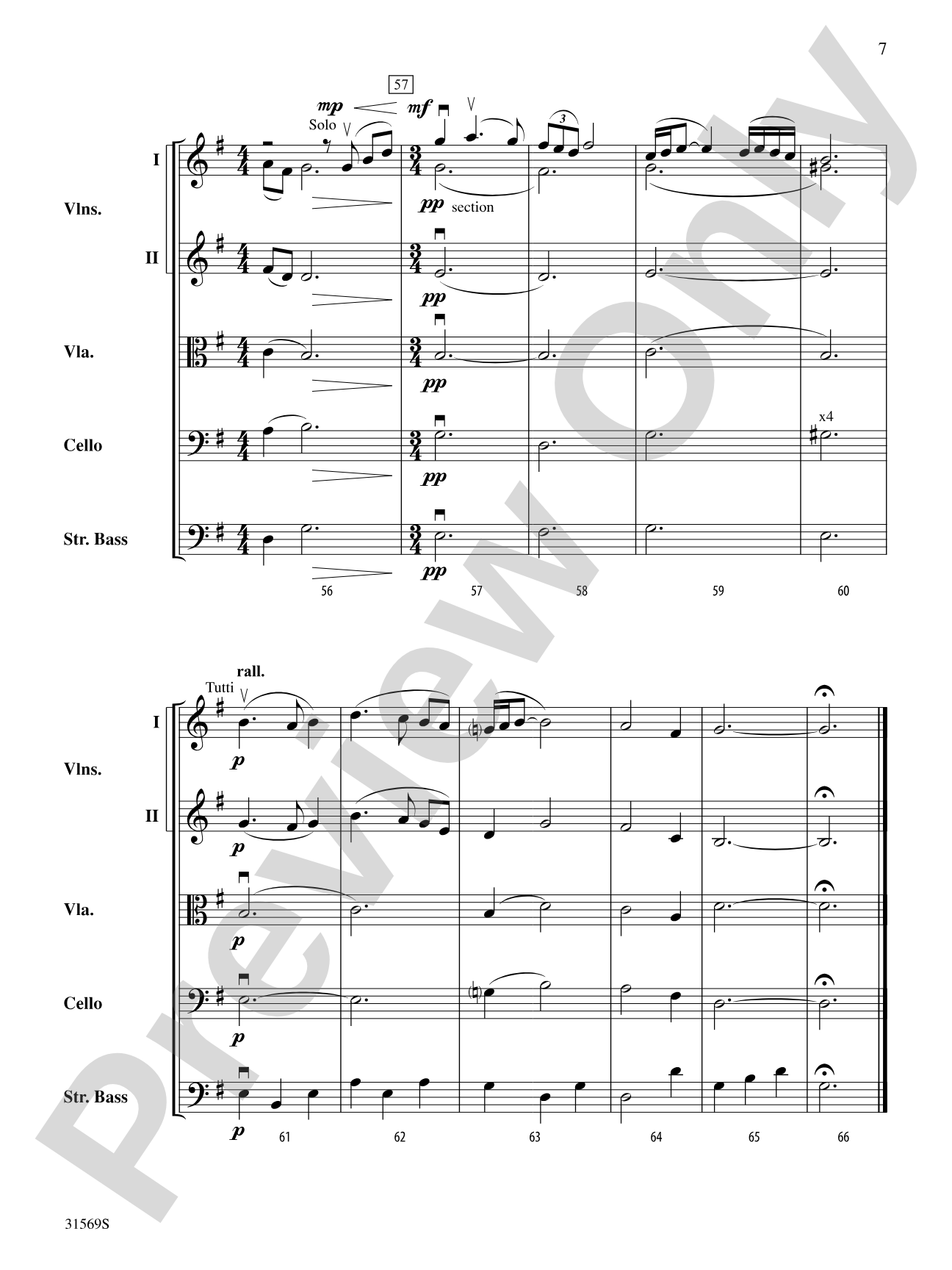


Song to the Moon (From Rusalka): Score
By Antonín Dvorák / arr. Jeffrey E. Turner
Grade: 3.5
Item: 00-PR-0001722
$11.00
Pickup currently not available
Description
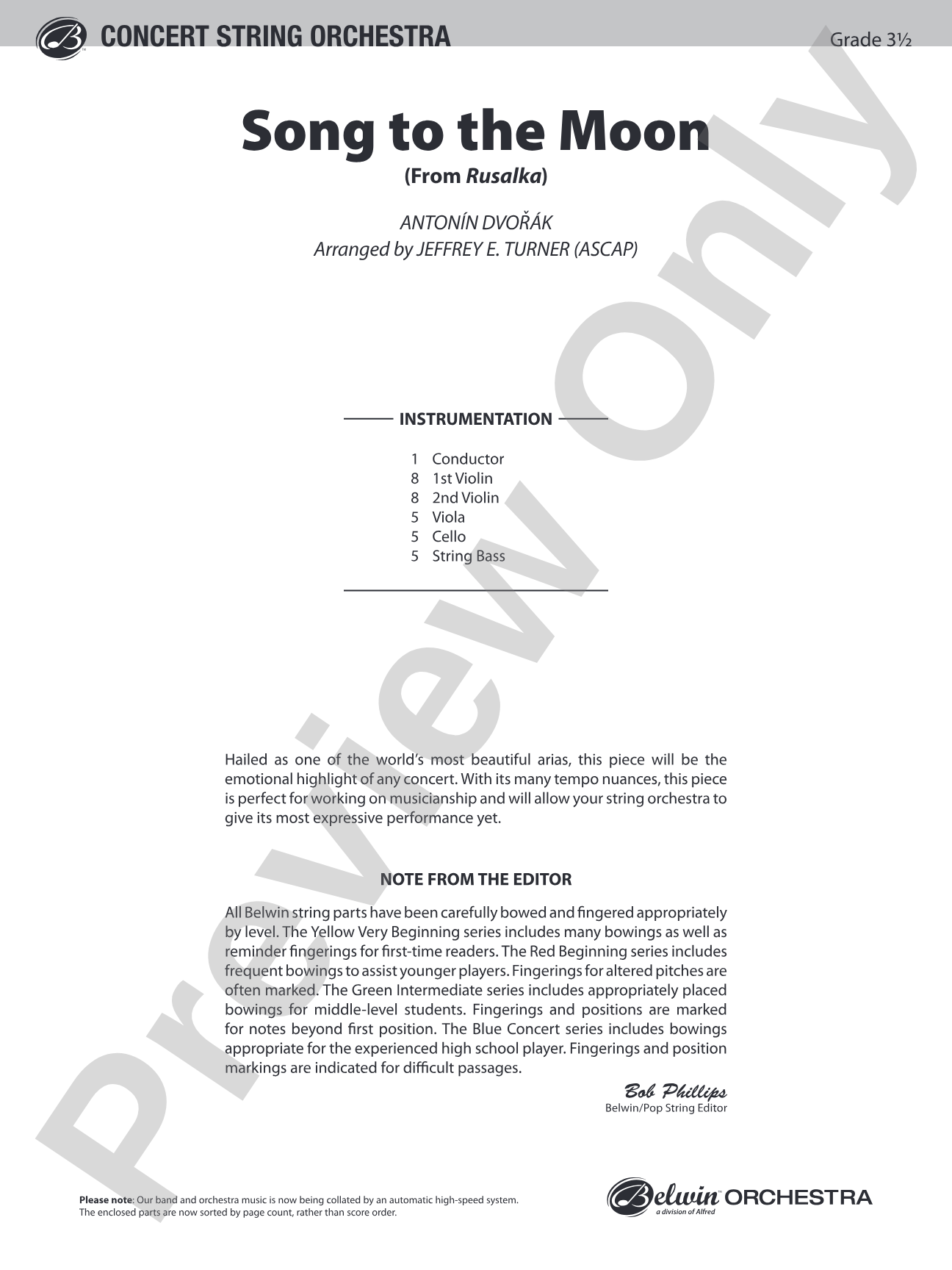
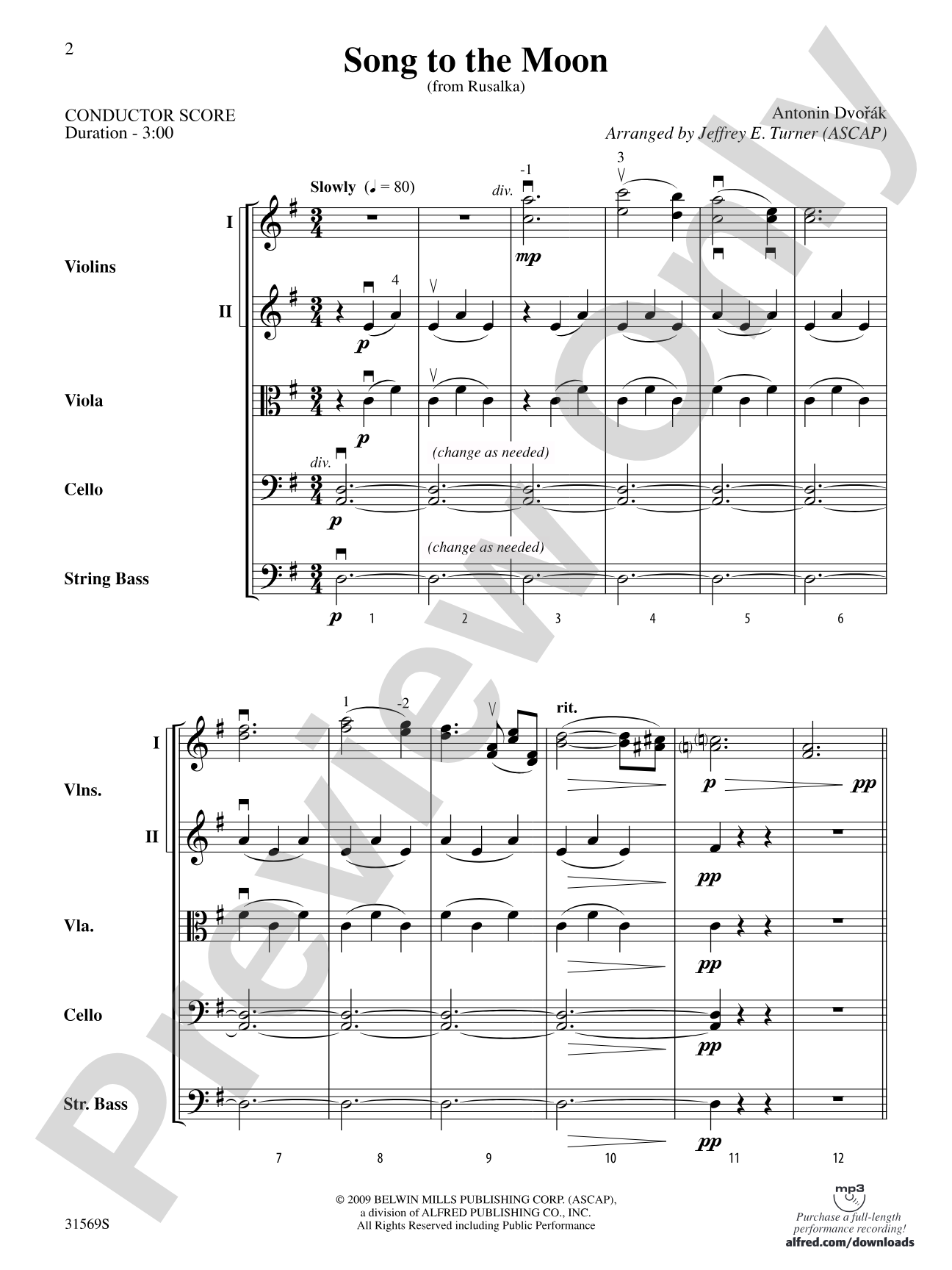
Hailed as one of the world's most beautiful arias, this Antonín Dvorák piece will be the emotional highlight of any concert. With its many tempo nuances, this piece is perfect for working on musicianship and will allow your string orchestra to give its most expressive performance yet. This title is available in MakeMusic Cloud.


Don't just read it, hear it, play along with it, and watch your students grow with it. In MakeMusic Cloud, Song to the Moon (From Rusalka): Score comes alive with professional accompaniment, adjustable tempo, and built-in practice tools that turn solo practice into real progress.
Open in the Player
Jump straight in and assign it today.
Start Your Free Trial
Open this title and explore the full library in minutes.
Sample Audio
1
Audio File
--:--
0:00
0:00
Sample Video
No sample videos found.
Additional Details
Series:
Belwin Concert String Orchestra
Publisher:
Alfred Music
Page Count:
62
SKU:
00-PR-0001722
More about this title
About the Composer: Antonin Dvorák
Antonín Dvořák (1841-1904) was a Czech composer who elevated his nation's musical voice to international prominence during the Romantic era. His gift for melody and his deep connection to folk idioms shaped works that balanced structural sophistication with emotional directness, making him a bridge between the classical tradition and modern expression. Dvořák spent time in America as director of the National Conservatory, an experience that enriched his compositional palette, yet his most enduring works often return to themes of longing and natural beauty rooted in his Czech heritage.
Why we love this
This arrangement captures the luminous vulnerability of one of opera's greatest moments in a form your string orchestra can execute with real dramatic power. Turner's voice leading preserves Dvořák's vocal lines while giving each section of the orchestra meaningful material, so no one is sitting out the music. The tempo markings and dynamic landscape demand that your players listen to one another and shape phrases together, rewarding rehearsal investment with noticeably mature musicianship.
What to expect
The opening unfolds like moonlight on water, intimate and vast at once. Tension builds through suspended harmonies and gentle crescendos before receding into quiet longing, creating an arc that feels both inevitable and surprising.
Who it's for
String orchestra directors at the Grade 3.5 level who want a piece that reaches for genuine artistry without overextending technical demands. This work suits musicians who have solid intonation and rhythmic security and are ready to explore expressive nuance as a form of musical communication.
How to get the most out of it
- Shape the opening melody with a warm, singing tone; think of it as a vocalist taking a breath before each phrase rather than a mechanical approach to the line.
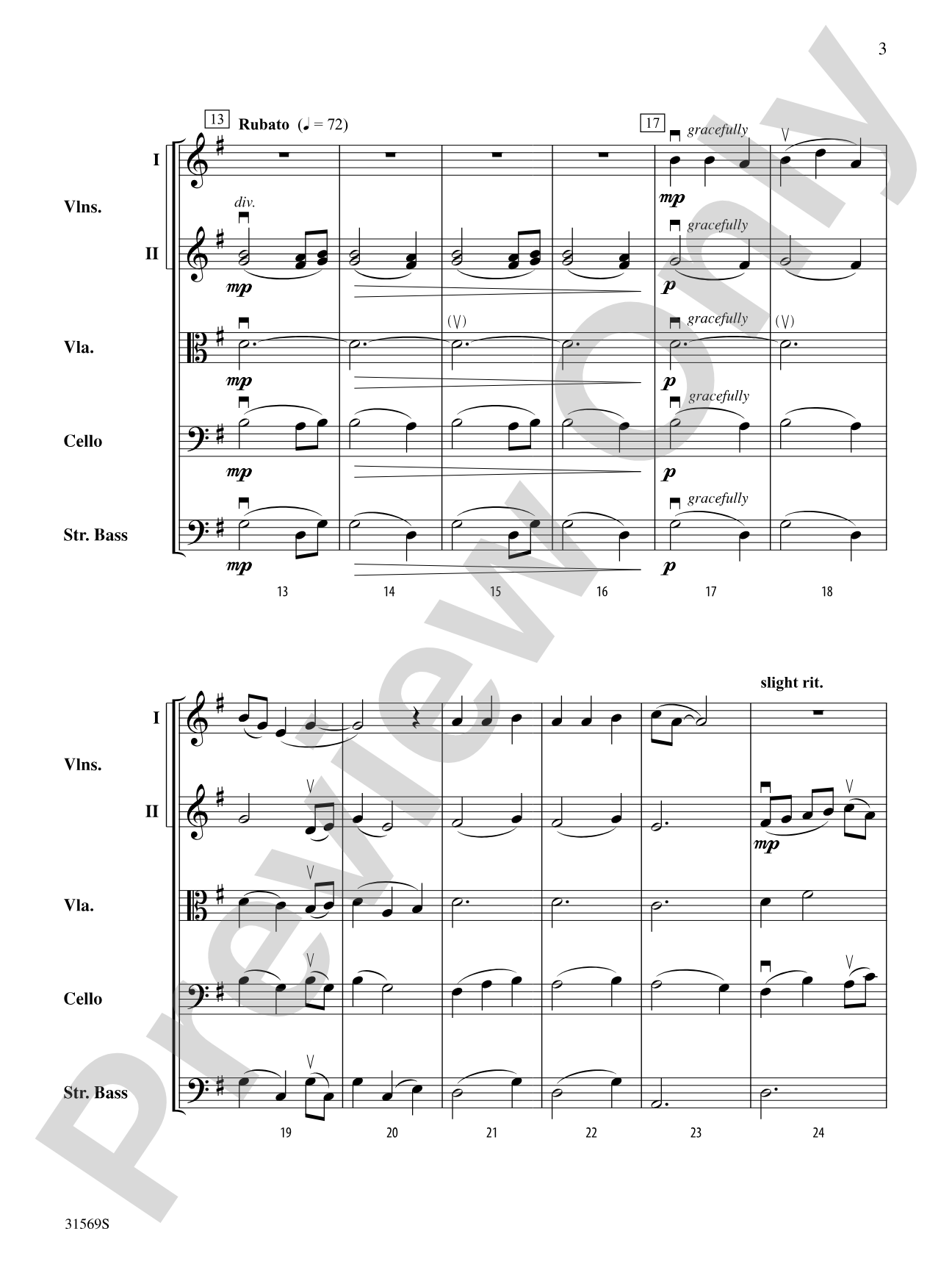
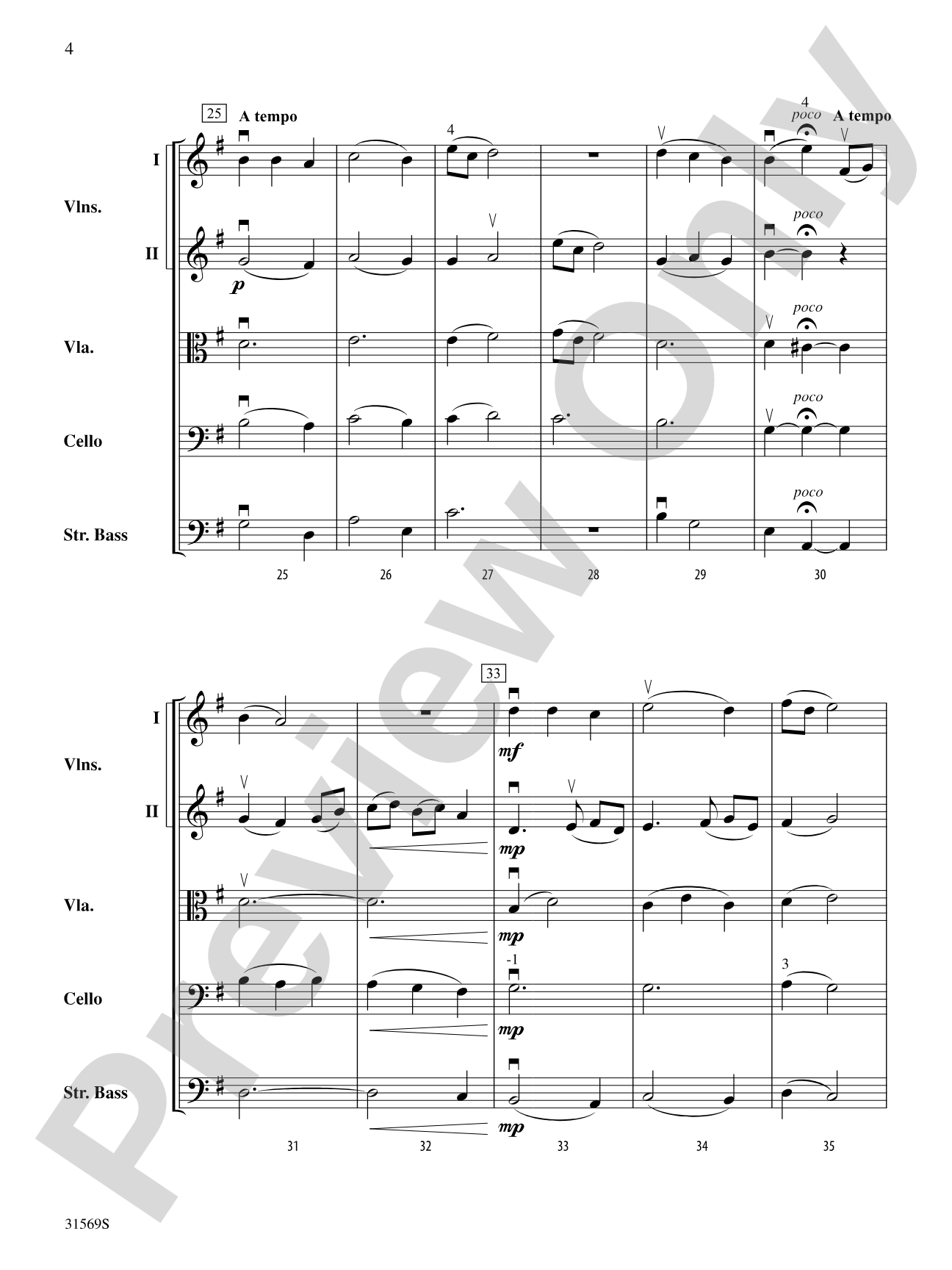
- Honor the tempo changes marked throughout. These shifts are not distractions but essential to the emotional arc; use them as rehearsal landmarks to help players understand where the music breathes.
- Balance the divisi sections carefully so that inner voices support rather than obscure the main line. Sectionals with violas and cellos will clarify who owns each moment.
- Allow silence and space between phrases to settle. Dvořák's genius includes what he leaves unsaid, and strings often rush to fill air; resist that instinct.
How to use it
Position this as a program centerpiece or closer on a concert featuring Romantic era string literature. Its emotional weight and accessible beauty make it an ideal bridge between lighter opening works and heavier pieces, or it can stand alone as a concert's emotional statement.
Skills your students will build
- Sustaining a singing tone across phrase length without loss of intonation
- Executing tempo flexibility and rubato as an ensemble
- Balancing divisi parts so secondary lines support rather than compete
- Reading and responding to nuanced dynamic markings (piano, pianissimo, crescendo shapes)
- Listening for harmonic sonority and blend within chord structures