Please note: Under U.S. copyright law, you must purchase the exact number of copies needed for your ensemble. Printing, duplicating or sharing additional copies is strictly prohibited.
Pickup currently not available
Description
Discover MakeMusic Cloud: thousands of interactive titles your students can play along with today.
Rollo Dilworth stands among the most performed contemporary choral composers in America, known for settings that honor African American texts and musical traditions with sophistication and accessibility. His arrangements and original compositions appear regularly on concert stages and in competitions, shaped by his deep understanding of vocal writing and his commitment to expanding the choral canon.
Why we love this
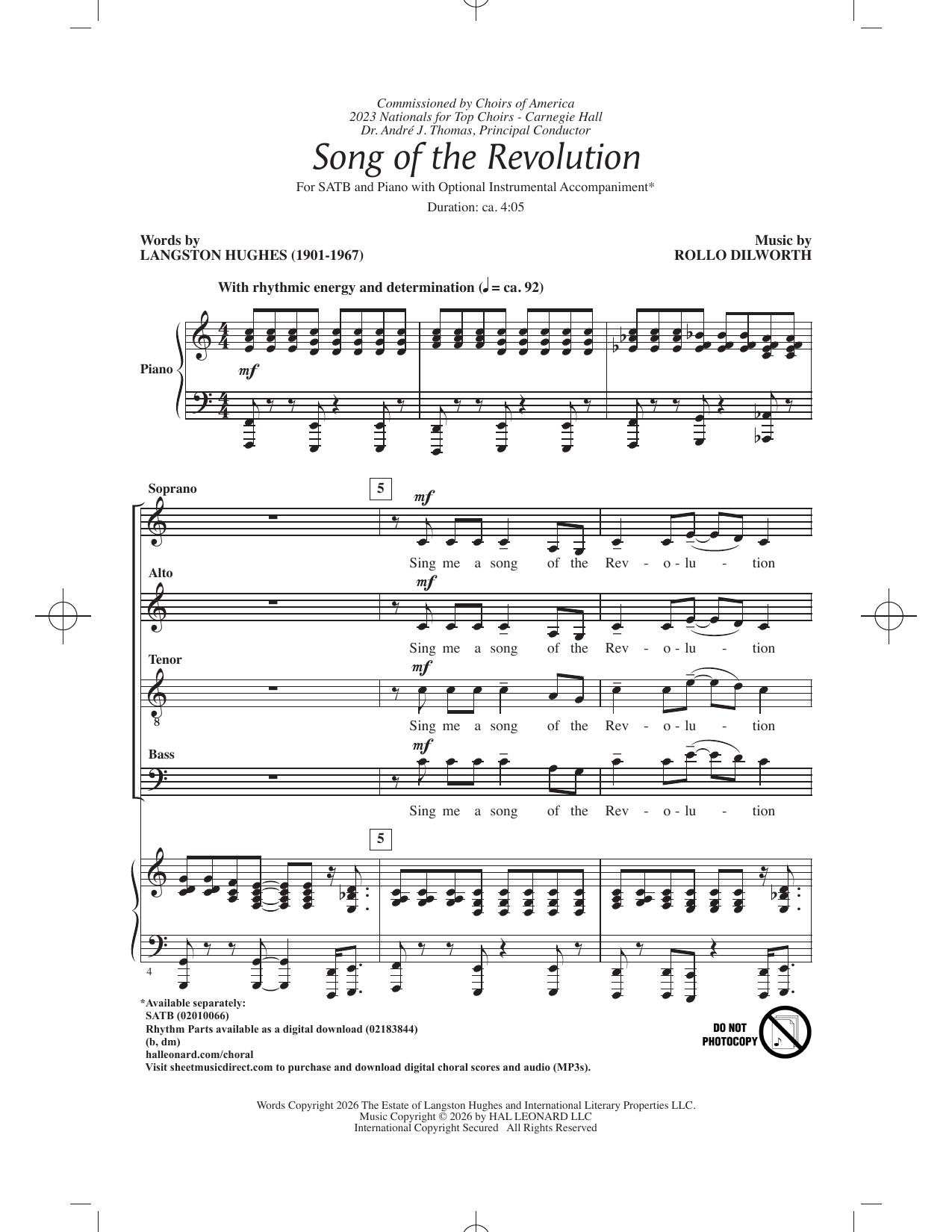
Dilworth's setting captures the urgency and lyrical power of Hughes's poem without overshadowing the text. The harmonic language moves between modern choral writing and accessible sonorities, making this piece compelling for both singers and audiences while remaining technically manageable for good community choirs.
What to expect
The music carries both reflection and momentum, pairing Dilworth's modern harmonic sensibility with the urgent cadence of Hughes's language. There is warmth in the voicing but also an edge that prevents the piece from becoming sentimental.
Who it's for
This octavo works for intermediate to advanced SATB choirs seeking repertoire that engages with American poetry and social consciousness. It suits concert programs, educational settings where text matters, and ensembles that value contemporary composition alongside standard literature.
How to get the most out of it
Treat the text with the weight it deserves; every word should land clearly even at moderate tempos. A metronomic, rushed reading will flatten the message.
Balance soprano and alto lines carefully in sections where they diverge. These voices often carry both melodic and harmonic responsibility simultaneously.
Let the piece breathe between phrases rather than pushing through continuously. Strategic use of silence amplifies the poem's rhetorical power.
How to use it
Consider programming this alongside other Hughes settings or as the anchor of a concert exploring poetry in choral music. Its length and character also make it effective as a concert closer, leaving audiences with a substantive artistic statement.
Skills your students will build
Singing with text clarity and intentionality
Navigating modern harmonic language (jazz-influenced sonorities, modal interchange)
Balancing ensemble blend while maintaining independent lines
Interpreting poetry through musical phrasing and dynamic shape
You May Also Like
Scan to Complete Your Purchase
Use your phone's camera to scan the code below
You'll log in on your phone and the order will be added to your account