
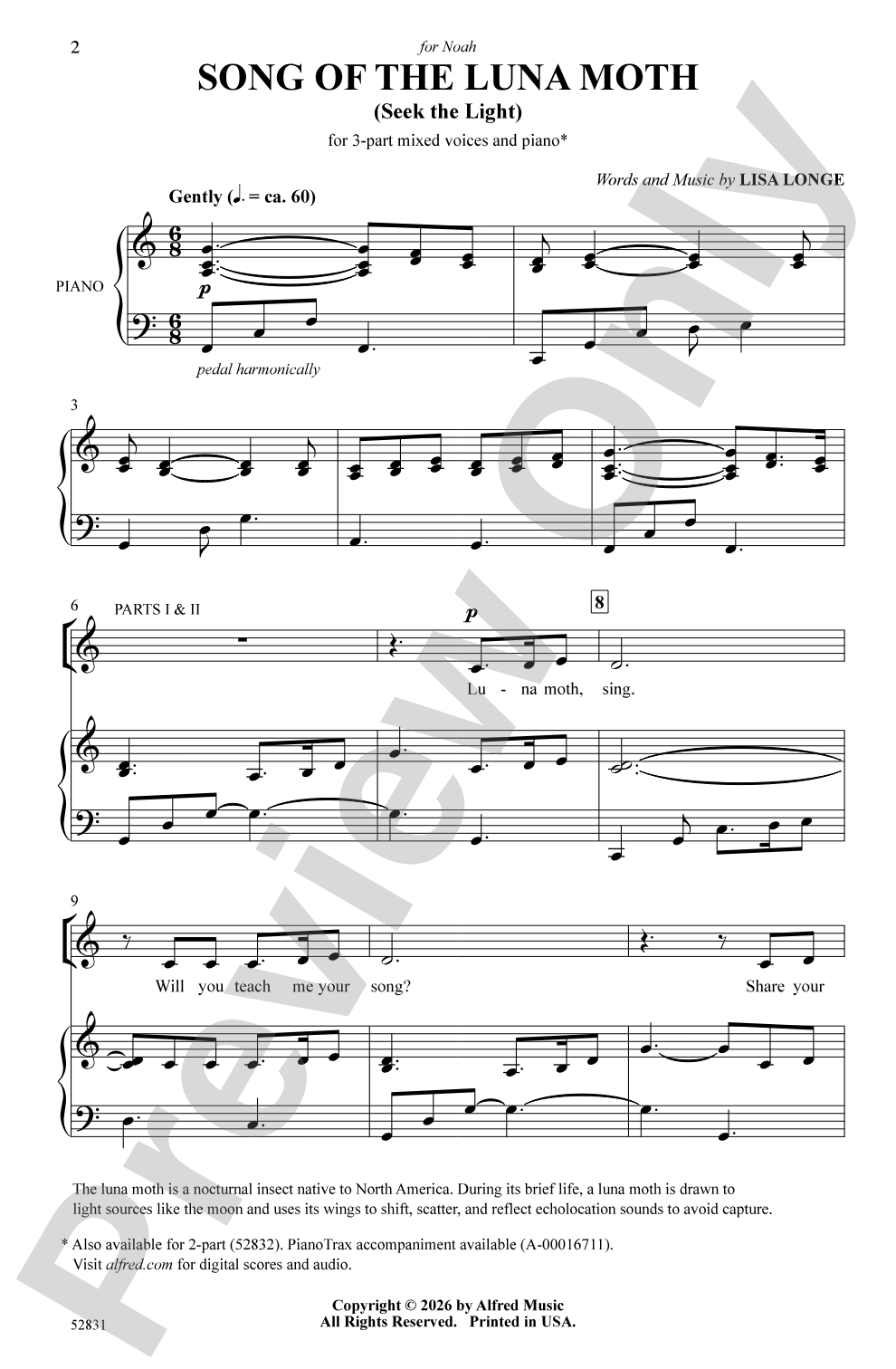

Song of the Luna Moth: 3-Part Mixed Choral Octavo
(Seek the Light)
Words and music by Lisa Longe
Item: 00-PO-0008301
$2.50
Minimum order quantity: 20 copies
Pickup currently not available
Description
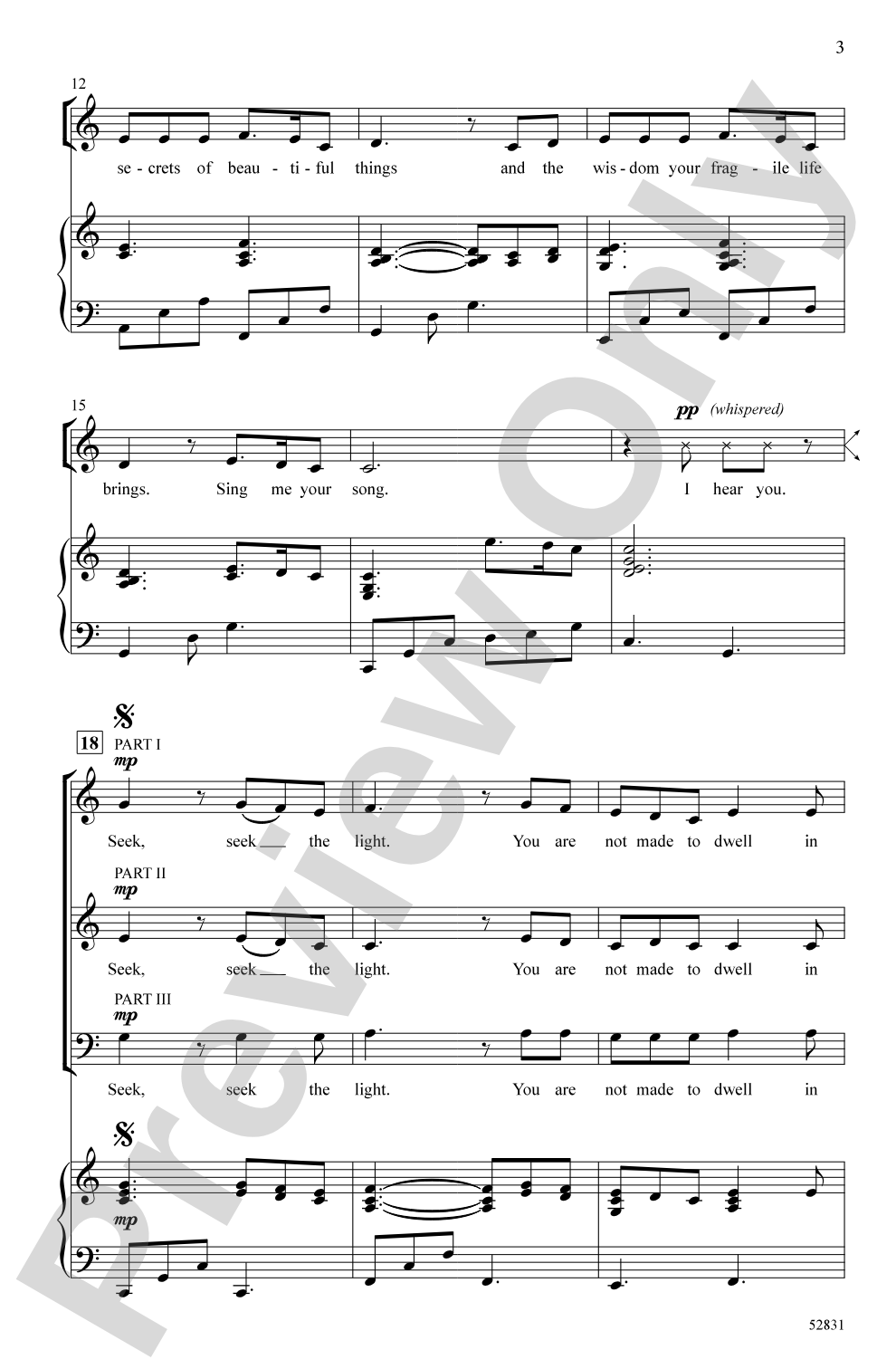
"Seek the light---you are not made to dwell in darkness" is the gentle invitation at the heart of this original. Inspired by the luna moth's pull toward moonlight, the text spins a quiet metaphor for finding your own way forward. Accessible ranges and mostly homophonic writing keep the parts easy to lock in, while a supportive piano carries a flowing 6/8 lilt throughout. Program it on a nature-themed concert, or let the message of courage and growth carry it into any lineup.


Discover MakeMusic Cloud: thousands of interactive titles your students can play along with today.
Sample Audio
1
Audio File
--:--
0:00
0:00
Sample Video
Additional Details
Series:
Alfred Choral Designs
Page Count:
12
SKU:
00-PO-0008301
More about this title
About the Composer: Lisa Longe

Lisa Longe earned both her Bachelor's and Master's degrees in Music Education from the Crane School of Music at SUNY Potsdam, then pursued further study in Christian Spirituality at Fordham University. For over two decades, she has shaped young musicians in the Schenectady City Public Schools system in Upstate New York, where she transitioned from general music instruction to instrumental band direction.
Longe's professional identity centers on a conviction that few sounds rival the beauty of children singing together. In her roles accompanying school choirs and introducing students to their first instruments, she has witnessed countless musical awakenings. She lives in Albany with her family and an assortment of animals that matches her belief in nurturing growth in all its forms.
Why we love this
Longe writes from lived classroom experience, and it shows in every choice here. The homophonic textures and accessible ranges reflect genuine understanding of what SAB singers can execute confidently, while the 6/8 lilt and luna moth imagery create something memorable without requiring technical virtuosity. The metaphor of seeking light lands naturally in choral writing, giving your students material with real substance to sink their voices into.
What to expect
Gentle and introspective, yet never timid. The 6/8 meter gives the piece a floating quality, like watching something drawn inevitably toward what calls to it. There is quiet confidence in the metaphor and tenderness in the voicing.
Who it's for
SAB choirs in middle school through early high school will find this piece both achievable and worthwhile. The accessible ranges and straightforward harmonic language let singers focus on interpretation and message rather than technical struggle.
How to get the most out of it
- Let the piano part establish the 6/8 pulse clearly in rehearsals before layering in voices. The flowing accompaniment does much of the work in cementing the groove, so anchoring it first pays dividends.
- Pay attention to phrase shaping across the mostly homophonic sections. Even when voices move together, subtle dynamic swells toward natural phrase peaks will add dimension and prevent the piece from feeling static.
- Balance the soprano and alto lines carefully when they separate slightly. Neither part should dominate; think of them as conversational, with the piano weaving beneath both.
How to use it
This works naturally on a spring or nature-themed concert, but its message of courage and self-discovery speaks across any context where you want to program something reflective. Consider pairing it with repertoire that explores growth and resilience, or let it serve as a moment of stillness between more energetic pieces.
Skills your students will build
- Maintaining independence in homophonic sections while blending with other voices
- Reading and performing in 6/8 meter with attention to phrase arc
- Connecting text meaning to musical expression and dynamic shape
- Singing with appropriate range comfort in SAB voicing