Song For A Windy Day Sheet Music Preview

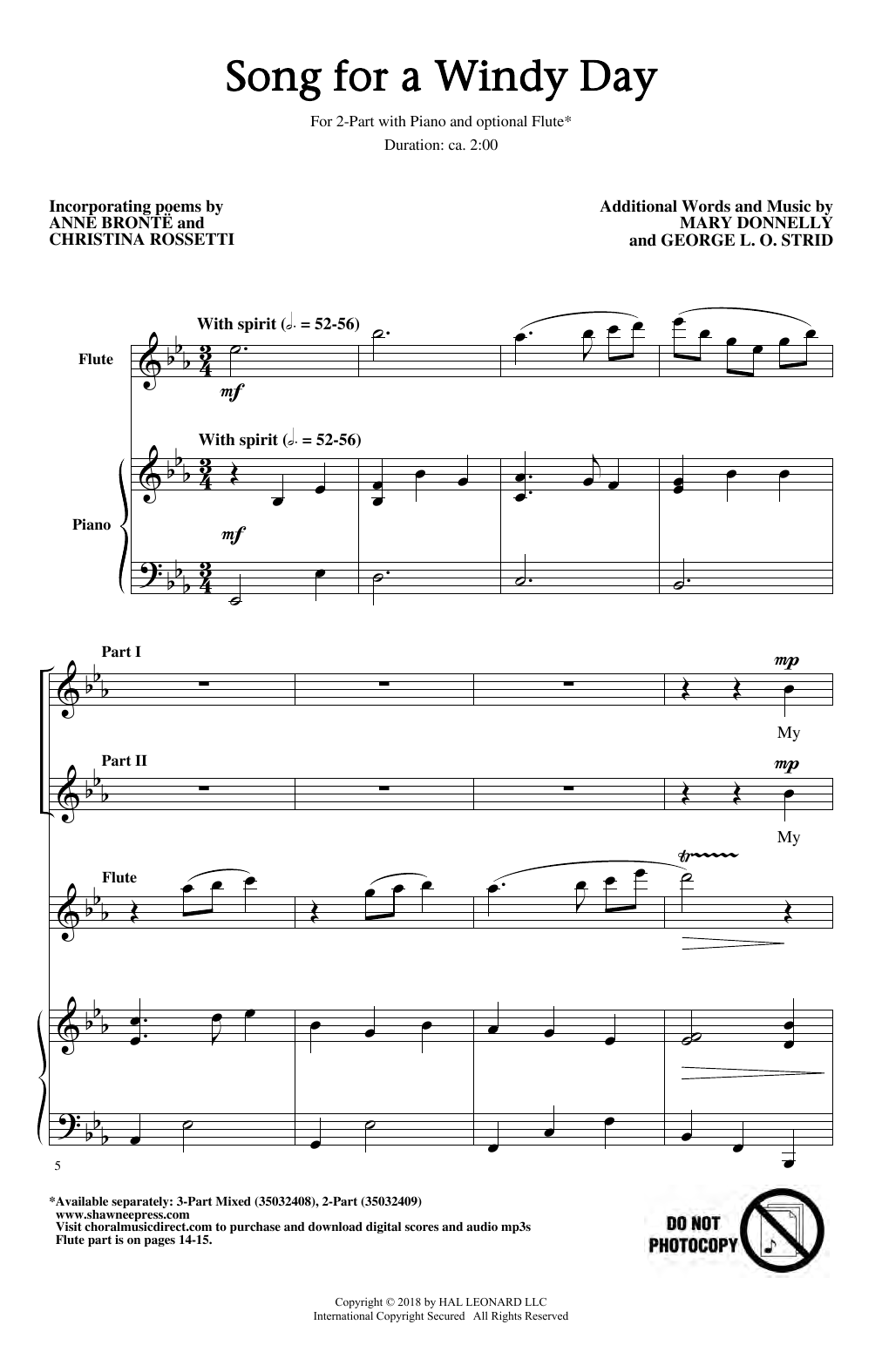
Song For A Windy Day: 2-Part Choral Octavo

Item: 35-DS00431148

Digital Download
$2.99
Description

Song For A Windy Day: 2-Part Choral Octavo isn't in MakeMusic Cloud just yet...but it could be. Let us know you'd like to see it, and you'll help shape what comes next. In the meantime, start a free trial and dive into thousands of interactive titles your students can play along with today.

Sample Audio
No sample audio found.
Sample Video
Additional Details
Publisher: Hal Leonard
Page Count: 14
SKU: 35-DS00431148

More about this title

Why we love this

The simplicity of two parts allows singers to focus on blending and intonation without the complexity of tracking multiple voice lines. This arrangement captures something genuinely atmospheric, giving concert programming a moment that feels both intimate and assured.

What to expect

The piece unfolds with the kind of quiet movement you feel in your shoulders when wind picks up. There's contemplation here, not bombast; the two voices create space for reflection rather than declaration.

Who it's for

Developing choirs seeking accessible material that doesn't sacrifice musical substance. Directors programming a concert that needs breathing room between larger works will find this octavo does genuine work in 14 pages.

How to get the most out of it

  • Treat the text as narrative rather than decoration; let the imagery of wind and weather shape your phrasing and breath points
  • Balance between parts matters more than volume; aim for the two lines to merge into a single musical line rather than compete
  • Test the passaggio passages early in rehearsal, since the limited voicing means there's nowhere to hide blend issues

How to use it

Position this as a concert interlude to establish contrast with fuller ensemble pieces. It reads well as a palate cleanser after something dramatic, and its modest scope makes it an excellent selection for shorter concert slots or informal performances.

Skills your students will build

  • Two-part blend and balance across phrase lengths
  • Breath control in sustained passages
  • Text projection without pushing beyond the octavo's intimate dynamic range
  • Reading text expression cues in minimal harmonic settings

You May Also Like