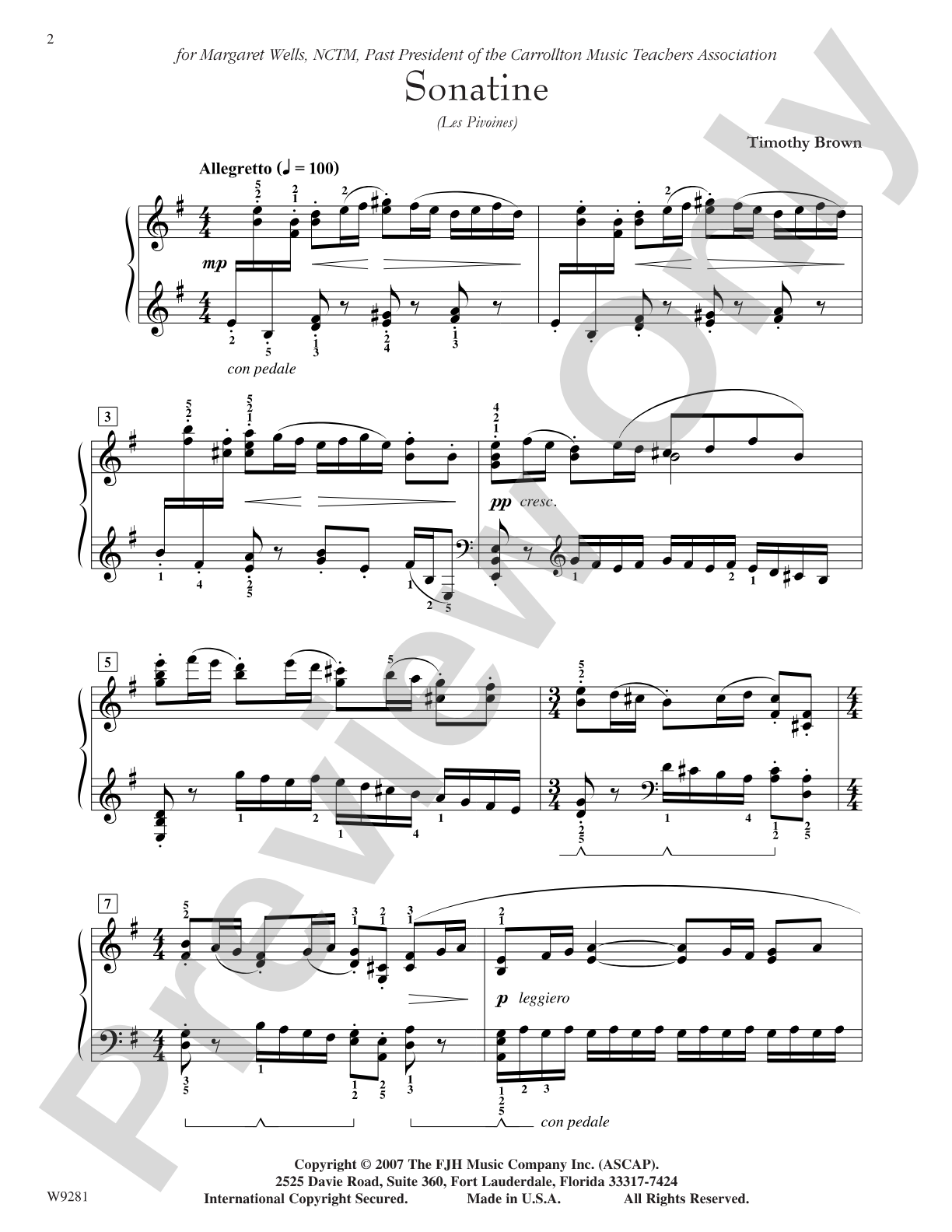
Sonatine (Les Pivoines) Sheet Music Preview

Sonatine (Les Pivoines): Piano

By Timothy Brown

Item: 98-DW9281

Digital Download
$2.95
Description
This advanced solo offers students an array of musical and technical challenges well worth the effort to master. Sonatine is a Debussy-style piece with an expressive impressionistic quality for the maturing musician.

Sonatine (Les Pivoines): Piano isn't in MakeMusic Cloud just yet...but it could be. Let us know you'd like to see it, and you'll help shape what comes next. In the meantime, start a free trial and dive into thousands of interactive titles your students can play along with today.

Sample Audio
No sample audio found.
Sample Video
Additional Details
Series: Written For You
Publisher: The FJH Music Company, Inc.
SKU: 98-DW9281

More about this title

Why we love this

Timothy Brown captures the harmonic and textural language of impressionism without pastiche. The piece demands real maturity from the performer: not just technical facility, but the interpretive sensitivity to shape color and sustain atmosphere across a full sonata form.

What to expect

Sonatine evokes the quiet luminosity of impressionist painting: light filtering through water, subtle shifts in color and mood. The writing is graceful and lyrical, yet intricate enough to sustain concentration and reveal new details with each study.

Who it's for

Advanced pianists ready to engage with 20th-century idiom and the technical demands of impressionistic texture. This piece rewards students who have solid command of hand independence, dynamic control, and pedal technique and are beginning to think about interpretation as a sophisticated skill.

How to get the most out of it

  • Build independence between hands early. The impressionistic harmony often lives in one hand while the other carries rhythmic or melodic material; locking them together too soon obscures the musical intention.
  • Shape phrases through dynamic and tonal weight rather than tempo fluctuation. Debussy-style writing asks for stillness within rubato, not constant rushing and pulling.
  • Explore the sustain pedal as an instrument unto itself. Experiment with partial changes and layered resonances to clarify the harmonic movement rather than blur it.

How to use it

Place this as a recital centerpiece for advanced students or use it as a bridge piece between classical and contemporary works. It pairs well alongside other 20th-century solo repertoire or impressionist-influenced chamber works, offering audiences a glimpse of how traditional forms were transformed through harmonic innovation.

Skills your students will build

  • Reading and executing impressionistic harmony and voice leading
  • Independent hand coordination and transparency between registers
  • Pedal technique for layering and clarifying harmonic resonance
  • Sustaining musical line and shape across longer phrases without relying on tempo change
  • Dynamic control and tonal shaping at intermediate to advanced dynamic levels

You May Also Like