
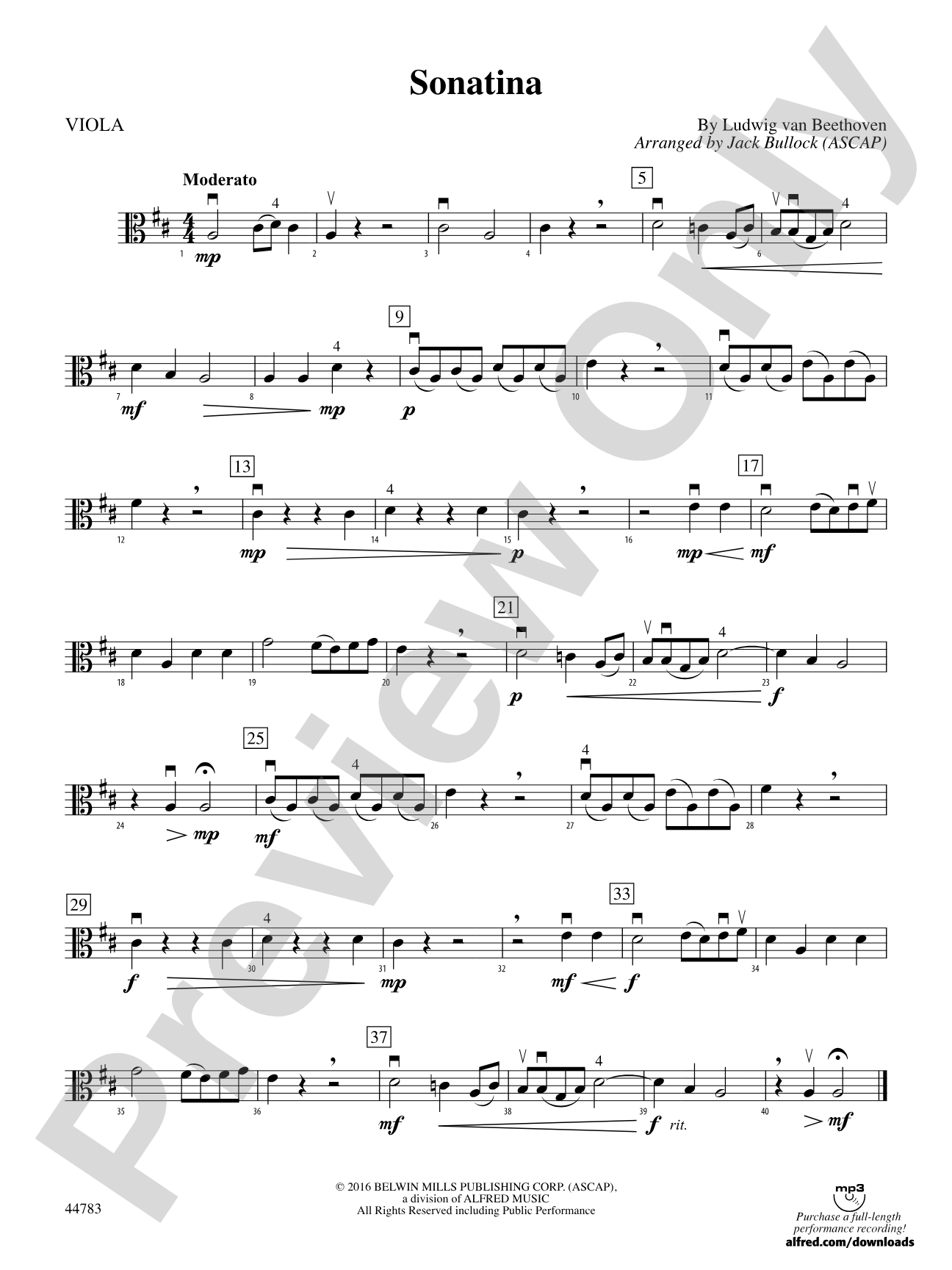

Sonatina: Viola
By Ludwig van Beethoven / arr. Jack Bullock
Grade: 2
Item: 00-PC-0017301_VA1
$5.99
Pickup currently not available
Description
Originally written by Beethoven for piano, this cool little gem has been adapted for strings by Jack Bullock, and is perfect for contest and festival. The melody moves between all sections allowing for many teaching opportunities. (1:50)


Don't just read it, hear it, play along with it, and watch your students grow with it. In MakeMusic Cloud, Sonatina: Viola comes alive with professional accompaniment, adjustable tempo, and built-in practice tools that turn solo practice into real progress.
Open in the Player
Jump straight in and assign it today.
Start Your Free Trial
Open this title and explore the full library in minutes.
Sample Audio
1
Audio File
--:--
0:00
0:00
Sample Video
Additional Details
Series:
Belwin Intermediate String Orchestra
Publisher:
Alfred Music
Page Count:
76
SKU:
00-PC-0017301_VA1
More about this title
About the Composer: Ludwig van Beethoven
Ludwig van Beethoven (1770-1827) transformed music from a craft into a force of personal expression. His nine symphonies, thirty-two piano sonatas, and string quartets established him as the bridge between Classical form and Romantic imagination, proving that structural mastery and emotional urgency could coexist. For music educators, Beethoven's work remains essential because it demonstrates how constraint breeds invention: even his shortest pieces contain architectural clarity and melodic richness that reward careful study.
Beethoven's sonatinas occupy a unique pedagogical space. Written for developing pianists, they retain the formal rigor of sonata structure while remaining accessible to students encountering multi-movement works for the first time. When adapted for ensemble, they become models for how melody, texture, and harmonic progression can engage multiple instrumental voices without sacrificing clarity or purpose.
Why we love this
This arrangement gives your string orchestra authentic masterwork repertoire that fits the Grade 2 skill level without feeling simplified. The melody's journey through all sections creates natural opportunities to address intonation, tone balance, and ensemble listening across your violin, viola, and cello sections. You'll find it equally at home in a concert setting or contest round, and at ninety seconds, it paces well between longer works.
What to expect
Elegant and economical. Beethoven distills Classical form into something lean and purposeful, with melodies that sing without ornamentation and harmonies that support rather than overwhelm. There's a transparent quality to the writing that rewards clean ensemble playing and reveals intonation issues instantly, keeping your section leaders honest.
Who it's for
String orchestra directors working with intermediate ensembles who want to include Beethoven without heavy arrangement or overly complex orchestration. High school and advanced middle school programs will find it accessible; younger advanced orchestras can tackle it with focused sectional preparation. It's equally suitable for concert and contest contexts.
How to get the most out of it
- Balance the melody line across sections as it transfers. Mark the lead passage in each part so students understand they're responsible for carrying the musical conversation, not just filling harmony.
- Establish a steady, singing tone from the start. This excerpt's Classical origins demand clarity and restraint; resist the urge to add excessive vibrato or dynamic swells that muddy the harmonic progression.
- Shape phrases by direction rather than arbitrary forte or piano markings. Let the shape of the melody itself guide your ensemble toward natural peaks and releases.
- Lock the rhythmic foundation early in rehearsal. Consistent pulse makes everything else—intonation, balance, phrasing—fall into place more easily.
How to use it
Schedule this as a secondary work on a concert that pairs it with a longer Romantic piece or contemporary selection. Its brevity and directness make it an ideal opening number that establishes focus before your audience settles in. For festivals, it demonstrates musical maturity and control without requiring the extended rehearsal time that Grade 2/3 full symphonic arrangements demand.
Skills your students will build
- Tracking melodic phrases as they shift between sections and voicings
- Maintaining consistent vibrato and tone quality in sustained harmonic parts
- Reading and executing Classical articulation and phrasing conventions
- Ensemble listening and balance when the lead voice moves away from first violins
- Intonation precision in extended harmonic passages