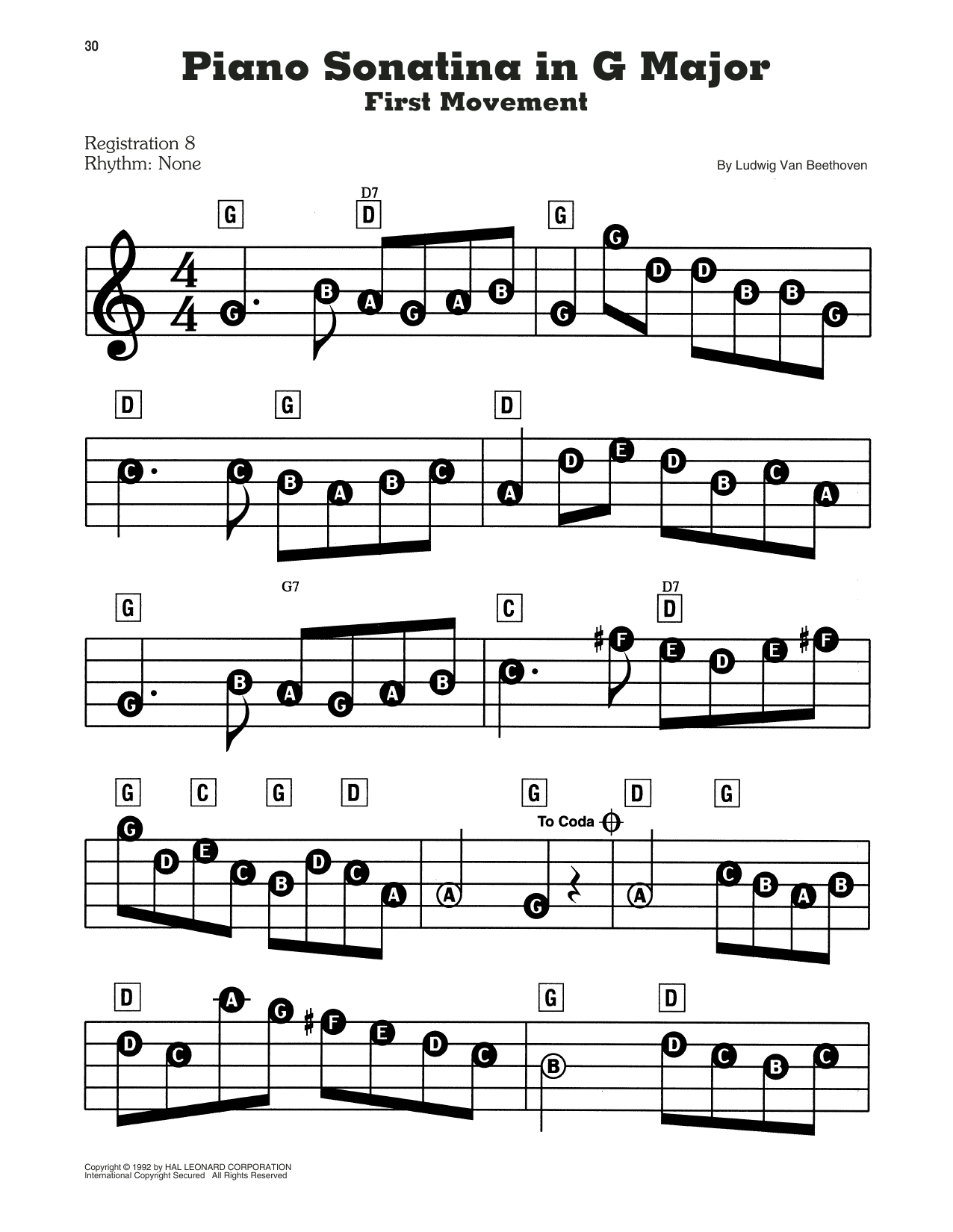
Sonatina In G Major Sheet Music Preview

Sonatina In G Major: E-Z Play Today

By Ludwig Van Beethoven

Item: 35-DS00603409

Digital Download
$4.99
Description

Sonatina In G Major: E-Z Play Today isn't in MakeMusic Cloud just yet...but it could be. Let us know you'd like to see it, and you'll help shape what comes next. In the meantime, start a free trial and dive into thousands of interactive titles your students can play along with today.

Sample Audio
No sample audio found.
Sample Video
Additional Details
Publisher: Hal Leonard
Page Count: 2
SKU: 35-DS00603409

More about this title

About the Composer: Ludwig Van Beethoven

Beethoven composed his sonatinas during the 1790s as he was establishing himself in Vienna, a period when he balanced the Classical forms he inherited from Haydn and Mozart with his own expanding harmonic language. These works served both as teaching pieces for his students and as concert vehicles that showcased the evolving capabilities of the piano.

Why we love this

The E-Z Play Today edition makes this Beethoven sonatina genuinely accessible without sacrificing the elegance of the original. Students encounter real Classical architecture in a manageable format, and teachers appreciate that the simplified voicing actually clarifies Beethoven's harmonic intentions rather than compromising them.

What to expect

Bright and conversational, with the architectural clarity that defines Beethoven's Classical inheritance. The opening theme states itself plainly, inviting the ear to follow its logical unfolding even as unexpected harmonic turns nudge the listener forward.

Who it's for

Piano students in their first or second year of study who are ready to move beyond simplified arrangements into actual Classical repertoire. Teachers seeking repertoire that builds technical foundation while introducing form, phrasing, and the stylistic expectations of the Classical era.

How to get the most out of it

  • Shape the phrases by thinking about where each one breathes rather than where the measure line falls; Beethoven's phrasing often crosses bar lines and rewards a vocalist's sensibility.
  • Keep the opening theme transparent by resisting the urge to pedal through the broken chord accompaniment; let the hand position changes create natural articulation.
  • Find the character shift when contrasting material enters; Beethoven's sonatinas are small dramas, and marking those tonal shifts with slight tempo flexibility adds communication without rushing.

How to use it

Position this as a student showcase piece in a chamber or piano recital where it demonstrates genuine musical maturity without the performance anxiety that more virtuosic works demand. It pairs well alongside other sonatinas from the same period, allowing audiences to hear how composers approached similar formal structures with different voices.

Skills your students will build

  • Reading and performing two-part texture with independent hand coordination
  • Recognizing and executing Alberti bass patterns with rhythmic precision
  • Understanding basic sonata form through listening and analysis
  • Managing articulation and pedaling choices in Classical style
  • Shaping melodic phrases within the constraints of Classical phrasing conventions

You May Also Like