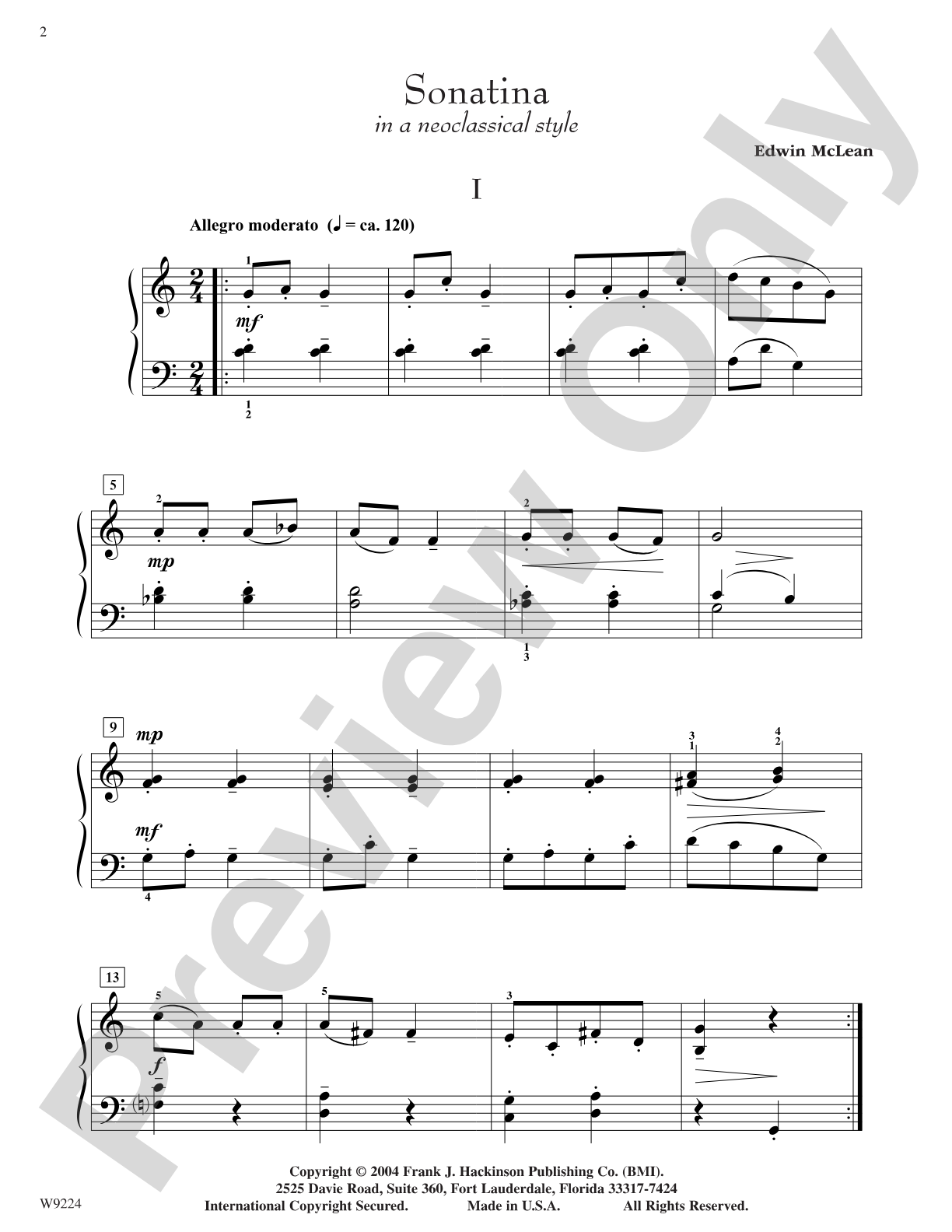
Sonatina in a Neoclassical style Sheet Music Preview

Sonatina in a Neoclassical style: Piano

By Edwin McLean

Item: 98-DW9224

Digital Download
$3.95
Description
This outstanding, classically structured sonatina offers fresh harmonies, expressive melodies, and energetic rhythms. Suitable for recitals and auditions, this three-movement piano solo provides teachers a wonderful model for teaching classical style and form. Sonatina in a Neoclassical Style is a welcome addition to the modern sonatina repertoire.

Sonatina in a Neoclassical style: Piano isn't in MakeMusic Cloud just yet...but it could be. Let us know you'd like to see it, and you'll help shape what comes next. In the meantime, start a free trial and dive into thousands of interactive titles your students can play along with today.

Sample Audio
No sample audio found.
Sample Video
Additional Details
Series: Written For You
Publisher: The FJH Music Company, Inc.
SKU: 98-DW9224

More about this title

Why we love this

McLean writes with genuine understanding of how sonatinas teach form without sacrificing musicality. The fresh harmonic language keeps students engaged while the clear three-movement architecture provides exactly the structural scaffolding young pianists need to internalize classical design.

What to expect

The piece inhabits the space between strict classical form and modern sensibility, offering melodies that sing with clarity and purpose against harmonies that surprise without jarring. Energy and expressiveness coexist throughout, creating a journey that feels both architecturally sound and emotionally present.

Who it's for

This sonatina serves intermediate to early advanced pianists preparing for recitals, competitions, or auditions. It's equally valuable for teachers seeking a contemporary work that models classical structure without relying on standard repertoire warhorses.

How to get the most out of it

  • Shape each movement's phrasing to emphasize the melodic contour rather than chasing tempo; the expressive quality of the lines will carry the energy forward naturally.
  • Bring out the interplay between harmony and melody in the middle section, treating harmonic shifts as moments of harmonic color rather than merely moving between chords.
  • Let the energetic rhythms breathe; precision matters, but allow slight space for the listener to feel the pulse shift across phrase boundaries.
  • Record yourself and listen for balance between the three movements; they should feel like a cohesive statement rather than three separate pieces.

How to use it

Program this as a centerpiece recital selection where you want to demonstrate a student's command of form and style without overwhelming the program's narrative arc. It also works as a bridge between earlier sonatinas and larger-scale classical works, showing pianists how contemporary composers have extended the tradition.

Skills your students will build

  • Reading and performing classical sonatina form (exposition, development, recapitulation)
  • Interpreting expressive markings within a structured harmonic framework
  • Sustaining rhythmic energy across multiple tempos within a single work
  • Balance and voicing in passages combining melody and accompaniment
  • Understanding how contemporary composition extends rather than abandons classical principles

You May Also Like