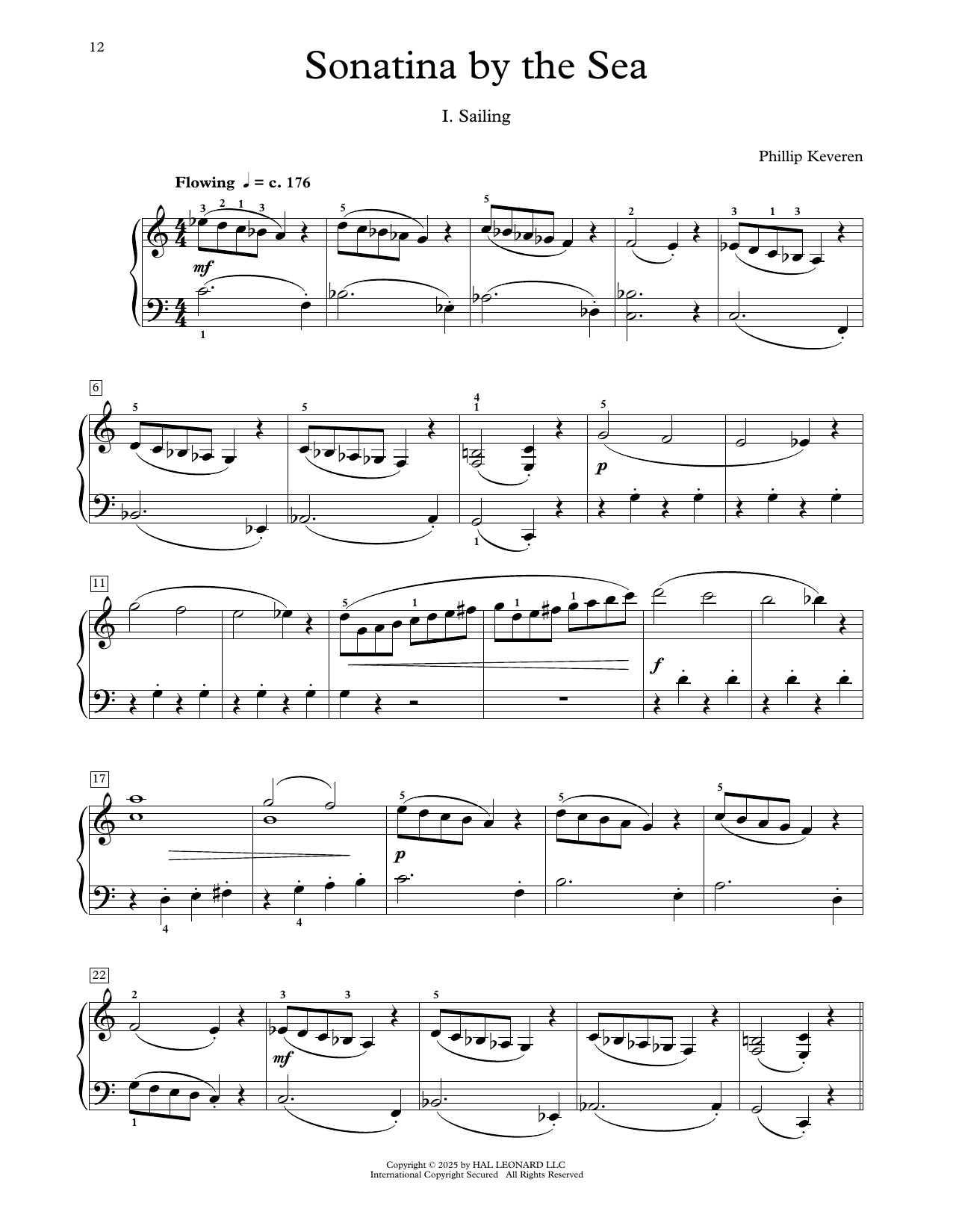
The six pages of music strike a genuine balance between technical substance and accessibility. Students encounter real compositional architecture without drowning in complexity, making this an ideal stepping stone between early intermediate work and more demanding classical forms.
What to expect
A gentle journey through light and shade, with a reflective quality that genuinely evokes water and horizon. The writing breathes naturally, offering moments of repose alongside passages that ask for focused technical control.
Who it's for
Pianists solidifying their intermediate skills and ready to explore classical sonatina form without intimidation. This works equally well for students preparing recital material or teachers building a curriculum around small classical forms.
How to get the most out of it
Establish a steady harmonic pulse in the left hand before layering melodic work in the right; this prevents the piece from feeling untethered.
Listen for where the thematic material returns and ensure those moments feel like arrivals, not repetitions.
Let the seaside imagery guide your tempo choices; resist pushing too hard during faster passages.
How to use it
Pair this with other sonatina literature to demonstrate how composers approach the form across different periods and styles. It also serves well as a confidence builder early in a recital, establishing an engaged, thoughtful tone without requiring superhuman virtuosity.
Skills your students will build
Recognition and execution of sonatina form
Pedal control and clarity in sustained passages
Balance between melody and accompaniment across register changes
Phrasing in classical contexts
Consistency in repeated material with slight variation
You May Also Like
Scan to Complete Your Purchase
Use your phone's camera to scan the code below
You'll log in on your phone and the order will be added to your account