
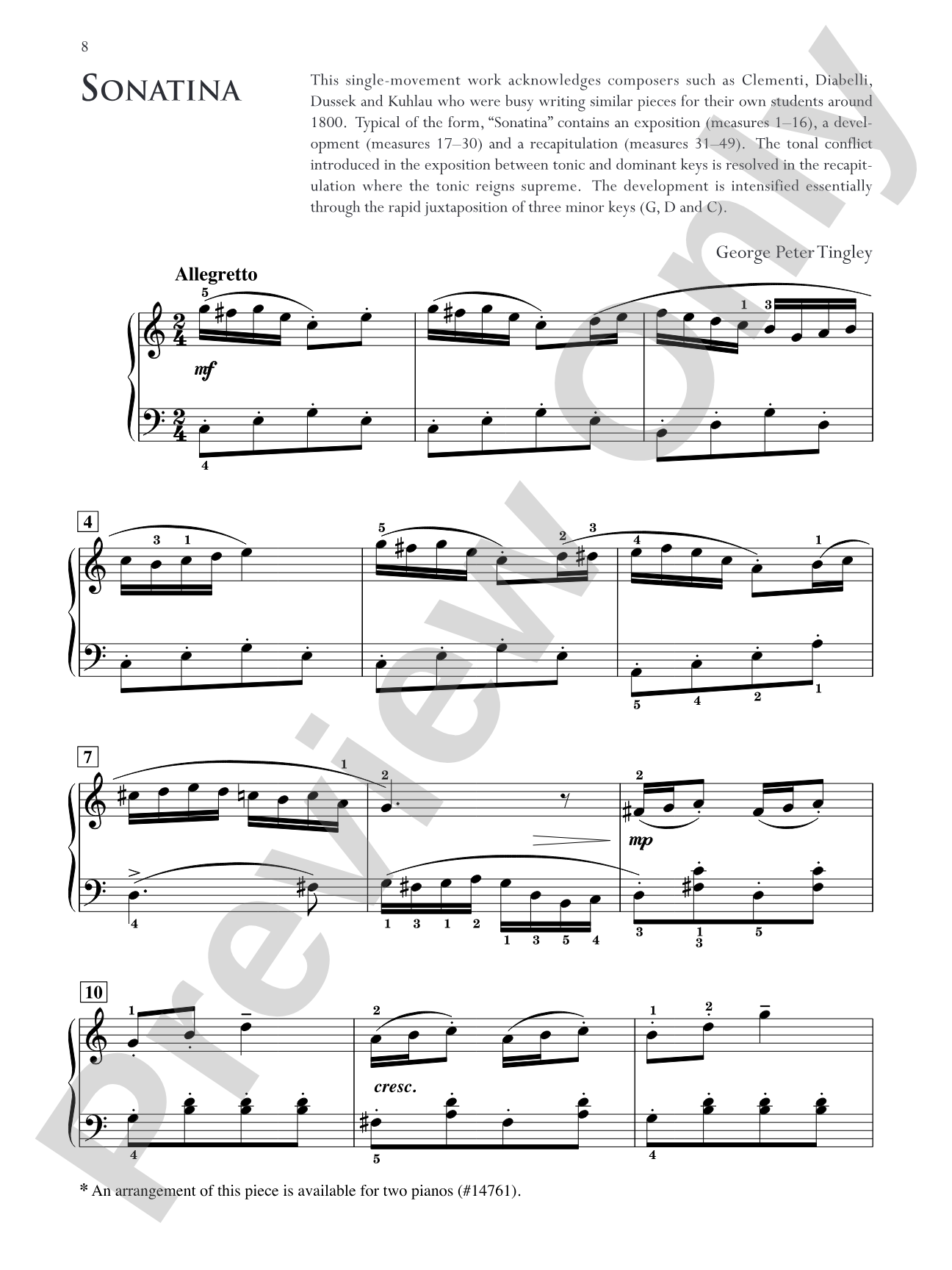

Sonatina: Piano
7 Intermediate to Late Intermediate Piano Solos That Reflect and Celebrate Styles of Past Masters
By George Peter Tingley
Level: Intermediate / Late Intermediate
Item: 00-PS-0016695
$5.50
Pickup currently not available
Description
Reflect and celebrate the styles of past masters with these pieces ranging from early to late intermediate in level. One might hear echoes of such composers as Beethoven, Tchaikovsky and sounds suggestive of European folk music. Program notes are included explaining the construction of the solos and specific influences.


Sonatina: Piano isn't in MakeMusic Cloud just yet...but it could be. Let us know you'd like to see it, and you'll help shape what comes next. In the meantime, start a free trial and dive into thousands of interactive titles your students can play along with today.
Request This Title
Tell us you want it.
Start Your Free Trial
Explore everything that's ready to play right now.
Sample Audio
No sample audio found.
Sample Video
No sample videos found.
Additional Details
Publisher:
Alfred Music
Page Count:
24
SKU:
00-PS-0016695
More about this title
About the Composer: George Peter Tingley
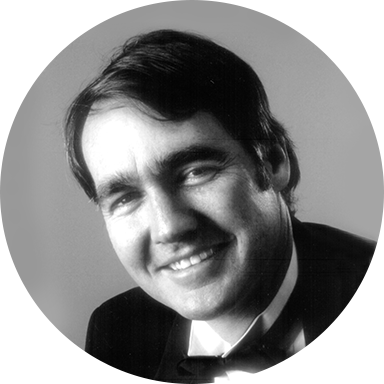
George Peter Tingley is a composer, pianist, and educator based in Point Richmond, California. He began violin at age four and switched to piano at ten, where he immediately gravitated toward improvisation and composition. His musical foundation came partly from formal training (a Bachelor of Arts in Piano Performance from California State University, Hayward, and both Bachelor and Master degrees in Music Theory from USC) and partly from countless hours spent learning by ear alongside recordings, particularly the Beatles during his teenage years.
In the 1970s, Tingley studied composition privately with the renowned pedagogue Nadia Boulanger in Paris. After returning to the United States, he built a career as a private teacher and, beginning in 1989, as a composer for the educational market. His published output exceeds 75 piano pieces, including the widely recognized solo Reverie. His duet collection Fiddle and the Tuba earned recognition from the National Federation of Music Clubs, and in 1992 he composed Kristi's Theme for Olympic figure skater Kristi Yamaguchi, which was arranged for full orchestra and recorded with Tingley as piano soloist.
Why we love this
Tingley's sonatinas strike a careful balance between accessibility and musical substance. The program notes that explain the construction and historical influences of each piece transform what could be routine etudes into informed encounters with classical form and orchestral color. Your students will recognize the fingerprints of Beethoven and Tchaikovsky without feeling trapped in pastiche, and they'll develop real taste for the architecture of European keyboard writing.
What to expect
These sonatinas inhabit a space between formal discipline and intimate expression. You'll encounter the clear architectural outlines of Classical form paired with Romantic lyricism, and moments where folk melodies surface like memories embedded in concert music. The writing feels both respectful of tradition and genuinely musical, never didactic.
Who it's for
Intermediate and late intermediate pianists looking for repertoire that teaches form and compositional craft alongside technical development. These sonatinas suit students ready to engage with the structural logic of Classical and Romantic-era writing but who need pieces written with modern pedagogical sensitivity.
How to get the most out of it
- Pay close attention to the program notes before you begin learning each sonatina. Understanding the specific historical influence or formal structure Tingley references will guide your interpretation and help you identify which musical elements to emphasize.
- Shape the phrasing around the Classical and Romantic conventions Tingley echoes. Listen for where cadences and thematic returns occur, and use dynamic nuance to clarify the underlying harmonic progression.
- Differentiate the folk-inspired sections from the more formal movements. These sonatinas benefit from a slightly lighter touch in passages suggesting European dance or character pieces, which contrasts effectively with the more architectural passages.
How to use it
Program these sonatinas on student recitals where they can stand alongside standard Classical and early Romantic fare, offering a refreshing perspective on form without departing from the stylistic world your audience expects. They also work well as curriculum pieces for piano students studying the development of sonata form, since each piece illuminates a specific compositional principle through actual music.
Skills your students will build
- Recognition and performance of Classical and Romantic formal structures (sonata, rondo, theme and variation)
- Phrasing and articulation informed by historical style conventions
- Understanding of how folk melodies and European musical idioms appear in concert music
- Dynamic shaping to clarify harmonic progression and thematic architecture
- Interpretation of program notes as a guide to musical decision-making