Sonata Pathetique: 1st Violin Sheet Music Preview

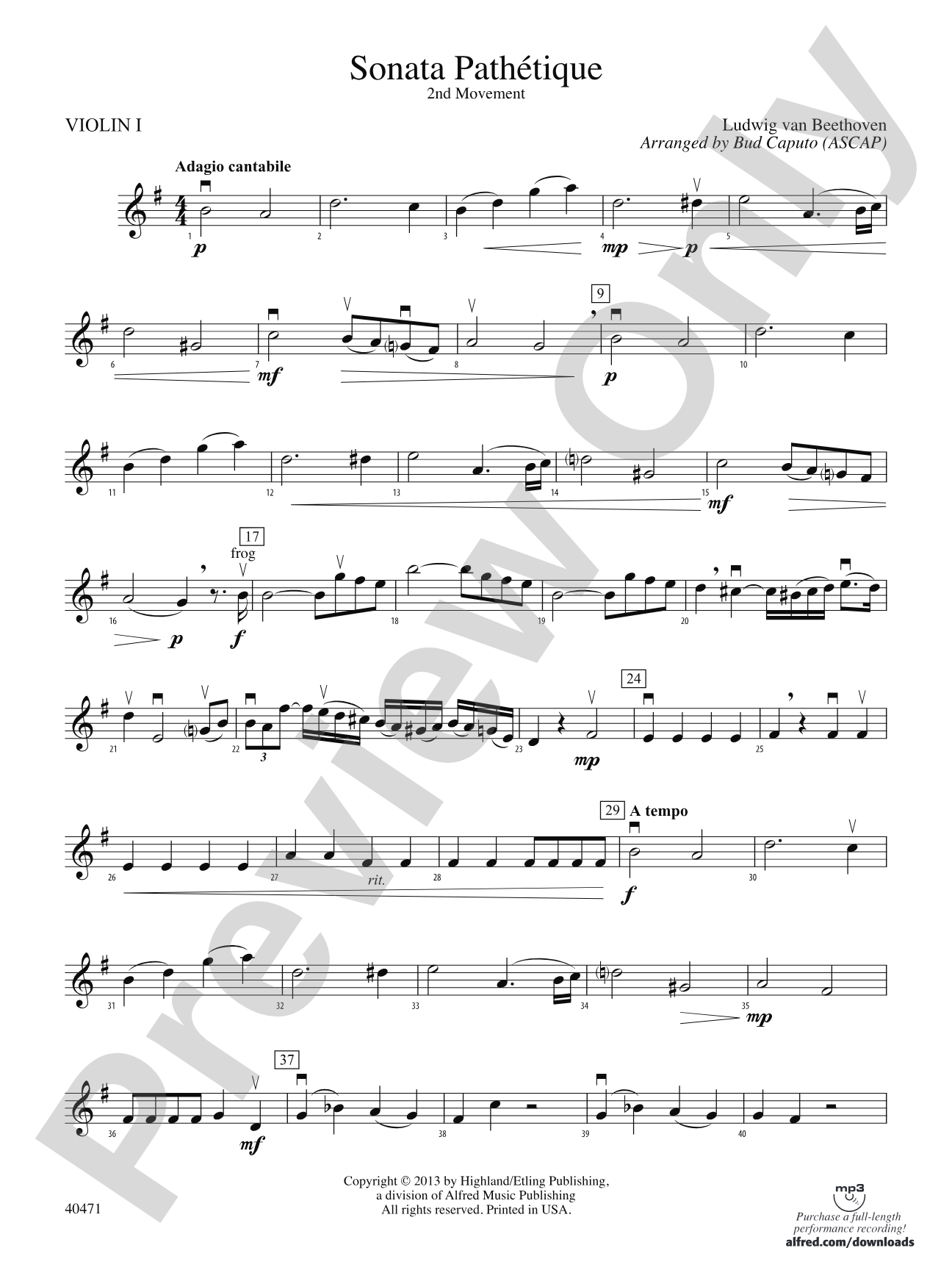
Sonata Pathetique: 1st Violin

2nd Movement

By Ludwig van Beethoven / arr. Bud Caputo

Grade: 3

Item: 00-PC-0016003_VN1

Digital Download
$5.99
Description
Directors, students, and audiences alike will enjoy this cherished and well-recognized piano melody arranged in G Major for string orchestra. Perfect for working on tone, string crossings, and dotted eighth/sixteenth rhythm.

Don't just read it, hear it, play along with it, and watch your students grow with it. In MakeMusic Cloud, Sonata Pathetique: 1st Violin comes alive with professional accompaniment, adjustable tempo, and built-in practice tools that turn solo practice into real progress.

Sample Audio
0:00
0:00
Sample Video
Additional Details
Series: Highland/Etling String Orchestra
Publisher: Alfred Music
Page Count: 124
SKU: 00-PC-0016003_VN1

More about this title

About the Composer: Ludwig van Beethoven

Ludwig van Beethoven (1770-1827) stands as one of history's most transformative composers, bridging the Classical and Romantic eras. His nine symphonies, thirty-two piano sonatas, and chamber works fundamentally expanded what instrumental music could express, moving beyond pure form into profound emotional territory. For music educators, Beethoven represents the intersection of technical mastery and expressive depth, offering students a model of how disciplined composition serves artistic vision.

Why we love this

This arrangement brings one of the Romantic era's most recognizable melodies within reach of young string orchestras without sacrificing the piece's emotional weight. The G Major transposition and Grade 3 accessibility make it ideal for building musicianship on substantive material rather than simpler filler, and the pedagogical focus on tone production and rhythmic precision gives every rehearsal a clear technical purpose.

What to expect

The Pathétique's opening moves with dark, searching expression, full of yearning but never desperate. This arrangement preserves that introspective gravity while allowing younger players to access string tone production and phrasing within a melodic context they can hear and feel.

Who it's for

String orchestra directors working with intermediate ensembles will find a concert-ready piece that teaches genuine musicianship while remaining accessible. Students at this level gain confidence performing a widely recognized work, and audiences respond immediately to the familiar and emotionally direct theme.

How to get the most out of it

  • Shape the famous opening melody with gradual dynamic swells rather than playing it straight; the yearning quality depends on singers' control of the bow and phrase direction.
  • Practice the dotted eighth/sixteenth figures in isolation before full tempo to ensure crisp articulation without rushing or dragging across string transitions.
  • Balance the inner voices carefully so the accompaniment supports rather than covers the primary melodic line, especially in the Violins II section.
  • Record a rehearsal and listen for evenness of vibrato across the section; tonal unity on this beloved melody will elevate the entire performance.

How to use it

Program this as a centerpiece on a concert featuring other Romantic-era works, or pair it with a contrasting lighter piece to highlight its dramatic character. It also works effectively as a festival selection where judges can evaluate both technical execution and expressive maturity from intermediate musicians.

Skills your students will build

  • Sustained legato tone production across multiple bow changes
  • Dotted eighth/sixteenth rhythm accuracy and articulation
  • String crossings with smooth voice leading
  • Dynamic shaping and phrase direction in a well-known melody
  • Ensemble balance and inner voice independence

You May Also Like