Sonata No. 8 "Pathetique": String Bass Sheet Music Preview

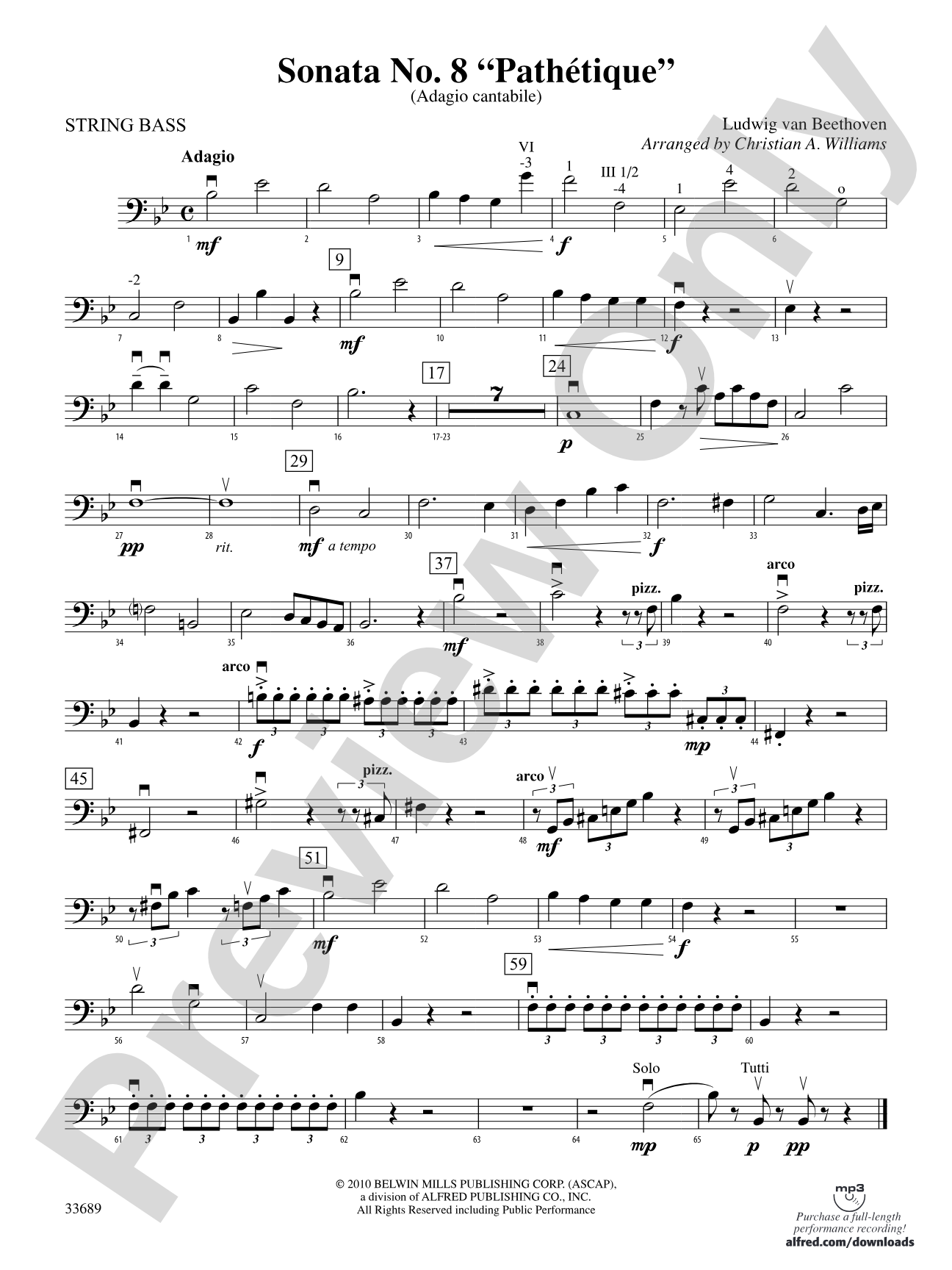
Sonata No. 8 "Pathetique": String Bass

Adagio cantabile

By Ludwig van Beethoven / arr. Christian Williams

Grade: 4

Item: 00-PC-0014478_SB

Digital Download
$5.99
Description
One of Beethoven's most famous early works and sure to please any audience with its simple, warm, and rich melodies! The main theme is passed to every instrument with moving accompaniments and strong harmonies. Optional divided parts in the first violins provide challenging material while maintaining the integrity of the original in the lower part. The key has been changed from E-flat major to B-flat major and includes accidentals for deeper study.

Don't just read it, hear it, play along with it, and watch your students grow with it. In MakeMusic Cloud, Sonata No. 8 "Pathetique": String Bass comes alive with professional accompaniment, adjustable tempo, and built-in practice tools that turn solo practice into real progress.

Sample Audio
0:00
0:00
Sample Video
Additional Details
Series: Belwin Concert String Orchestra
Publisher: Alfred Music
Page Count: 98
SKU: 00-PC-0014478_SB

More about this title

About the Composer: Ludwig van Beethoven

Beethoven transformed music at the threshold of the 19th century, bridging Classical form with Romantic expression. His early works remain foundational to music education because they demonstrate how clarity of structure can contain profound emotional depth.

Why we love this

This arrangement captures everything that makes the Pathétique beloved while remaining accessible to Grade 4 orchestras. The divided first violin part gives your strongest players meaningful challenges without fragmenting the ensemble's sound, and the transposition to B-flat major sits perfectly for string combinations that need something substantial but playable.

What to expect

Dignified and intimate at once. The melodies unfold with natural phrasing and warm harmonic support, creating moments that feel both noble and deeply personal. This is music that speaks without demanding virtuosity.

Who it's for

String orchestra directors at the Grade 4 level who want to program a genuine masterwork without arranging around ensemble limitations. It works equally well for concert or festival settings and serves orchestras seeking repertoire with both immediate appeal and room for musical growth.

How to get the most out of it

  • Balance the theme as it passes between sections; each instrument group should feel it's carrying the complete melodic thought, not just playing notes.
  • Shape the moving accompaniments with gentle direction rather than mechanical precision; Beethoven's "pathetic" quality comes from warmth, not heaviness.
  • In the divided first violin passages, have the lower part maintain steady contact with the violas and cellos so the upper part's figures don't float free.
  • Let silence breathe. The spaces between phrases matter as much as the phrases themselves in this music.

How to use it

Pair this with lighter Romantic or early Classical works to build a concert around the theme of emotional directness. It also serves as a bridge piece for orchestras transitioning from Grade 3 to Grade 4 repertoire, offering students their first encounter with music that operates on both structural and expressive levels simultaneously.

Skills your students will build

  • Phrasing and musical line continuity across ensemble sections
  • Balance between melody and accompaniment
  • Reading transposed material (original E-flat major, arranged in B-flat major)
  • Sustained tone with dynamic nuance in Classical context
  • Ensemble cohesion while managing optional divisi parts

You May Also Like