
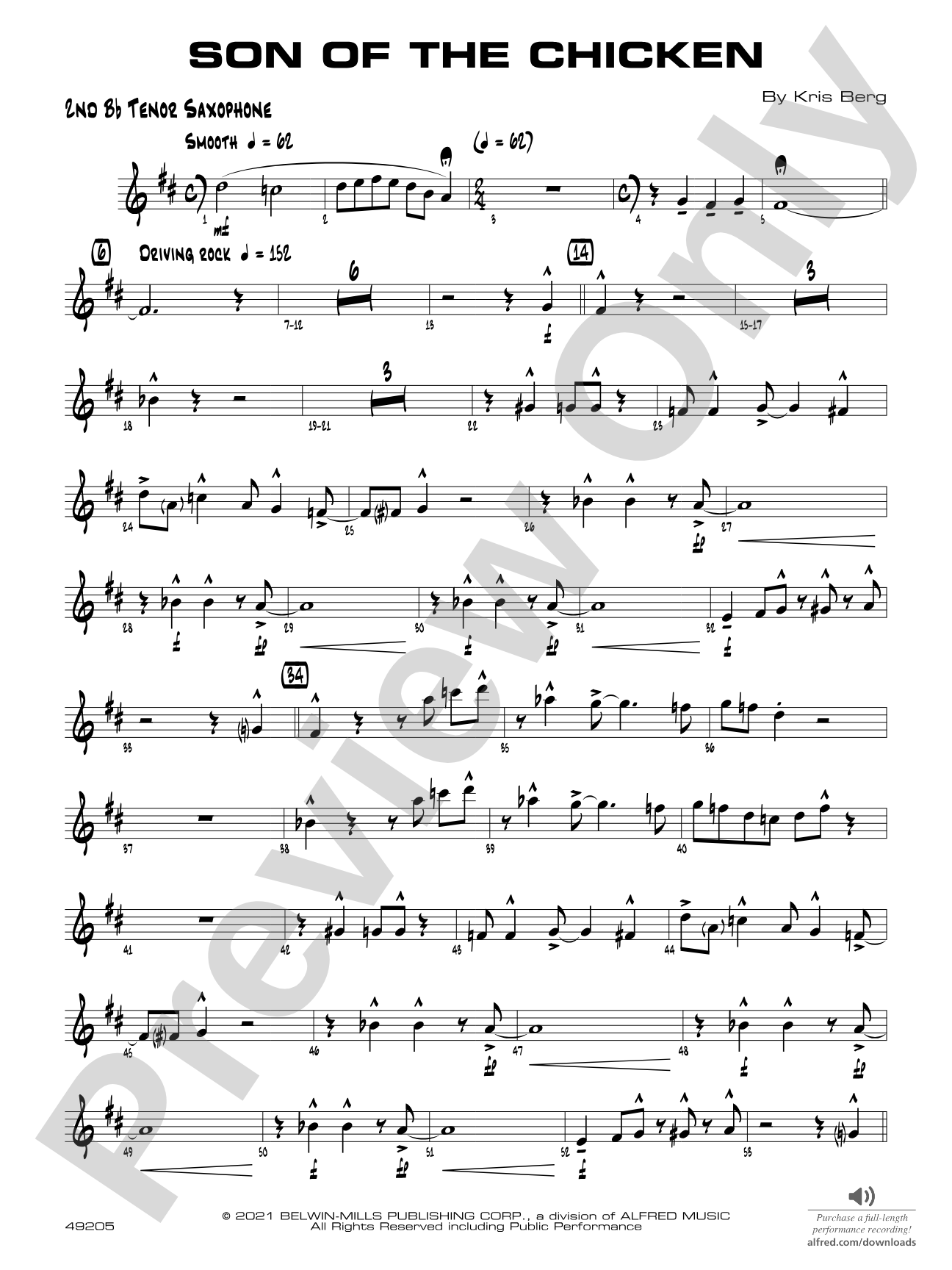

Son of the Chicken: 2nd B-flat Tenor Saxophone
By Kris Berg
Grade: 2 (Medium Easy)
Item: 00-PC-0018722_TX2
$3.00
Pickup currently not available
Description
Yep, 2021 marks the 20-year anniversary of the original "Chicken" chart arranged by Kris Berg---it's time to celebrate with Son of the Chicken! This original is more accessible for younger bands with a chorale intro, written solos for trumpet 1 and tenor 1, and lead trumpet range is to written G on top of the staff. It's funky. It's hip 'cause everybody loves the chicken! (3:30) This title is available in MakeMusic Cloud.


Don't just read it, hear it, play along with it, and watch your students grow with it. In MakeMusic Cloud, Son of the Chicken: 2nd B-flat Tenor Saxophone comes alive with professional accompaniment, adjustable tempo, and built-in practice tools that turn solo practice into real progress.
Open in the Player
Jump straight in and assign it today.
Start Your Free Trial
Open this title and explore the full library in minutes.
Sample Audio
1
Audio File
--:--
0:00
0:00
Sample Video
Additional Details
Series:
Young Jazz Ensemble
Publisher:
Alfred Music
Page Count:
76
SKU:
00-PC-0018722_TX2
More about this title
About the Composer: Kris Berg
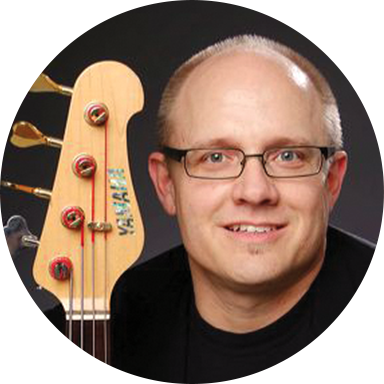
Kris Berg has shaped jazz education at Collin County Community College in Texas, where he directs the jazz studies program. A University of North Texas graduate with degrees in jazz studies at both the bachelor's and master's levels, Berg has built a reputation for creating charts that balance accessibility with musical substance. His work with Collin's ensembles has earned invitations to perform at the Montreux Jazz Festival, and he founded both the Collin Jazz Fest and the Texas All-Star Jazz Camp to develop young musicians across the region.
As a composer and arranger for Belwin Jazz (Alfred Publishing), Berg's music has been performed and recorded internationally. Beyond the page, he works as a clinician for Yamaha Corporation and has collaborated with world-class musicians including Kurt Elling, Randy Brecker, Peter Erskine, and Clark Terry. He is also the author of Bass Lines in Minutes, a widely used resource for developing walking bass fundamentals.
Why we love this
Berg understands what Grade 2 jazz ensembles actually need: accessible voicings that don't sound like training wheels, and written solo sections that young players can execute with confidence. The chorale intro gives conductors a moment to settle the band and establish style before the groove kicks in, making this an excellent opener for developing jazz musicians who are still building their chops but hungry for something real.
What to expect
Funky, energetic, and grounded in classic chicken-dance humor that never gets old with student musicians. The groove is infectious and accessible, built on a rhythm section foundation that locks in tight and carries the whole ensemble forward with infectious joy.
Who it's for
Grade 2 jazz ensembles looking for repertoire that entertains without talking down to young musicians. Conductors want a piece that teaches jazz language and rhythmic precision while keeping players engaged and building confidence on solos.
How to get the most out of it
- Let the chorale intro breathe. Resist the urge to rush; use this section to establish the ensemble's tone and ensure balanced voicing across the reeds and brass before the rhythm section enters.
- Prep the written solos in rehearsal with clear expectations about articulation and phrasing. Berg's solo lines are designed to sit well on the trumpet and tenor saxophone, so make sure your soloists understand the style reference and where the groove is heading.
- Lock the rhythm section early and often. The funk foundation depends on precise coordination between the drums and bass, so isolate that pair multiple times before adding horns.
- Balance the lead trumpet range carefully. The G on top of the staff is accessible for Grade 2 players, but it requires clear tone and steady breathing—build endurance for that section in sectional rehearsals.
How to use it
Program this as a concert opener or centerpiece for a jazz ensemble concert, particularly when you want to demonstrate musicianship and fun in equal measure. The 3:30 length and approachable difficulty make it ideal for a mixed-level jazz program where younger ensembles can perform alongside more advanced groups, or as a celebration piece marking growth over a semester.
Skills your students will build
- Jazz articulation and rhythmic precision in swing and funk contexts
- Solo construction and performance over a written form
- Listening and responding to the rhythm section in real time
- Reading and interpreting chord changes in a jazz setting
- Ensemble balance and blend across reeds and brass
- Stylistic awareness and interpretation of groove-based composition