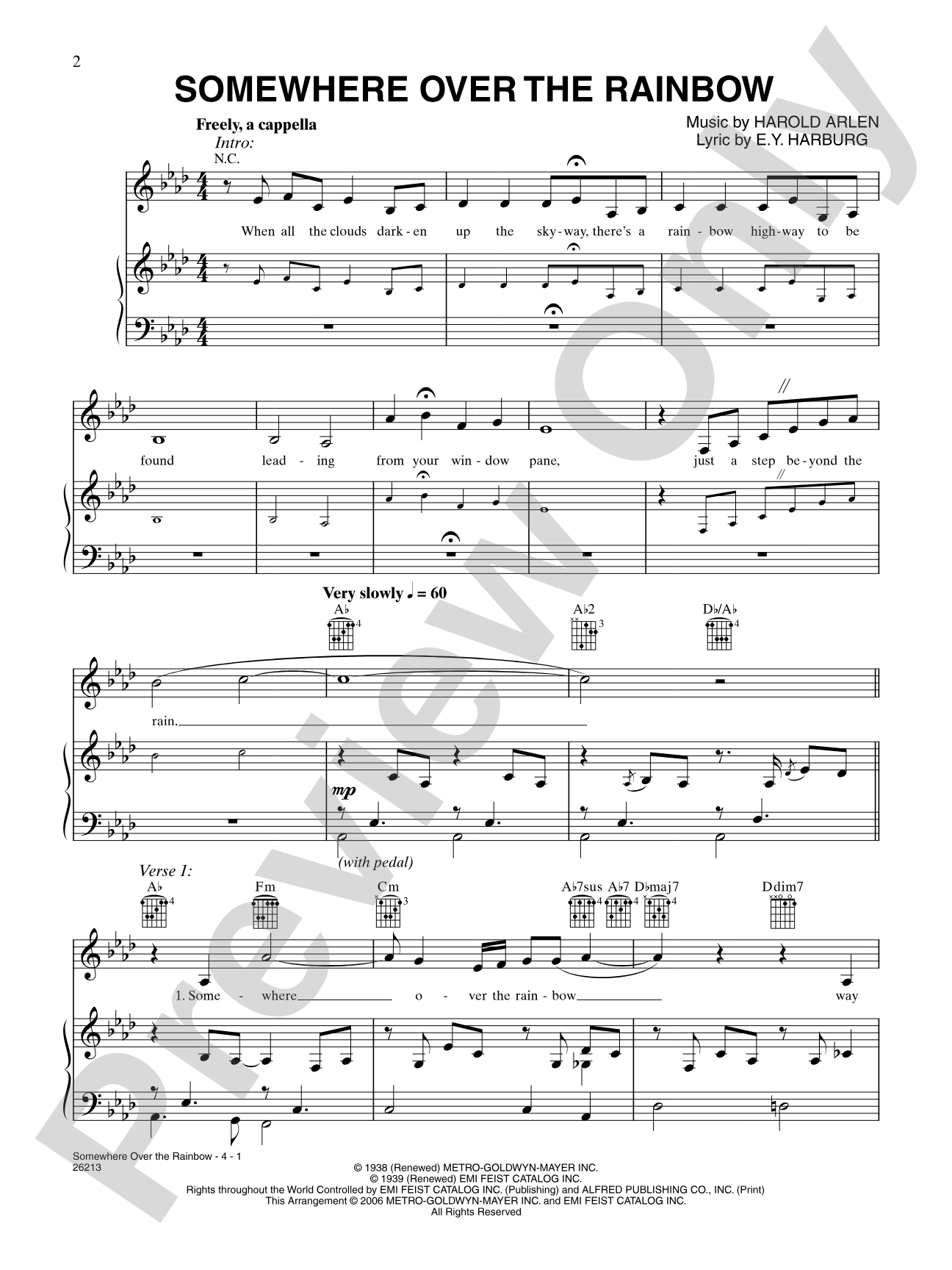
Somewhere Over the Rainbow Sheet Music Preview

Somewhere Over the Rainbow: Piano/Vocal/Chords

Recorded by Katharine McPhee

Item: 00-PS-0011017

Digital Download
$3.99

One moment…

Description
Alfred is pleased to present the sheet music for Katharine McPhee's version of the classic song "Somewhere Over The Rainbow." "Somewhere Over The Rainbow" is McPhee's debut single after her very successful run on the fifth season of the hit show American Idol.. This sheet music provides the song's lyrics along with piano and chord arrangements.

Somewhere Over the Rainbow: Piano/Vocal/Chords isn't in MakeMusic Cloud just yet...but it could be. Let us know you'd like to see it, and you'll help shape what comes next. In the meantime, start a free trial and dive into thousands of interactive titles your students can play along with today.

Sample Audio
No sample audio found.
Sample Video
Additional Details
Series: Original Sheet Music Edition
Publisher: Alfred Music
Page Count: 6
SKU: 00-PS-0011017

More about this title

About the Composer: Harold Arlen

Harold Arlen (1905-1986) composed some of the most enduring melodies in American music history. His gift for writing singable, memorable lines with sophisticated harmonic underpinnings made him a master of both film scores and Broadway standards. "Somewhere Over the Rainbow," written for the 1939 film The Wizard of Oz with lyricist E.Y. Harburg, remains one of the most performed songs in the world and stands as a cornerstone of American songwriting pedagogy.

Arlen's approach to melody construction offers students a masterclass in what makes a tune stick: clear phrasing, strategic leaps, and harmonic support that enhances without overwhelming the line. His work continues to appear in countless recitals, competitions, and classroom settings because the songs themselves teach singers about legit vocal production, lyrical phrasing, and interpretive depth.

Why we love this

This arrangement captures the emotional core of Arlen's masterpiece while honoring the contemporary pop interpretation that introduced a new generation to this standard. The piano and chord voicings support both traditional legit singing and the contemporary phrasing associated with Katharine McPhee's performance, making it versatile for different vocal approaches and styles.

What to expect

Hopeful and intimate, with an undercurrent of yearning. Arlen's melody soars in places but never loses its conversational quality, creating a song that feels both deeply personal and universally resonant. The accompaniment grounds the emotions while allowing the voice to float and dream.

Who it's for

Vocalists preparing for recitals, auditions, or casual performance who want a modern arrangement of a timeless standard. This version works equally well for singers exploring contemporary pop interpretations and those seeking a bridge between classic songwriting and current musical styles.

How to get the most out of it

  • Balance the vocal line over the piano part; the melody must always speak clearly, but the accompaniment should provide full harmonic color rather than stepping back entirely.
  • Treat the bridge section as an emotional peak. The shift in harmonic movement and melodic contour demands a slight tempo flexibility and fuller dynamic support.
  • Connect the lyrics through specific images and emotions in each phrase. Arlen's melody rises and falls with the text, so character choices should follow the song's natural arc.
  • Use the chord symbols to explore different voicing possibilities. Contemporary pop arrangements often spread chords across registers differently than traditional legit voicings, allowing for personal interpretation.

How to use it

Feature this as a contemporary take on a classic in a recital that mixes standards with modern interpretations. It also works well in a program exploring iconic film music or American songwriting across genres, offering audiences the familiar melody they know while showcasing a fresh performance style.

Skills your students will build

  • Sustaining legit vocal tone across a wide melodic range
  • Phrasing lyrical ballads with contemporary sensibility
  • Interpreting chord symbols for accompaniment and harmonic awareness
  • Balancing emotional expression with technical control in ballad singing

You May Also Like