Somewhere Only We Know (arr. Jo Annemans) Sheet Music Preview

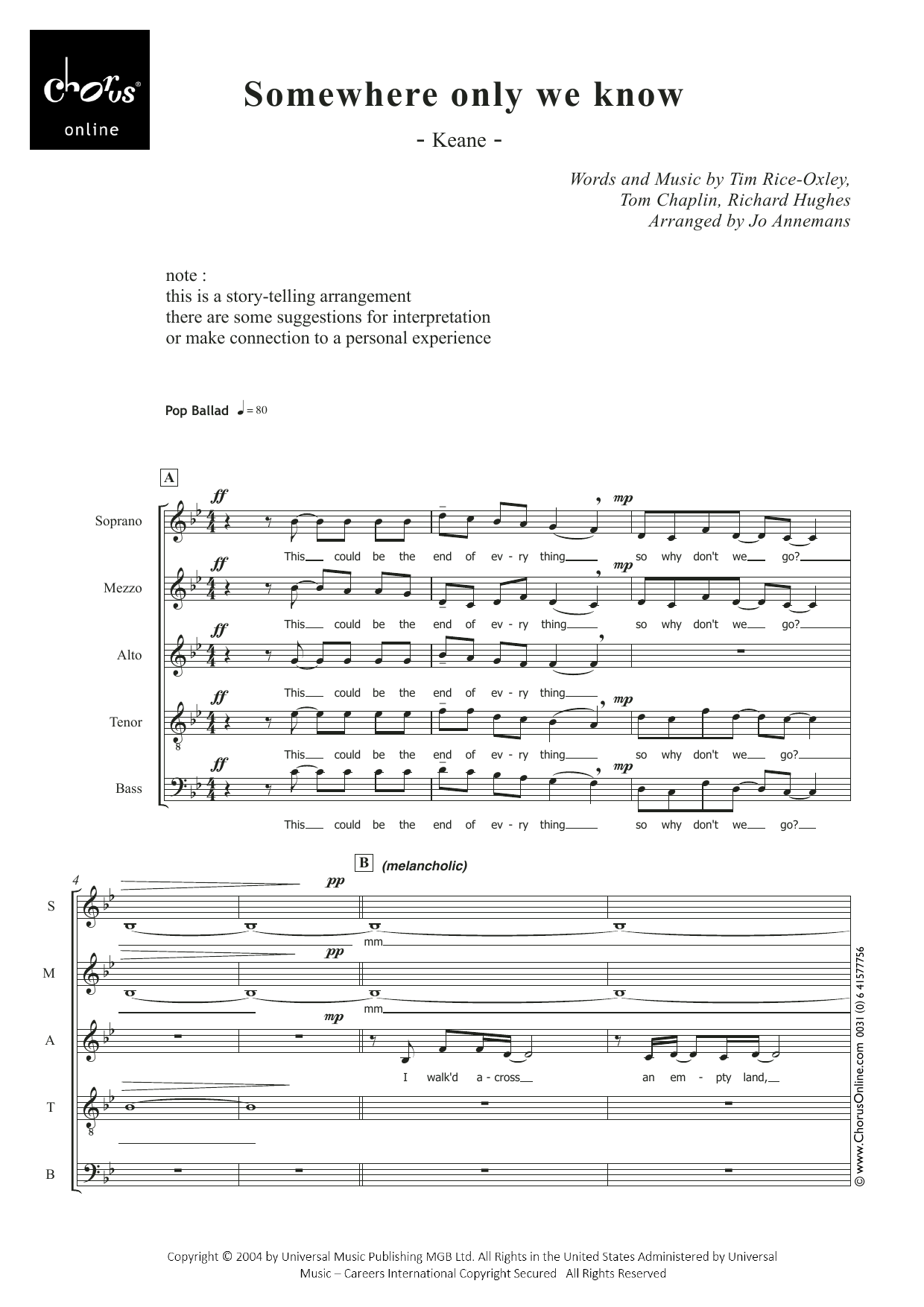
Somewhere Only We Know (arr. Jo Annemans): SMATB Choral Octavo

As performed by Keane / Arranged by Jo Annemans

Item: 35-DS00490629

Digital Download
$2.99
Description

Somewhere Only We Know (arr. Jo Annemans): SMATB Choral Octavo isn't in MakeMusic Cloud just yet...but it could be. Let us know you'd like to see it, and you'll help shape what comes next. In the meantime, start a free trial and dive into thousands of interactive titles your students can play along with today.

Sample Audio
No sample audio found.
Sample Video
Additional Details
Publisher: Hal Leonard
Page Count: 10
SKU: 35-DS00490629

More about this title

About the Artist: Keane

Keane emerged from the British music scene in the early 2000s with a refreshingly stripped-down approach to pop songwriting. The band's biggest success came with their debut album "Hopes and Fears" (2004), which established their signature sound of sparse piano arrangements, emotionally direct lyrics, and soaring vocal melodies. For music educators, Keane's catalog represents accessible contemporary material that rewards both technical precision and genuine emotional connection from singers.

Their songs translate particularly well to choral settings because the melodies are singable yet memorable, and the emotional core of their lyrics resonates across age groups. "Somewhere Only We Know" exemplifies why arrangers consistently return to Keane's work: the song has inherent beauty that can sustain multiple interpretive approaches without losing its identity.

Why we love this

Jo Annemans brings clarity and sophistication to this beloved contemporary ballad. The SMATB voicing avoids the heavy scoring that can muddy a song this intimate, instead trusting space and blend to carry the emotion. Programming this arrangement lets you claim a genuinely modern piece without sounding like you're chasing trends.

What to expect

The piece captures the quiet vulnerability of Keane's original while adding textural depth through the four-part writing. There's an almost chamber-like intimacy here; when balanced correctly, it feels like overhearing a confession rather than watching a performance. The arrangement respects the song's restraint and builds its impact through sophistication rather than volume.

Who it's for

This arrangement suits intermediate to advanced choirs comfortable with contemporary material and divided voicing. It works equally well in concert settings, competitions, or recordings where you want to feature a song that audiences recognize and singers can genuinely connect with.

How to get the most out of it

  • Track the harmonic progression carefully during rehearsal; these jazz-influenced chord movements require intonation precision that won't come naturally from listening alone.
  • Use the silence between phrases intentionally. Breath placement here isn't just technical; it shapes the pacing and emotional impact of the entire song.
  • Balance the melody against sustained harmonies by rehearsing sections separately. The altos, tenors, and basses carry important supporting lines that risk getting buried if the sopranos dominate.
  • Pay attention to vowel consistency across the divisi sections. When your upper voices split, unified vowel shapes prevent the sound from fragmenting.

How to use it

This pairs naturally with other contemporary ballads in a pop or mixed concert, or as a palate cleanser in a program of heavier classical repertoire. Consider programming it in a set that explores modern songwriting and vocal arrangement, where singers can showcase their ability to shape contemporary material with artistry. It also works beautifully as a closing piece for smaller, more intimate concerts.

Skills your students will build

  • Singing in divided voicing across four parts with independent harmonic awareness
  • Phrasing contemporary pop melodies with classical vocal technique
  • Intonation in jazz-influenced harmonic progressions
  • Blending sustained chords while maintaining textural clarity
  • Breath management in phrases with longer melodic spans

You May Also Like