
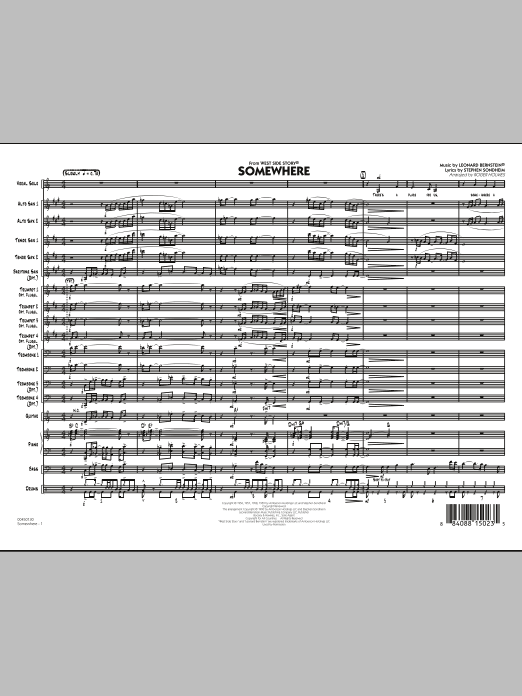

Somewhere (from West Side Story): Jazz Ensemble Conductor Score & Parts
By Stephen Sondheim / By Leonard Bernstein / Arranged by Roger Holmes
Grade: 3-4
Item: 35-PK00160266
$60.00
Pickup currently not available
Buy Extra Parts (Digital PDF Download)
Parts Added to Cart!
Description
Rarely does a song have staying power over time like this gem from "West Side Story." One of the definitive ballads of all time, here is a wonderful opportunity to perform it with a vocal soloist and big band!


Discover MakeMusic Cloud: thousands of interactive titles your students can play along with today.
Sample Audio
No sample audio found.
Sample Video
Additional Details
Publisher:
Hal Leonard
SKU:
35-PK00160266
More about this title
About the Composer: Stephen Sondheim
Stephen Sondheim revolutionized musical theater by treating the song as a vehicle for character development and narrative complexity. His lyrics demand precision from performers; every word carries weight, and his harmonic language extends far beyond the typical Broadway palette, influencing generations of composers who followed.
Why we love this
Roger Holmes strips away the lush orchestration to reveal the emotional core of this ballad, letting a single vocalist shine against the warmth of a big band. The arrangement respects Sondheim's original while creating space for jazz interpretation, making it equally effective as a concert feature or a centerpiece in a mixed program.
What to expect
Tender and bittersweet. The piece unfolds like a quiet conversation, with the vocalist offering intimacy while the band provides a cocoon of warm, bluesy support. Despite its film musical origins, there's nothing saccharine here; the jazz voicings add depth and longing.
Who it's for
Jazz ensembles at the intermediate level that want to tackle a song with real emotional stakes and sophisticated harmony. Directors looking for an arranged standard that showcases a strong vocalist while giving the full band meaningful parts.
How to get the most out of it
- Balance the vocal line so it never disappears into the ensemble; the band should support, not compete for attention.
- Let the rhythm section establish a gentle swing feel early; this prevents the ballad from dragging despite its reflective tempo.
- Shape the saxophone section's harmonic fills with care, treating them as responses to the vocal melody rather than decorative elements.
- Rehearse the vocalist and rhythm section as a unit first, then integrate the horns once that foundation is solid.
How to use it
Pair this with other arranged standards to create a lyrical second set, or use it as a poignant contrast to more energetic big band charts. It works beautifully as a spring or end-of-year concert closer, giving the audience a moment of reflection before departing.
Skills your students will build
- Balancing a featured soloist against ensemble accompaniment
- Phrasing jazz chords with attention to voice leading
- Maintaining steady time in a ballad without rushing or dragging
- Reading and executing the arranger's dynamic and articulation markings across mixed textures