Sometimes I Feel Like A Motherless Child (arr. Rosephanye Powell) Sheet Music Preview

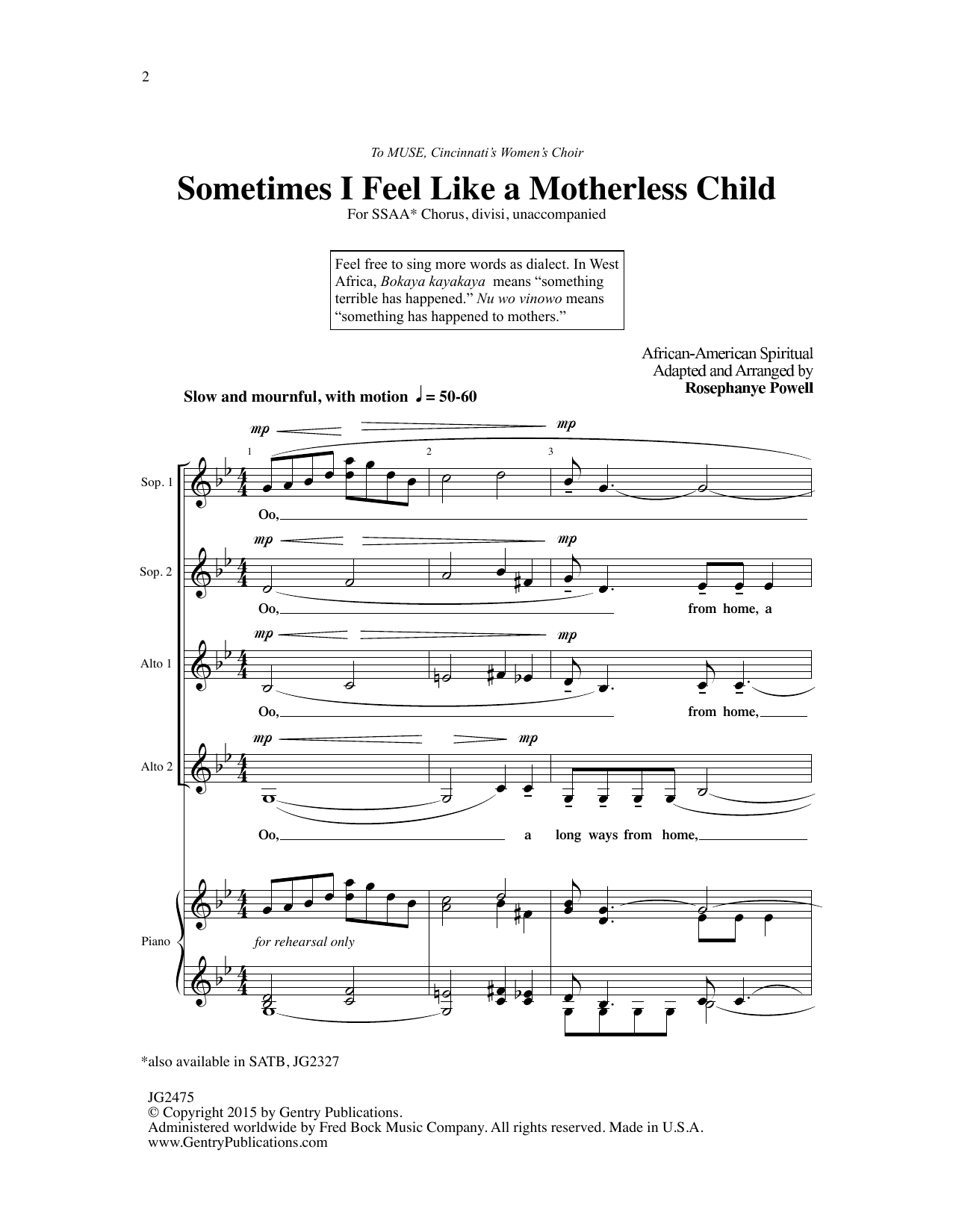
Sometimes I Feel Like A Motherless Child (arr. Rosephanye Powell): SSA Choral Octavo

Arranged by Rosephanye Powell

Item: 35-DS00450687

Digital Download
$2.99
Description

Sometimes I Feel Like A Motherless Child (arr. Rosephanye Powell): SSA Choral Octavo isn't in MakeMusic Cloud just yet...but it could be. Let us know you'd like to see it, and you'll help shape what comes next. In the meantime, start a free trial and dive into thousands of interactive titles your students can play along with today.

Sample Audio
No sample audio found.
Sample Video
Additional Details
Publisher: Hal Leonard
Page Count: 9
SKU: 35-DS00450687

More about this title

About the Arranger: Rosephanye Powell

Rosephanye Powell is a composer and arranger whose work centers on African American musical traditions, particularly spirituals and gospel idioms. Her arrangements honor the emotional and historical depth of these genres while making them accessible to contemporary choirs across skill levels and contexts.

Why we love this

Powell's treatment of this spiritual respects its weight while opening it up for SSA voicing, creating an arrangement that feels both intimate and resonant. The piece demands genuine musical maturity from singers without requiring technical virtuosity, making it equally powerful in a concert hall or smaller performance setting.

What to expect

A contemplative descent into vulnerability and resilience. The piece carries the weight of the spiritual's origins while inviting singers and listeners into a space of shared understanding and quiet strength. There's both sorrow and dignity here.

Who it's for

Directors working with SSA or SSAA choirs who want to include spirituals in their repertoire with artistic integrity. This arrangement suits both high school and college choirs seeking material that engages historical significance alongside musical substance.

How to get the most out of it

  • Build the arrangement's emotional arc by shaping dynamics carefully through the middle sections; resist the urge to let soloists overshadow the ensemble writing.
  • Pay attention to the relationship between the alto and soprano lines, especially in moments where they diverge. These counter lines strengthen the overall harmonic movement and should be distinctly audible.
  • Allow space for silence and breath between phrases. The spiritual tradition thrives on moments of silence as much as sound, and Powell's arrangement likely honors this.

How to use it

Pair this with other spirituals or art songs exploring themes of identity and perseverance for a thematically cohesive concert. It also works effectively as a centerpiece in a program that traces African American musical expression, particularly when programmed alongside more contemporary work.

Skills your students will build

  • Phrasing and interpretation within the spiritual tradition
  • Ensemble balance between SSA voicing with potential alto independence
  • Responding to text-driven emotional content with appropriate vocal color and dynamics
  • Understanding the historical and cultural context of the spiritual as lived experience

You May Also Like