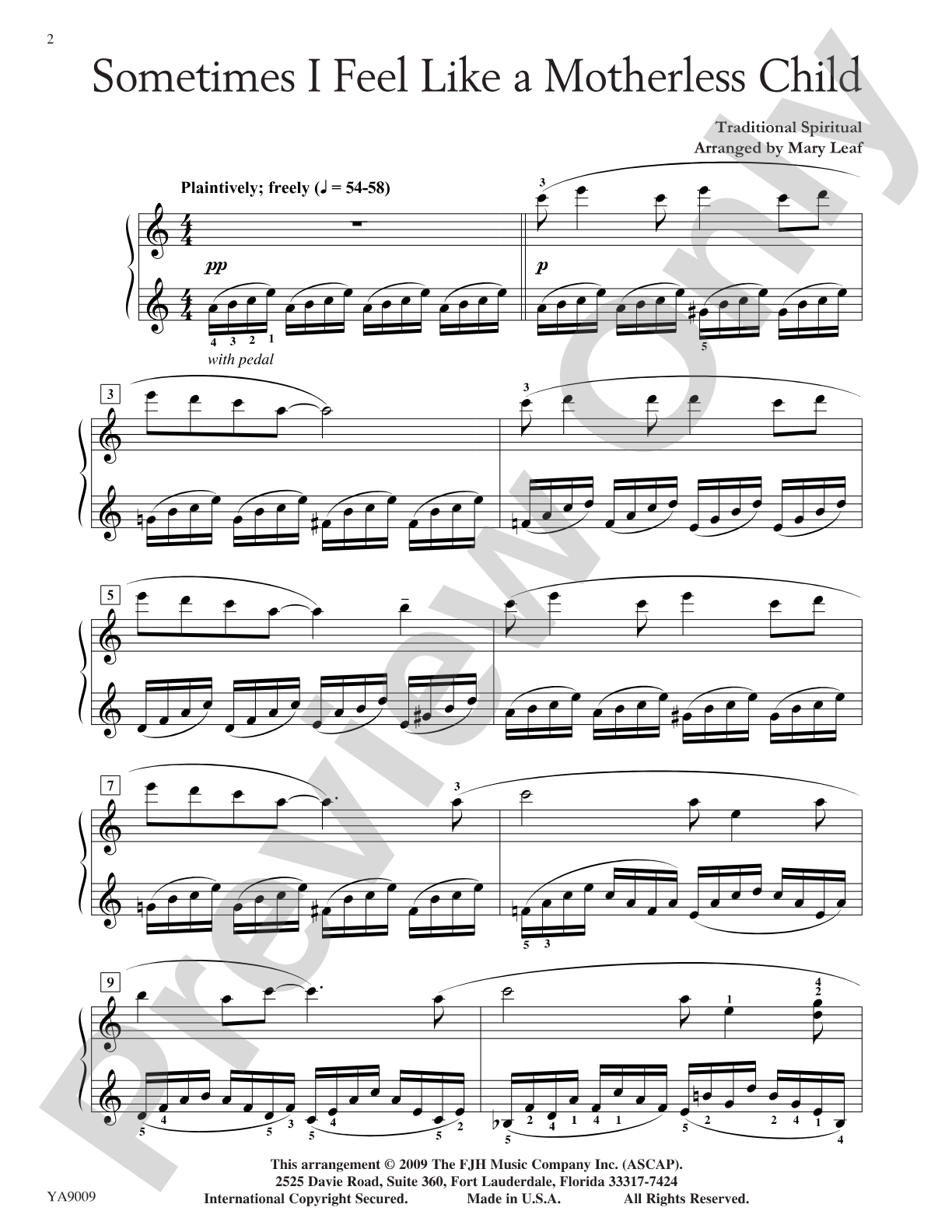
This lovely spiritual is arranged for advanced students and consists of sixteenth note patterns in the L.H. while the R.H. plays the melodic line ranging from single notes, to double notes, and chords. The middle of this piece changes key and also provides a change in material in a rubato style. This would be a great piece for a recital or other multicultural event.
Discover MakeMusic Cloud: thousands of interactive titles your students can play along with today.
Mary Leaf's arrangement captures the spiritual's emotional weight while giving advanced pianists a genuinely interesting technical challenge. The interplay between the rhythmic left hand and the lyrical right hand keeps performers engaged, and the key change midway through prevents the piece from becoming predictable.
What to expect
This arrangement honors the spiritual's haunting, introspective character while the pianistic writing keeps the sound contemporary and engaged. The rhythmic underpinning gives it forward motion and energy, yet the melody remains the emotional center, evoking both sorrow and resilience.
Who it's for
Advanced piano students ready to work with meaningful repertoire beyond the standard classical canon. This arrangement suits pianists who have solid technique and can manage the rhythmic independence required, and who want to deepen their interpretive skills through a piece with real cultural and emotional significance.
How to get the most out of it
Balance the sixteenth note patterns in the left hand as accompaniment rather than feature; they should support the melody without overshadowing it.
Shape the rubato section in the middle with real flexibility in tempo, allowing the change of key and material to breathe distinctly from the surrounding passages.
Let the double notes and chords in the right hand ring warmly; this arrangement rewards a singing touch rather than a percussive one.
Control the overall arc from the opening through the key change and back, treating the piece as a single emotional statement rather than disconnected sections.
How to use it
Program this for a recital that celebrates diverse musical traditions or for a concert exploring spirituals and American roots music. It works equally well as a standalone recital piece for an advanced student or paired with other arranged spirituals to create a thematic set.
Skills your students will build
Right hand and left hand independence (sustained rhythm vs. lyrical melody)
Sixteenth note patterns and rhythmic precision
Key modulation and maintaining continuity across tonal shifts
Rubato and flexible tempo control
Interpretive choices and character development in arranged repertoire
You May Also Like
Scan to Complete Your Purchase
Use your phone's camera to scan the code below
You'll log in on your phone and the order will be added to your account