

Something Told the Wild Geese: 2-Part Choral Octavo
Words by Rachel Field, music by Darin Lewis
Item: 00-PO-0006629
$2.05
Minimum order quantity: 20 copies
Pickup currently not available
Description
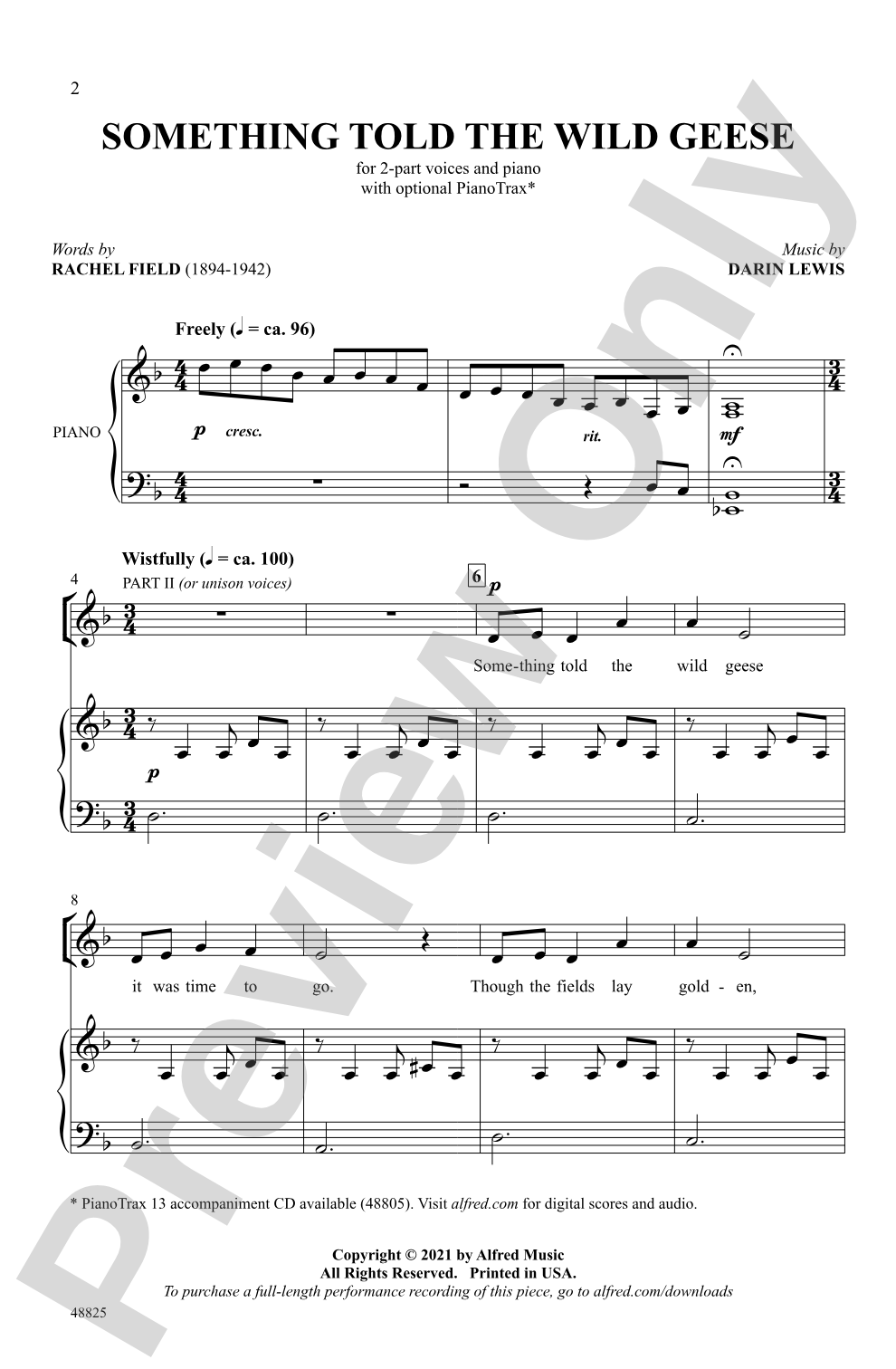
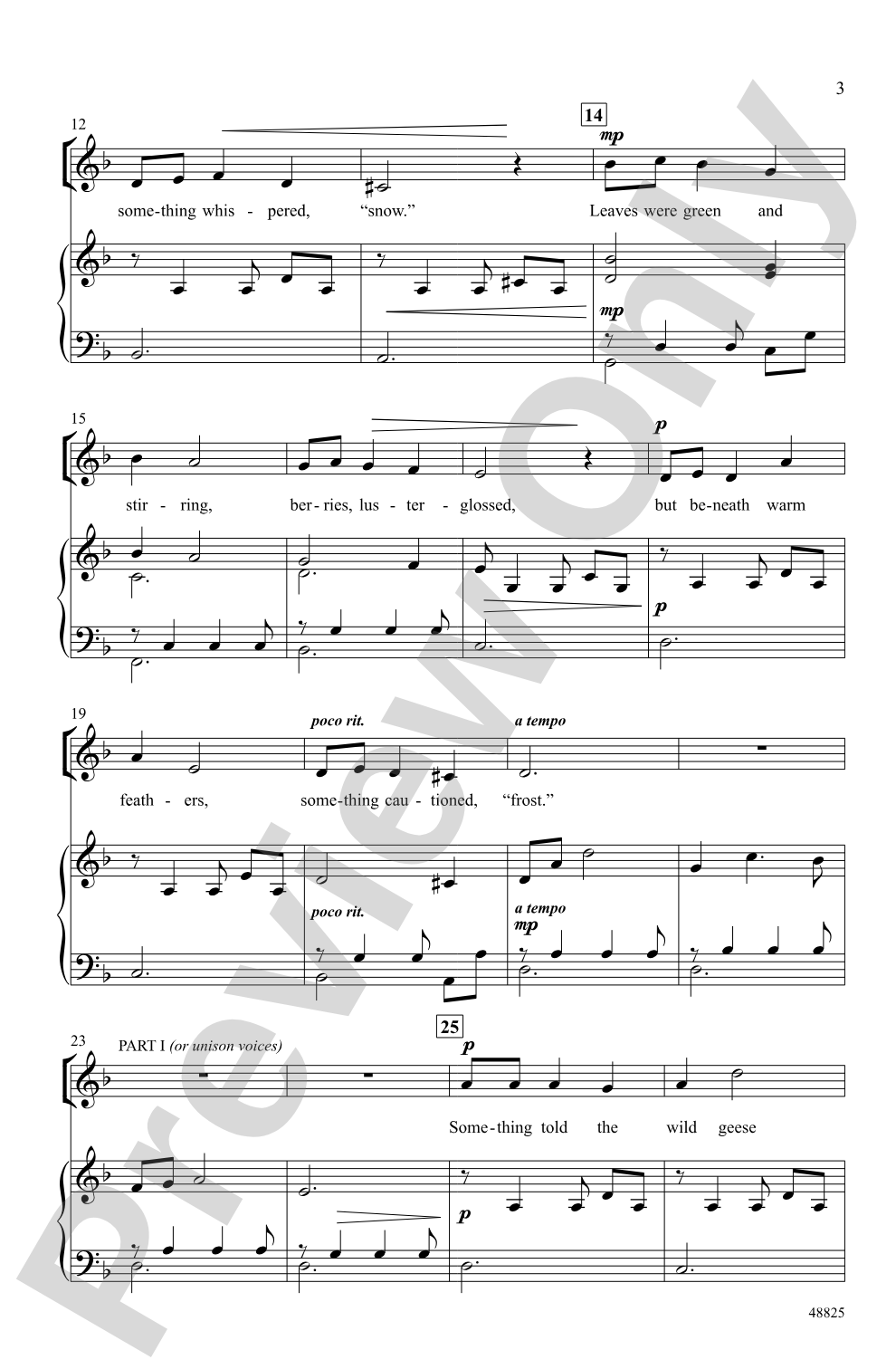
The last autumn leaves freely descend during the short piano introduction, symbolic of the change from fall to winter. Two-part groups will luxuriate in the words of Rachel Field as presented in this sumptuous setting. As simple as a partner song, with two independent melodies that assemble into a delicate choral duet; as sophisticated as an art song, with haunting motives and passing dissonances. Crystalline chords, embedded into the mostly arpeggiated accompaniment, dazzle the ear and offer subtle support to treble voices of any age. Designed with the clarity and elegance that will make any ensemble sound impressive.


Something Told the Wild Geese: 2-Part Choral Octavo isn't in MakeMusic Cloud just yet...but it could be. Let us know you'd like to see it, and you'll help shape what comes next. In the meantime, start a free trial and dive into thousands of interactive titles your students can play along with today.
Request This Title
Tell us you want it.
Start Your Free Trial
Explore everything that's ready to play right now.
Sample Audio
1
Audio File
--:--
0:00
0:00
Sample Video
Additional Details
Series:
Alfred Choral Designs
Publisher:
Alfred Music
Page Count:
8
SKU:
00-PO-0006629
More about this title
About the Composer: Darin Lewis

Darin Lewis earned advanced degrees in piano performance from Yale University and composition from City College of New York, where he studied with David Del Tredici. He holds a doctorate in music education from Boston University and has created more than 100 compositions spanning symphonic works, large choral pieces, and sacred octavos. His music has been performed across the United States and Europe, with premieres at Carnegie Hall and performances by the Boston Pops.
As a sought-after composer, Lewis's works appear regularly on state and festival competition lists. He serves as a clinician for WorldStrides Festivals and continues to expand a catalog that balances accessibility with musical sophistication.
Why we love this
Lewis writes 2-part music with genuine harmonic interest rather than oversimplification. The arpeggiated piano accompaniment and passing dissonances create an art-song quality that elevates what could be a basic partner song into something your singers will actually want to rehearse. This is the kind of writing that makes young treble singers sound mature.
What to expect
The opening piano figure evokes autumn leaves drifting downward, and that imagery carries through the piece. The two vocal parts interweave like a conversation between old friends, sometimes moving in parallel, sometimes creating gentle tension through dissonance. The overall effect is wistful and introspective, capturing the natural transition from fall into winter.
Who it's for
This octavo suits 2-part choirs at any age level, from middle school ensembles building confidence with partner songs to high school groups seeking concert repertoire with substance. The independence of the two vocal lines keeps singers engaged without requiring advanced sight-reading.
How to get the most out of it
- Balance the two melodies carefully during the introduction and throughout. The piano's arpeggiated texture can easily dominate if dynamics aren't controlled; let the chords support rather than compete.
- Pay attention to the text naturally. Rachel Field's poetry has internal rhythm that should guide phrasing more than the barline does.
- Shape the harmonic motion by listening for the passing dissonances Lewis includes. These moments need slight emphasis to register without rushing.
How to use it
Program this as part of a seasonal concert or as a thoughtful transition piece between more energetic selections. Its literary foundation and contemplative mood make it ideal for fall and winter concert programs, and its brevity (eight pages) allows room for pairing with contrasting repertoire.
Skills your students will build
- Singing independent melodic lines in a 2-part texture
- Recognizing and performing passing dissonances with musicality
- Connecting text to musical phrasing and expression
- Blending harmonies in an arpeggiated accompaniment context