Something's Gotta Give: 4th B-flat Trumpet Sheet Music Preview

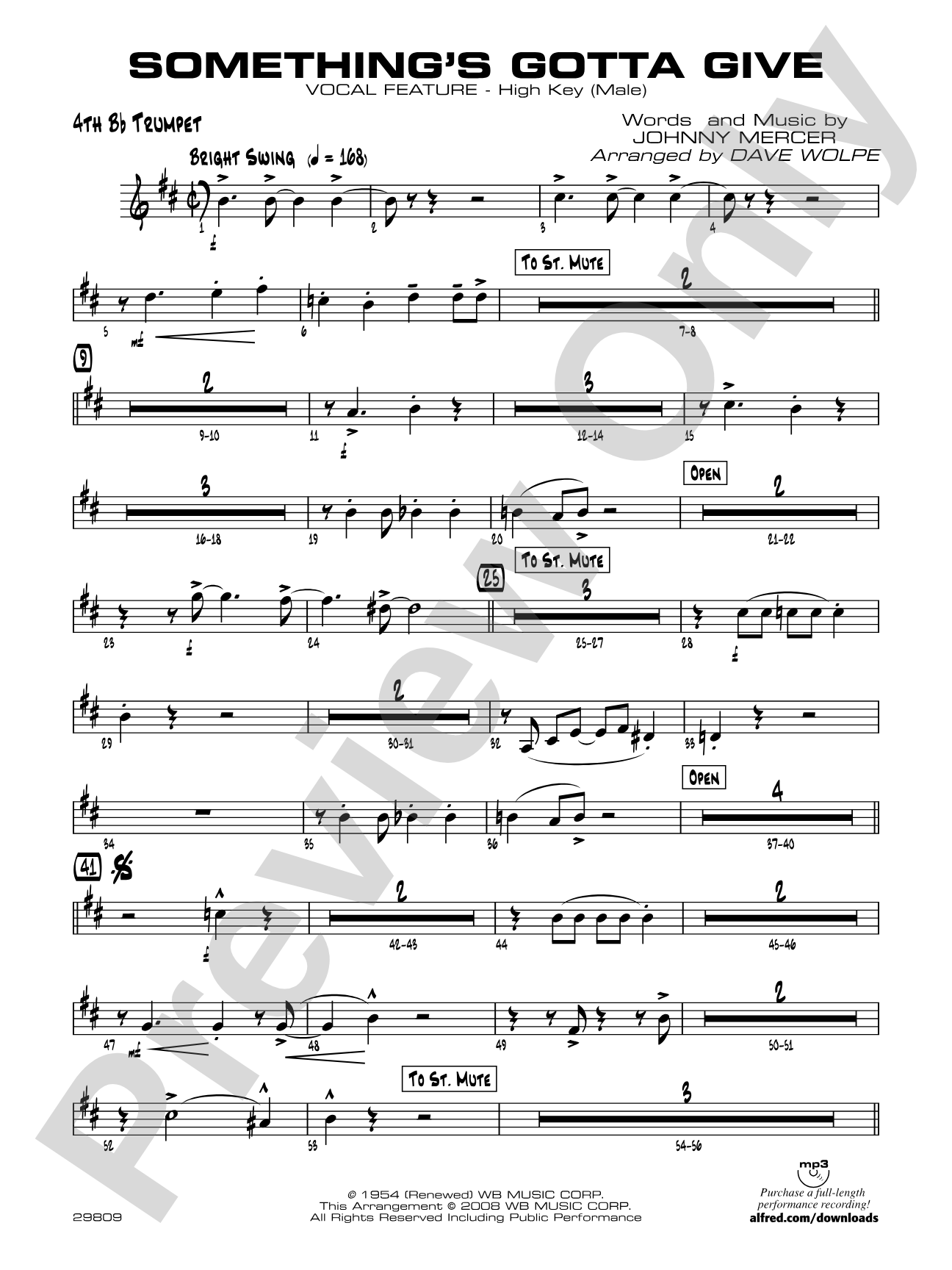
Something's Gotta Give: 4th B-flat Trumpet

Arr. Dave Wolpe

Grade: 3.5 (Medium)

Item: 00-PC-0014812_T4

Digital Download
$3.00
Description
A swinging chart, Dave Wolpe continues his string of superb vocal charts with jazz ensemble with Something's Gotta Give. This one is arranged in two keys with two scores and the parts are reversible---just flip the page for the high or low key your vocalist prefers. A tenor sax solo and a shout chorus connect the dots. Vocal solo range: female key (low) key of G---G below middle C to 3rd line B; male key (high) of C---middle C to top space E, treble clef. (3:31)

Something's Gotta Give: 4th B-flat Trumpet isn't in MakeMusic Cloud just yet...but it could be. Let us know you'd like to see it, and you'll help shape what comes next. In the meantime, start a free trial and dive into thousands of interactive titles your students can play along with today.

Sample Audio
0:00
0:00
Sample Video
Additional Details
Series: Jazz Vocal Series
Publisher: Alfred Music
Page Count: 132
SKU: 00-PC-0014812_T4

More about this title

About the Arranger: Dave Wolpe

Dave Wolpe

Dave Wolpe has been arranging for big band and jazz ensembles since 1965, building a career marked by extensive work with the Glenn Miller Orchestra and contributions to ensembles led by Ray Anthony, Lawrence Welk, and Les Brown. His platinum certification as co-arranger on In the Christmas Mood reflects decades of craft in writing for traditional jazz and swing contexts.

Why we love this

Wolpe understands what makes a vocal chart work: the reversible two-key format means your soloist's range determines which version you use, eliminating transposition headaches. The tenor sax solo and shout chorus give the ensemble real material to swing with rather than serving as mere accompaniment, making this a true collaborative moment between vocalist and band.

What to expect

The chart swings with the ease of a classic big band number, combining the warmth of a vocal lead with the interactive energy of a tenor sax conversation. It feels conversational and unstuffy, built on the kind of repertoire that makes audiences lean in and smile.

Who it's for

Jazz ensemble directors with a vocalist in the roster who needs a vehicle that showcases personality and range without excessive technical demands. This arrangement works for singers comfortable in a swing idiom, whether school jazz choirs or collegiate or community ensembles.

How to get the most out of it

  • Balance the vocal line so it sits comfortably above the ensemble without requiring the vocalist to push; the arrangement supports rather than overwhelms.
  • Lock the rhythm section (bass, drums, and comping instruments) into a relaxed swing feel before layering the horn sections; this foundation makes the chart breathe naturally.
  • Use the tenor sax solo as a space for the ensemble to settle and listen; give your soloist room to phrase conversationally rather than strictly metronomically.
  • Emphasize the shout chorus with crisp articulation and dynamic punch; this section should feel like a collective exclamation that brings the chart home.

How to use it

Pair this with other Wolpe arrangements or similar vocal charts to showcase your ensemble's swing credentials in a concert. It works well as a lighter moment between harder-swinging instrumental pieces or as a standalone feature that gives your vocalist equal footing with the band.

Skills your students will build

  • Swing interpretation and rhythmic flexibility in ensemble playing
  • Accompanying and supporting a solo vocalist while maintaining groove
  • Call-and-response phrasing between saxophone soloist and ensemble
  • Reading and executing both transposed versions fluidly

You May Also Like