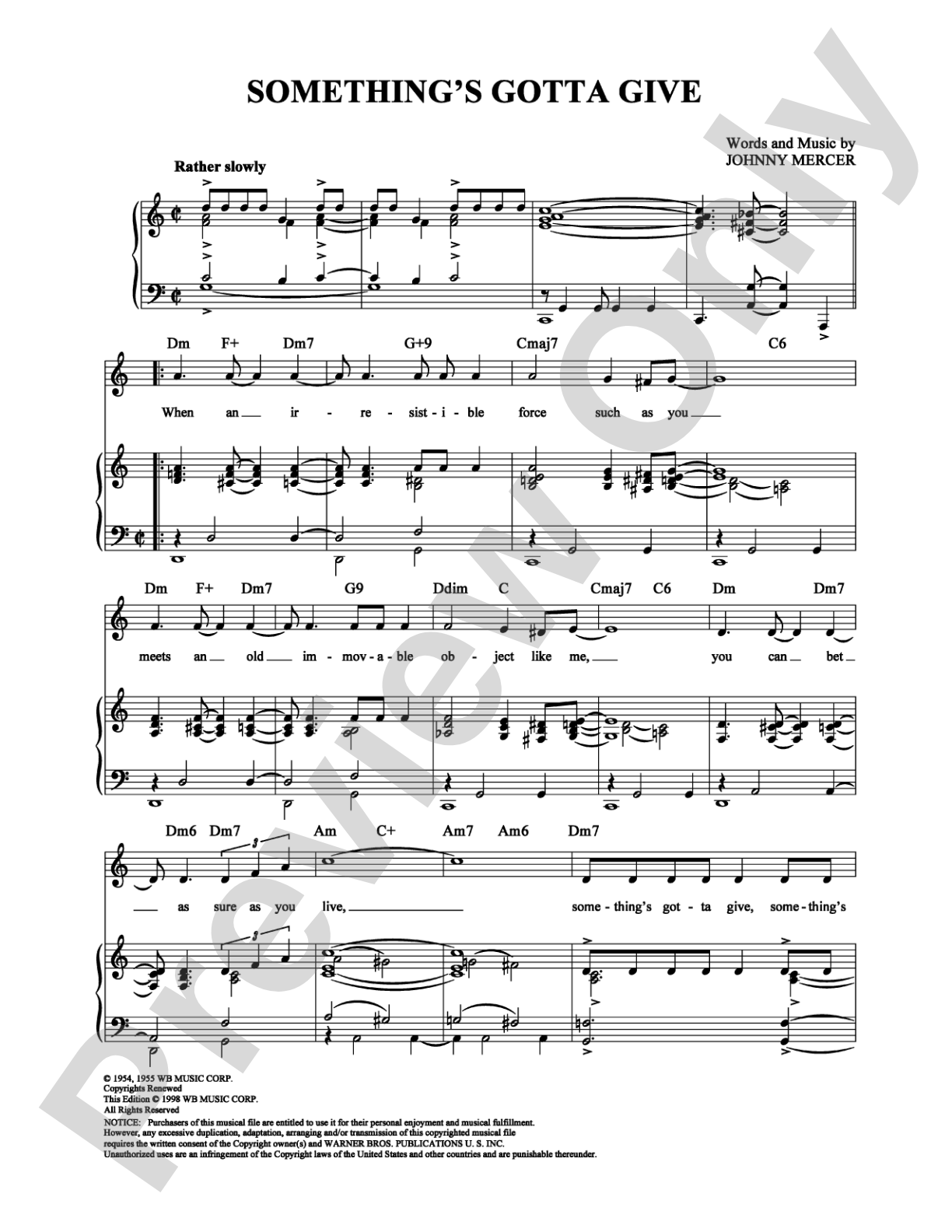
Something's Gotta Give: Piano/Vocal/Chords Digital Sheet Music

Something's Gotta Give: Piano/Vocal/Chords Digital Sheet Music

Johnny Mercer, Frank Sinatra, Sammy Davis, Fred Astaire

Item: 00-PS-0000493

Digital Download
$3.99
Description

Something's Gotta Give: Piano/Vocal/Chords Digital Sheet Music isn't in MakeMusic Cloud just yet...but it could be. Let us know you'd like to see it, and you'll help shape what comes next. In the meantime, start a free trial and dive into thousands of interactive titles your students can play along with today.

Sample Audio
No sample audio found.
Sample Video
Additional Details
SKU: 00-PS-0000493

More about this title

About the Artist: Frank Sinatra

Frank Sinatra (1915-1998) shaped American popular song through his phrasing, interpretive depth, and ability to inhabit a lyric. His approach to melody and rhythm became a model for vocal musicianship that extends far beyond jazz and standards into choral and solo vocal pedagogy. Sinatra's catalog demonstrates how a singer can achieve sophistication through clarity, restraint, and rhythmic precision rather than technical display.

Why we love this

This standard offers a genuine entry point into the Great American Songbook for singers and pianists working with jazz repertoire or classic pop. The piano/vocal/chords format makes it accessible for rehearsal, coaching, and solo performance without requiring a full rhythm section, and the song's conversational melody rewards attention to phrasing and lyrical storytelling.

What to expect

A witty, conversational number with urbane charm and emotional directness. The melody sits comfortably in the voice and dances around the harmony, inviting you to play with timing and color while maintaining elegance.

Who it's for

Jazz singers and musical theater singers developing interpretive skill through standards. Pianists accompanying solo vocalists or preparing material for recital, audition, or rehearsal coaching.

How to get the most out of it

  • Anchor your tempo around the harmonic rhythm rather than rushing the melody; these chord changes breathe, and rubato only works when the harmonic foundation is solid.
  • Study how the melody sits against the chord changes to find natural breath points and moments where the vocal line can lean into or float away from the beat.
  • Use the piano voicings as a guide for interpretation; they often suggest where to place emphasis or where to pull back dynamically.
  • Balance lyrical clarity with the song's inherent sophistication; conversational doesn't mean casual.

How to use it

Program this alongside other standards in a jazz recital or vintage pop concert to anchor the historical and stylistic context of the American songbook. In a vocal coaching or studio lesson, use it to develop phrasing sensitivity and harmonic awareness alongside more complex arrangements.

Skills your students will build

  • Interpreting jazz melody and phrasing conventions
  • Reading and voicing jazz chord symbols
  • Coordinating vocal line with piano accompaniment
  • Navigating chromatic and jazz harmony changes
  • Building conversational, lyric-driven expression

You May Also Like