

Something Like a Breeze: 2-Part Choral Octavo
Words by Terry W. York, music by David Schwoebel
Item: 00-PO-0007593
$2.30
Minimum order quantity: 20 copies
Pickup currently not available
Description
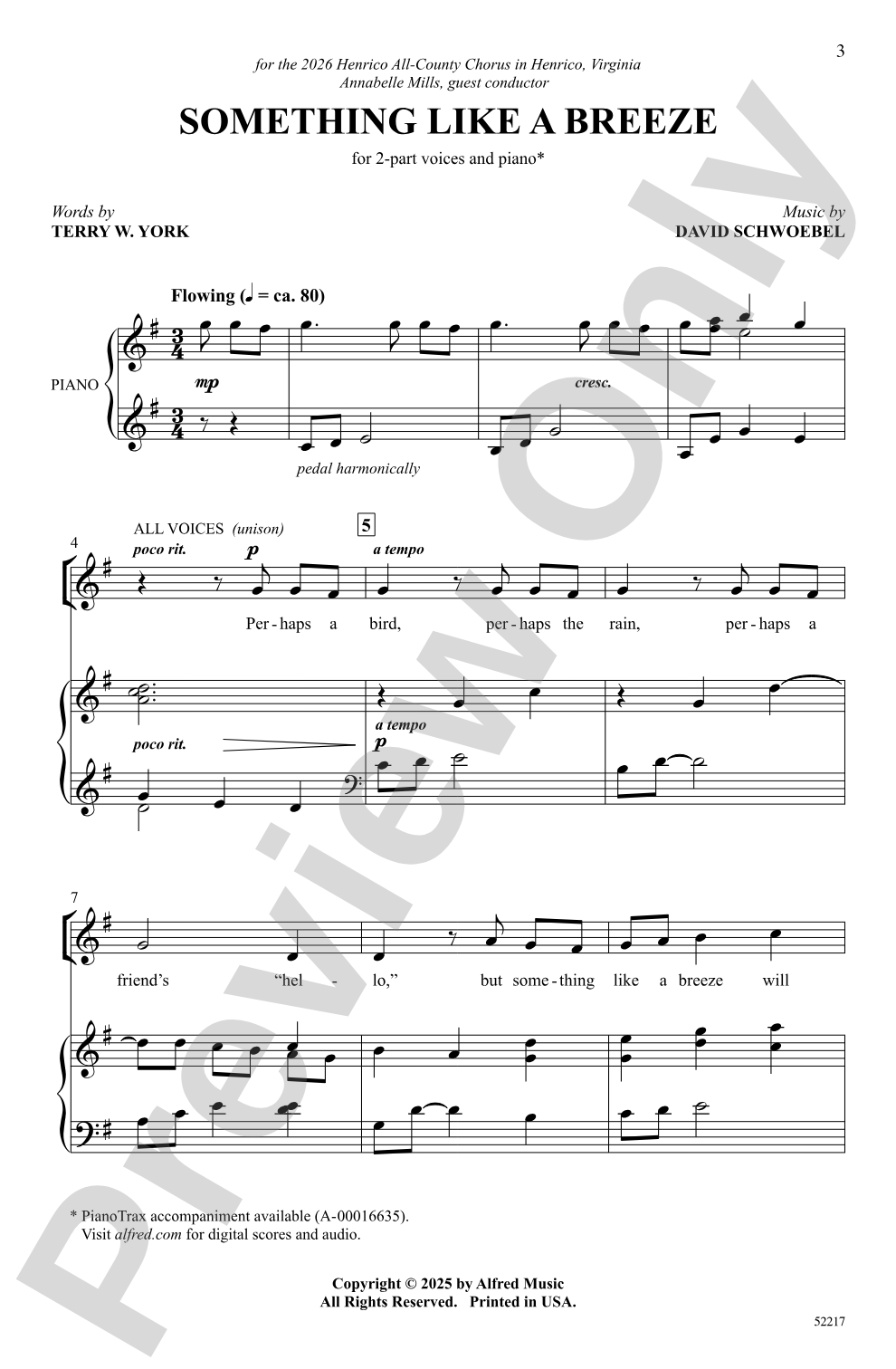
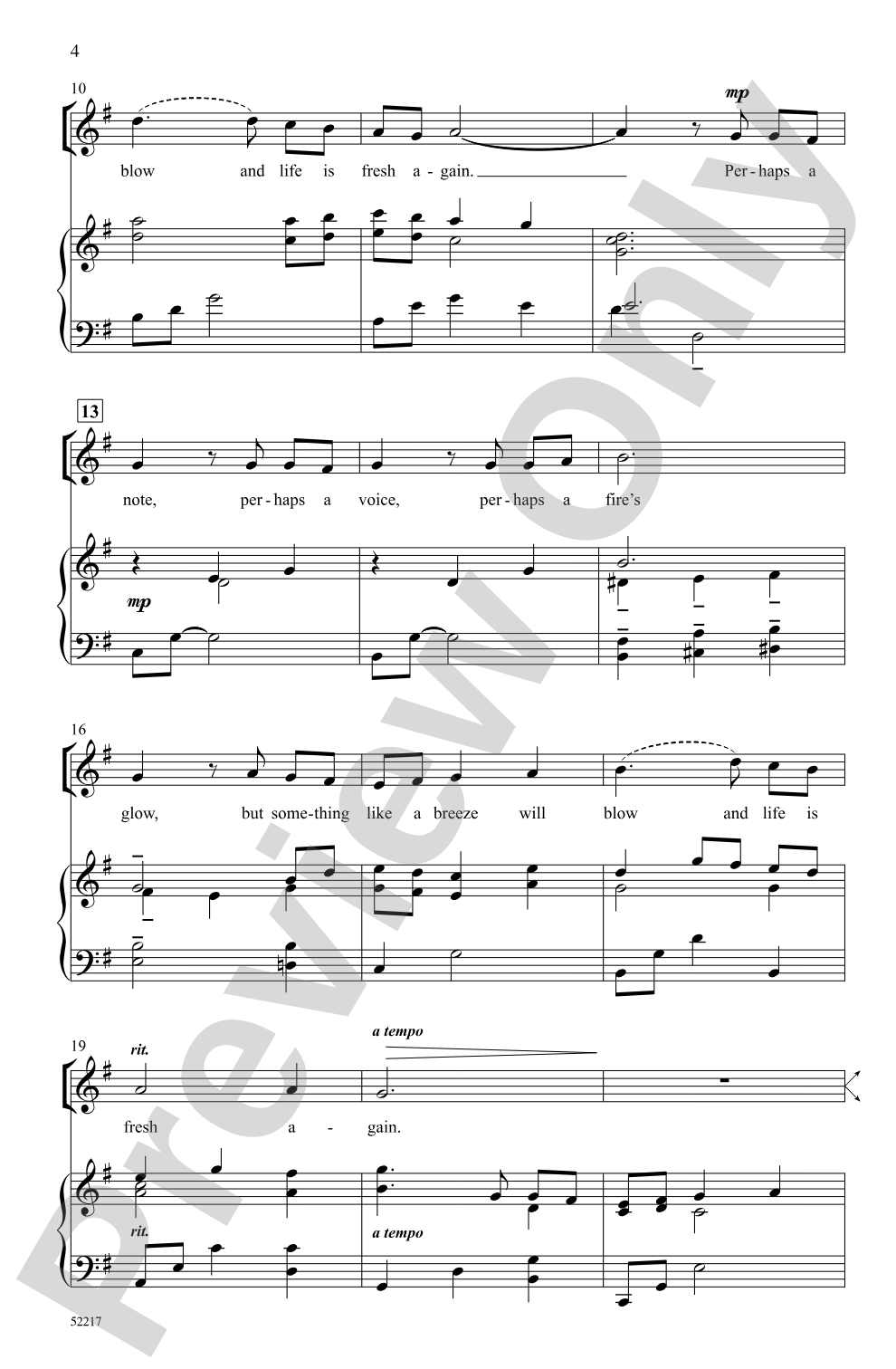
This stunning, newly penned poem ponders the precious moments that make life fresh. "Perhaps a bird, perhaps the rain, perhaps a friend's hello." The music itself is sheer excellence for treble groups, with an achievable sophistication worthy of concerts, contests, festivals, and adjudications alike. Observe the subtle nuances of changing tempos and dynamics to mold an artful interpretation. Collaborative pianists will cherish this graceful accompaniment, which fits seamlessly in the hands.


Something Like a Breeze: 2-Part Choral Octavo isn't in MakeMusic Cloud just yet...but it could be. Let us know you'd like to see it, and you'll help shape what comes next. In the meantime, start a free trial and dive into thousands of interactive titles your students can play along with today.
Request This Title
Tell us you want it.
Start Your Free Trial
Explore everything that's ready to play right now.
Sample Audio
1
Audio File
--:--
0:00
0:00
Sample Video
Additional Details
Series:
Alfred Choral Designs
Publisher:
Alfred Music
Page Count:
12
SKU:
00-PO-0007593
More about this title
About the Composer: David Schwoebel

David Schwoebel has shaped music ministry across multiple states since the 1990s, currently serving as Minister of Music and Composer in Residence at Derbyshire Baptist Church in Richmond, Virginia. His formal training in voice, organ performance, and church music composition (from McKendree College and Southwestern Baptist Theological Seminary) grounds his prolific output of hymn tunes and sacred works. As an ordained minister, he oversees a comprehensive music program encompassing six choral ensembles, four handbell choirs, and a 32-piece orchestra, working directly with musicians across generations to develop their artistry.
Schwoebel's hymn tunes have appeared in major denominational hymnals including the Baptist Hymnal, Celebrating Grace, and Glory to God: The Presbyterian Hymnal. His compositions balance accessibility with musicianship, reflecting his deep commitment to creating works that serve both worship contexts and concert settings. His catalog spans sacred and secular repertoire, consistently offering pieces that challenge and inspire performers at all levels.
Why we love this
Schwoebel crafts a piece that gives treble choirs real musical substance without requiring advanced technique. The shifting tempos and dynamic architecture demand interpretive maturity from singers, creating the kind of engaging rehearsal environment where young musicians discover they're capable of more nuance than they expected. Pianists will appreciate accompaniment writing that supports the voices without overshadowing them, making this genuinely collaborative rather than a burden to learn.
What to expect
The piece unfolds with quiet reverence, inviting listeners into intimate reflection on the small, transformative moments that refresh our spirits. Schwoebel's music evokes tenderness and openness, letting silence and space speak as much as the sung notes do, creating an atmosphere of gentle discovery rather than grand statement.
Who it's for
Treble choirs from middle school through adult community ensembles will find genuine artistry here. The two-part voicing is accessible, but the musical and textual depth rewards musicians who are ready to think about interpretation and interpretation, making it ideal for groups at the intermediate to advanced level.
How to get the most out of it
- Map the tempo and dynamic changes in rehearsal before addressing note accuracy; treating these shifts as the emotional architecture of the piece helps singers understand the structural shape rather than viewing them as isolated markings
- Balance the text imagery with vocal color. The concrete language (bird, rain, hello) invites singers to paint those moments sonically through subtle shifts in resonance and vibrato control
- Use the recorded accompaniment to lock ensemble entries and maintain the piece's gentle forward momentum, especially through the more exposed moments in the two-part writing
How to use it
This works beautifully as a program opener or closer, setting a contemplative tone before or after larger works. It also pairs well with other secular texts about nature and human connection, giving concert designers room to build thematic programs around renewal and presence. The piece's modest performance demands make it accessible for contests and adjudications without sacrificing the sophistication that evaluation panels recognize.
Skills your students will build
- Responding to subtle tempo and dynamic shifts to communicate mood and interpretation
- Balancing blend and individual voice quality within two-part voicing
- Text painting and connecting lyrical content to vocal color choices
- Maintaining musical line across longer phrases with minimal harmonic support