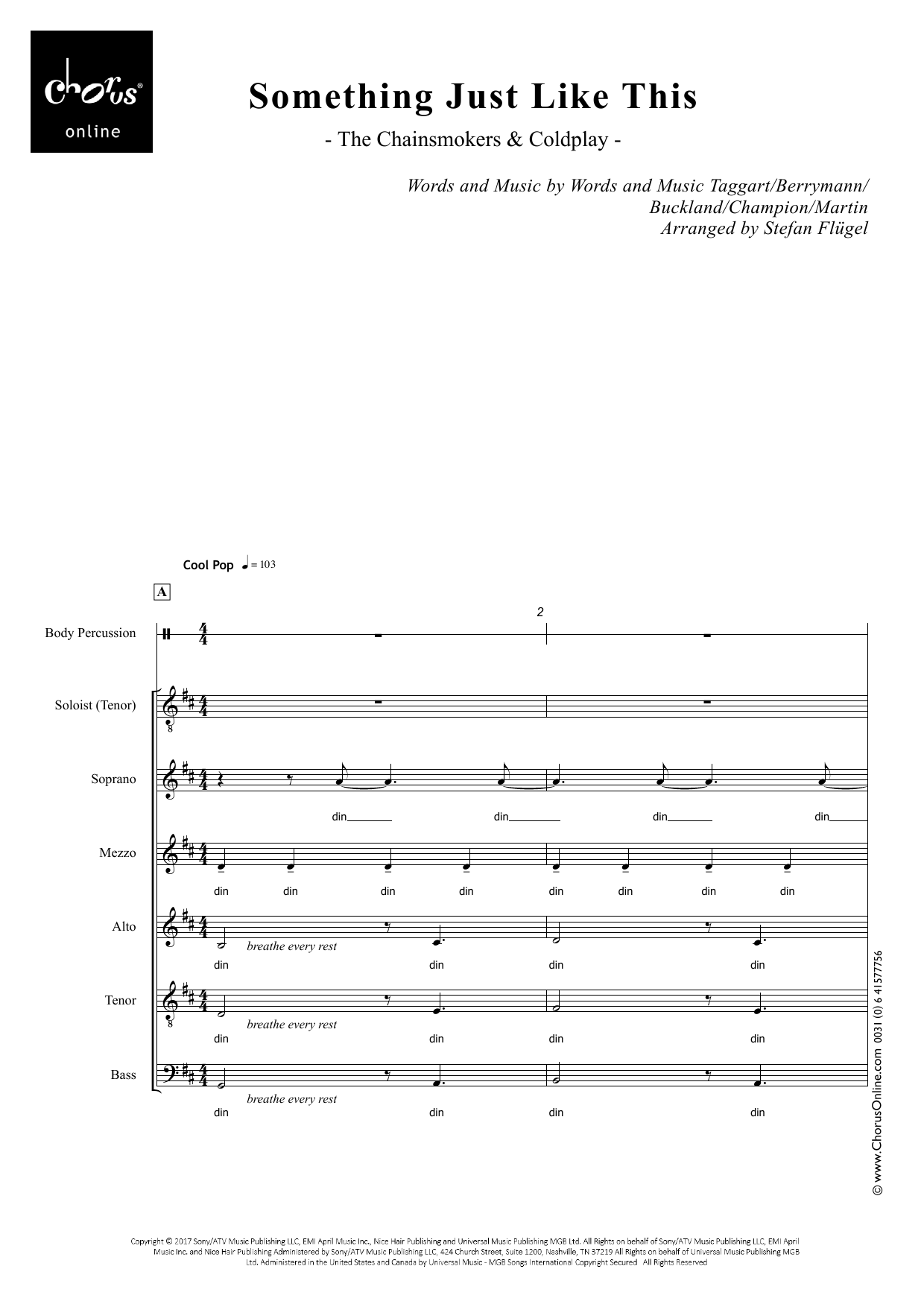
Something Just Like This (arr. Stefan Flügel) Sheet Music Preview

Something Just Like This (arr. Stefan Flügel): SMATB Choral Octavo

As performed by The Chainsmokers Coldplay / Arranged by Stefan Flügel

Item: 35-DS00489462

Digital Download
$2.99
Description

Something Just Like This (arr. Stefan Flügel): SMATB Choral Octavo isn't in MakeMusic Cloud just yet...but it could be. Let us know you'd like to see it, and you'll help shape what comes next. In the meantime, start a free trial and dive into thousands of interactive titles your students can play along with today.

Sample Audio
No sample audio found.
Sample Video
Additional Details
Publisher: Hal Leonard
Page Count: 17
SKU: 35-DS00489462

More about this title

About the Artist: The Chainsmokers Coldplay

The Chainsmokers emerged in the 2010s as electronic dance music pioneers, blending synth-pop sensibilities with deeply personal songwriting. Their collaboration with Coldplay on "Something Just Like This" became a defining crossover moment, showcasing how electronic production and alternative rock could meet on common ground.

Coldplay built their reputation on anthemic alternative rock with melodic sophistication and emotional directness. As one of the most successful bands of their generation, they've consistently demonstrated how to write songs that function at both intimate and stadium scales. The pairing of these two acts created something genuinely memorable: a track that works equally well in club settings and on arena stages.

Why we love this

Stefan Flügel's arrangement captures the song's infectious pop energy while giving your choir room to shine on parts rather than fight against instrumental texture. The SMATB voicing distributes the melodic and harmonic weight evenly, so you're not stuck with alto recitatives or tenor struggles. At 17 pages, it has substance without overwhelming singers who are tackling the contemporary pop repertoire for the first time.

What to expect

Propulsive and hopeful, with the production-forward spark of electronic music meeting the emotional warmth of rock vocals. The arrangement moves between moments of crystalline clarity and layered texture, creating dynamics that feel earned rather than imposed.

Who it's for

Directors building a contemporary pop section or needing accessible a cappella material for mixed choirs at the high school or community college level. Singers who connect with current music styles and need to feel ownership of their parts rather than singing around a dominant melody line.

How to get the most out of it

  • Anchor the opening statement in soprano and alto while letting tenor and bass establish rhythmic foundation; the interplay between melody and pulse is what makes this arrangement breathe.
  • Keep the recorded accompaniment tight and present during rehearsals so singers lock into the synth-driven rhythmic grid, but consider backing it way down or removing it entirely during final performances to let voices carry the texture.
  • Shape the dynamic arc across the full 17 pages; contemporary pop often flattens out dynamically, so marking subtle swells through melodic phrases prevents the performance from feeling static.
  • Listen for moments where parts move in parallel versus contrary motion and highlight those textural shifts to your singers so they understand when they're supporting the line versus creating independence.

How to use it

Pair this with other contemporary pop arrangements to build a concert segment that speaks directly to your singers' listening lives. It also functions beautifully as a closer or encore piece because the energy is immediate and the emotional landing is universal without requiring program notes.

Skills your students will build

  • Singing in rhythmic alignment with electronic production templates
  • Navigating parallel and contrary voice leading in pop contexts
  • Balancing independence of parts within a cohesive harmonic structure
  • Interpreting contemporary phrasing and breath placement across four distinct vocal lines
  • Building ensemble blend when parts move at different rhythmic densities

You May Also Like