Something Sheet Music Preview

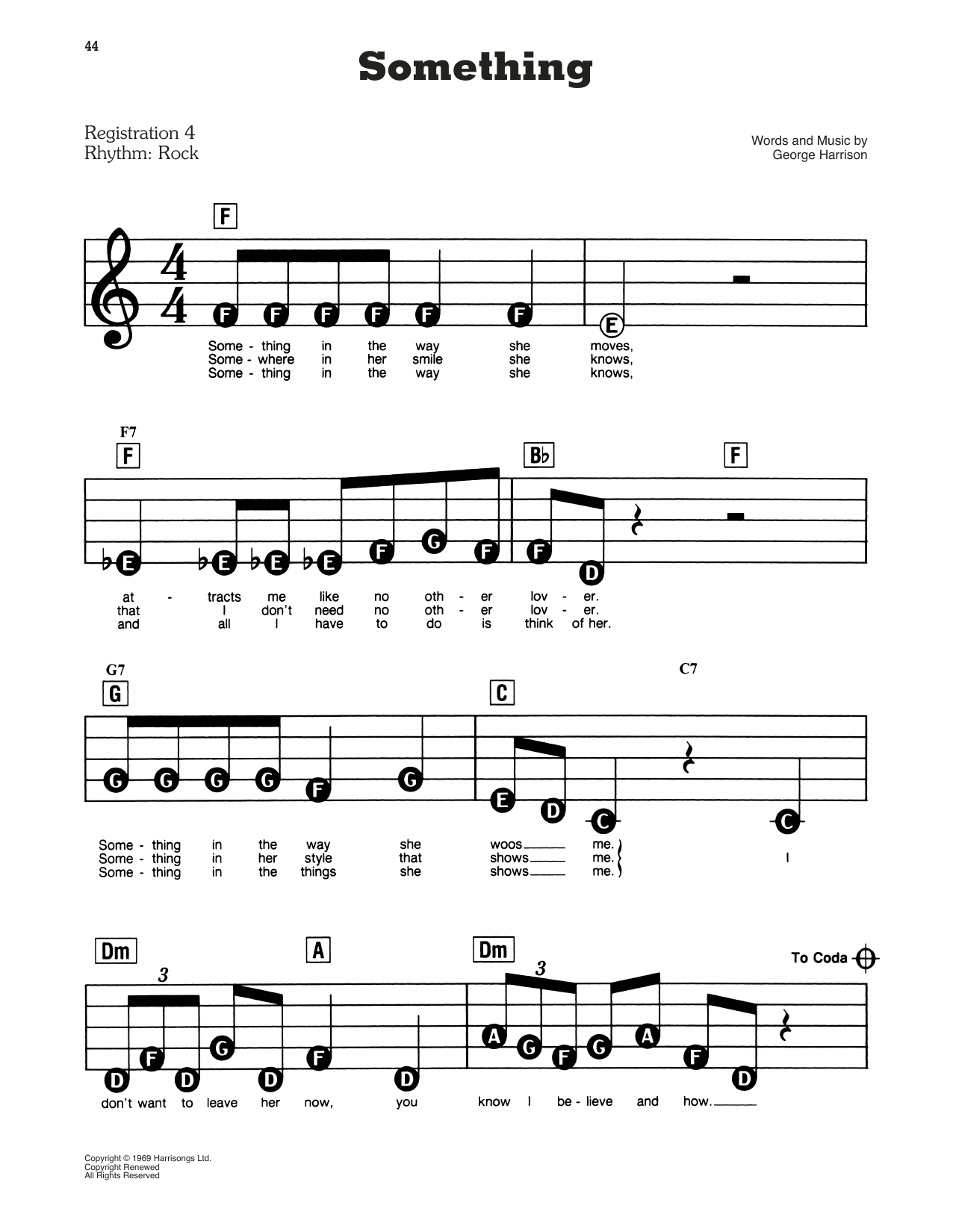
Something: E-Z Play Today

As performed by The Beatles

Item: 35-DS00454203

Digital Download
$4.99
Description

Something: E-Z Play Today isn't in MakeMusic Cloud just yet...but it could be. Let us know you'd like to see it, and you'll help shape what comes next. In the meantime, start a free trial and dive into thousands of interactive titles your students can play along with today.

Sample Audio
No sample audio found.
Sample Video
Additional Details
Publisher: Hal Leonard
Page Count: 2
SKU: 35-DS00454203

More about this title

About the Artist: The Beatles

The Beatles revolutionized popular music across the 1960s, moving rock and roll into new harmonic and compositional territory. Their work remains foundational to music education because it bridges classical songwriting craft with contemporary idioms, making it invaluable for teaching melody, harmony, and arrangement to students who might otherwise dismiss older repertoire.

Why we love this

Beatles arrangements in this series consistently nail the balance between accessibility and authenticity. Students recognize these melodies immediately, which means they stay focused on the actual musical work: hearing the voice leading, understanding how a simple harmonic progression can carry an entire song, and discovering why certain songs have lasted fifty years.

What to expect

Immediate familiarity mixed with the satisfaction of playing something substantial. These melodies are burned into cultural memory, so students feel the weight of that responsibility while enjoying the straightforward physicality of the arrangement.

Who it's for

Piano students moving into popular music and jazz styles will benefit from the songwriting clarity embedded in this arrangement. It also works well for ensembles that want a keyboard player handling the harmonic foundation while other instrumentalists carry the melody.

How to get the most out of it

  • Lock the left hand into the groove pattern early in rehearsal rather than treating it as accompanying texture. The rhythmic feel of the comping changes the entire character of the piece.
  • Pay attention to any dynamic markings that signal shifts between verse and chorus. Even in a two-page arrangement, these changes are what keep listeners engaged.
  • Record yourself playing the accompaniment and practice singing or playing the melody over it. This reveals whether your tempo and phrasing choices actually serve the song.

How to use it

This fills the spot in a spring or pops concert where you need something the audience already loves but that still demonstrates real musicianship from your performers. It also works as a standalone recital piece for students building confidence in public performance.

Skills your students will build

  • Reading and executing accompaniment patterns that establish groove
  • Coordinating melody and harmony in a single-instrument context
  • Interpreting dynamic shape across a short form
  • Recognizing and performing the harmonic language of mid-20th-century pop

You May Also Like