Someone to Watch Over Me: 2nd Violin Sheet Music Preview

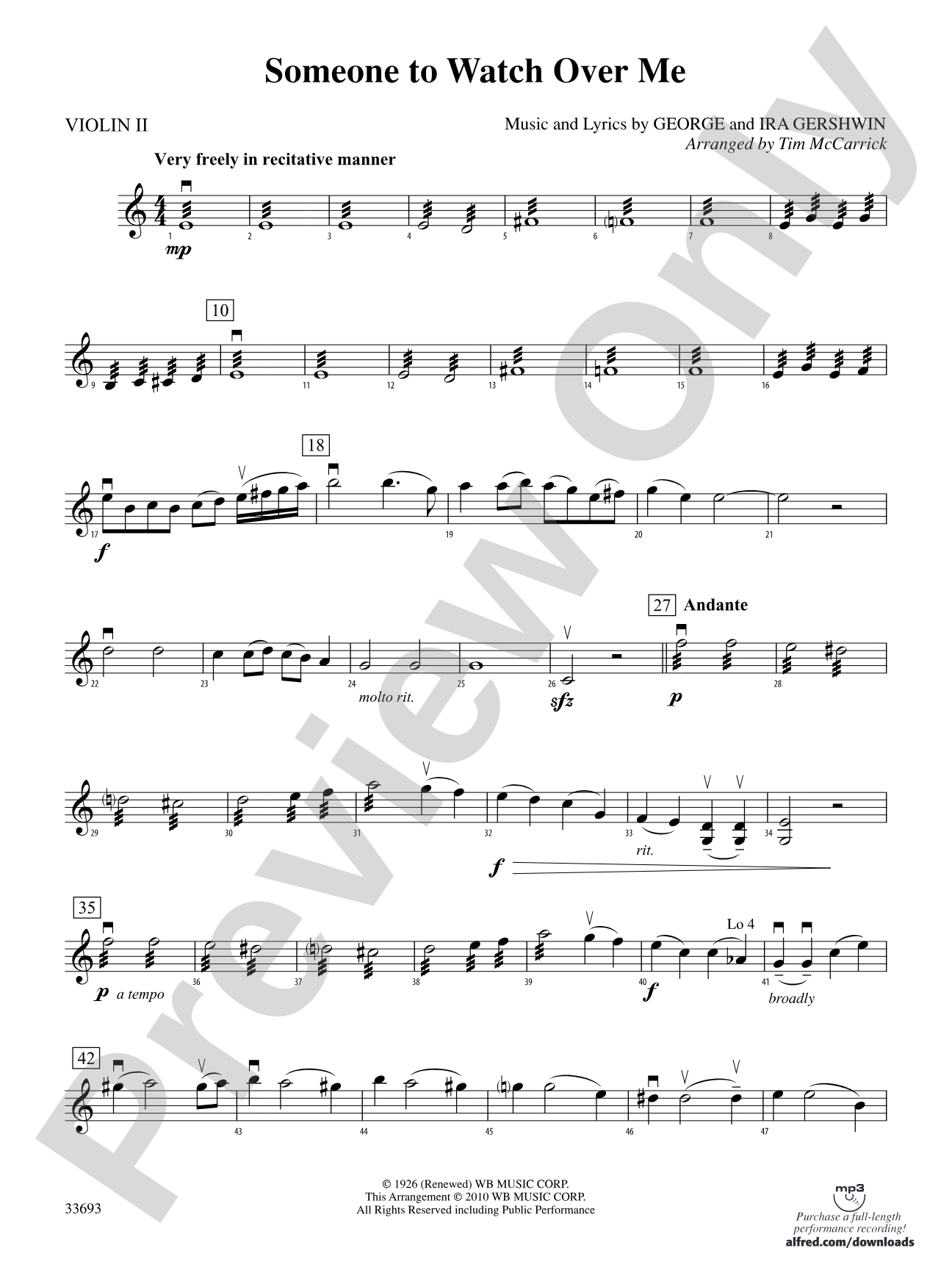
Someone to Watch Over Me: 2nd Violin

Music and lyrics by George and Ira Gershwin / arr. Tim McCarrick

Grade: 3

Item: 00-PC-0014482_VN2

Digital Download
$5.99
Description
Arranged in a dramatic style, this piece will give your orchestra a "great American standard" to go along with their classical standards! Sung countless times and featured on stage and screen, we also remember this piece from a music teacher favorite, Mr. Holland's Opus. Opening with a solo violin over tremolo accompaniment, we hear the often-left-out opening verse. Next, the cello and viola sections soar with the well-known chorus. The music builds until finally the violins play the theme at the end.

Don't just read it, hear it, play along with it, and watch your students grow with it. In MakeMusic Cloud, Someone to Watch Over Me: 2nd Violin comes alive with professional accompaniment, adjustable tempo, and built-in practice tools that turn solo practice into real progress.

Sample Audio
0:00
0:00
Sample Video
Additional Details
Series: Pop Concert String Orchestra
Publisher: Alfred Music
Page Count: 124
SKU: 00-PC-0014482_VN2

More about this title

About the Composer: George Gershwin

George Gershwin (1898-1937) bridged the concert hall and popular song like few composers in American history. His gift for melody and harmonic sophistication made standards like "Someone to Watch Over Me" endure across generations of performers and audiences.

Gershwin's work remains central to music education because it demonstrates how vernacular music can achieve artistic depth. String orchestras benefit from engaging with his catalog: the writing is singable and lyrical while maintaining genuine compositional craft.

Why we love this

This arrangement captures what makes the song memorable while giving string players rewarding material that sits comfortably under the fingers. Tim McCarty's orchestration respects the original melody while building dramatic tension through the arrangement, creating a satisfying arc that holds an audience's attention from the tremolo opening through the final violin statement.

What to expect

The piece opens with quiet introspection, a single violin voice emerging from shimmering tremolo strings. The emotional center deepens when the lower strings carry the familiar melody, building momentum until the full orchestra arrives at a sweeping statement of the theme. There's warmth and nostalgia throughout, grounded in Gershwin's harmonic sophistication.

Who it's for

String orchestras at the intermediate level seeking accessible yet artistically substantial repertoire that audiences recognize and enjoy. Directors programming a mix of classical and popular standards will find this arrangement bridges both worlds effectively.

How to get the most out of it

  • Balance the opening solo violin line against the tremolo accompaniment so the melody emerges clearly without strain; this sets the intimate tone for the entire piece.
  • Shape the cello and viola sections' chorus as if they are singing the well-known melody; lean into the phrasing of the original song rather than treating it as instrumental texture.
  • Let the final violin theme build gradually as the full orchestra enters; resist the urge to jump to full volume immediately, allowing the crescendo to feel inevitable.
  • Use consistent vibrato across string sections during sustained notes to maintain cohesion in the tremolo background and harmonic bed.

How to use it

Ideal as a closer for a concert mixing classical and contemporary repertoire, or as a bridge between a classical set and lighter fare. The piece works well paired with other Great American Songbook arrangements or with film-inspired concert programs. Consider programming it where you want to send the audience out with a familiar, deeply satisfying melody.

Skills your students will build

  • Sustaining pure tremolo texture without rhythmic slippage
  • Balancing solo and accompaniment roles within string sections
  • Shaping lyrical melodic lines with proper phrase breathing
  • Navigating dramatic dynamic buildups from pianissimo to climax
  • Reading and executing sustained legato passages across multiple bars

You May Also Like